
Sher-Dor Madrasa
The portal of the sun-lions
This site is in test mode — some information may contain errors.
Report
A Sufi master's shrine and the 'mirror of Sher-Dor'
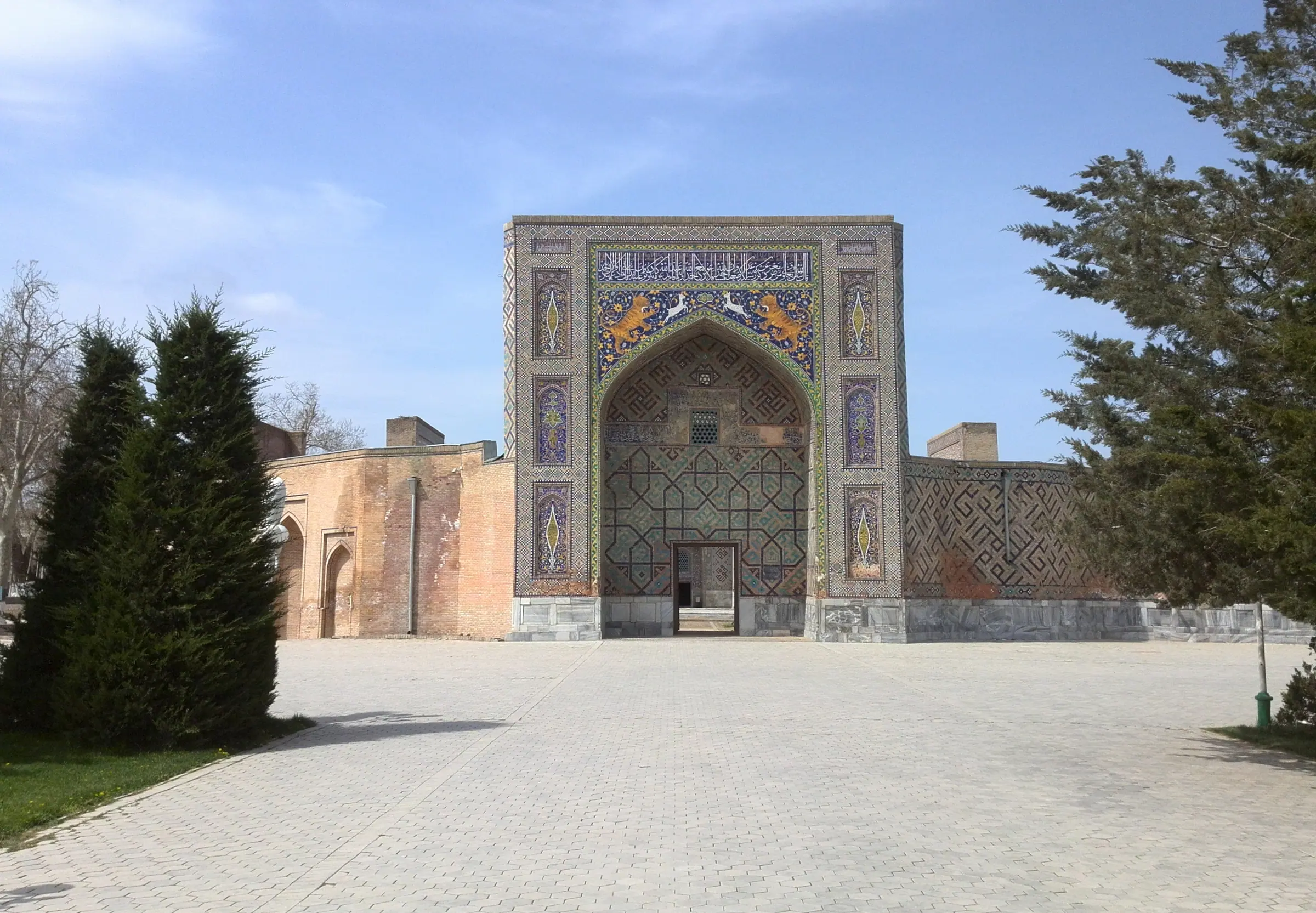
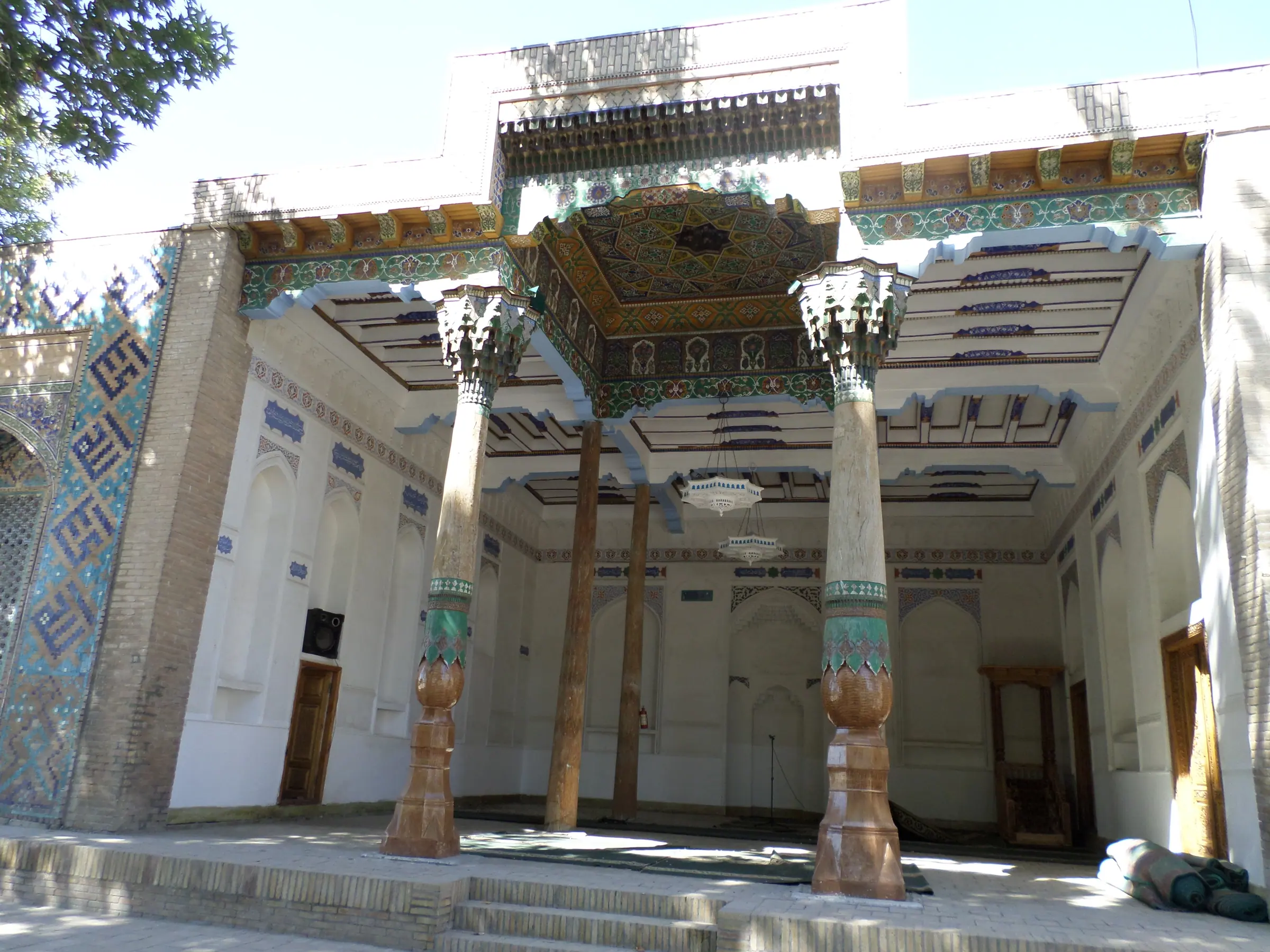
The shrine of the Naqshbandi master Khoja Ahrar (1404–1490), with the Nadir Divan-Begi Madrasa (1630–1636) and its tiger-lion portal, summer and winter mosques and an octagonal pool.
Nasir al-Din Ubaydullah ibn Mahmud al-Shashi (1404–1490), known as Khoja Ahrar, was a towering master of the Naqshbandi Sufi order and one of the most powerful men in Timurid Transoxiana. Born near Tashkent and educated in Samarkand, he amassed vast estates yet poured much of his income into charitable endowments, and more than once brokered peace between warring princes. The poet Jami, a devoted follower, dedicated to him the poem Tuhfat al-Ahrar.

In the second half of the 15th century Khoja Ahrar built a khanqah (Sufi lodge) in the village of Kafshir south of Samarkand, with an octagonal pool in front. He was buried in the southern part of the complex; his white marble tombstone carries an epitaph regarded as a masterpiece of Islamic calligraphy.
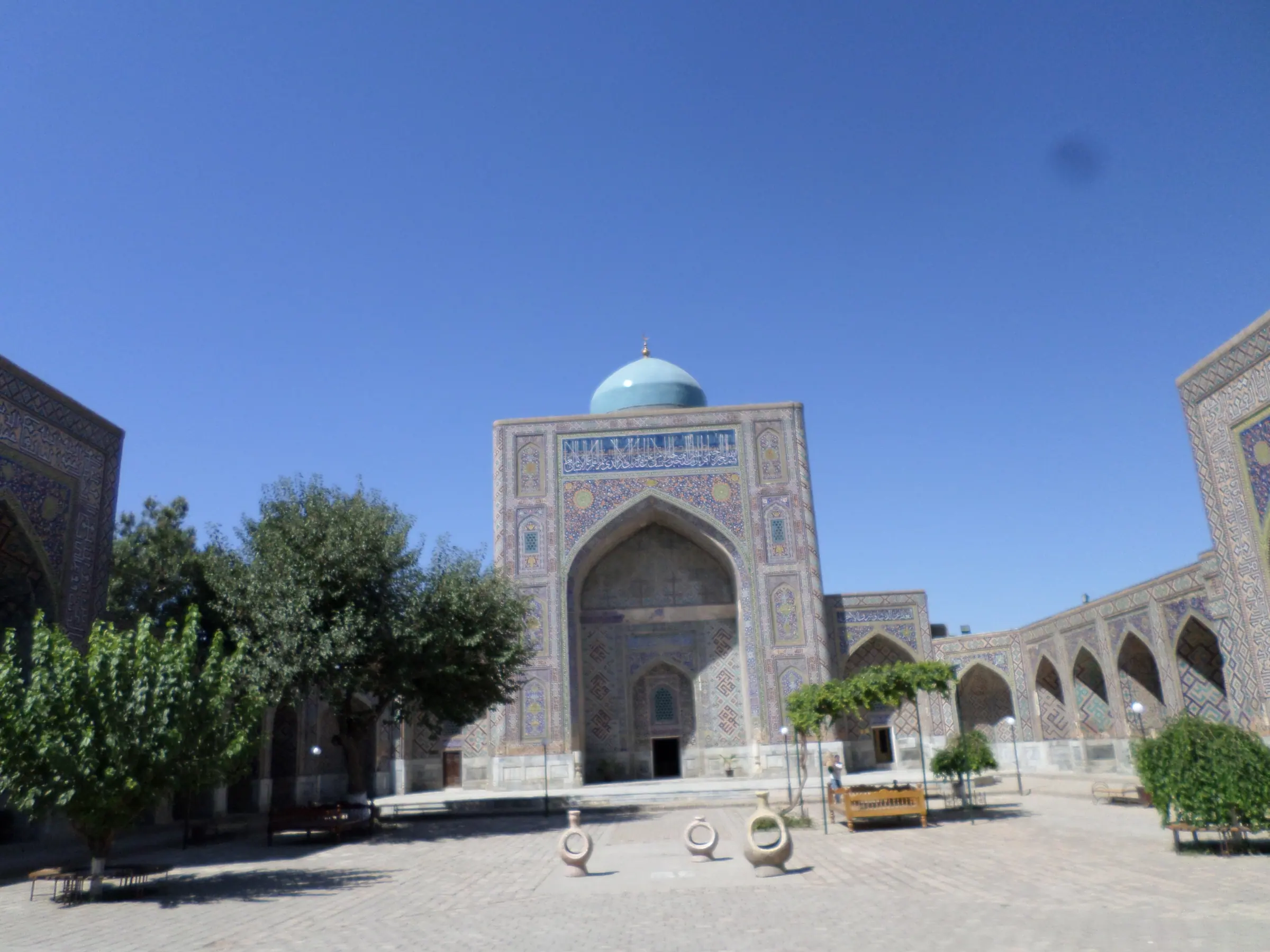
In 1630/31 Nadir Divan-Begi, vizier to the Bukharan ruler Imam Quli Khan, began a large madrasa beside the shrine, incorporating parts of the khanqah; the architect was Dust Muhammad and the works were run by master Khoja Hashim. It was finished in 1635/36. Earthquakes in the early 19th century and, above all, in 1907 badly damaged the building, and its original appearance was recreated from 19th-century photographs during restoration that began in 1978.
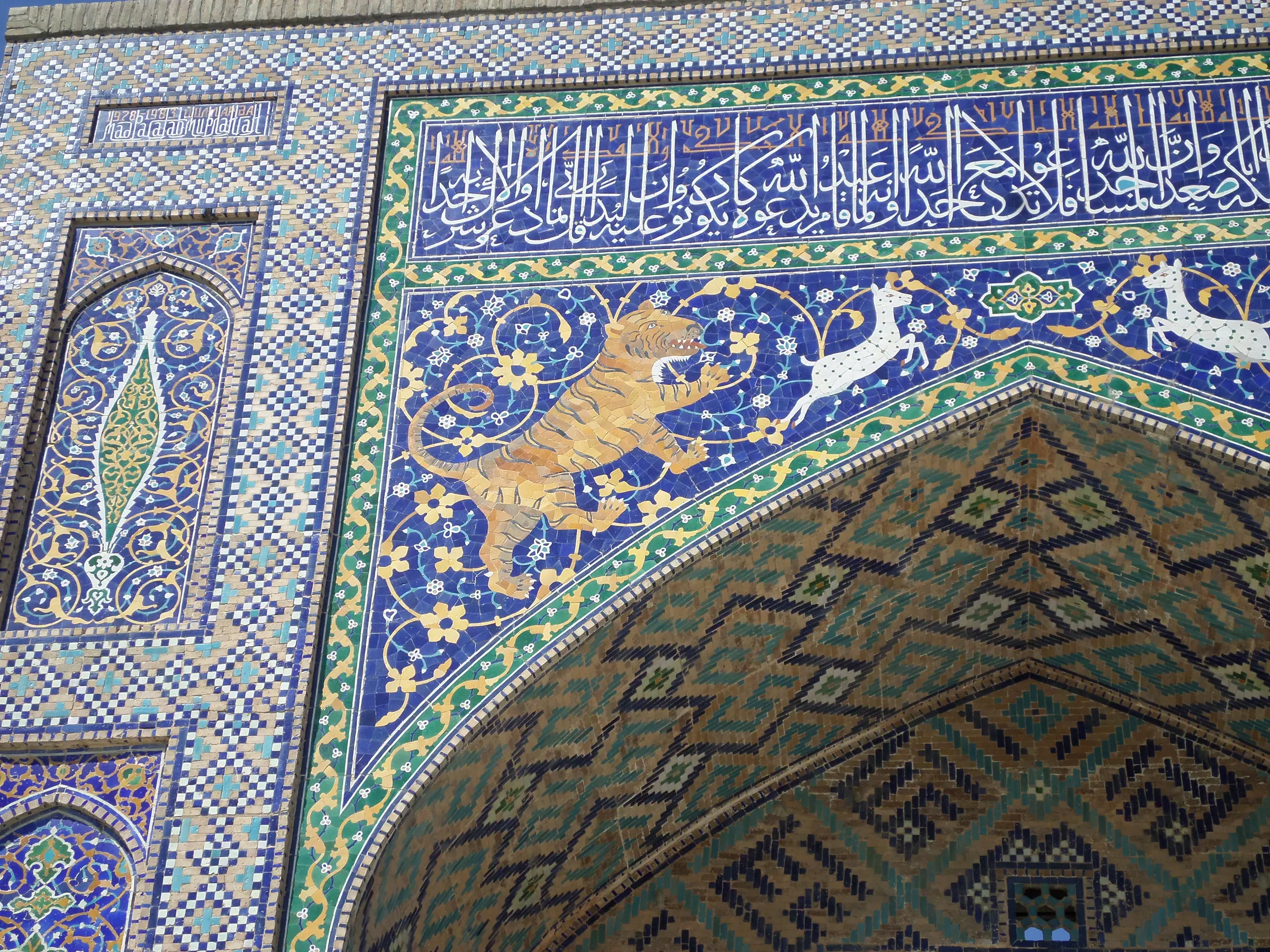
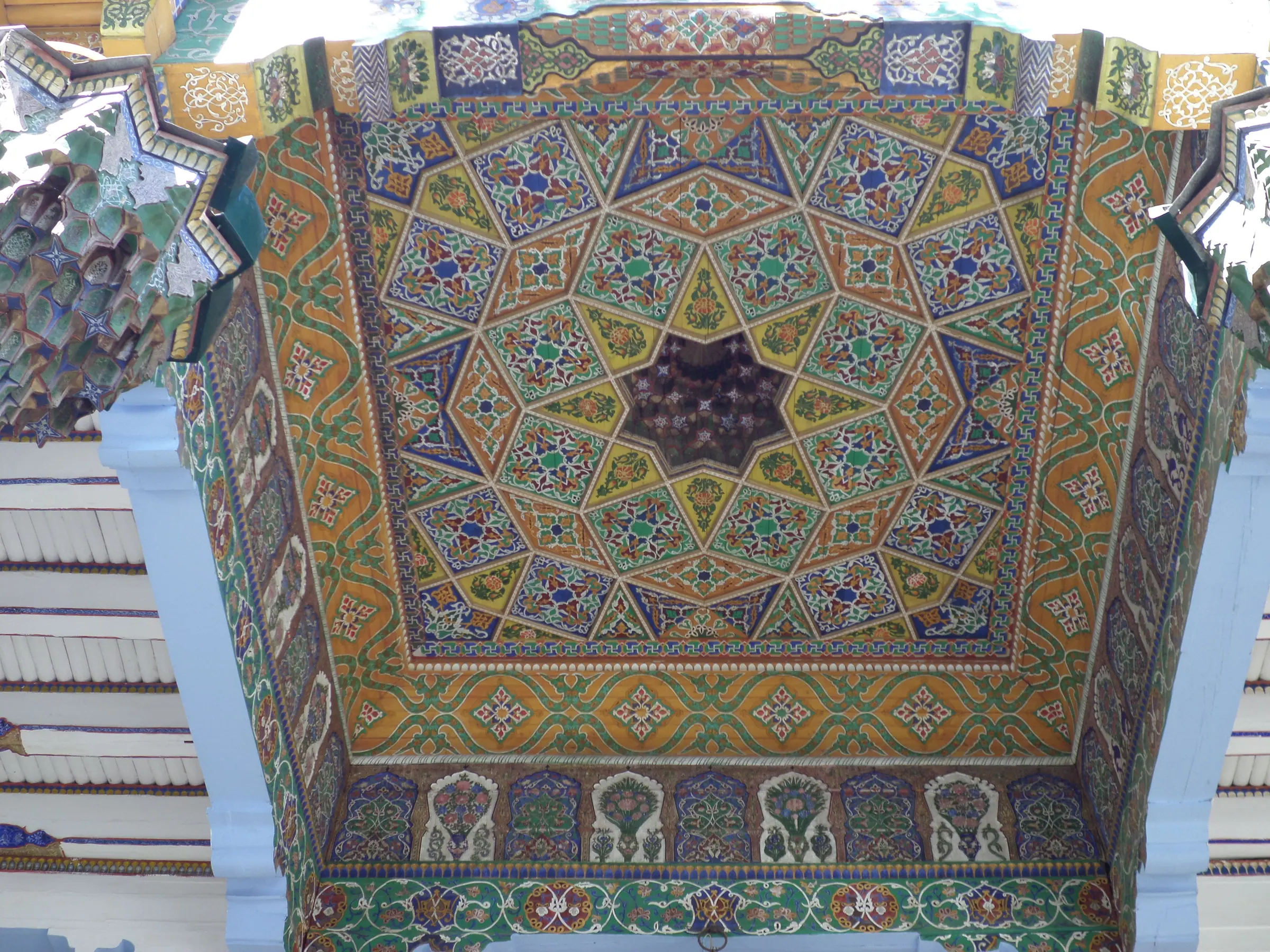
The tympanum of the main eastern portal shows a tiger-lion chasing a gazelle – an echo of the famous scene on the Sher-Dor Madrasa in the Registan, which is why locals call this building the 'mirror of Sher-Dor'. Twenty-seven cells surround the four-iwan courtyard; instead of corner lecture halls there are five-sided niches, a compromise forced by building the khanqah into the madrasa. A blue-domed mosque stands on the portal's axis, while beside the shrine runs a row of summer and winter mosques and a small minaret of 1909.

In the 19th century the madrasa kept an ancient Kufic manuscript known as the Qur'an of Uthman. After the Russian conquest of 1868, General Abramov sent it to St Petersburg; it was returned to Uzbekistan in the 1920s and is now kept in Tashkent.
Gallery
Related places
The portal of the sun-lions

An ancient shrine around a plane-shaded pool

The great square of three madrasas
Nearby


Stay & eat
Hostel · 1.4 km
Hotel · ★★★★ · 2.6 km
Hotel · 2.7 km
Hotel · ★★★ · 2.8 km
Café · 1.9 km
Plov centre · 2.4 km
Fast food · 2.6 km
Fast food · 2.8 km


For example: Registan, Ulugh Beg, plov, Urgut