

Sher-Dor Madrasa
The portal of the sun-lions
© Adam Harangozó, CC BY-SA 4.0
Built
1619–1636
Time needed
30 min
Opening hours
Registan ensemble hours: 07:00–24:00 in high season, from 08:00 in winter (until 22:00 in winter 2025/26).
Admission
Included in the Registan ticket: 100,000 som for foreign visitors, 15,000 som for Uzbek citizens (2026).
District
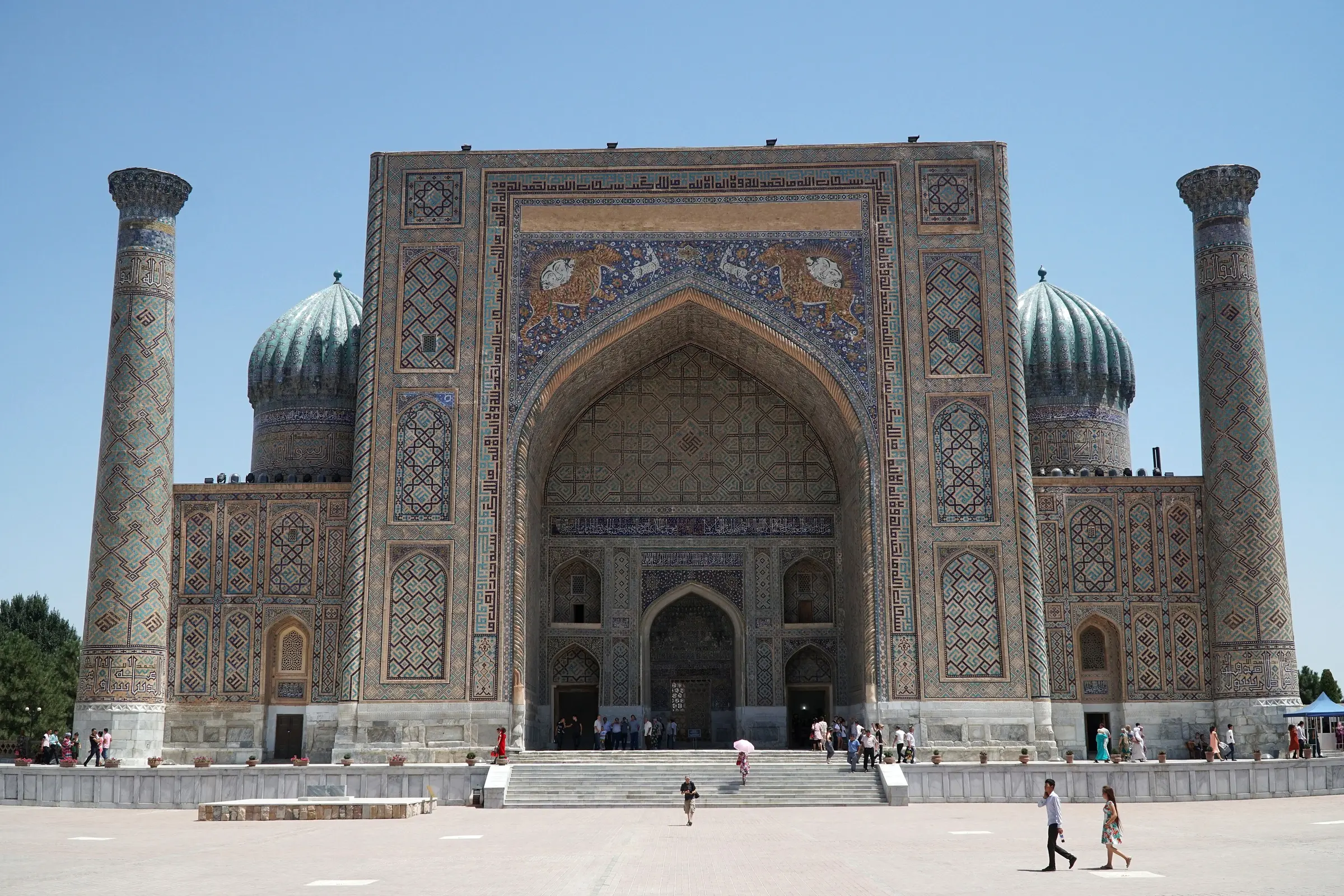
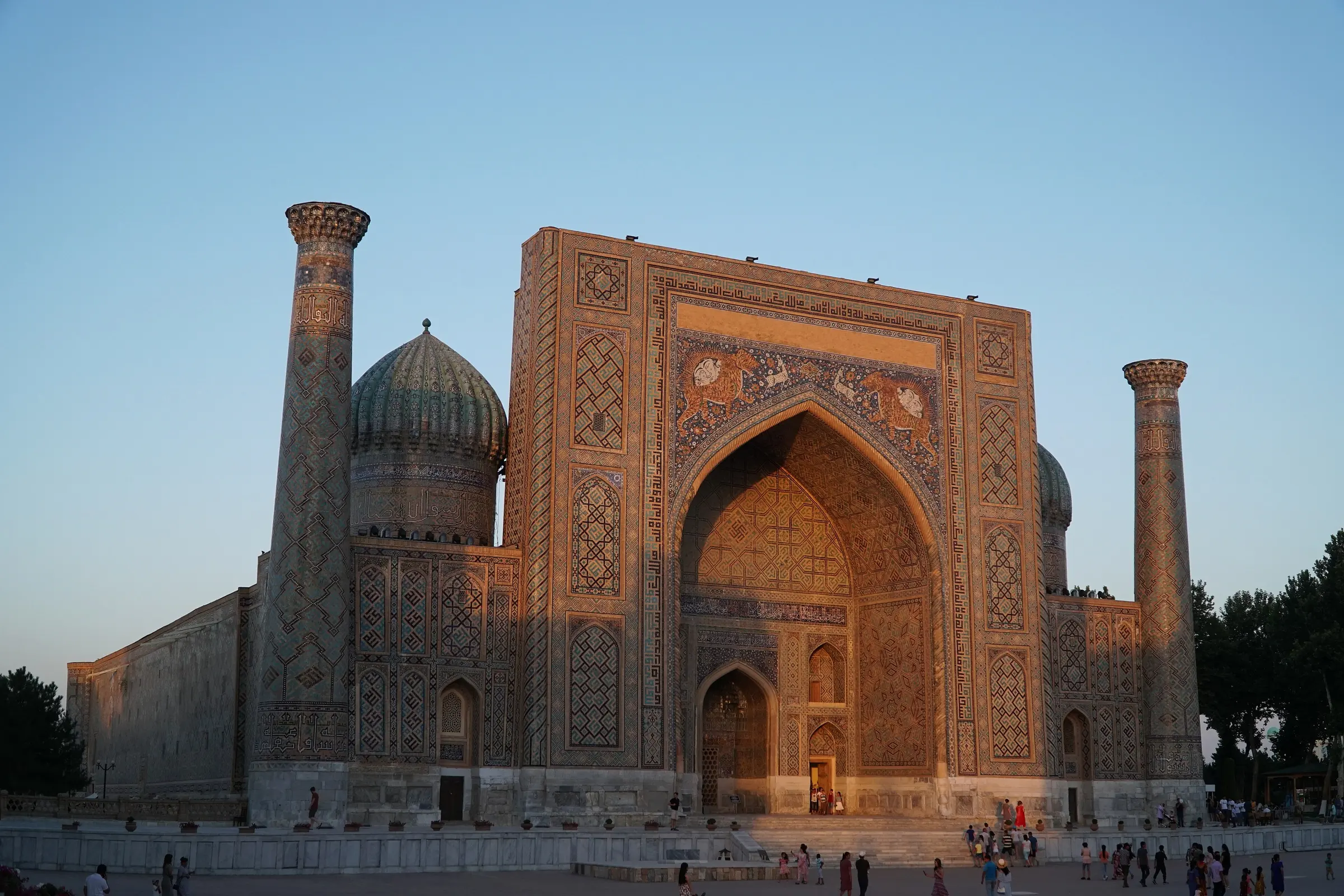
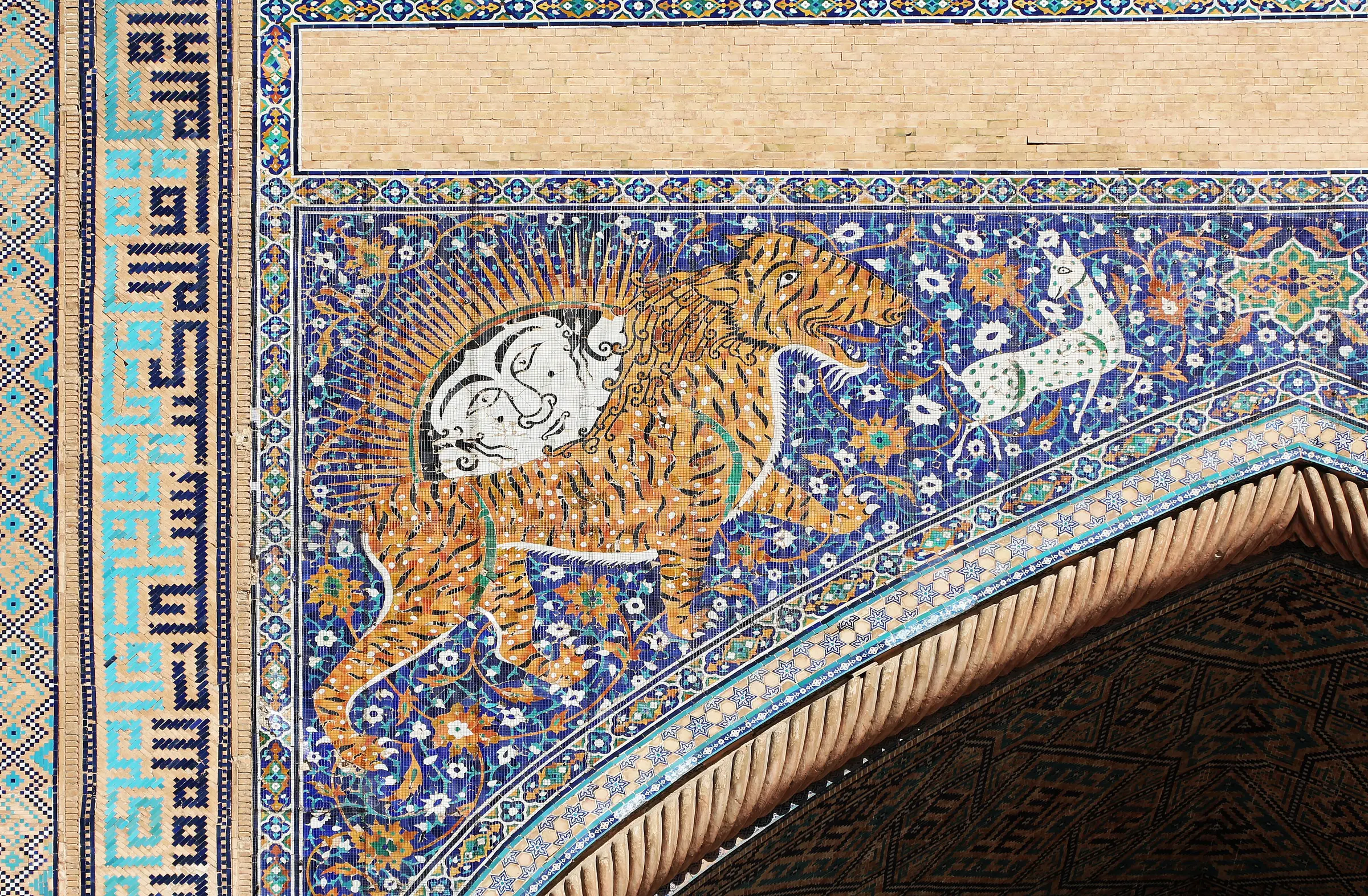
The madrasa on the east side of the Registan (1619–1636), famed for the mosaic of tiger-lions with a rising human-faced sun on its portal — one of Samarkand's most recognisable images.
Built on Ulugh Beg's foundations
By the early 17th century the Timurid buildings of the Registan were in disrepair. Yalangtush Bahadur, an Uzbek of the Alchin clan who governed Samarkand for the Ashtarkhanid khans, set about rebuilding the square. For the Sher-Dor he chose the site of Ulugh Beg's khanaqah of 1424, which was dismantled and its bricks reused — as excavations by the archaeologist S. N. Yurenev confirmed in 1956.
The madrasa went up between 1619 and 1636 under the Samarkand architect Abdul Jabbar, with tilework by the master Muhammad Abbas. The architect's name is spelled out in white letters on a black ground in the tile inscription inside the portal arch — an unusually public signature for the period.

A mirror image
Sher-Dor was designed as a qosh, or mirror pair, to the Ulugh Beg Madrasa opposite, so that their portals face each other across the square. Its builder borrowed the elegant proportions of the 15th-century building but did not allow for the fact that the ground had risen nearly two metres in the intervening two centuries, so Sher-Dor looks squatter than its twin.
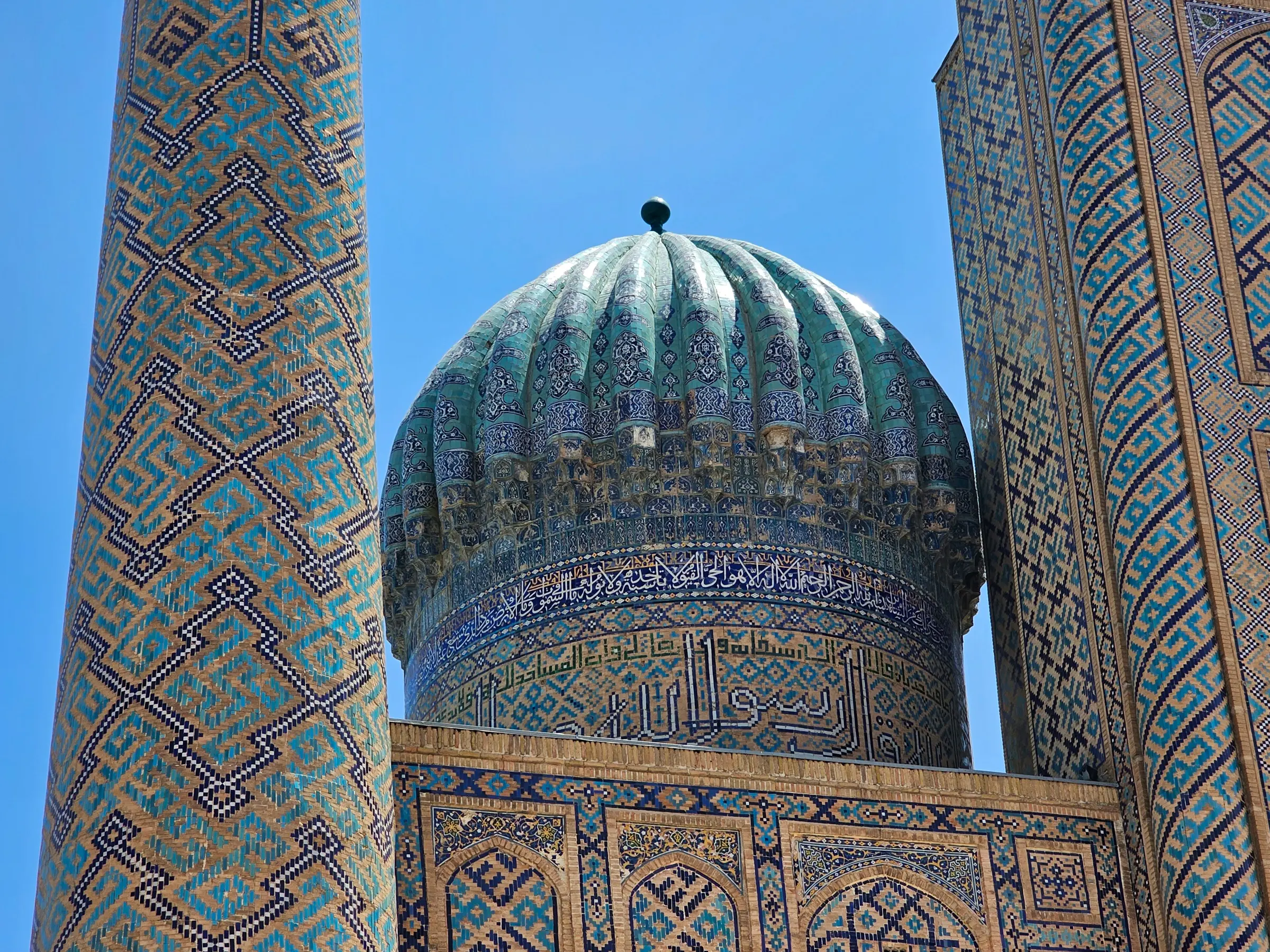
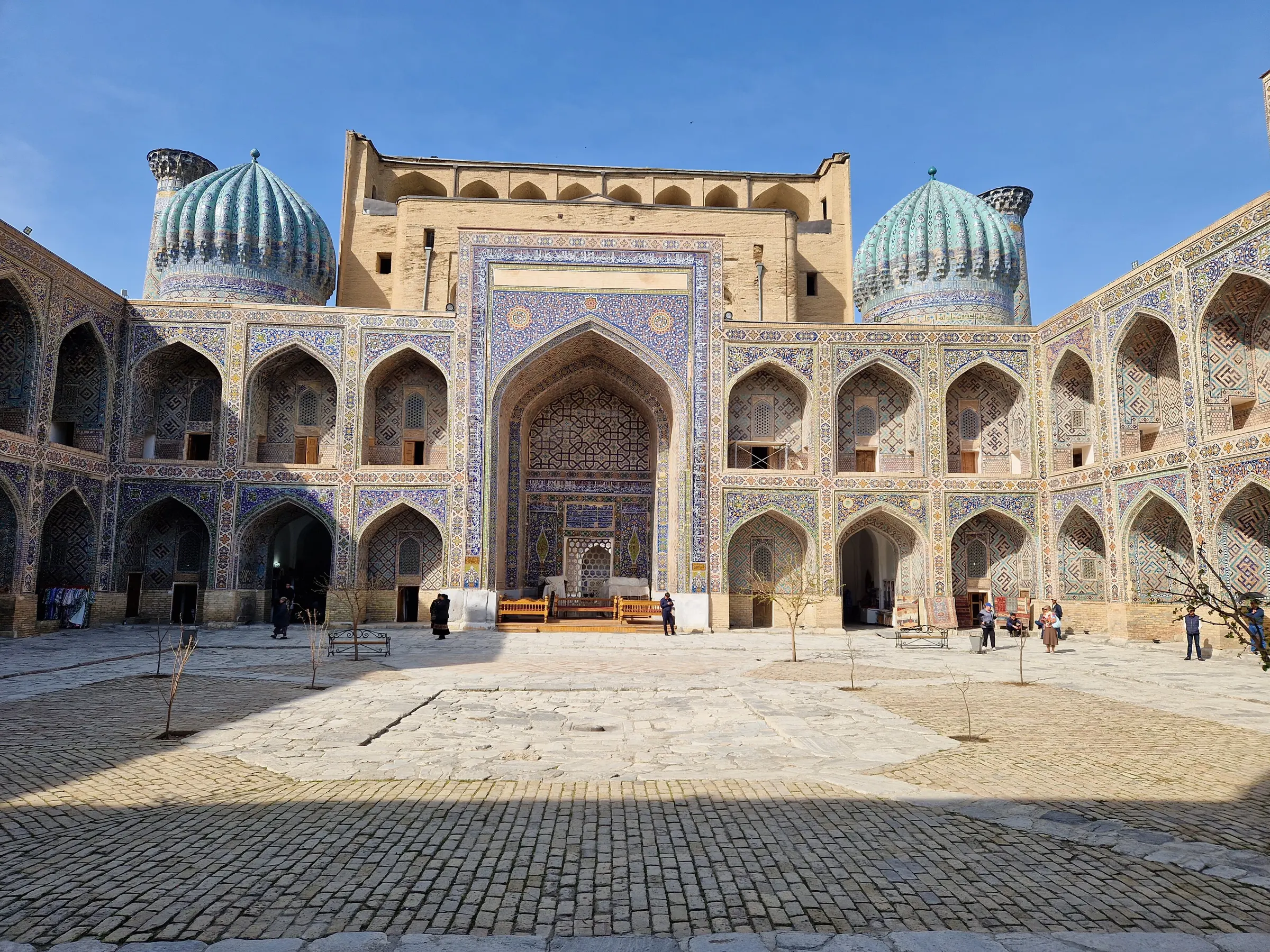
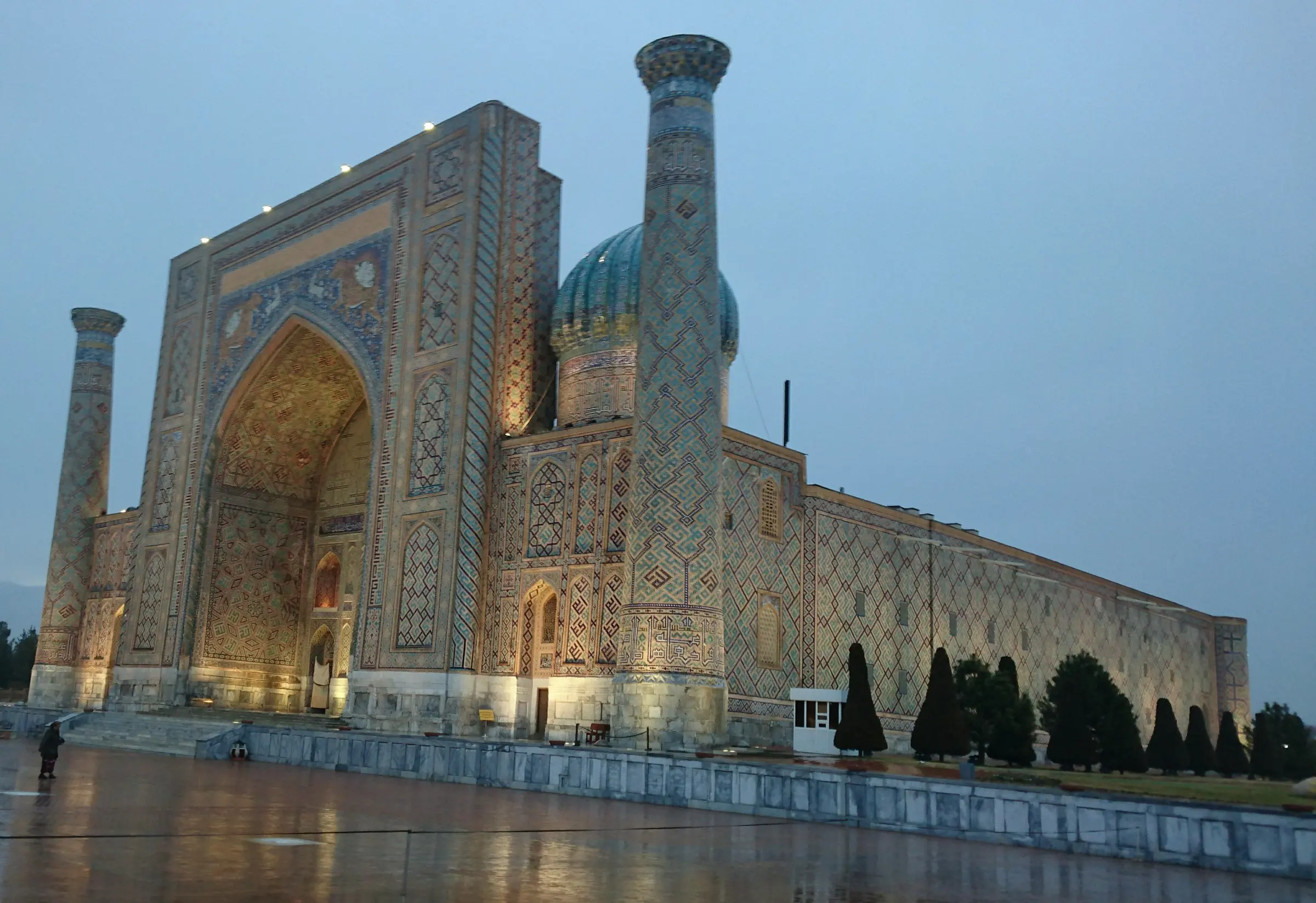
The building measures roughly 70 by 57 metres. A tall portal and two 31-metre corner minarets mark the main facade, flanked by huge ribbed turquoise domes over a lecture hall and a mosque. Those domes are strikingly oversized, and some researchers believe their weight contributed to later structural damage. Two storeys of student cells surround a four-iwan courtyard, where the side iwans are capped by unusual faceted half-domes. Look out for the floral mosaics above the cell arches, the bouquets in shaped vases on the west iwan — a tree-of-life motif — and the kundal painting inside the domed lecture hall.
The lions on the portal
The madrasa takes its name from the mosaic high in the portal arch: a tawny, tiger-striped beast with a lion's mane chases a white deer, while a sun with a human face rises from behind its back. Sher-Dor means "having lions". Living creatures are a rare sight on a religious building in Islamic art, and that boldness is precisely what made the Sher-Dor famous.
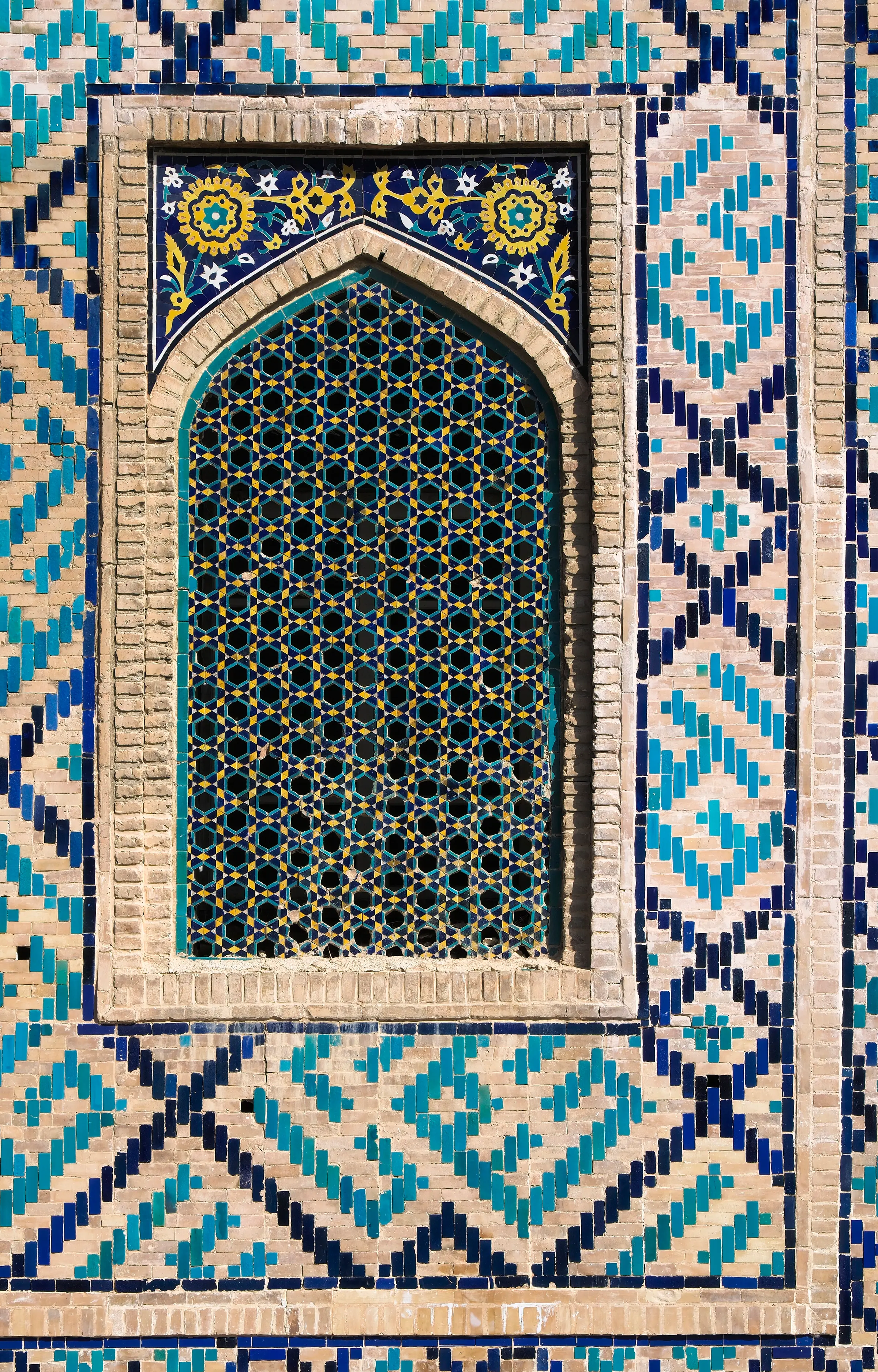
The lion-and-sun motif is ancient: it appears on 12th-century Seljuk coins and was later used by the Timurids and their descendants in India. It is usually read as an astrological emblem — the sign of Leo with the Sun. Today the scene is one of the best-known symbols of Samarkand and of Uzbekistan as a whole. Elsewhere the facade is covered in bold geometric girih patterns designed to be read from afar, with calligraphic bands on the minarets and dome drums.

Earthquakes and restoration
The madrasa functioned for almost three centuries, but earthquakes in the early and late 19th century badly damaged it: the main portal vault buckled, tiles fell away and the minarets leaned. Teaching ended in the early 1920s, the building was nationalised and restoration began in 1924. The main campaign came in the 1960s: the minarets were reinforced in 1960–1962, and in 1962 the famous tympanum mosaic was recreated to a design by the artist V. N. Gorokhov and the architect A. I. Freytag. Work was completed in 1965–1967.
Did you know?
For all its size, the madrasa housed only a little over forty students at a time. Its best-known alumnus is the 19th-century Tatar theologian and historian Shihabuddin Marjani. A small room inside also holds an empty grave intended for Yalangtush's spiritual mentor, Khoja Hashim Dahbedi.

Good to know
- The Sher-Dor portal faces west, so photograph the lions in afternoon sun.
- To study the mosaic, stand directly in front of the portal and move closer, rather than viewing it from the middle of the square.
- Craftspeople work in the former student cells — embroidery, miniatures, jewellery; compare prices before you buy.
- The Chorsu trading dome stands just behind the madrasa and makes an easy add-on.
Details may change — please check before you visit.
Gallery
Sher-Dor Madrasa
Nearby
Nearby


Islam Karimov Street (formerly Tashkent Street)
The pedestrian street from the Registan to Bibi-Khanym
233 mStay & eat
Stay & eat nearby
Hotels nearby
See allMinor
Hotel · 200 m
Kamila & Terrace
Hotel · 200 m
Diyor
Hotel · 250 m
Bahodir B&B
Guesthouse · 300 m
Restaurants & cafés nearby
See allRegiston Sogdiana
Café · 100 m
Khoja Nasriddin Teahouse
Teahouse · 200 m
Emirhan
Restaurant · 200 m
Zarqand
Restaurant · 250 m


