
Khoja Ahrar Complex
A Sufi master's shrine and the 'mirror of Sher-Dor'
This site is in test mode — some information may contain errors.
Report
An ancient shrine around a plane-shaded pool
A shrine that grew over eight centuries around the grave of a 9th-century jurist: a 12th-century mausoleum, a Timurid khanqah, an octagonal pool, a neighbourhood mosque and a small madrasa.
The complex grew up around the grave of Khoja Abdi (also recorded as Abd al-Mazeddin), a 9th-century jurist and qadi. Renowned for his knowledge of Islamic law and counted among Samarkand's most respected judges, he died around 861 and was buried in the garden of his estate inside the city walls. Accounts of his ancestry differ: the Qandiya of Najm al-Din Umar al-Nasafi traces his line back to Caliph Uthman, which scholars think helped give rise to his cult.

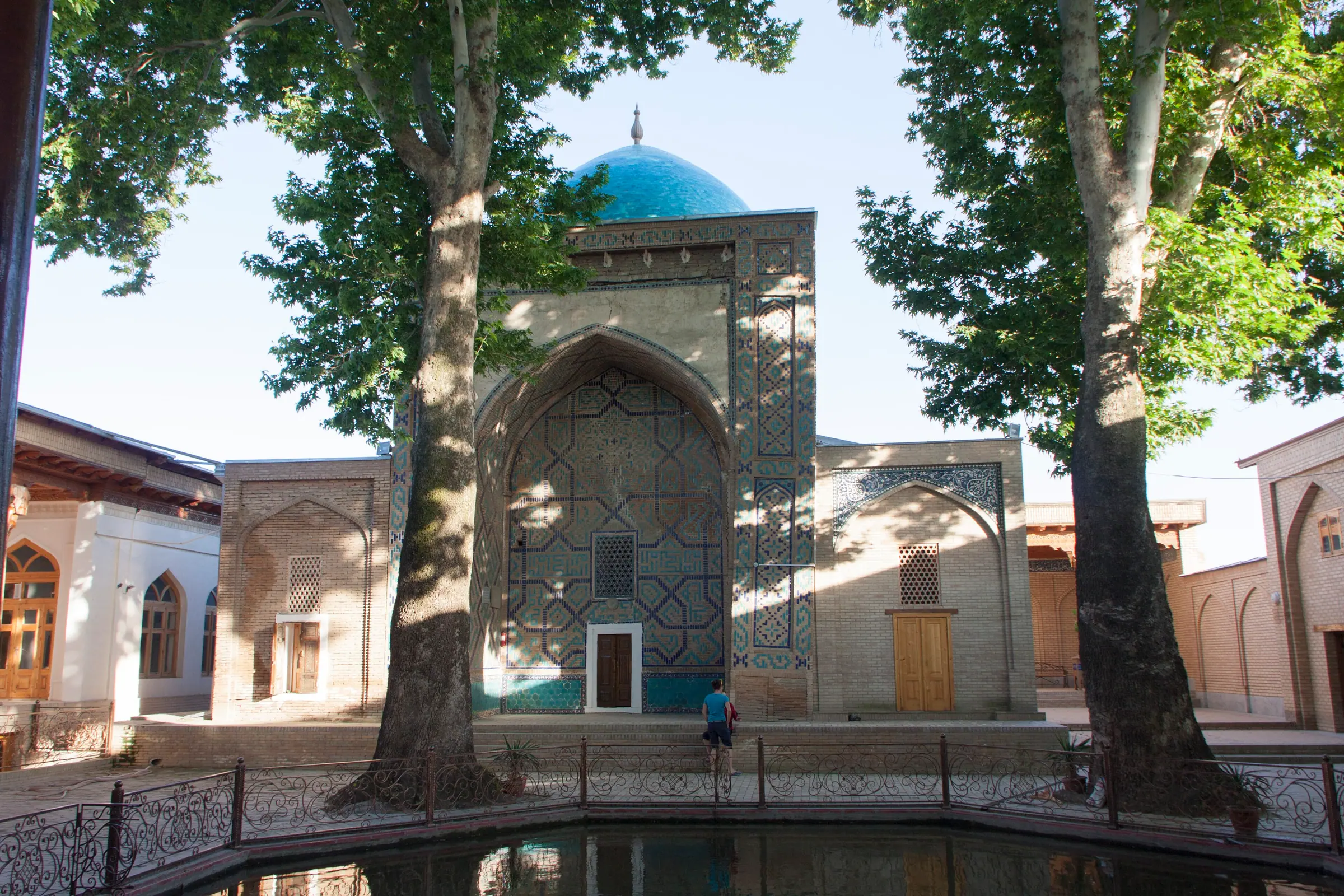
In the first half of the 12th century Sultan Sanjar ordered a small cube-shaped mausoleum with a conical dome to be built over the grave – so cramped that the tombstone filled almost all of it. In the 15th century, under Ulugh Beg, a spacious khanqah with a portal and a blue dome was added in front, and a pool was dug in the shade of plane trees.
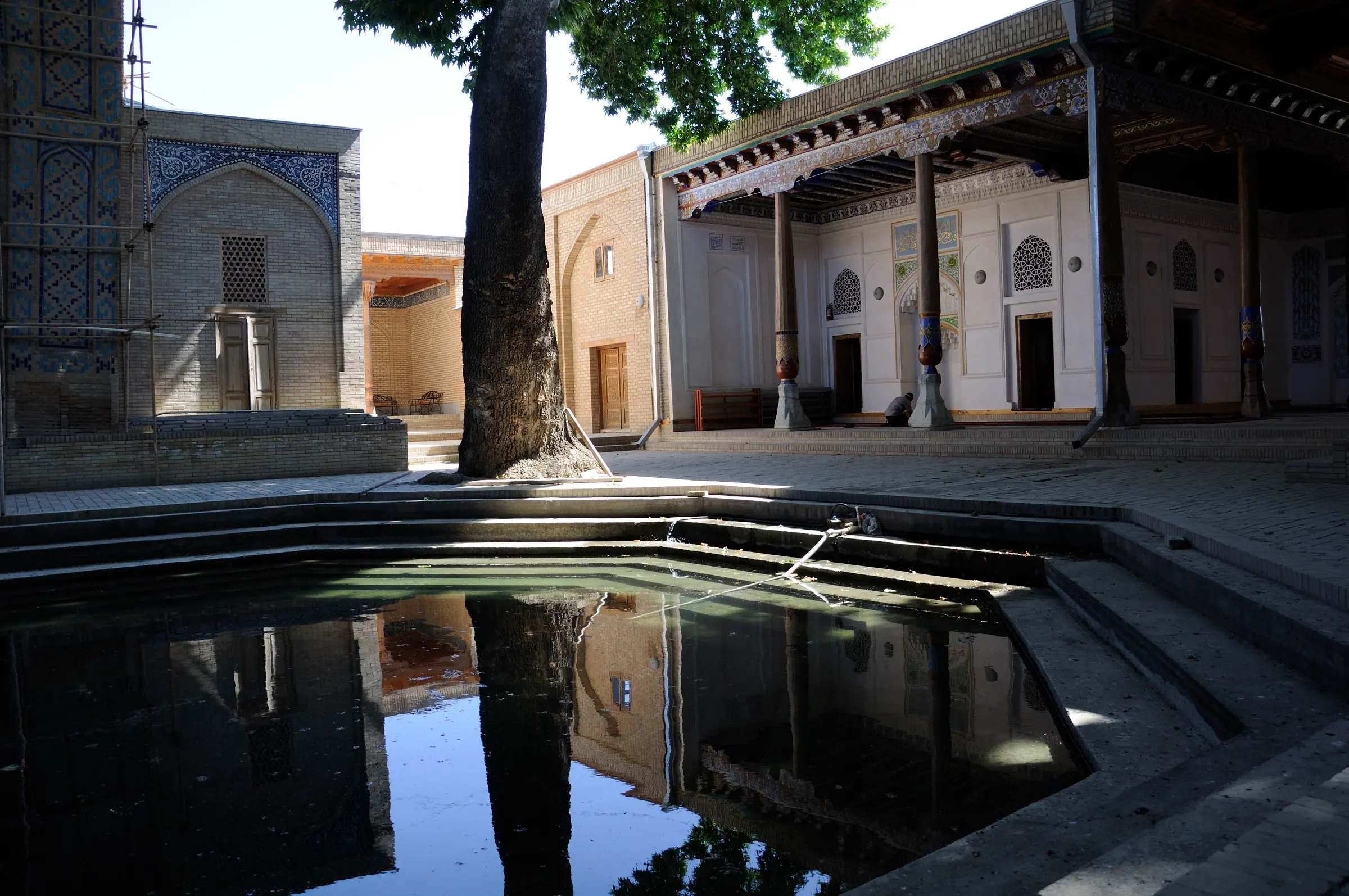
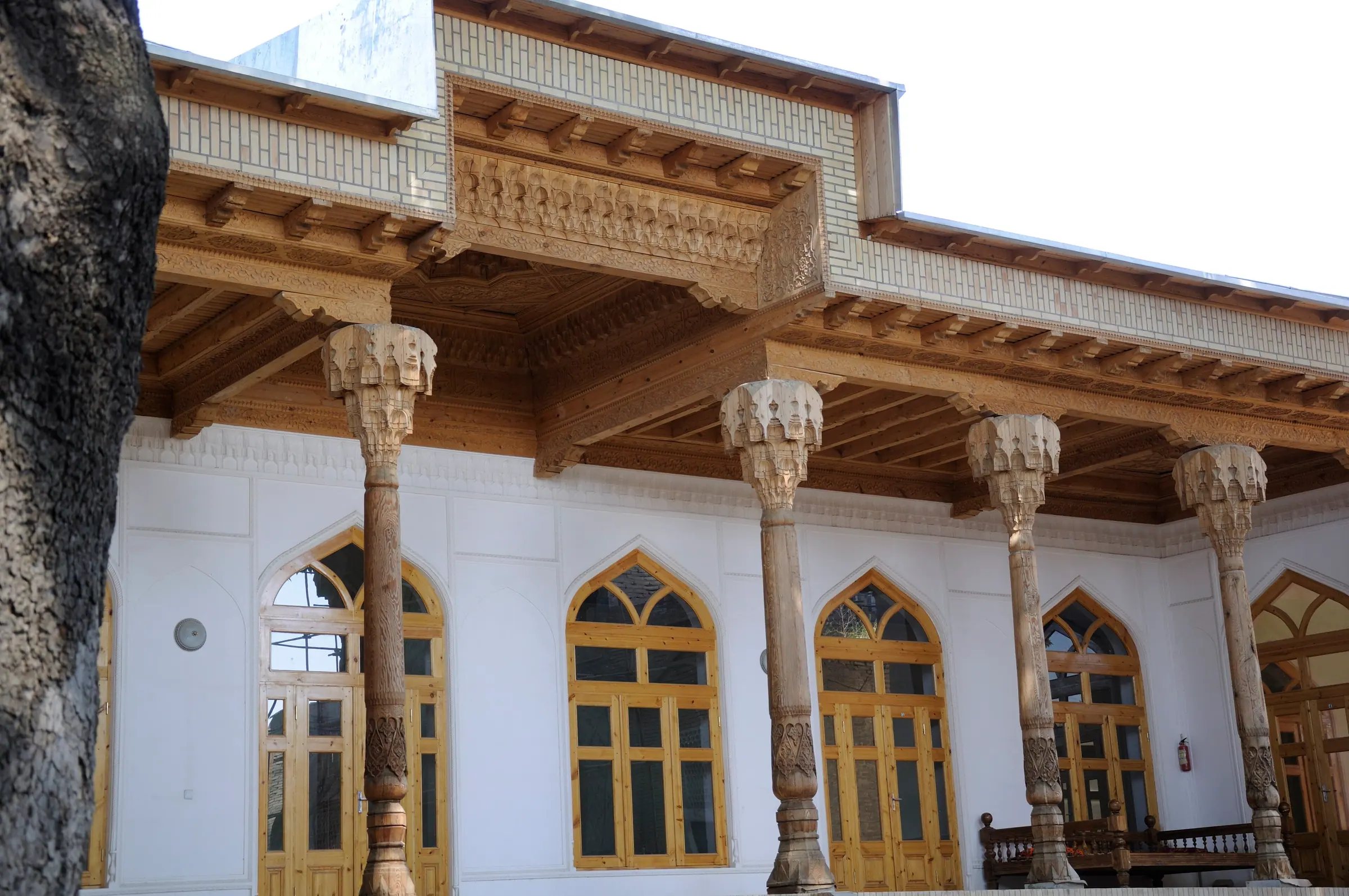
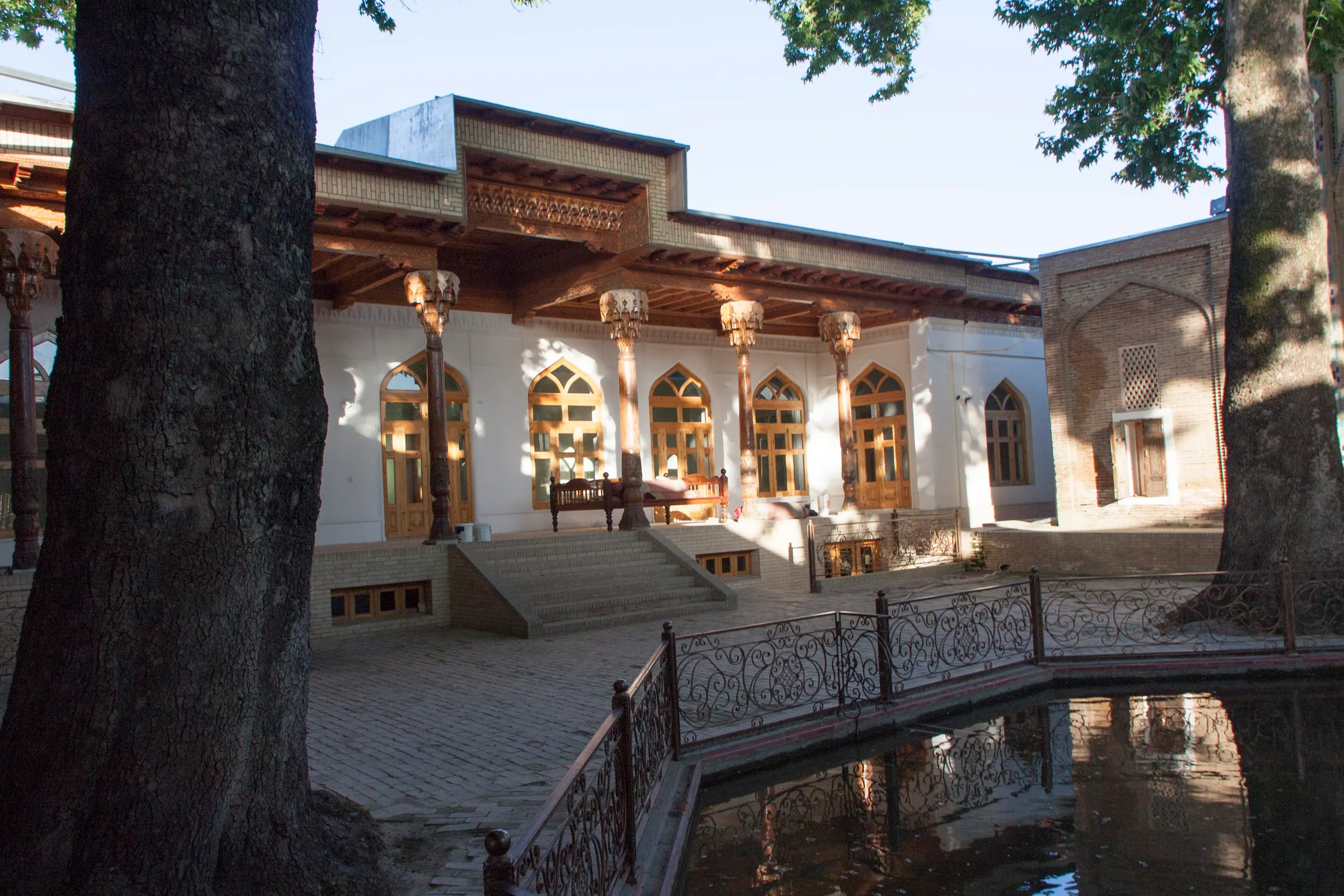
A mosque and small minaret followed on the west side in the early 19th century, a small madrasa on the north in 1905 and, in 1909, a larger neighbourhood mosque with an L-shaped aivan replacing the old one – when the pool was also given its octagonal shape. Restoration around 2000 gave the khanqah back exterior decoration lost centuries ago.
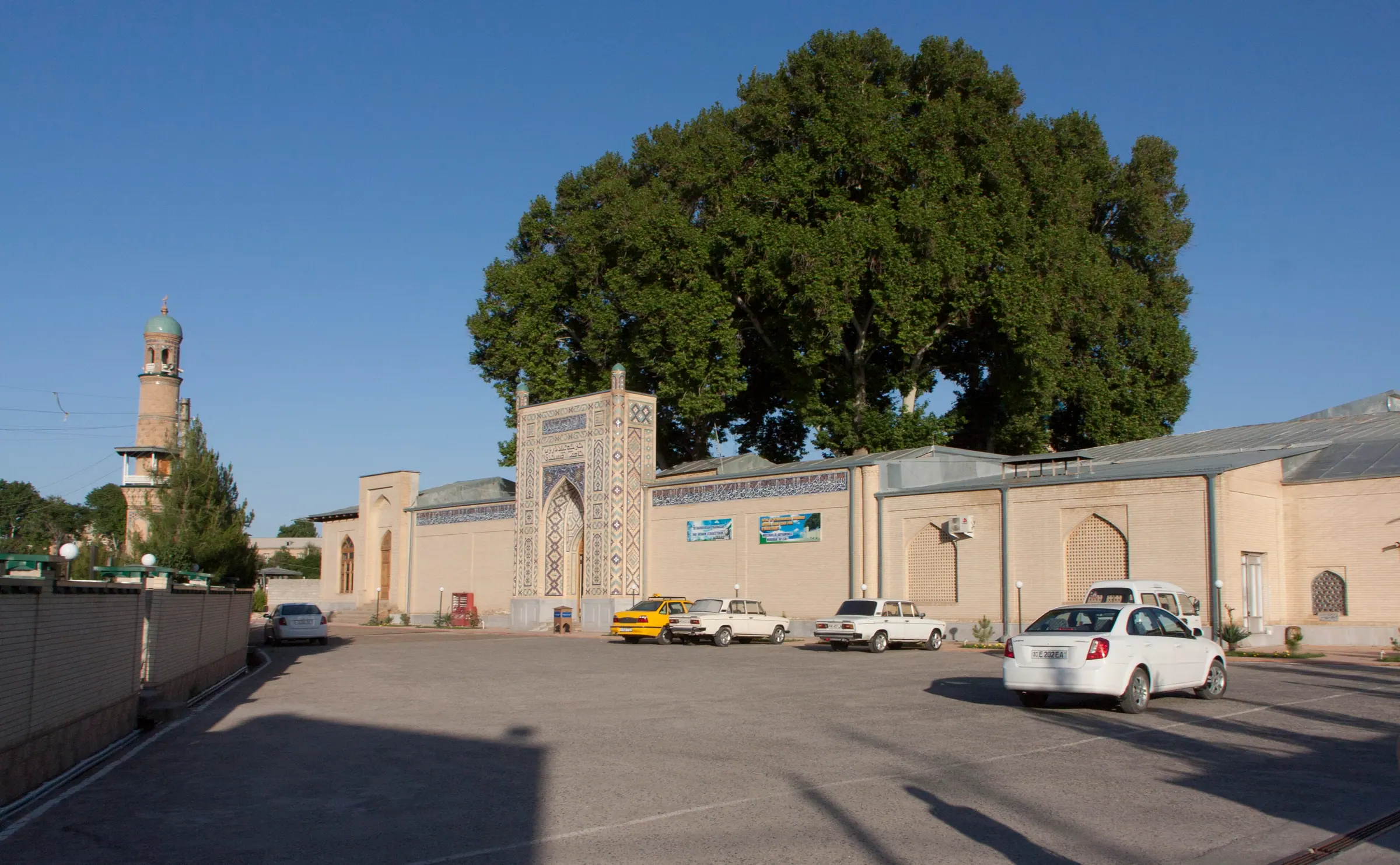
The heart of the complex is the octagonal pool ringed by plane trees in a 25-metre-square courtyard. To the south are the mausoleum and khanqah: note the geometric girih patterns in glazed brick on the portal and the band of calligraphy around the tall drum. The mosque's coffered aivan ceiling to the west, painted in many colours, is a fine example of Samarkand's vernacular style around 1900. Local belief holds that walking seven times around the mausoleum on Eid al-Adha equals a pilgrimage to Mecca on foot; this is folk tradition, not religious law.

Darun means 'inner' – inside the city walls. On the southern outskirts, about 4 km away, lies Abdi Birun ('outer'), built in the 1630s by Nadir Divan-Begi, vizier of the Bukharan ruler Imam Quli Khan; the grave platform there dates from 1633. Some scholars believe both shrines honour the same saint. Abdi Birun was restored in the 2000s.
Gallery
Stay & eat
Guesthouse · 1.1 km
Hostel · 1.3 km
Hostel · 1.3 km
Guesthouse · 1.5 km
Restaurant · 550 m
Restaurant · 750 m


For example: Registan, Ulugh Beg, plov, Urgut


