
Afrasiyab
The ruins of pre-Mongol Samarkand
This site is in test mode — some information may contain errors.
Report
The avenue of mausoleums
A necropolis on the slope of Afrasiyab built up from the 11th to the 19th century: a narrow lane of mostly Timurid tombs with unrivalled tilework, and one of Central Asia's great pilgrimage sites.
Shah-i-Zinda means "the Living King". The name refers to Qusam ibn Abbas, a cousin of the Prophet Muhammad, who came to Transoxiana with the Arab armies in the 7th century to preach Islam. Legend has it that he was attacked while praying, beheaded, and that he picked up his head and walked down into a deep well, where he lives on to this day. Until the 16th century the shrine was known as Mazar-i Shah; the present name took hold later.
A sanctuary grew up around the grave under the Karakhanids in the 11th century — sources record a madrasa built here by Tamghach Bughra Khan in 1066. The Mongol conquest destroyed many buildings, but the grave kept its sanctity: Ibn Battuta, in Samarkand in the 1330s, describes visiting the shrine of Qusam ibn Abbas. Most of what survives dates from the 14th and 15th centuries, the age of Timur and Ulugh Beg, when members of the Timurid family, commanders and clerics were buried here.

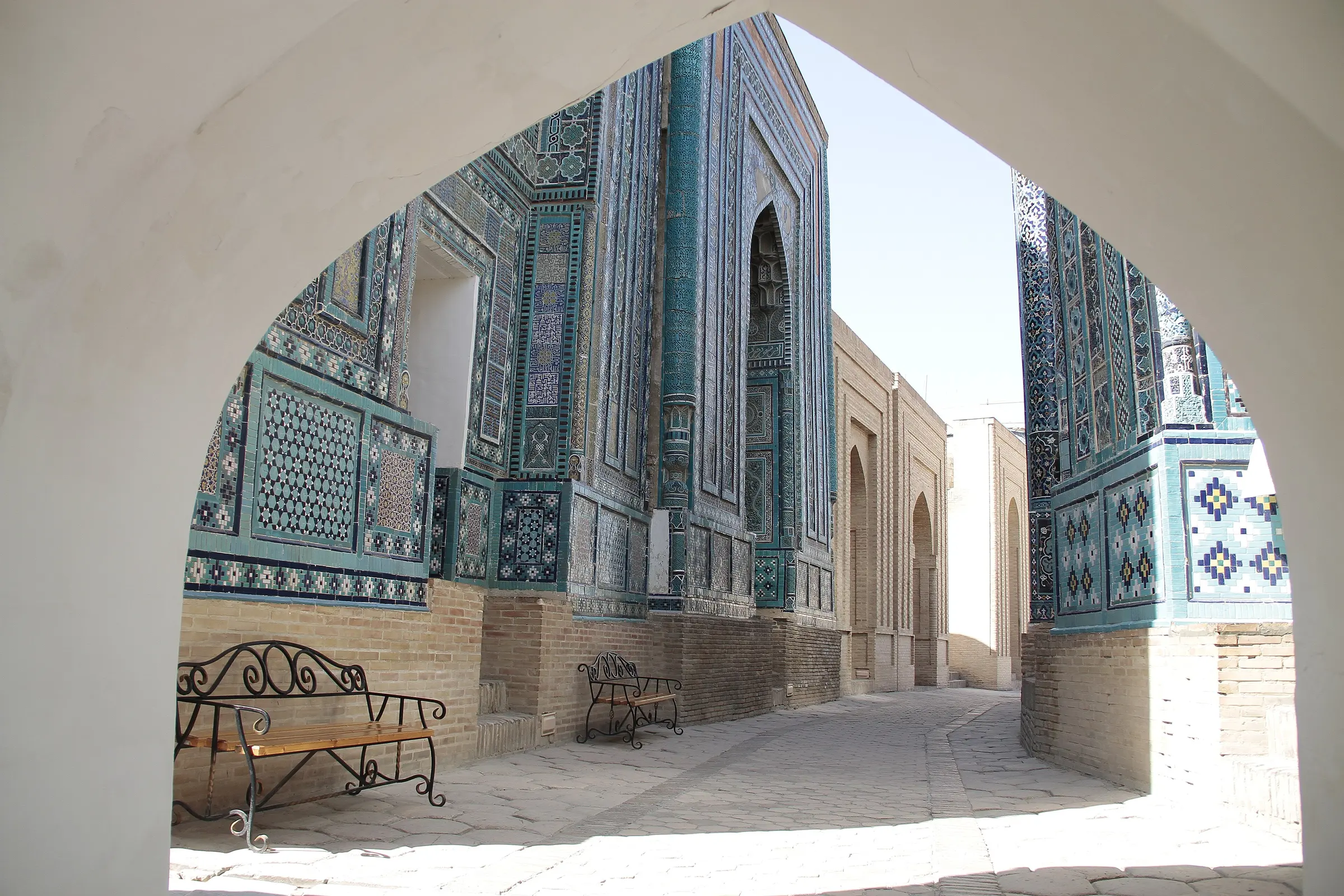
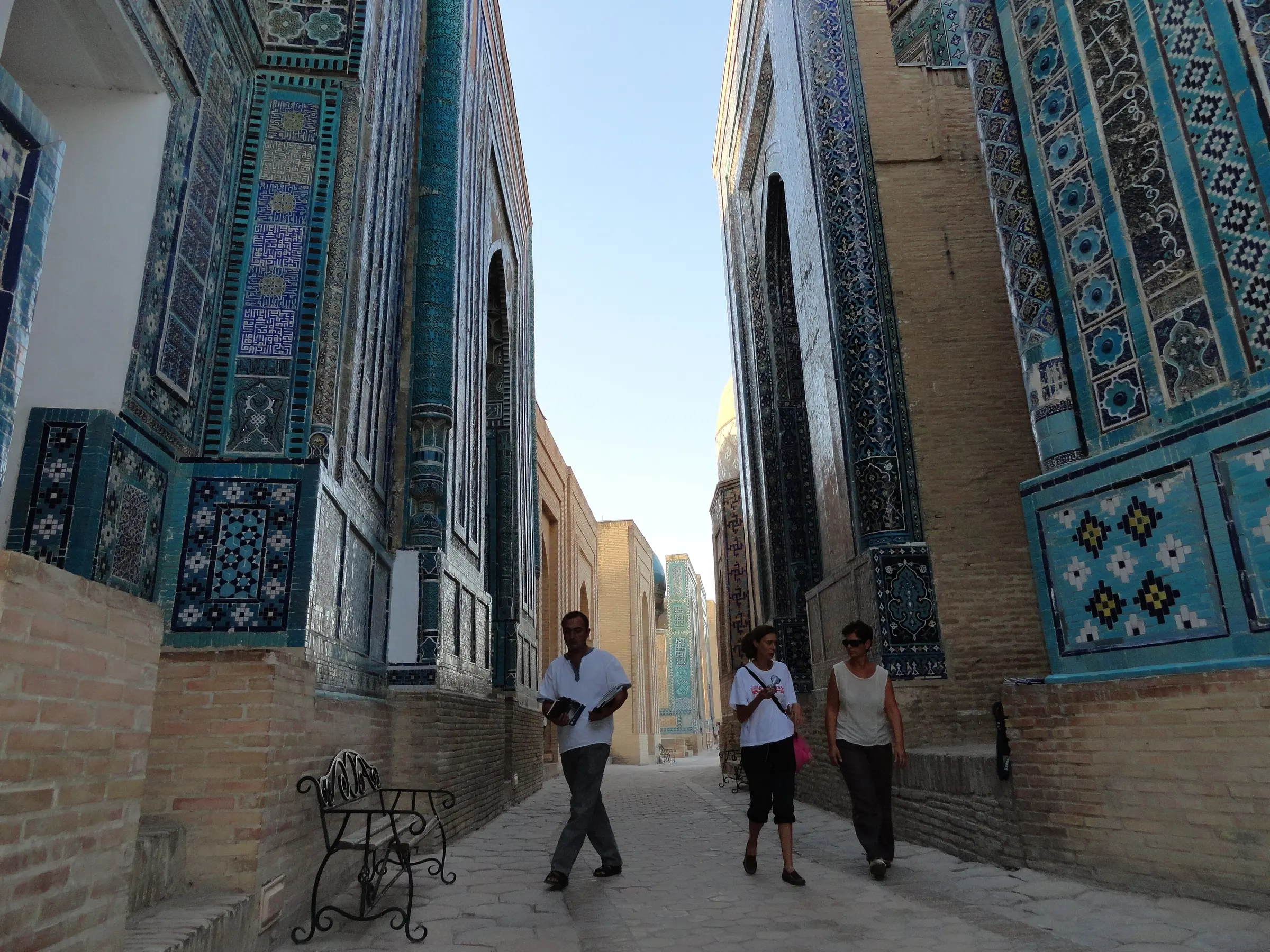
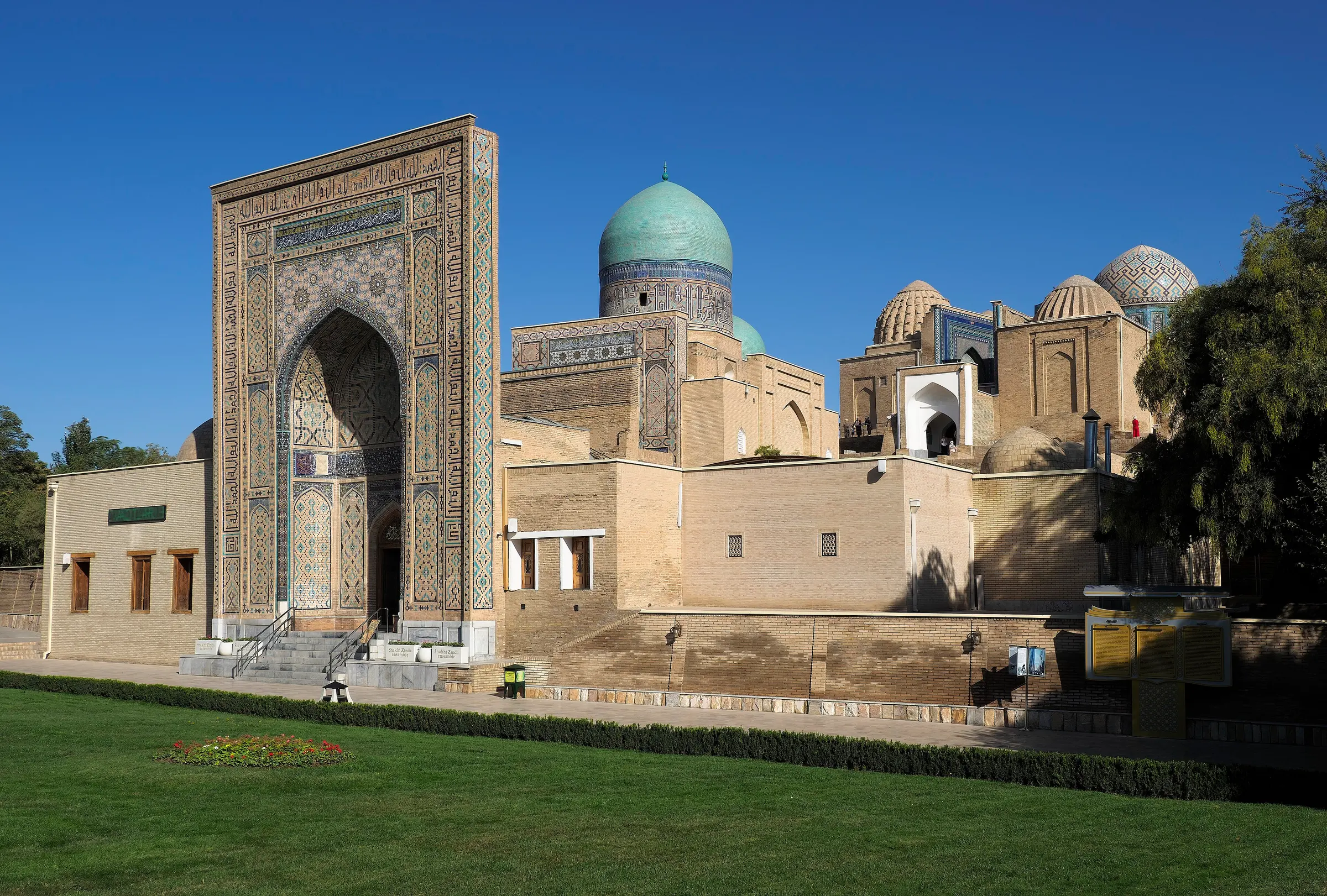
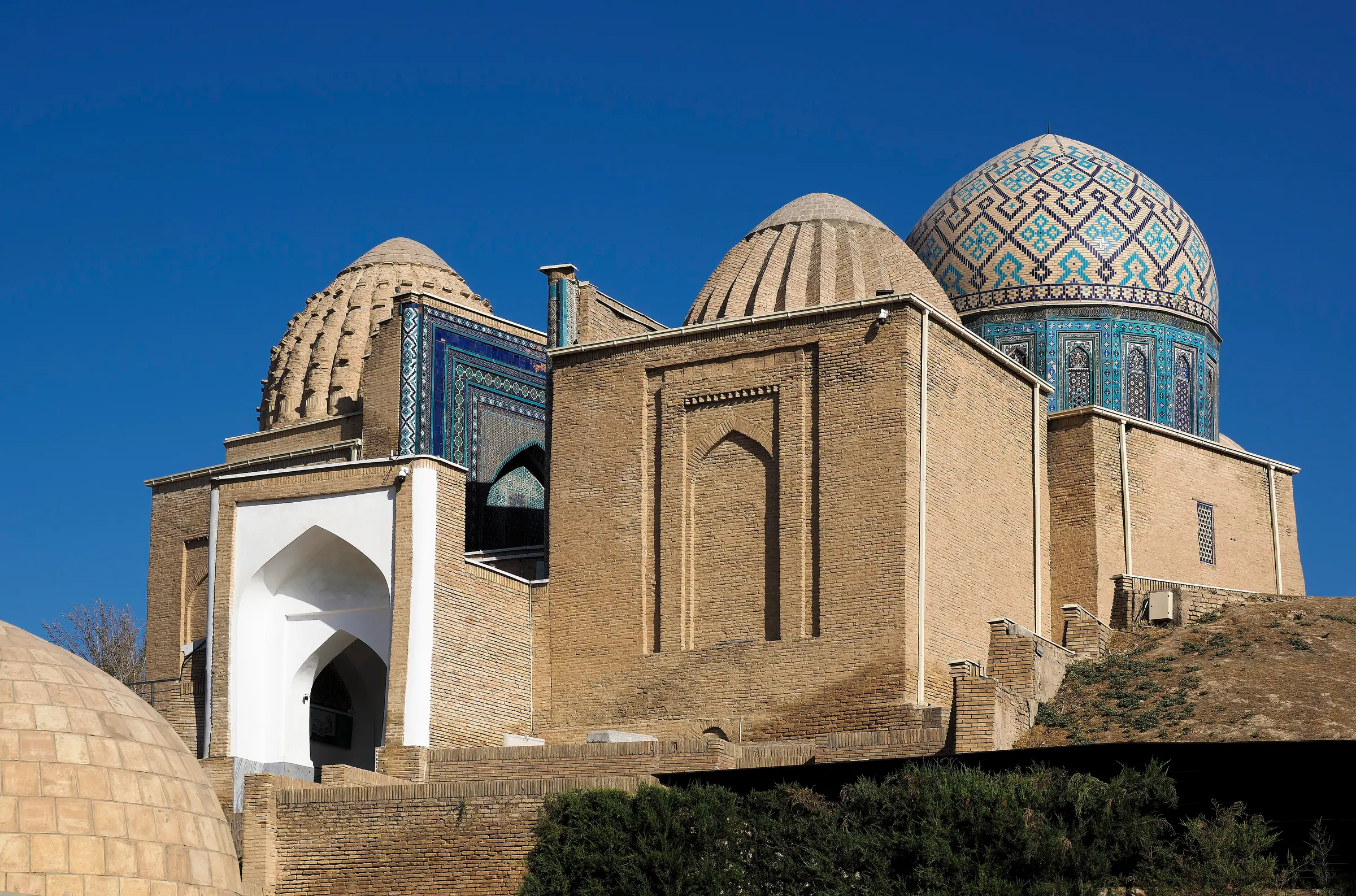
The ensemble lines a narrow lane climbing from the old city wall towards Afrasiyab hill and falls into three groups linked by domed passageways called chartak. You enter through the main gateway, built in 1434–1435 in the name of Ulugh Beg's son Abd al-Aziz, beside the 19th-century Davlat Qushbegi madrasa and a summer mosque raised by Samarkand craftsmen in 1910. Then comes a steep stairway of about forty steps. Local lore says that if you count the same number of steps going up and coming down, your sins will be forgiven.
Beside the stairs stands an elegant double-domed mausoleum traditionally linked to Ulugh Beg's teacher, the astronomer Qazi-zade Rumi — though when the grave was opened in 1979 it held the remains of a woman aged 30 to 35, so who lies here remains an open question. In the middle group, Timurid tombs face one another across the lane: the mausoleum Timur's elder sister Turkan Aqa built for her daughter Shadi Mulk Aqa (1371–1372), that of his younger sister Shirin Bika Aqa (1385–1386), the Amirzade (1386) and Tughlu Tekin (1376) mausoleums, an unusual early-15th-century octagon, and the tomb of the commander Amir Burunduq.
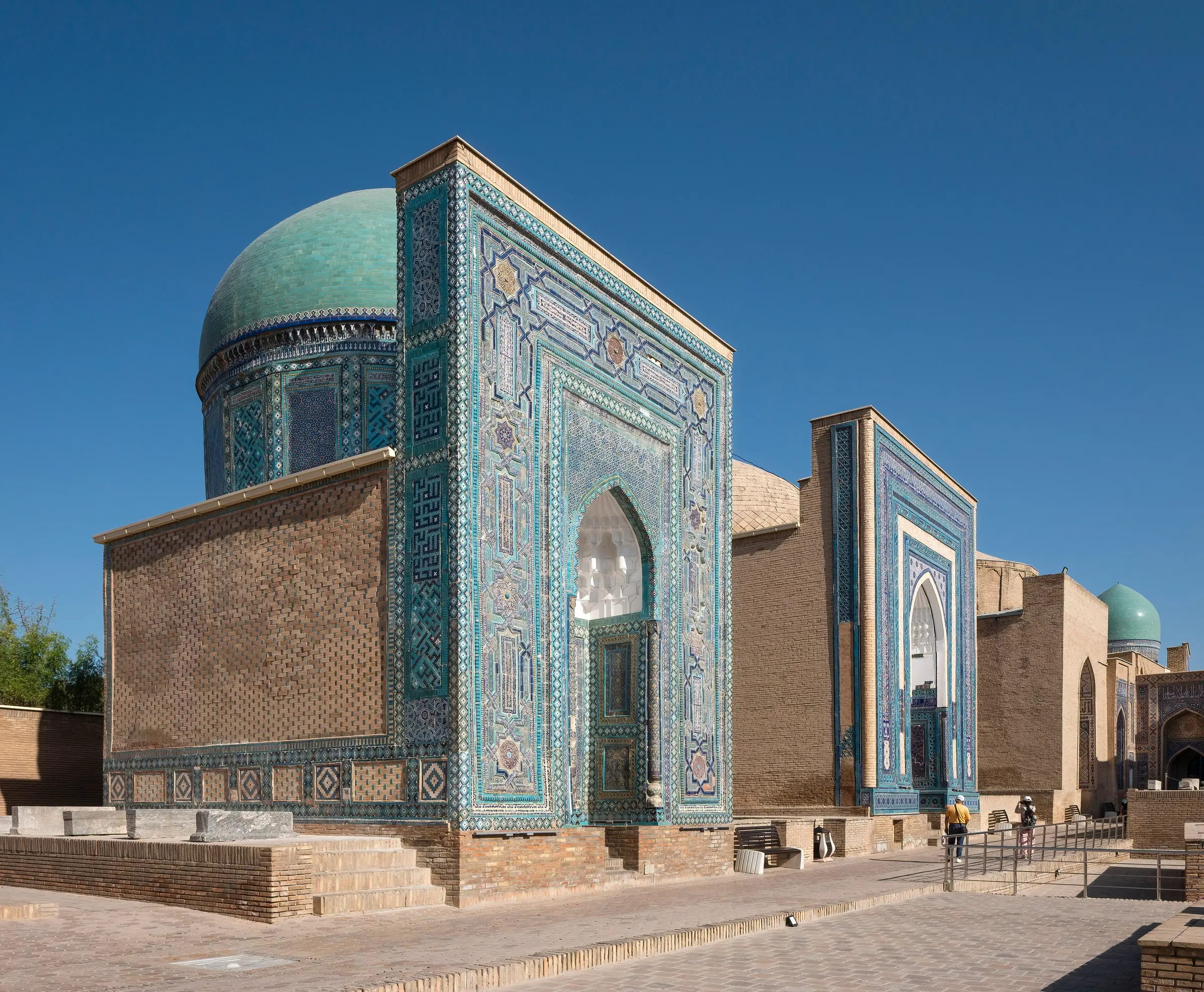
The holiest part of the ensemble is the Qusam ibn Abbas complex. His mausoleum dates from 1334, its decoration enriched in the 15th century. You enter through a carved door dated 1404–1405 and once inlaid with ivory, which leads to a pilgrims' hall, a mosque and a tiled, four-tiered cenotaph. At the very top of the lane is an intimate courtyard framed by the pre-Timurid mausoleum of Khoja Ahmad (1340s), an anonymous mausoleum of 1360–1361 and the complex of Timur's wife Tuman Aqa (1405) — three facades that seem to compete in beauty.

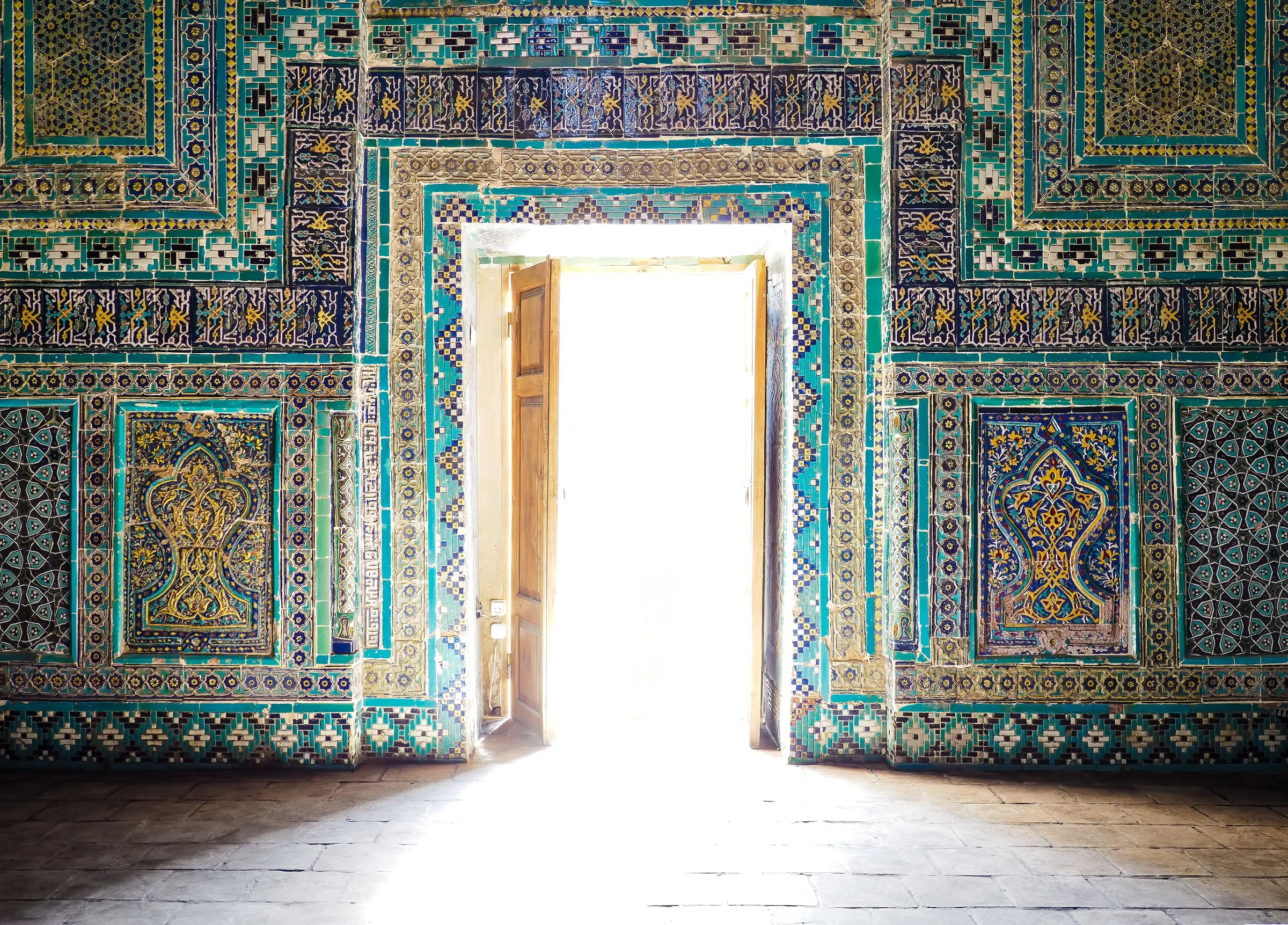
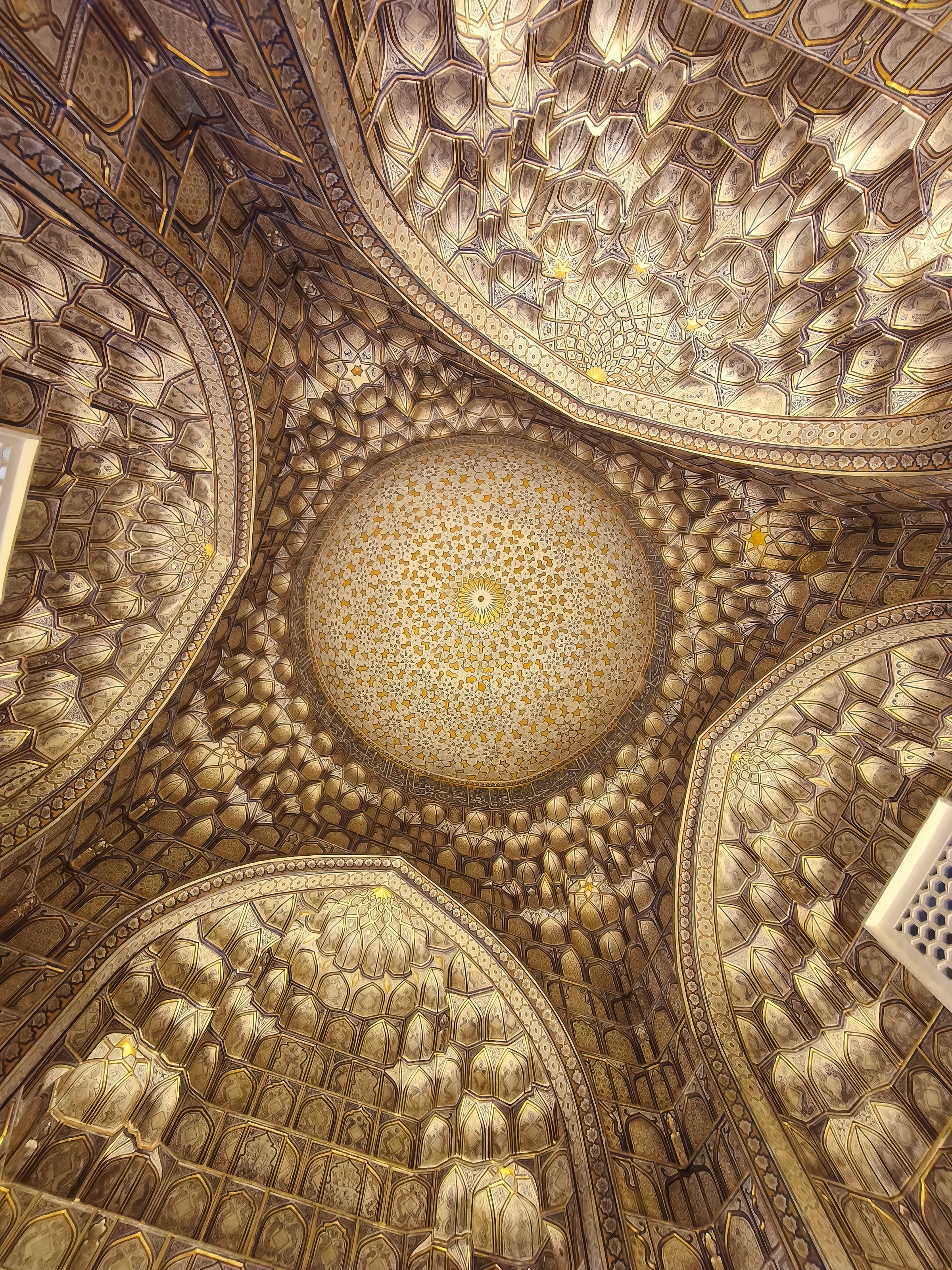
Specialists call Shah-i-Zinda an encyclopaedia of the architecture and ornament of the Muslim East. Almost every technique used over several centuries can be seen side by side: carved glazed terracotta, cut-tile mosaic, majolica and gilded painting. The carved glazed terracotta of the 14th-century tombs is especially fine. Blue, turquoise, white and yellow tiles with floral scrolls and Kufic and thuluth inscriptions turn the narrow lane into a gallery.
In 2004–2005 a government-ordered campaign restored and landscaped the ensemble, removing a wall along one side of the lane and exposing the remains of an early medieval mosque, a madrasa and older tombs. Shah-i-Zinda is still a living shrine, and alongside the tourists you will always meet pilgrims at prayer.
Details may change — please check before you visit.
Gallery
Related places
The ruins of pre-Mongol Samarkand

Home of the Hall of Ambassadors
Nearby


Stay & eat
Hotel · 150 m
Hostel · 300 m
Hostel · 550 m
Hotel · 700 m
Plov centre · 250 m
Café · 700 m
Restaurant · 750 m
Teahouse · 750 m


For example: Registan, Ulugh Beg, plov, Urgut