

Khoja Doniyor (Tomb of Daniel)
A shrine revered by three faiths
© Bobyrr, CC BY-SA 4.0
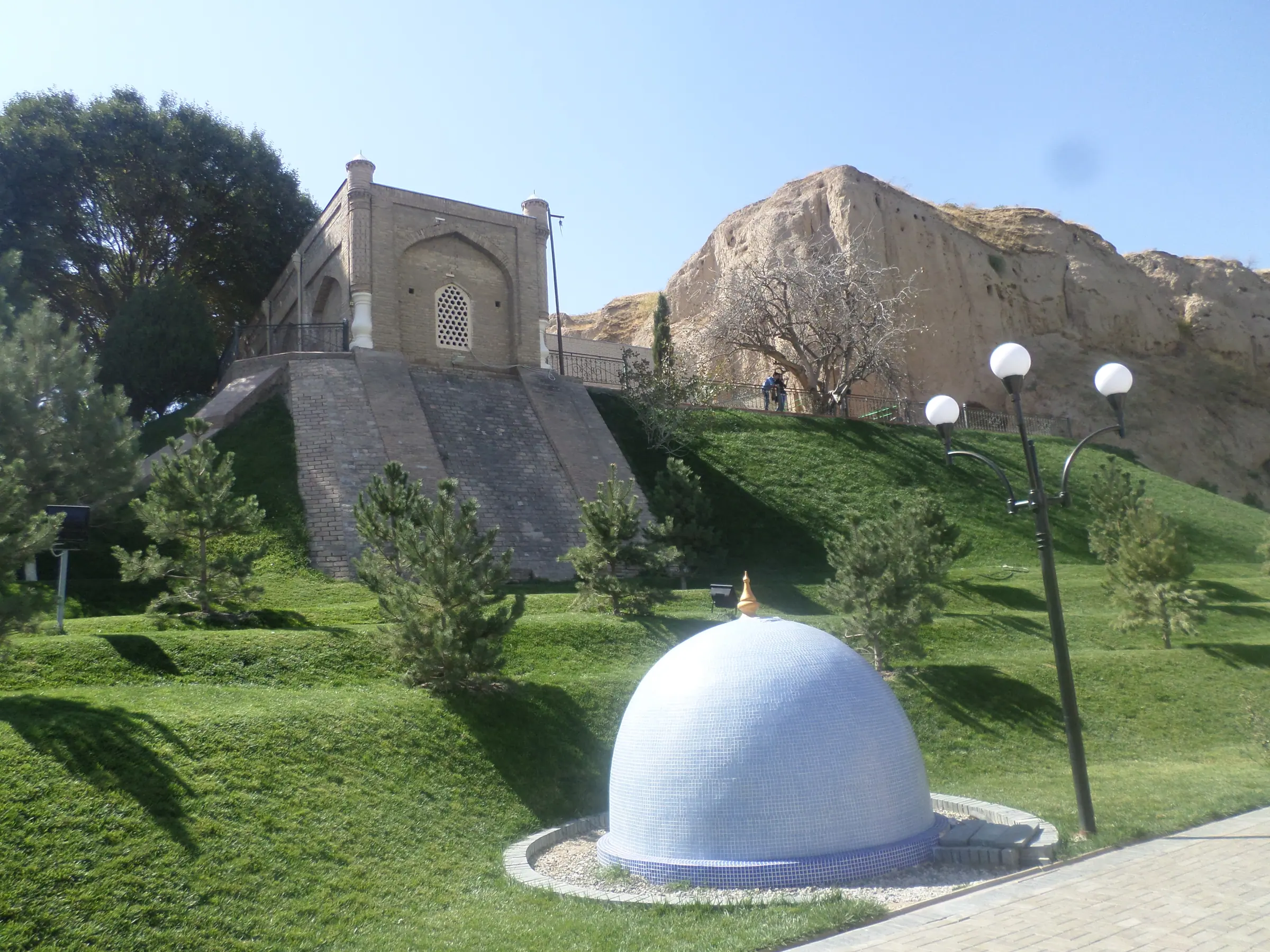
A five-domed mausoleum on a hill above the Siyob stream, sheltering an 18-metre-long tomb. Muslims, Jews and Christians all venerate it as the grave of the prophet Daniel, and its spring is said to heal.
A grave honoured by three religions
On a hillock above the Siyob stream, at the north-eastern edge of Afrasiyab, stands one of Samarkand's most remarkable shrines. Muslims know it as the tomb of Khoja Doniyor; Jews and Christians revere it as the resting place of the prophet Daniel. In the biblical Book of Daniel, he is a young nobleman carried off from Jerusalem into Babylonian exile, who wins the trust of Nebuchadnezzar through his wisdom and his gift for interpreting dreams – and who, under the Persian king Darius, is thrown into the lions' den on the word of jealous courtiers and emerges unharmed.
Daniel is not named in the Qur'an, but Islamic tradition honours him as a prophet. Where he lies is disputed: the most widely accepted site is Shush (ancient Susa) in Iran, whose tomb the traveller Benjamin of Tudela described as early as the 12th century. Yet the Samarkand historian Abu Tahir Khoja, in his chronicle Samariya, describes Khoja Doniyor as a companion of Qusam ibn Abbas, who brought Islam to Samarkand – so locally the name is also woven into the story of the city's first Muslim preachers.

The legend of Timur
The best-known story says that during his western campaigns Timur failed to capture Susa. Local clerics told him the city's strength flowed from the blessing of Daniel's tomb, and Timur supposedly arranged for part of the prophet's remains – in some versions, his hand – to be carried to Samarkand. When the caravan reached the bank of the Siyob, the horse bearing the relics stopped and knelt; the saint was buried on that spot, and a spring burst from the ground where its hoof had struck.
No historical record confirms any of this, and scholars regard it as a later legend. But it is this tale that turned the mausoleum into one of the most visited places in Samarkand.
An 18-metre tomb
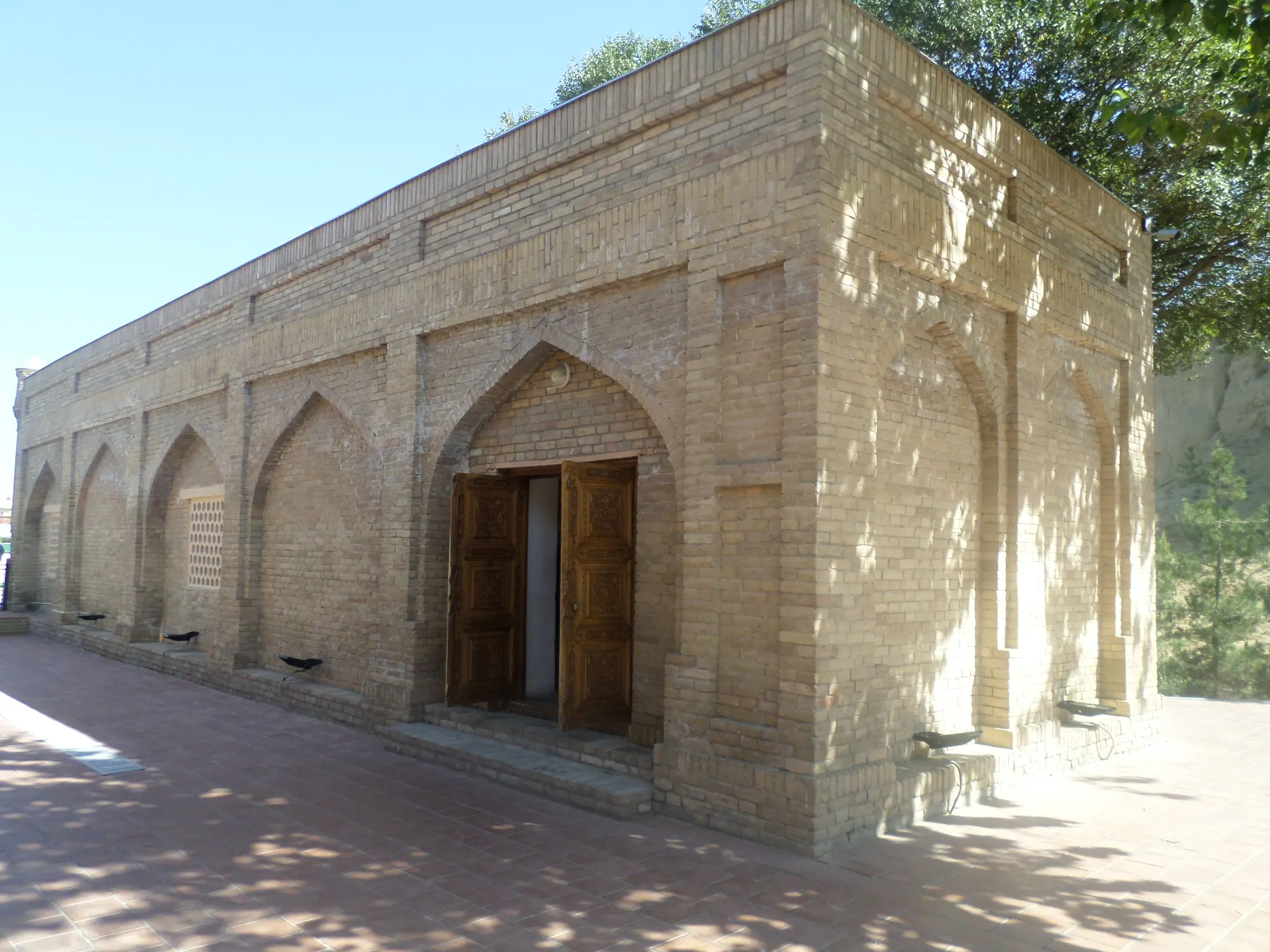
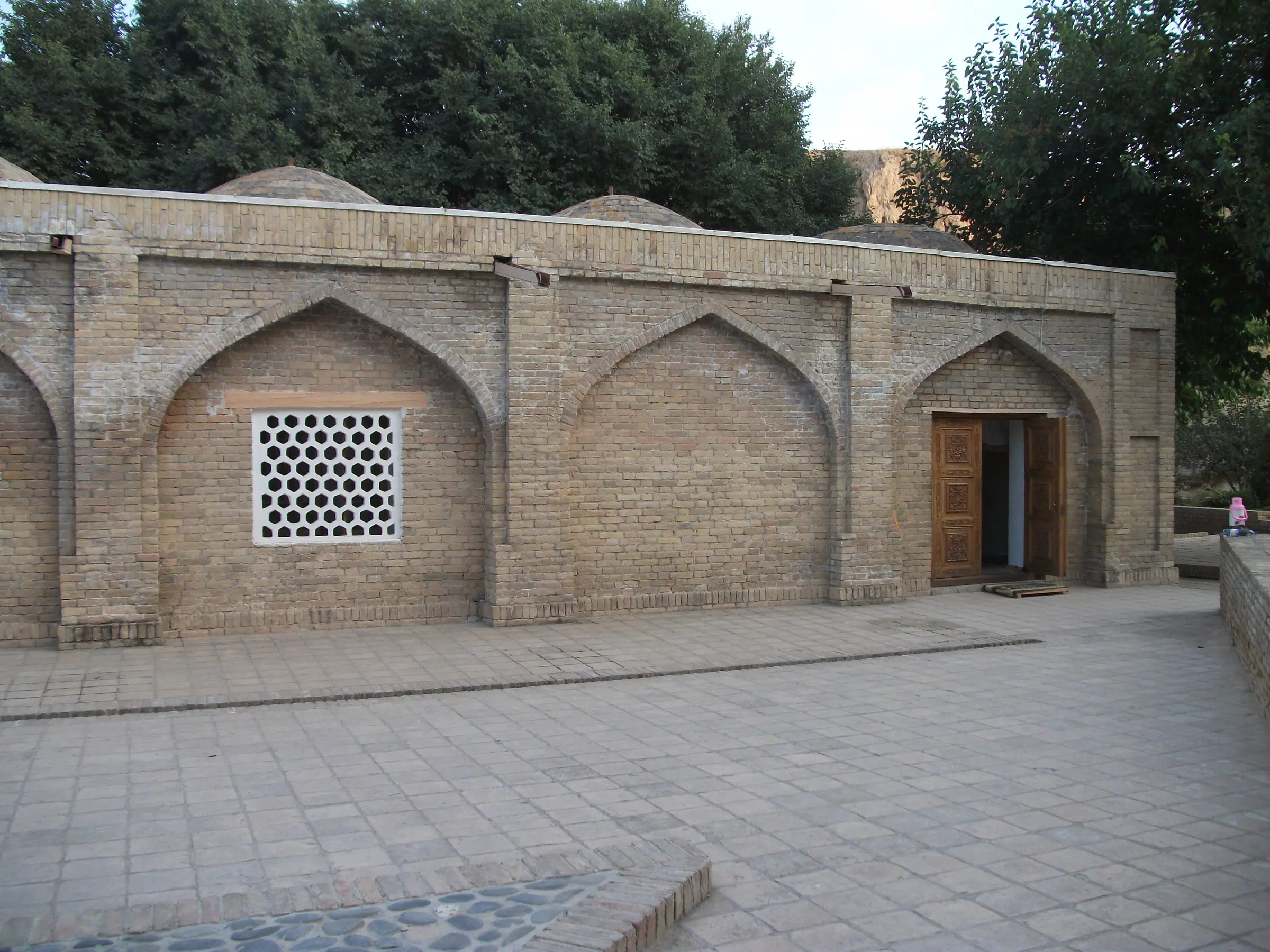
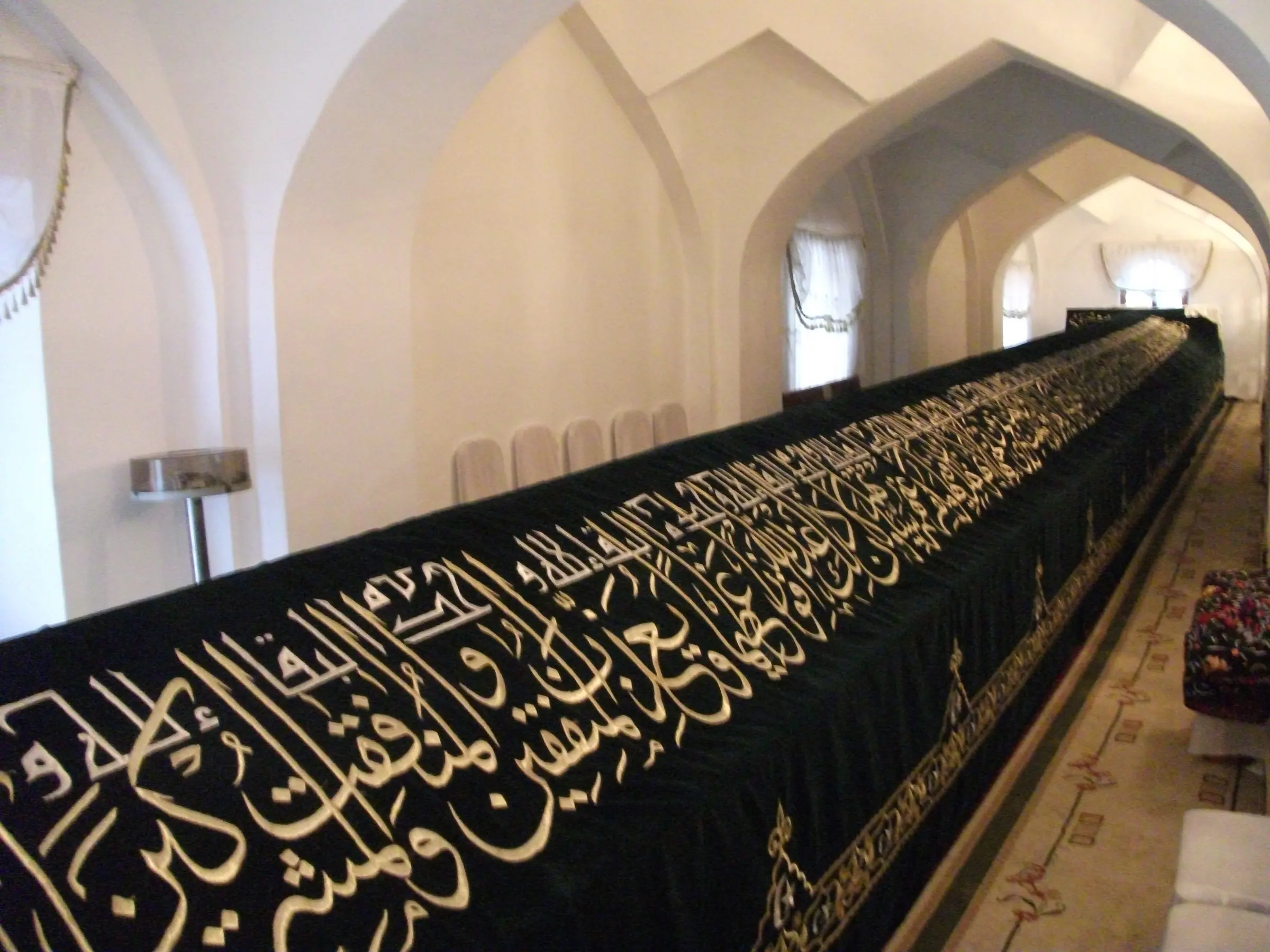
Another legend holds that the grave kept 'growing', so the building over it had to be lengthened again and again. The present mausoleum dates from the early 20th century: a long, low rectangular hall topped by a row of five shallow domes, housing a tomb almost 18 metres long. Photographs from the early 1900s show six domes, so one was probably lost or rebuilt.
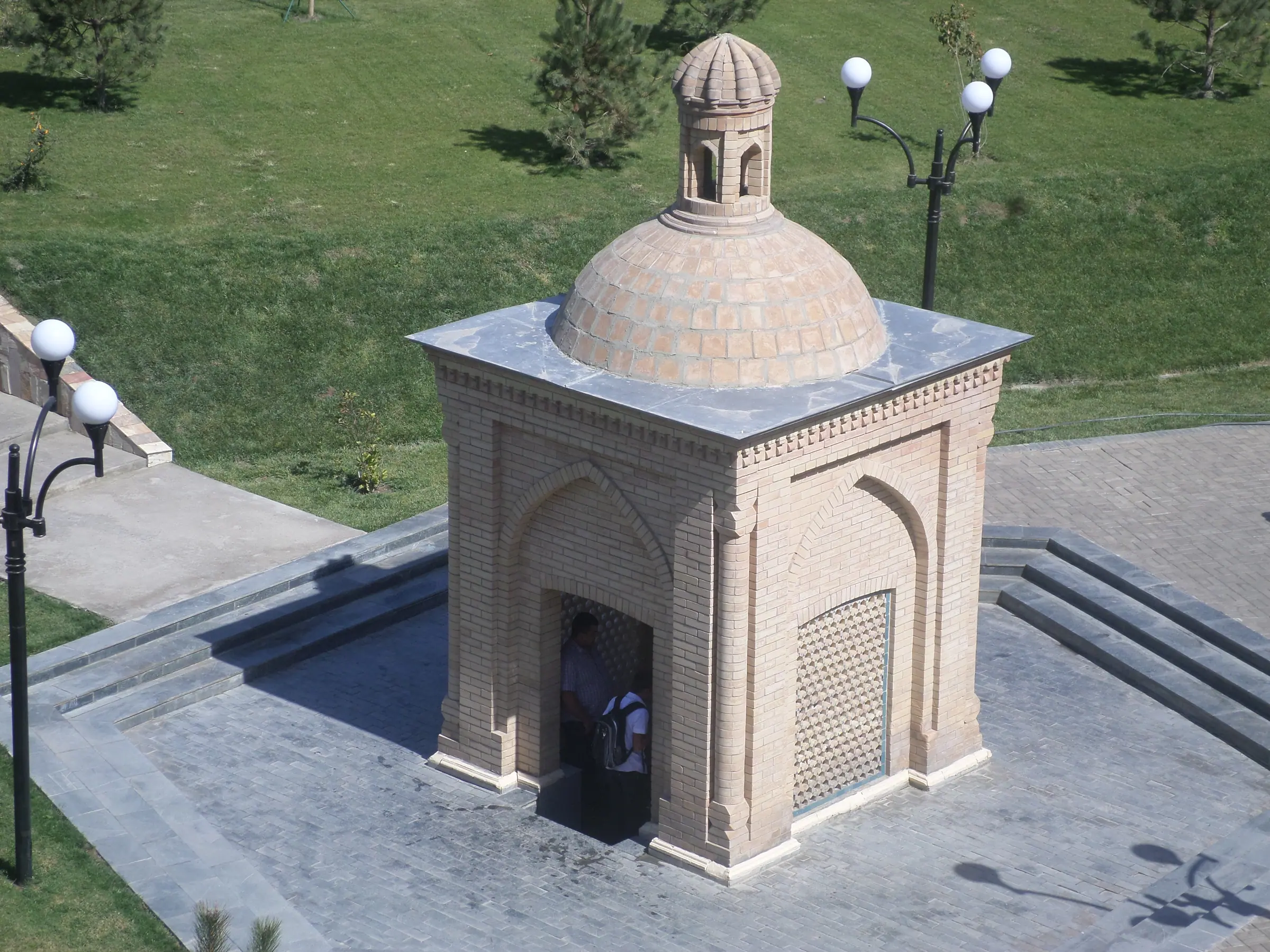
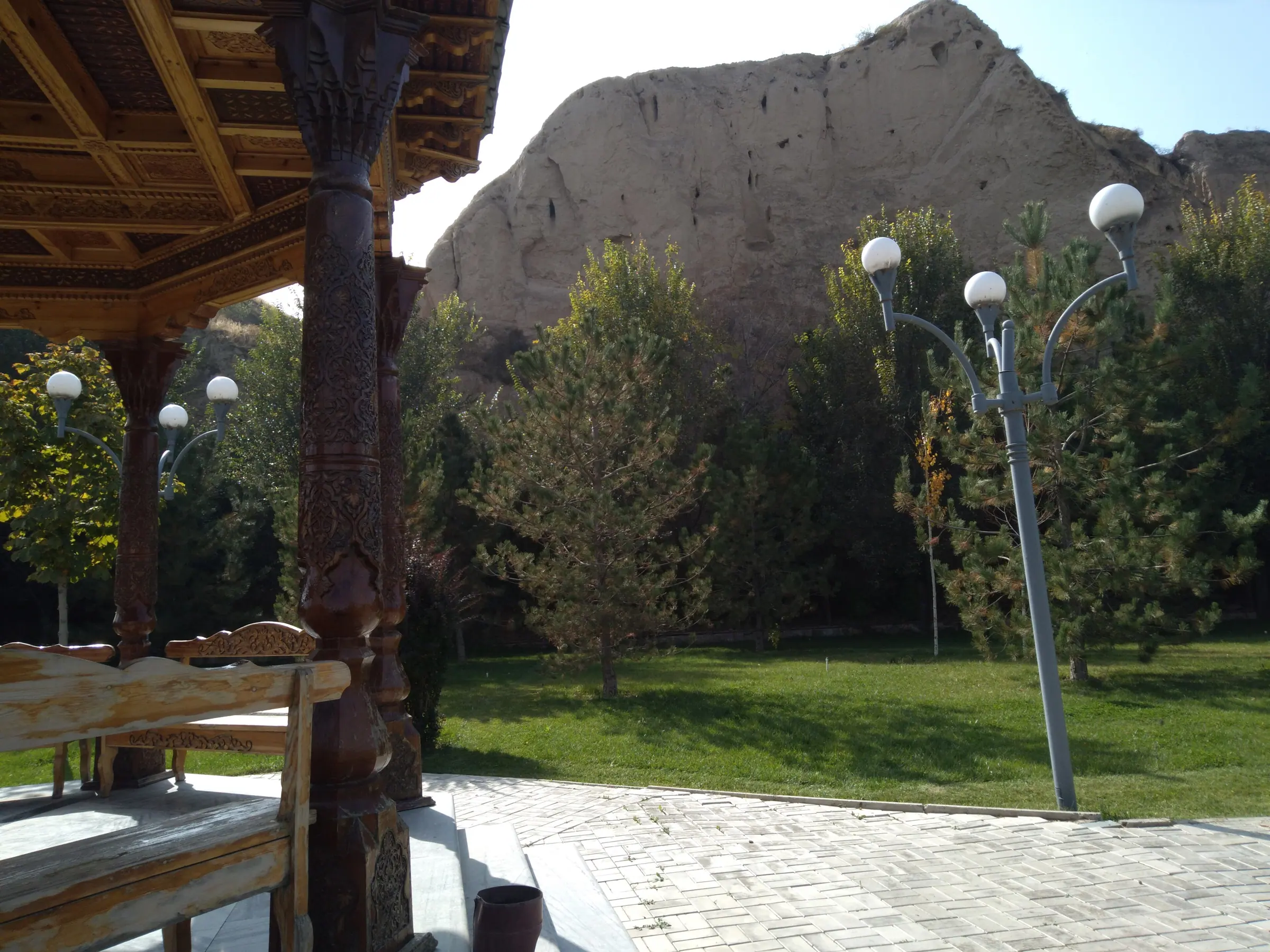
The northern portal and the domes are built of fired brick, the portal decorated with carved ganch. Later renovations enclosed the site with a wall, added a three-flight staircase up the hill and clad the tomb in onyx and black marble. There is also a covered aivan for prayer.

The spring and the pistachio tree
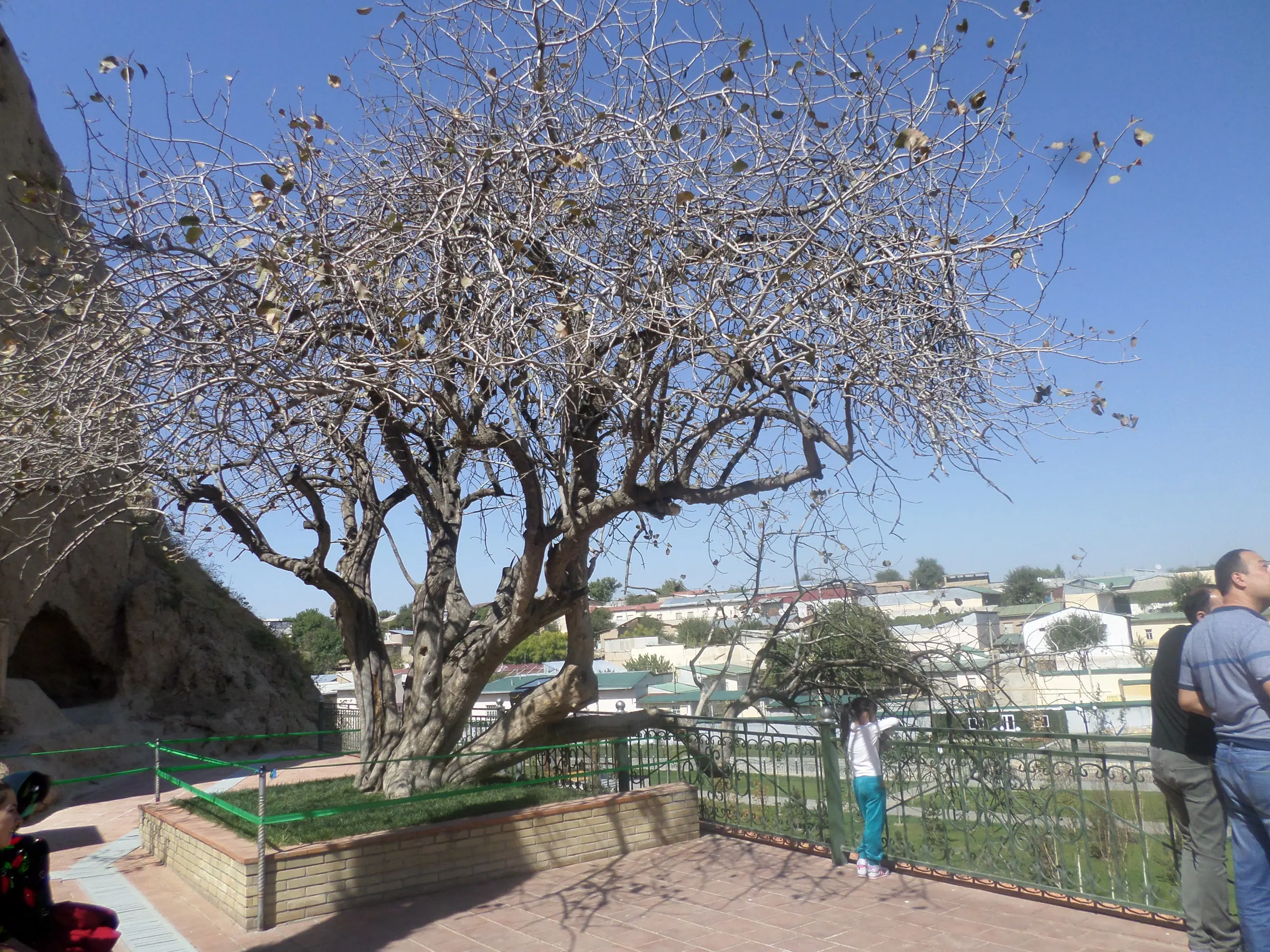
Pilgrims drink from the spring beside the mausoleum and fill bottles to take home, believing the water heals. In 1996 Patriarch Alexy II of Moscow, visiting Samarkand, came to the shrine and blessed a withered pistachio tree beside the tomb. According to a local story the tree soon sprouted new leaves. The church never officially declared it a miracle, but guides and pilgrims tell the tale to this day.
Did you know?
Together with Afrasiyab, the mausoleum lies within Samarkand – Crossroads of Cultures, inscribed on the UNESCO World Heritage List in 2001. It is one of the rare places where people of different faiths pray side by side with equal reverence.

Good to know
- This is an active shrine: dress modestly, women are advised to cover their hair, keep quiet beside the tomb and don't photograph people at prayer.
- A staircase leads up to the mausoleum – take it slowly if you are travelling with older companions or small children.
- The Afrasiyab Museum and the ruins of the ancient city are close by, so combine them in one visit.
- Come early or late in the day, when the view from the hill over the Siyob valley is at its loveliest.
Gallery
Khoja Doniyor (Tomb of Daniel)
Nearby
Nearby


Bog'i Baland Tourism Neighbourhood
The fig-garden quarter — Uzbekistan's first tourism mahalla
1.1 km

Stay & eat
Stay & eat nearby
Restaurants & cafés nearby
See allSamarqand Osh Markazi No. 1
Plov centre · 1.2 km
Joni Osh
Plov centre · 1.5 km
Otash Osh
Plov centre · 1.5 km


