
Makon Mall (former GUM)
A shopping hub in the heart of Russian Samarkand
This site is in test mode — some information may contain errors.
Report
The shady avenue between the old city and Russian Samarkand
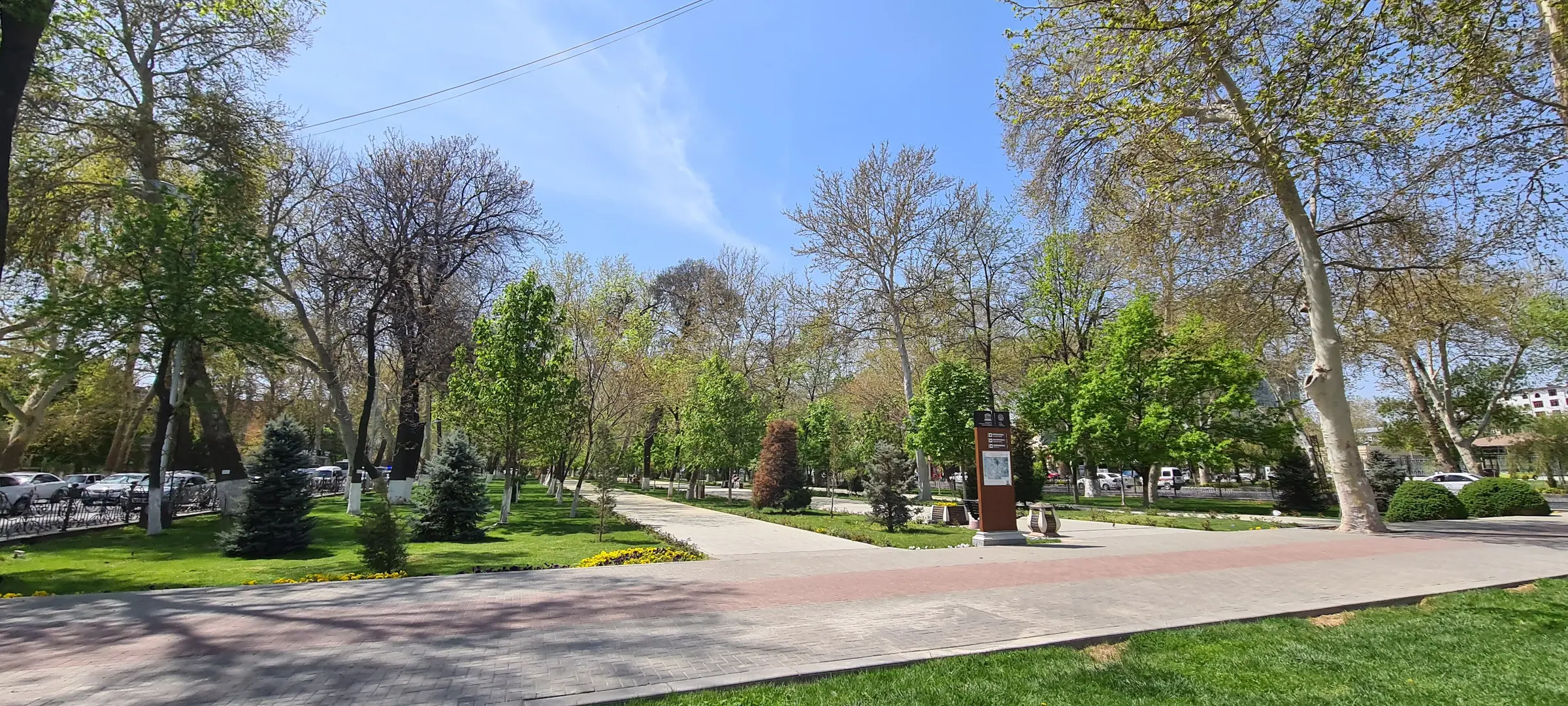
Laid out in the 19th century as Abramov Boulevard: century-old plane trees and pines, the governor's house, the Russo-Chinese Bank and the university's halls.
After Russia took Samarkand in 1868, a new European-style town began to rise west of the old city. Separating the two was a broad tree-lined boulevard, laid out in the early 1870s (sources give 1871 or 1872; some authors say the 1880s) under General Alexander Abramov, head of the Zeravshan district, and named Abramov Boulevard in his honour. It later became Gorky Boulevard and then University Boulevard — though older residents still call it "Abramovsky".
The original boulevard ran 490 sazhens — roughly a kilometre — with three tree-lined walks and two carriageways. Today's street of the same name stretches for 2.3 km.

The planting was entrusted to the biologist Mikhail Nevessky, who for nearly thirty years ordered saplings from around the world and acclimatised them in a dedicated nursery. Oaks, pines, plane trees and catalpas line the walks today, and a rare Lebanese cedar is protected as a natural monument. Under the canopy the air is several degrees cooler than on the open streets.
Next door, the Governor's Garden received Crimean pines and North American swamp cypresses in 1886, along with an artificial pond dug at Nevessky's suggestion. Together with the city garden — today's Alisher Navoi Central Park — they form the "green chain" of Russian Samarkand.
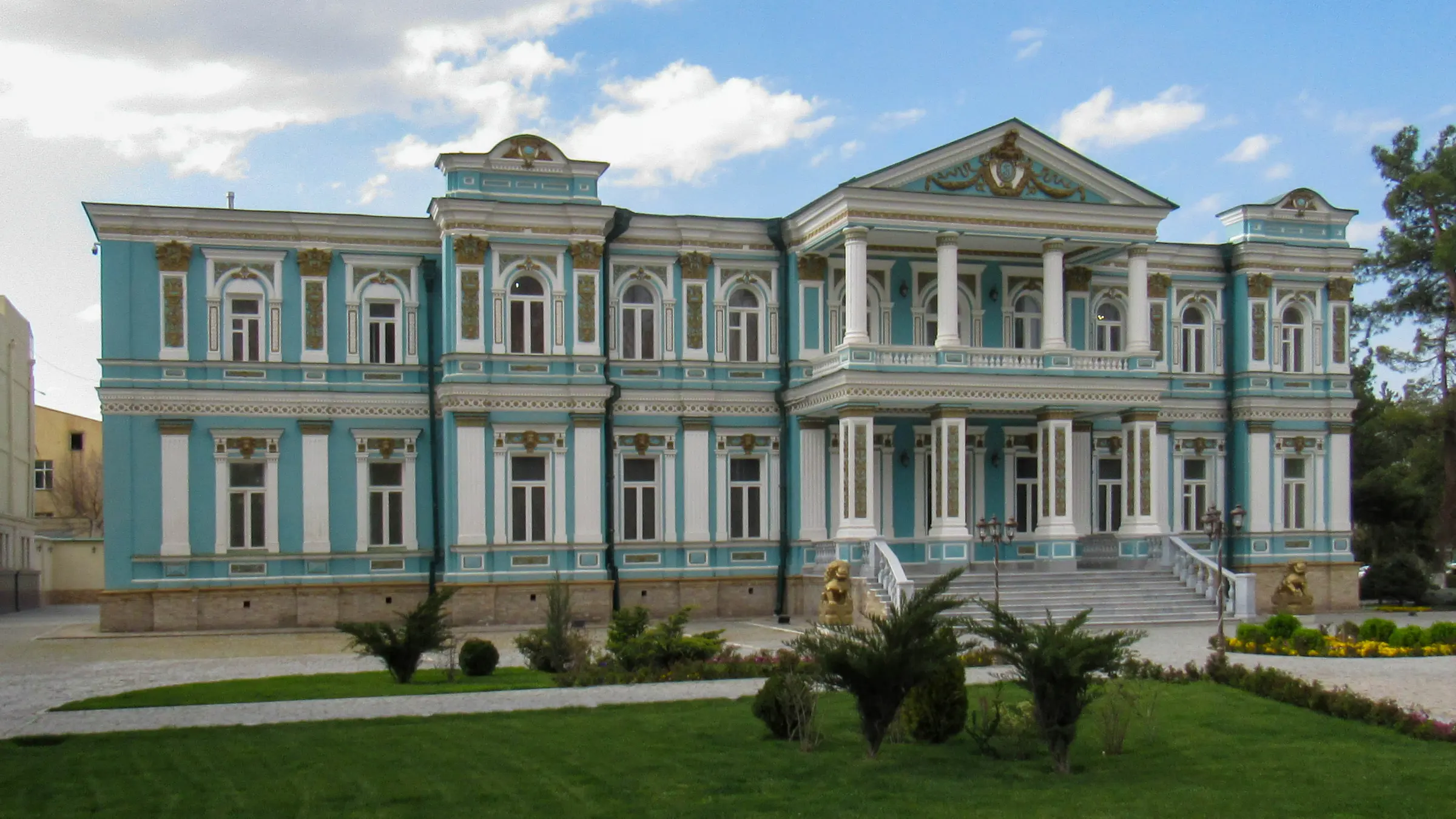
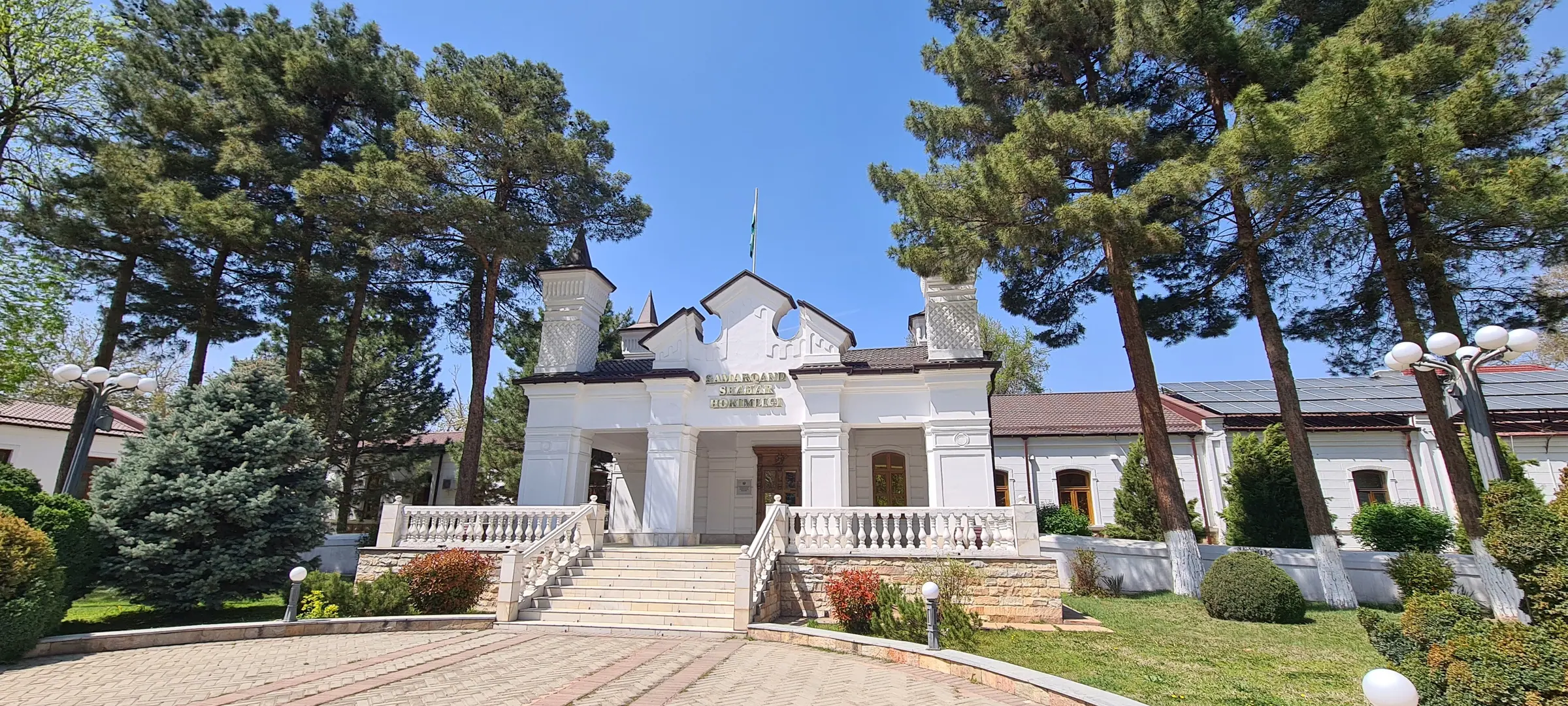
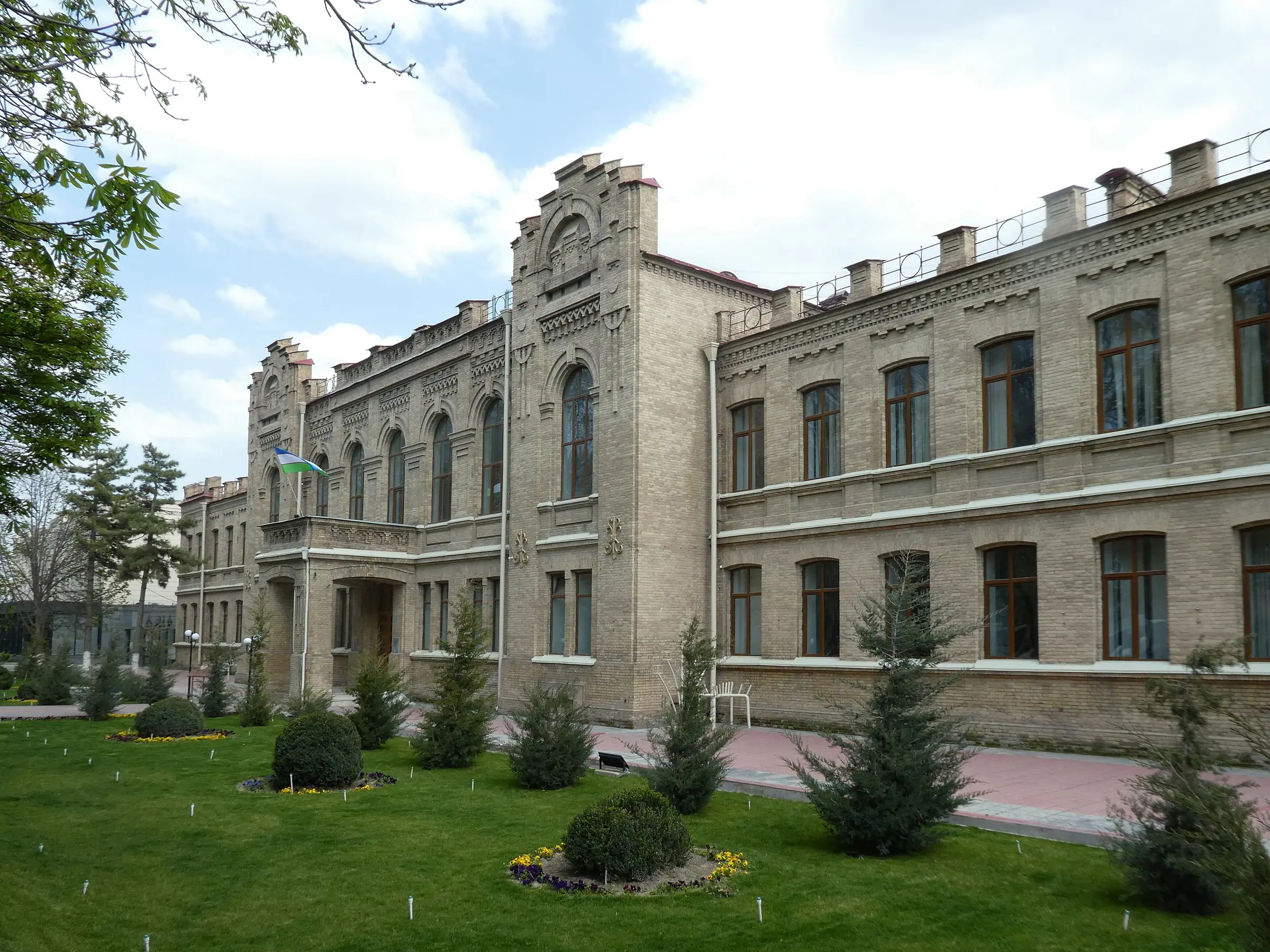
The boulevard keeps the finest buildings of the colonial town: the governor's house of 1874 (now the city administration), the Russo-Chinese Bank of the late 1890s (restored in 2021–2022 and now Samarkand State University's Museum of Uzbek–Chinese Friendship) and the 1904 girls' gymnasium by architect Georgy Svarichevsky (now the university's biology faculty). The main buildings of the university that gave the boulevard its name stand here too, and at the junction with Abdurahmon Jomiy Street lies Confucius Square, with Chinese-style pavilions.
In 2019, plans for cycle lanes and fountains were shelved after residents protested, fearing for the trees.

Gallery
Related places
A shopping hub in the heart of Russian Samarkand
A youth hub on the grounds of a former military hospital
Nearby


Stay & eat
Hotel · ★★★★ · 200 m
Hotel · 250 m
Hotel · ★★★★★ · 350 m
Hotel · ★★★★★ · 350 m
Café · 200 m
Restaurant · 200 m
Fast food · 250 m
Restaurant · 400 m


For example: Registan, Ulugh Beg, plov, Urgut