
Ulugh Beg Observatory
The greatest astronomical instrument of the Middle Ages
This site is in test mode — some information may contain errors.
Report
The astronomer-king's university
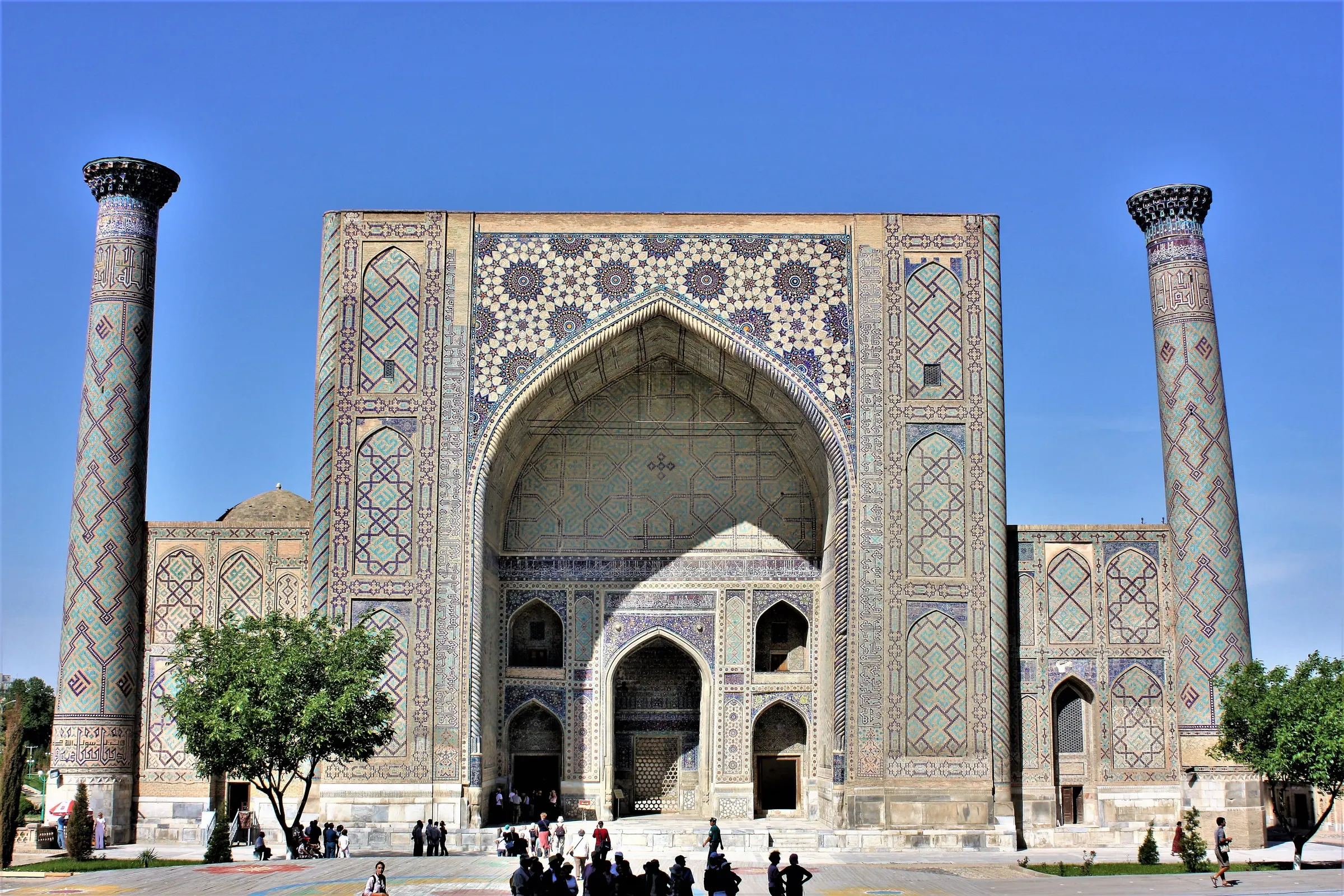
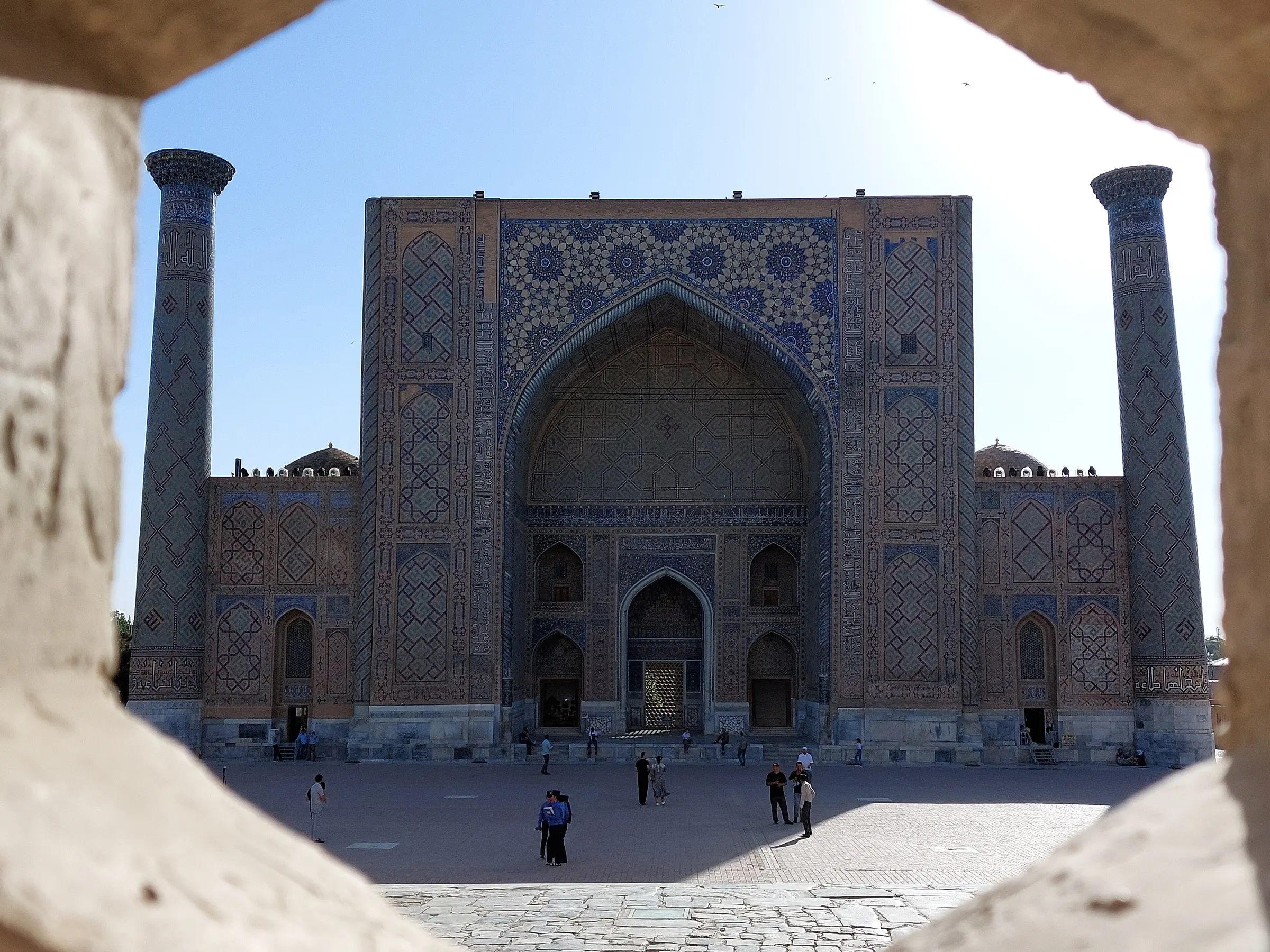
The oldest building on the Registan (1417–1420), built by Mirzo Ulugh Beg as one of the leading colleges of the 15th-century Islamic world, and famous for the star-spangled mosaic of its portal.
Timur's grandson Mirzo Ulugh Beg governed Samarkand from 1409 and set out to make his capital a centre of scholarship as well as power. His first great statement was this madrasa on the west side of the Registan. An inscription in the portal niche gives the year 820 of the Hijra (1417) and hails the building as "the most excellent and loftiest of places in the world"; the main work was finished by 1420.
Who designed it is debated. The name most often given is Qavam al-Din Shirazi, court architect to Ulugh Beg's father Shah Rukh, but the 16th-century writer Zayn al-Din Vasifi credits Kamal al-Din Muhandis, a pupil of the astronomer Qazi-zade Rumi.

The madrasa quickly became one of the most prestigious schools in the Muslim world. Alongside theology, students studied mathematics, geometry, astronomy, logic and the natural sciences, taught by luminaries such as Qazi-zade Rumi, Jamshid al-Kashi and Ali Qushji — and at times by Ulugh Beg himself. Tradition holds that the poet and mystic Abd al-Rahman Jami studied here.
Legend has it that Ulugh Beg held a contest for the post of head teacher and that the winner was a shabbily dressed dervish of great learning, Mavlana Muhammad Khavafi — a story still told to show that knowledge, not rank, counted here.
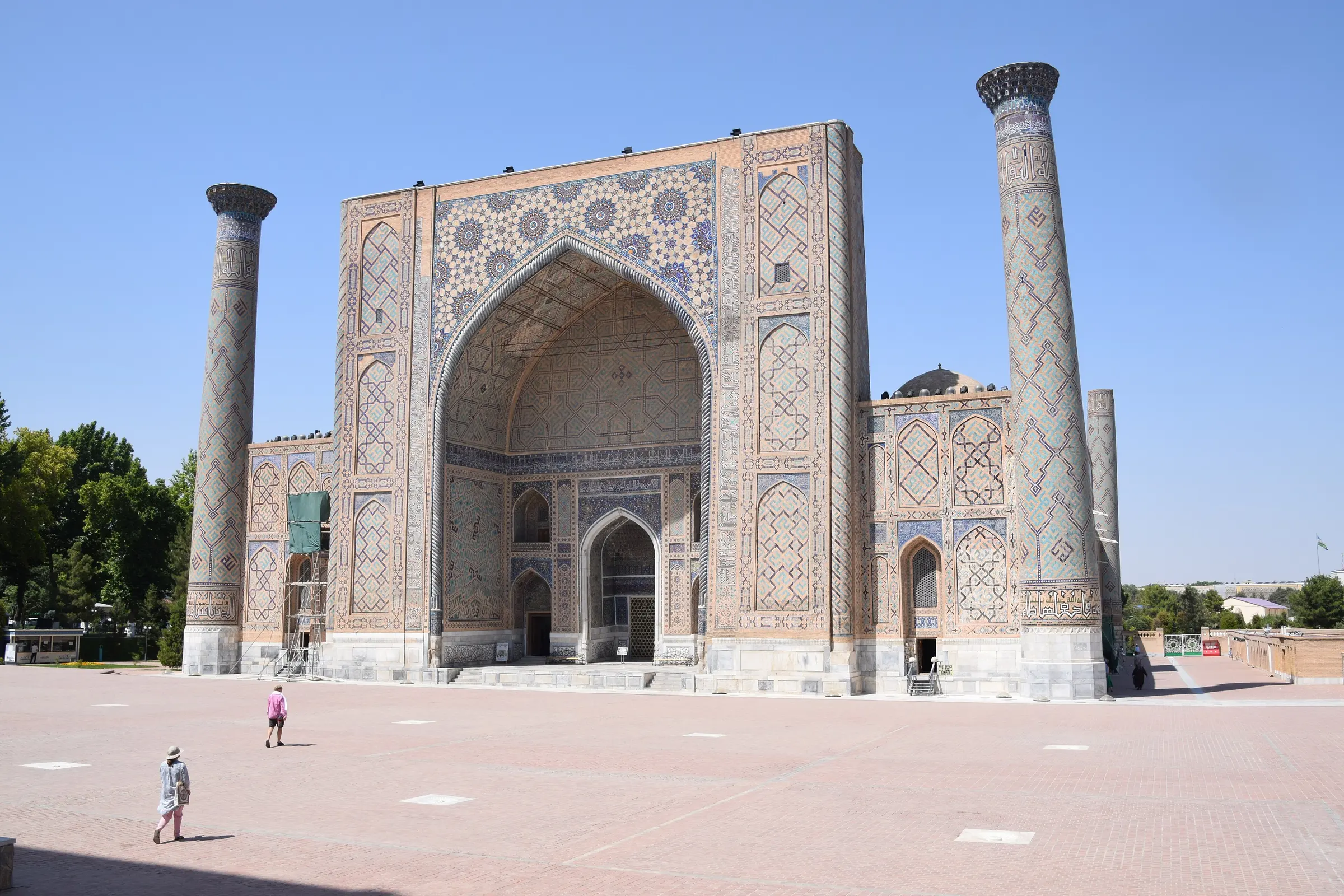
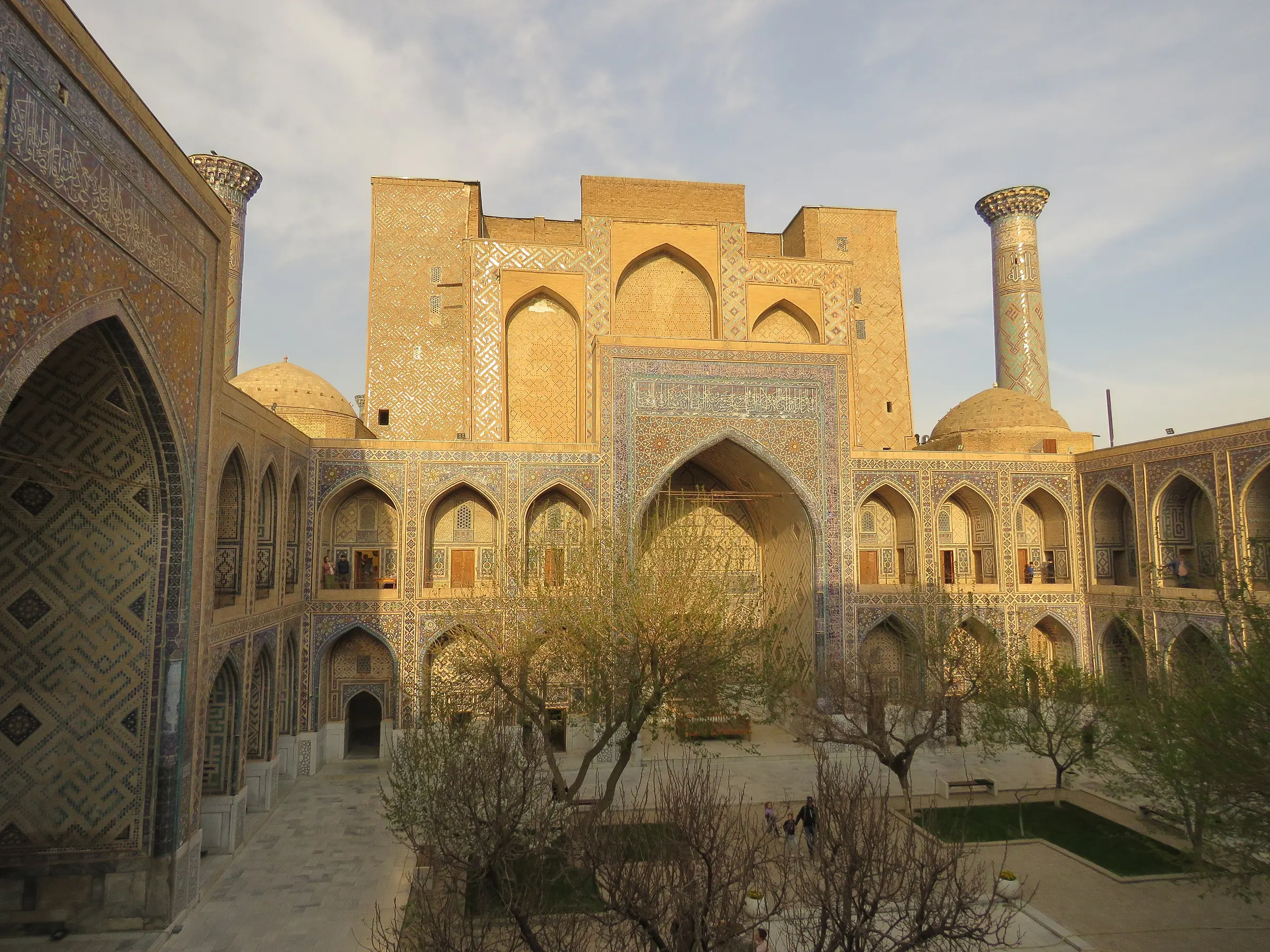
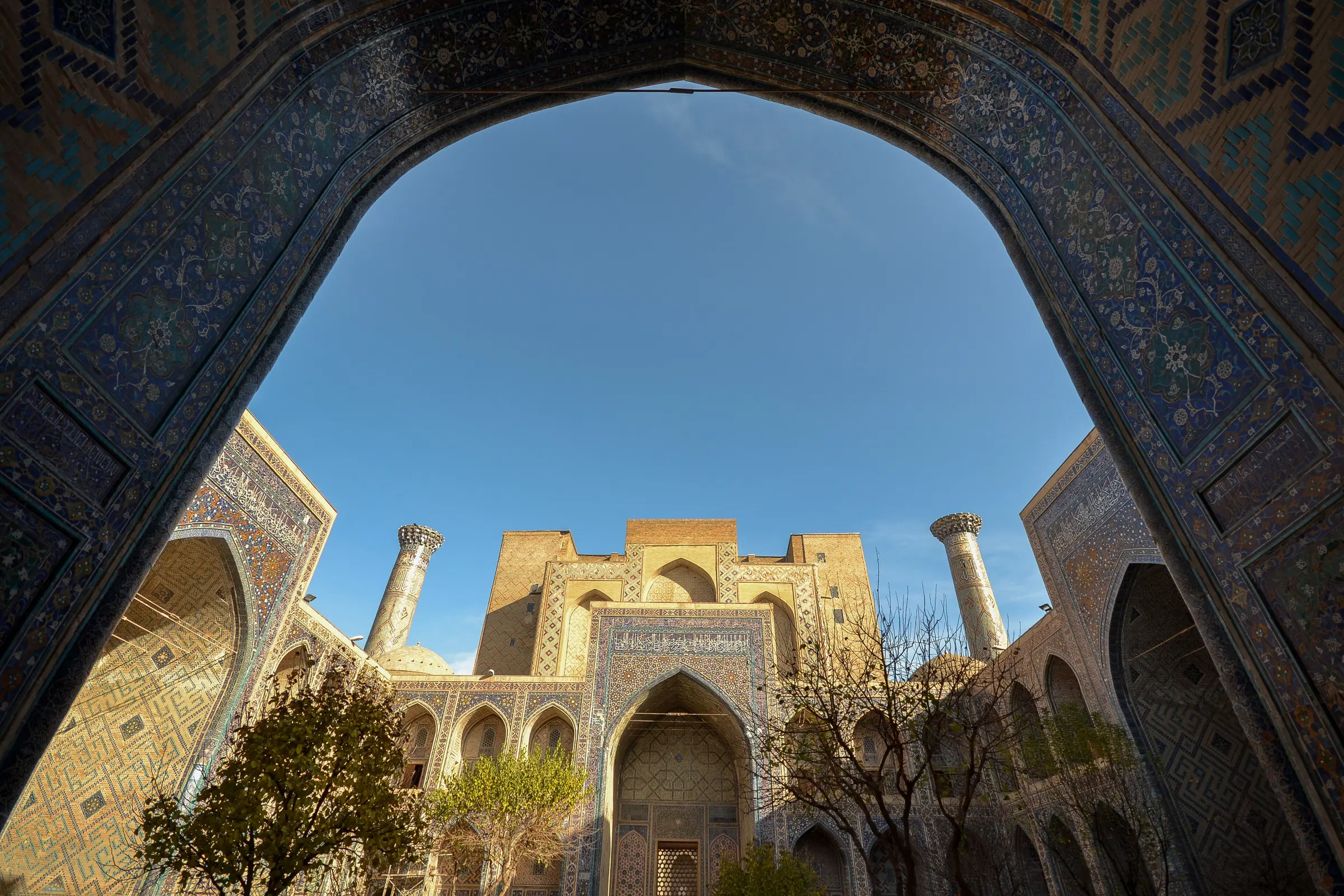
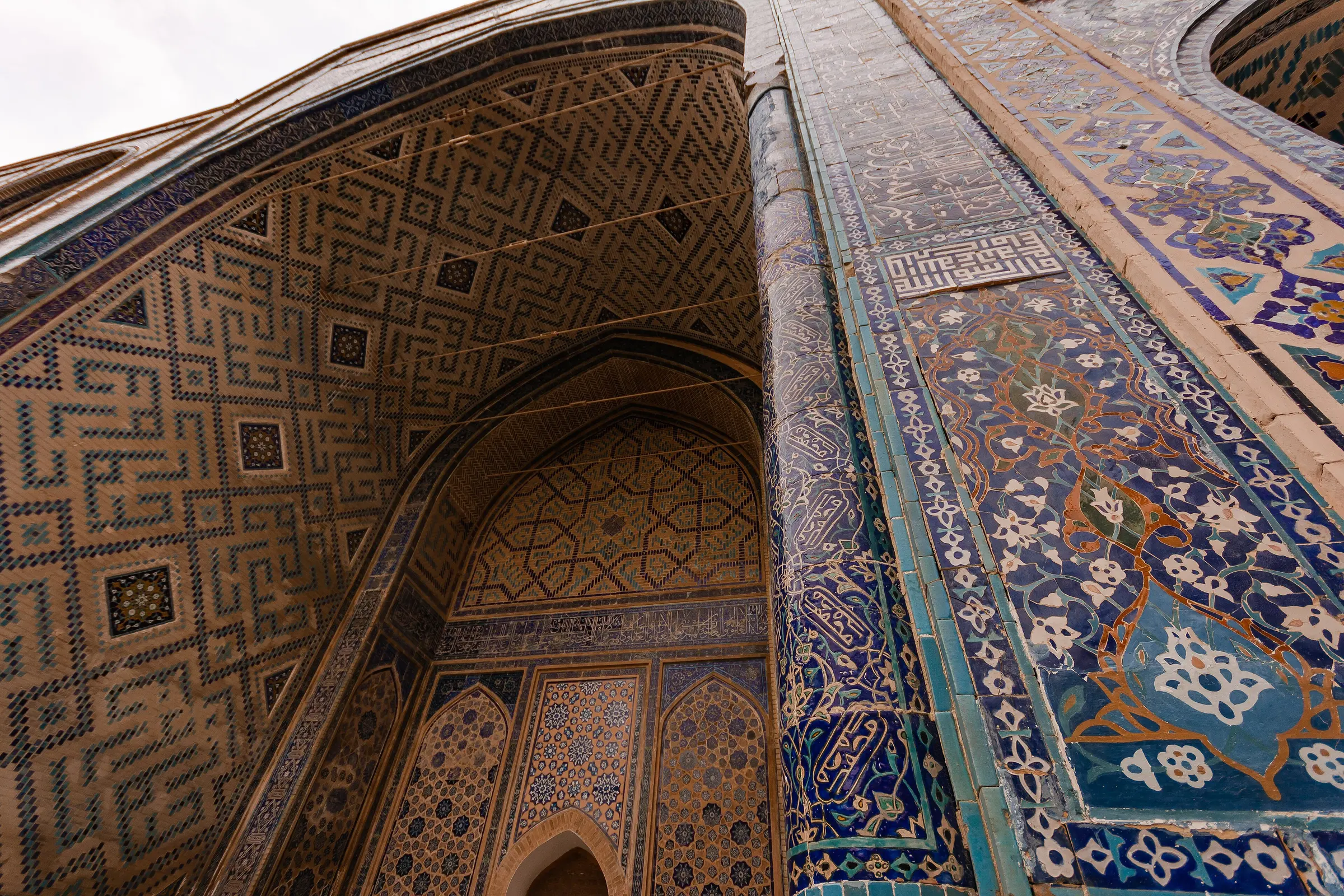
The building is a rectangle of 81 by 56 metres. Its east facade, facing the square, is dominated by a massive pishtaq portal with three entrances, the central one framed by a towering pointed arch. A square, four-iwan courtyard is lined with two storeys of hujras, the cells where students lived. A winter mosque fills the west wing, domed lecture halls once stood at the corners, and four minarets about 33 metres tall rose at the outer angles. The courtyard is paved with large stone slabs, and the north and south iwans served as open-air classrooms in summer. Placing lecture halls in the corners became the norm for almost every later madrasa in Central Asia.
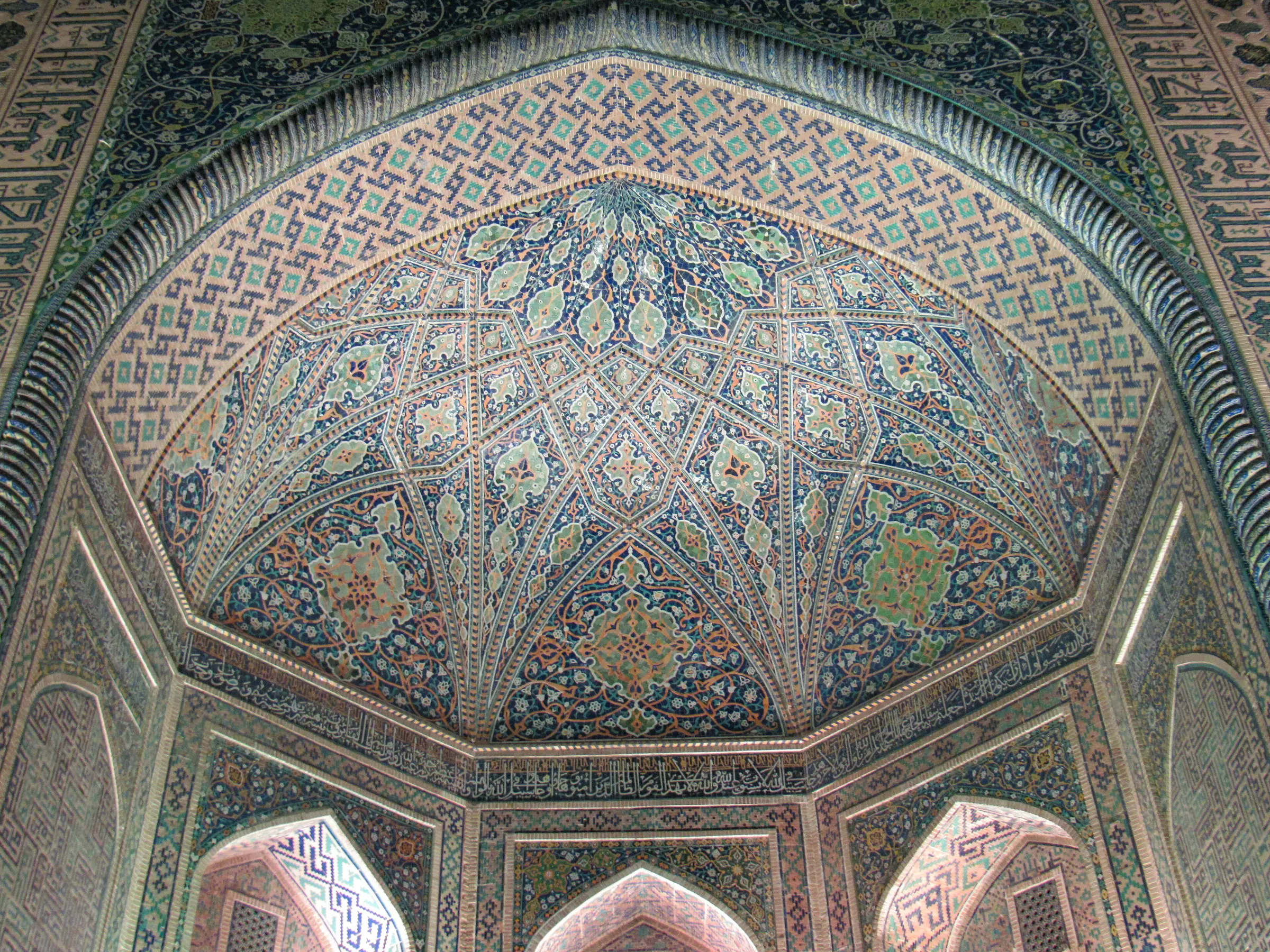
The decoration uses every technique of the age: glazed brick, cut-tile mosaic, majolica and carved marble. White, cobalt, sky-blue and near-black tiles play against terracotta brick in geometric, floral and calligraphic designs. The stars on the portal tympanum are often read as a nod to Ulugh Beg's passion for astronomy — an appealing idea, though impossible to prove.

Even after the capital moved to Bukhara the madrasa kept its prestige, and in the 17th century Yalangtush Bahadur had it repaired. According to the 18th-century Samarkand historian Abu Tahir Khoja, a Bukharan governor later pulled down the upper storey for fear that rebels would fire on his residence from its walls. Earthquakes in 1817–1818 and 1897 did further damage, and Jules Verne wrote of minarets that seemed about to topple yet never fell.
Restoration began in the 1920s and lasted more than seventy years. The north-east minaret was straightened in 1932 and the south-east one in 1965; the portal and decoration were restored in the 1950s and 1960s, and the second floor of cells was rebuilt in the 1990s. The outer domes of the corner lecture halls have never been reconstructed.
Two other madrasas bear Ulugh Beg's name, in Bukhara (1417) and Gijduvan (1433), but the Samarkand one is the largest and most celebrated. In 2020 Samarkand State University marked its 600th anniversary with an international conference.

Details may change — please check before you visit.
Gallery
Related places
The greatest astronomical instrument of the Middle Ages

Tomb of Timur and his dynasty
Nearby


Stay & eat
Hotel · 100 m
Hotel · 150 m
Hotel · 250 m
Hotel · 250 m
Café · 150 m
Restaurant · 150 m
Café · 150 m
Restaurant · 200 m


For example: Registan, Ulugh Beg, plov, Urgut