
Shah-i-Zinda
The avenue of mausoleums
This site is in test mode — some information may contain errors.
Report
Timur's colossal Friday mosque
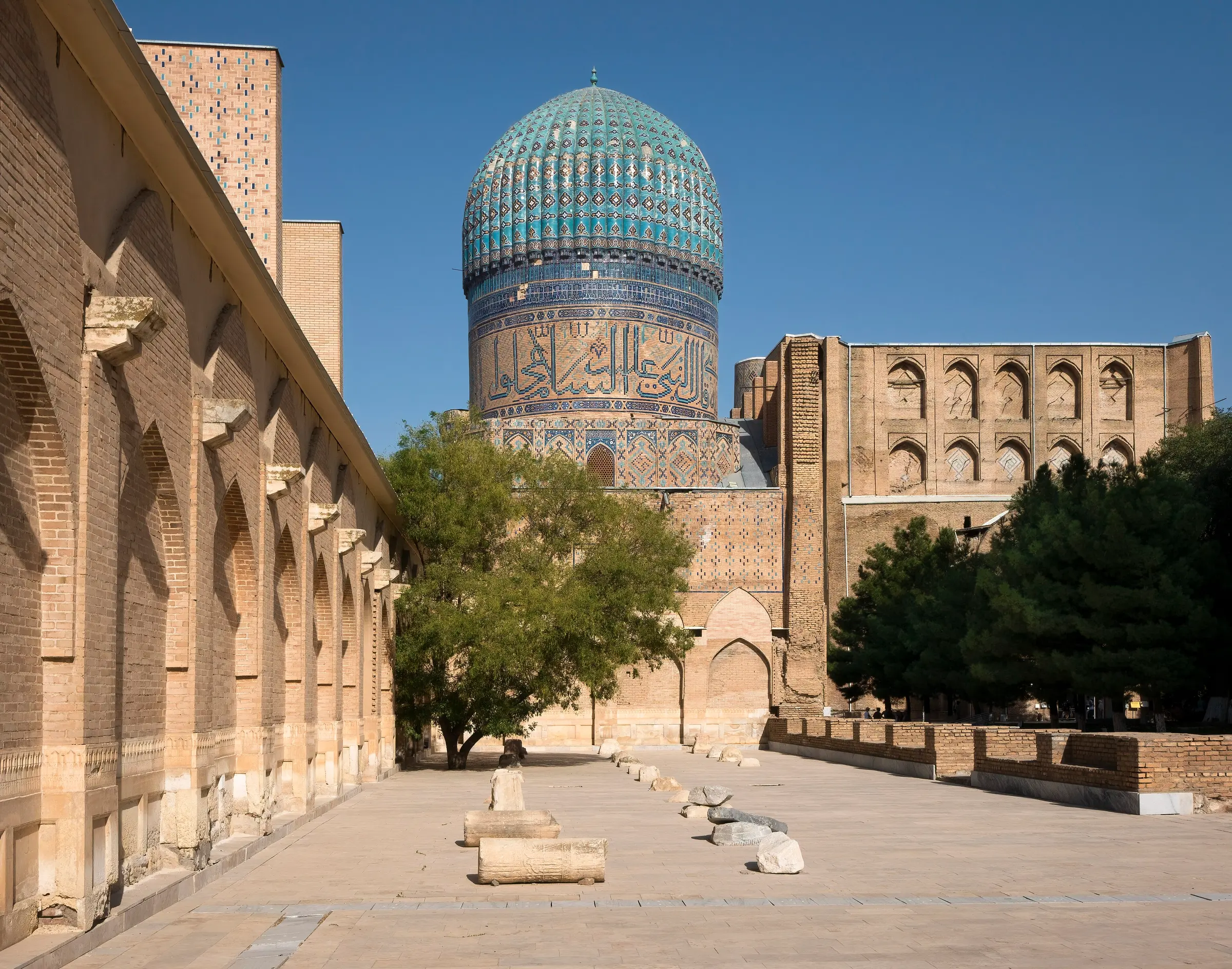
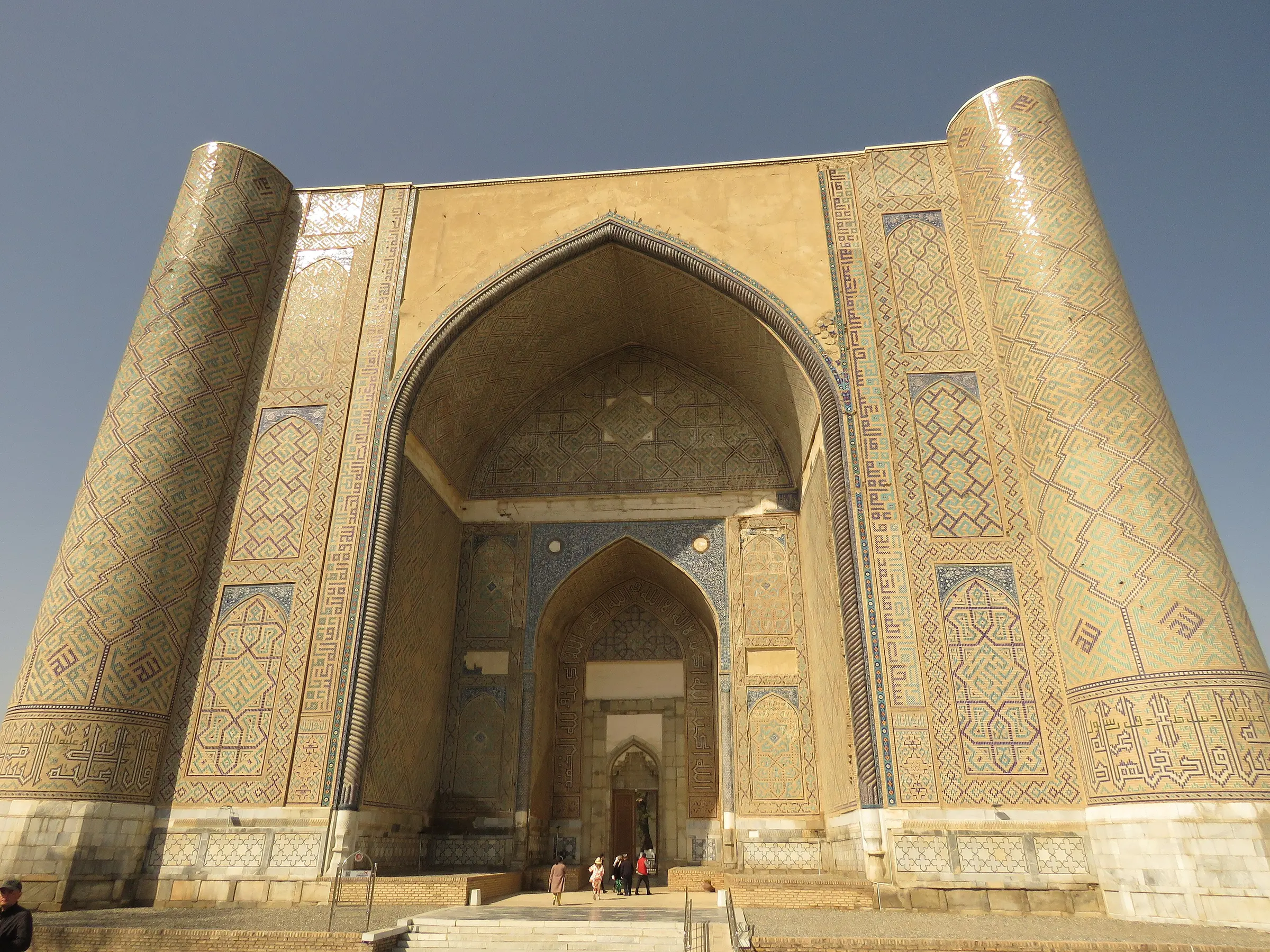
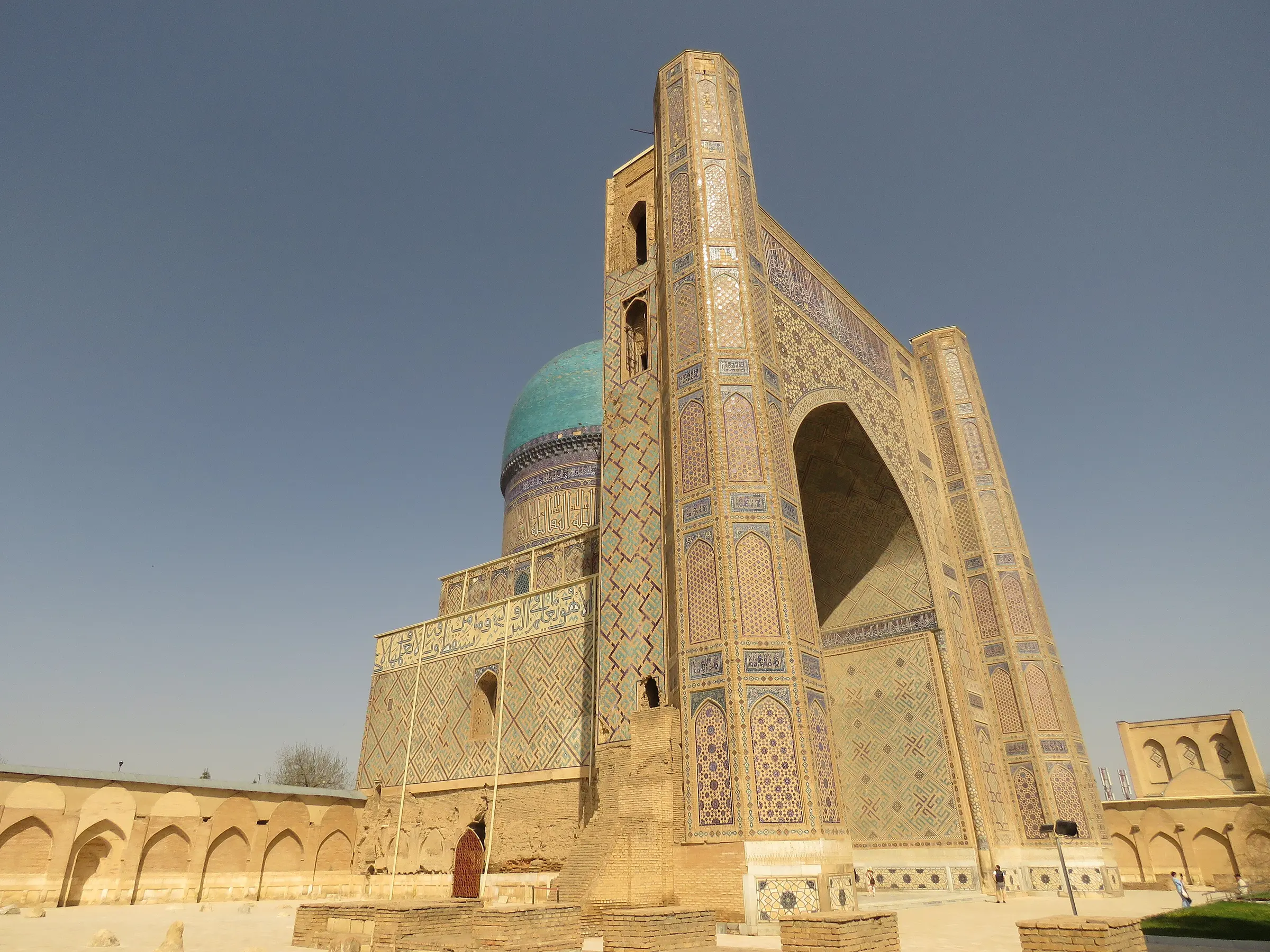
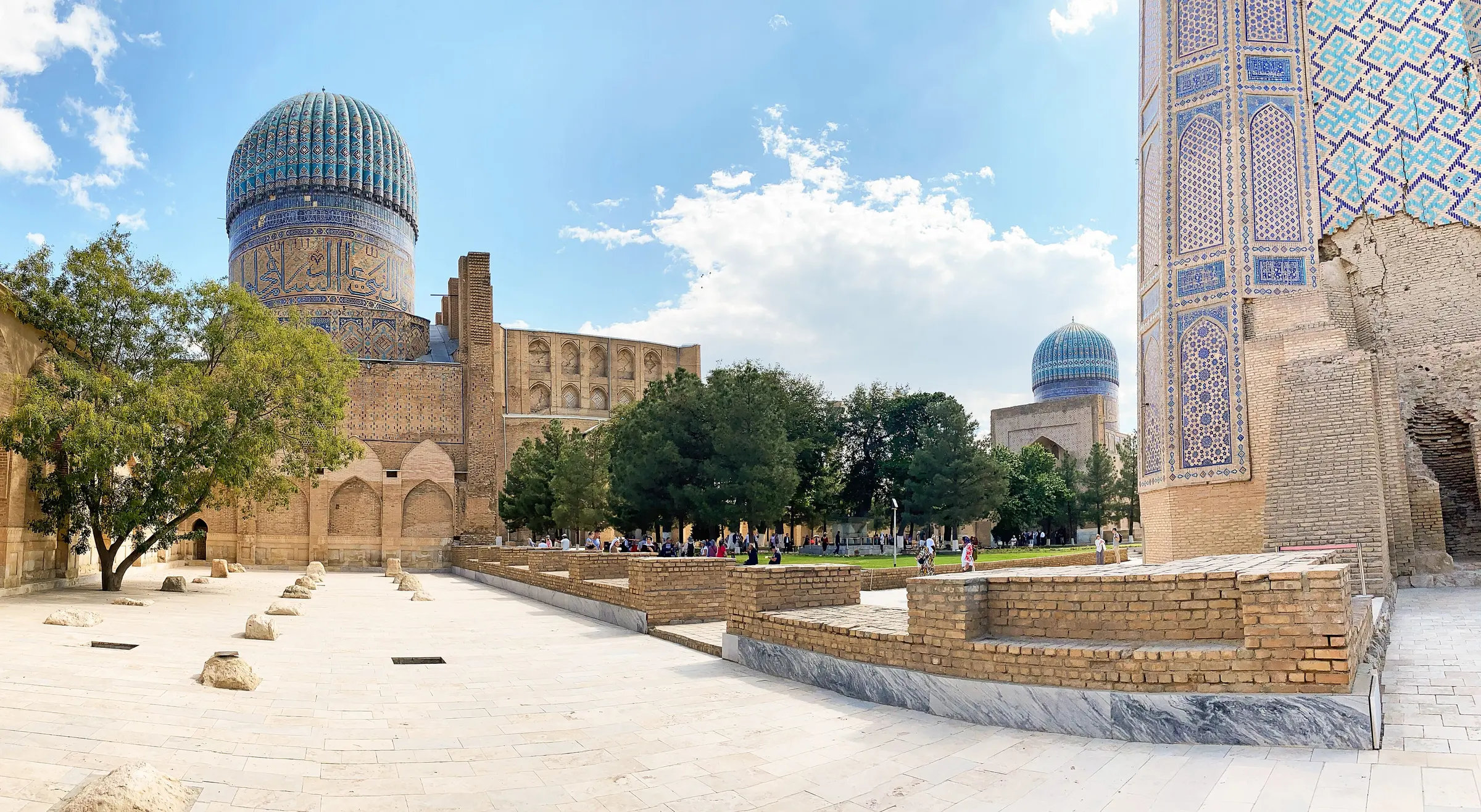
The congregational mosque Timur built after his Indian campaign (1399–1404): among the largest mosques of the Islamic world in its day, a ruin for centuries and rebuilt in the 20th century.
In the spring of 1399, back from his campaign in India, Timur ordered a Friday mosque without equal for his capital. The court historian Ghiyas al-Din Ali records that the foundations were laid on the fourth day of Ramadan 801 — May 1399 — at an hour chosen by the astrologers. Two hundred stonemasons from Azerbaijan, Fars and Hindustan worked on site while five hundred more quarried stone in the mountains, and 95 elephants were brought from India to haul the loads.
Timur soon left on another campaign, this time into Anatolia, and building went on without him. Returning in the autumn of 1404, he judged the main portal too modest and had it torn down and rebuilt. The Spanish envoy Clavijo describes the ailing ruler being carried to the site on a litter, tossing meat and coins to the workmen to drive them on.

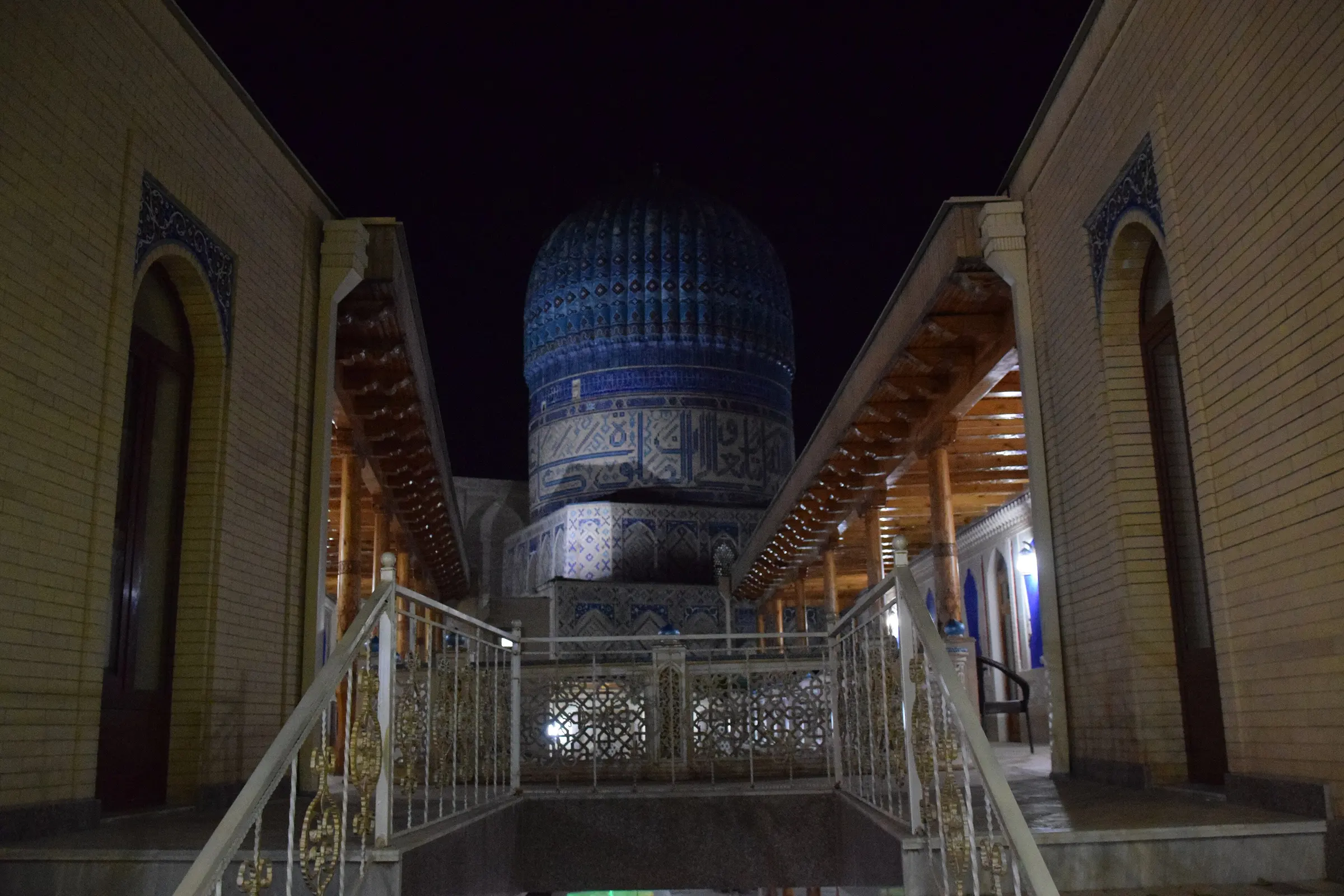
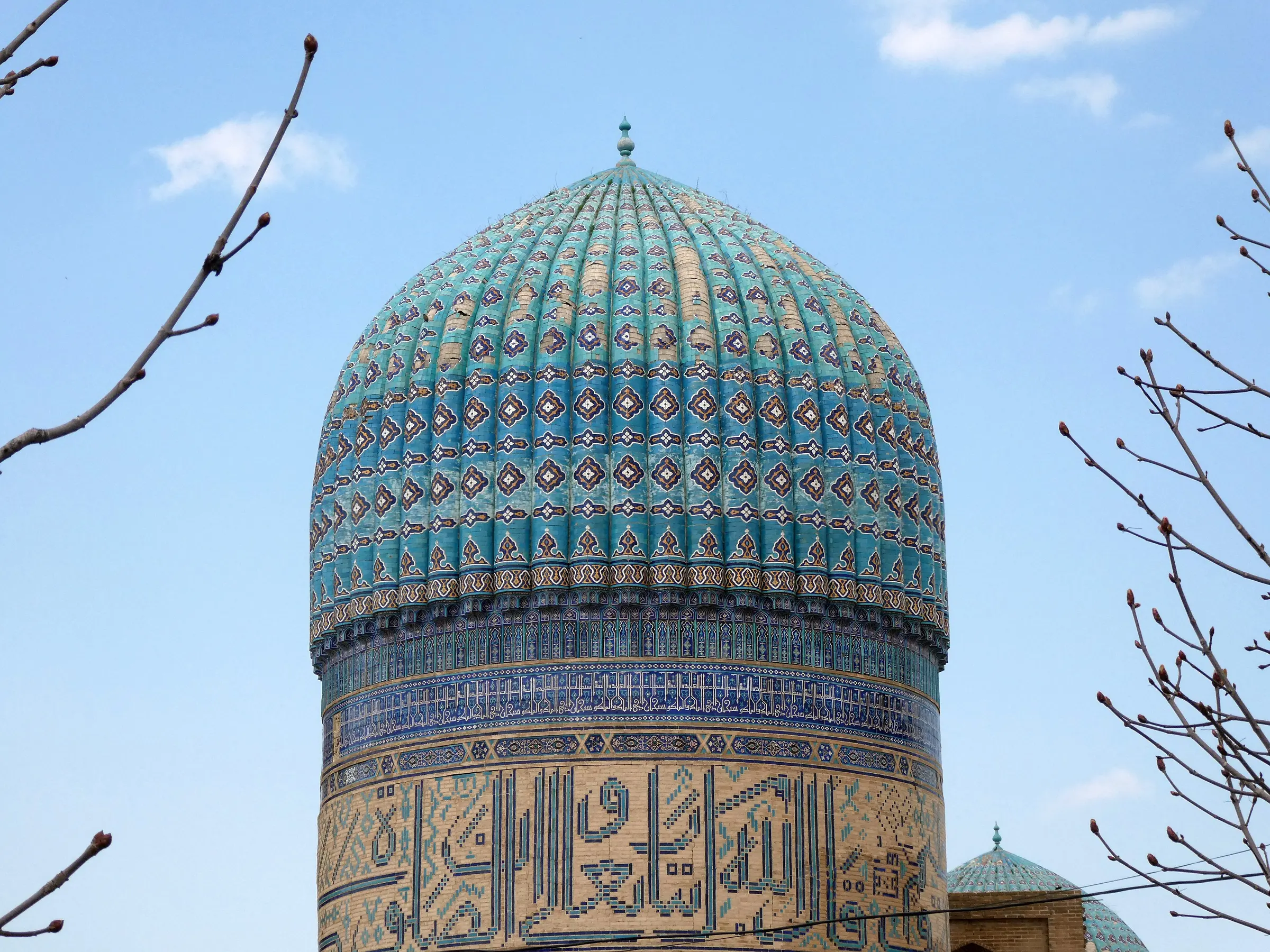
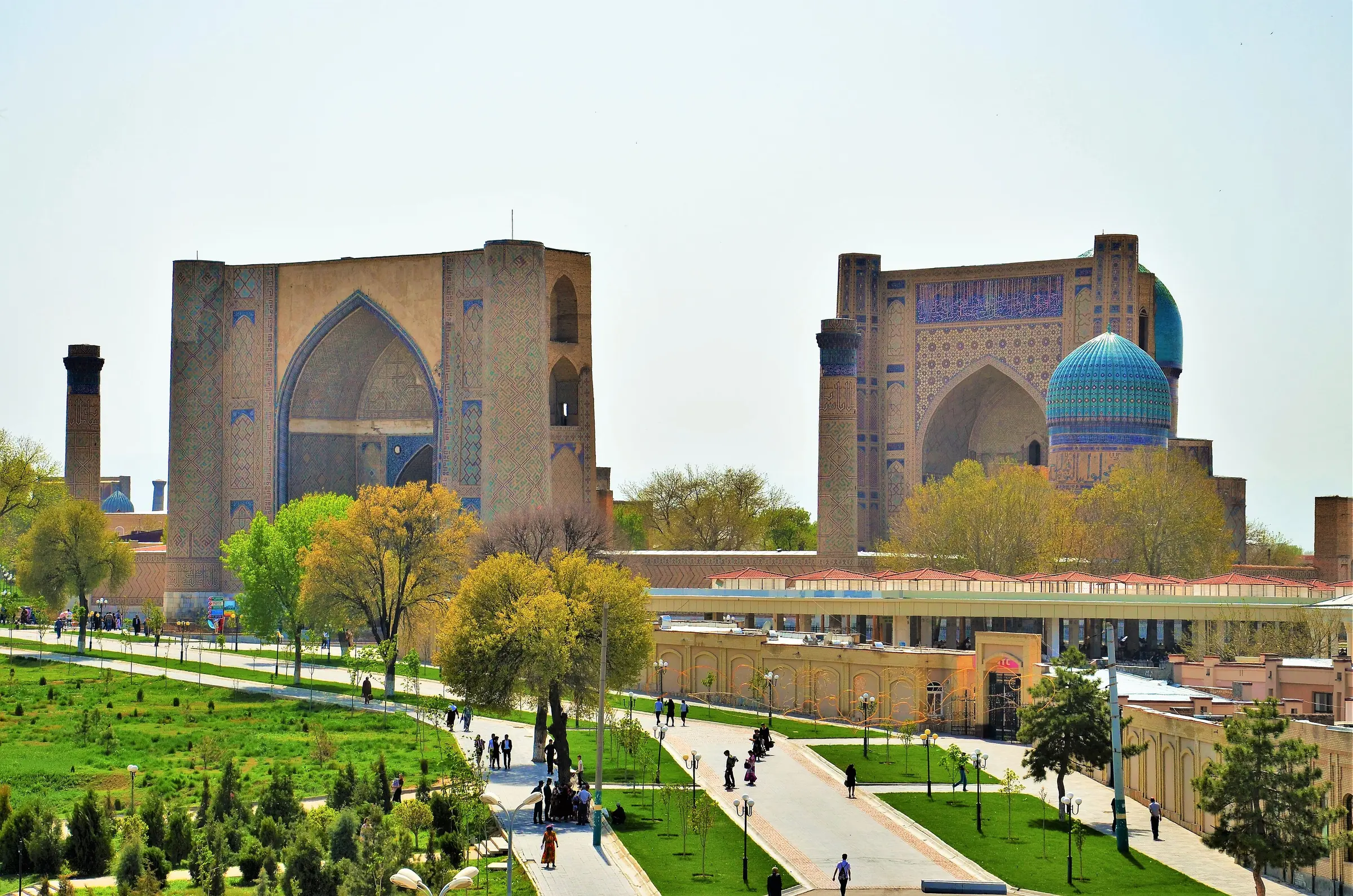
This is a courtyard mosque on a vast scale: its outer walls enclose an area of 167 by 109 metres around an open courtyard of 78 by 64 metres. The gateway on the north-east side rose more than 35 metres. Opposite stood the main domed sanctuary, its outer dome about 40 metres high over a prayer hall roughly 30 metres tall. Two smaller domed halls face each other across the courtyard's cross-axis, completing a classic four-iwan plan, and galleries roofed with small domes on more than 400 marble columns linked the whole, with minarets at the corners.
The double dome comes into its own here: the outer shell creates a silhouette visible across the city, while the inner one suits the proportions of the hall. The historian Sharaf al-Din Ali Yazdi wrote that its dome would have been unique had the sky not been its replica, and its arch unrivalled had the Milky Way not been its twin. He also tells us the doors were cast from an alloy of seven metals.
The ambition pushed the building techniques of the age to their limit, and the rush made matters worse: within a few years bricks were falling from the main dome. Over the following centuries the mosque decayed into a ruin, plundered by locals for building material until the galleries and marble columns had vanished. The earthquake of 1897 brought down the inner arch of the main iwan and destabilised the great dome.
Soviet archaeologists studied and stabilised the ruins, and a full reconstruction began in 1974. Above all in the late 20th century, the main domed hall, the gateway and the side domes were rebuilt and their tilework completed. In October 2024 the Qatar Fund for Development and Uzbekistan's Art and Culture Development Foundation agreed to provide $4.175 million to the Aga Khan Trust for Culture to restore the complex, including training local craftspeople in traditional building methods.

Locals name the mosque after Timur's senior wife, Saray Mulk Khanum, known as Bibi-Khanym. Legend has it that she built it as a gift for her husband's return, and that the architect, smitten with her, would finish only in exchange for a kiss — a kiss that left a mark on her cheek, after which, the story goes, women were told to veil their faces. In fact the mosque was Timur's own project; Saray Mulk Khanum built her own madrasa across the road.
At the centre of the courtyard stands a huge marble lauh, or Quran stand, made in Ulugh Beg's time according to official sources. Local belief holds that a woman hoping for a child should crawl beneath it.
Details may change — please check before you visit.
Gallery
Related places
The avenue of mausoleums

The great square of three madrasas
Nearby


The pedestrian street from the Registan to Bibi-Khanym
480 m

Stay & eat
Hotel · 100 m
Hotel · 150 m
Hostel · 200 m
Hotel · 400 m
Café · 50 m
Restaurant · 100 m
Teahouse · 150 m
Plov centre · 450 m


For example: Registan, Ulugh Beg, plov, Urgut