

Afrasiyab
The ruins of pre-Mongol Samarkand
© BeshevI, CC BY-SA 4.0
219 hectares of grassy mounds north of Siyob Bazaar: the Marakanda that Alexander the Great knew and the Samanid capital, abandoned after the Mongol onslaught of 1220.
Samarkand's first city
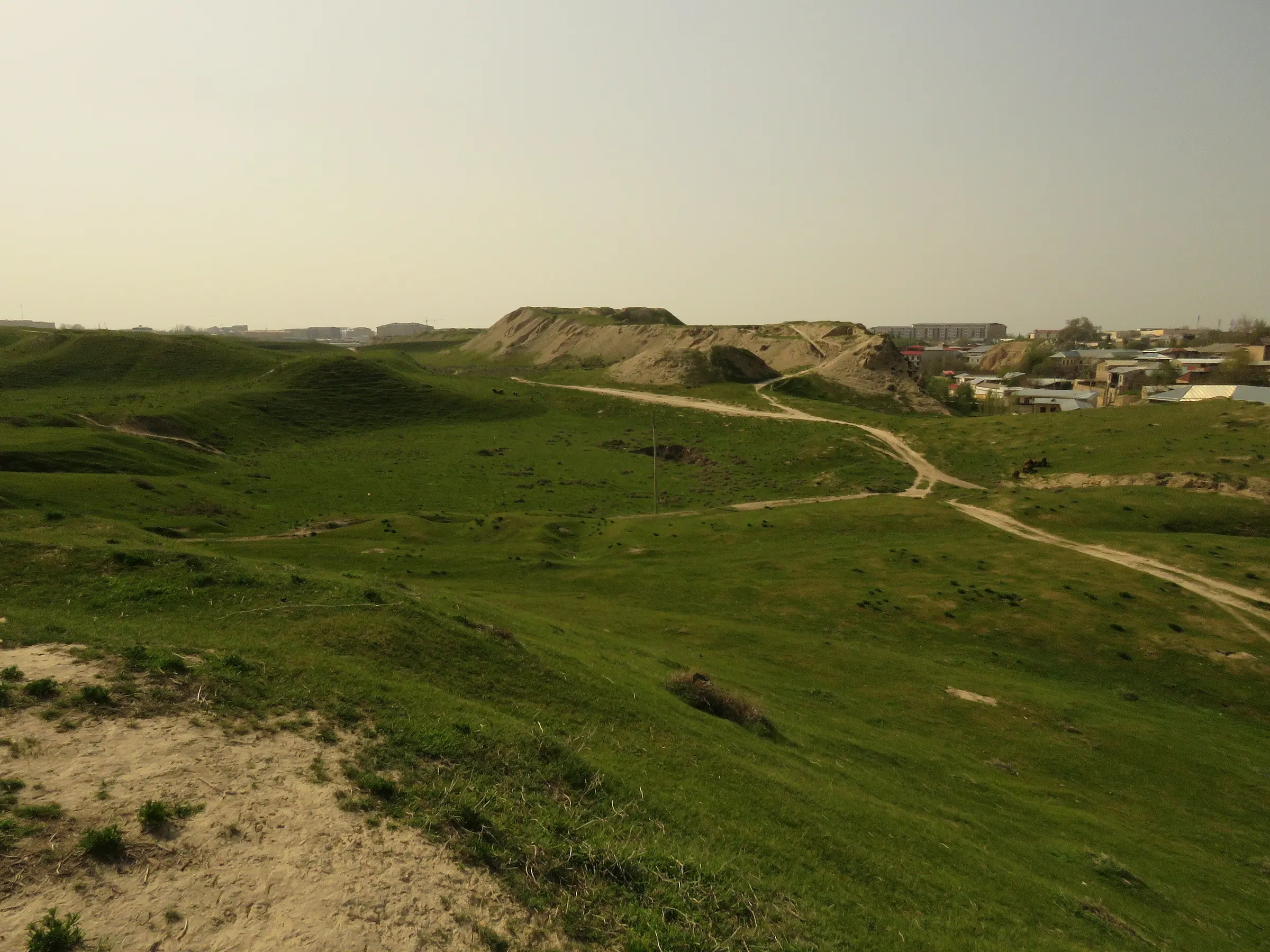
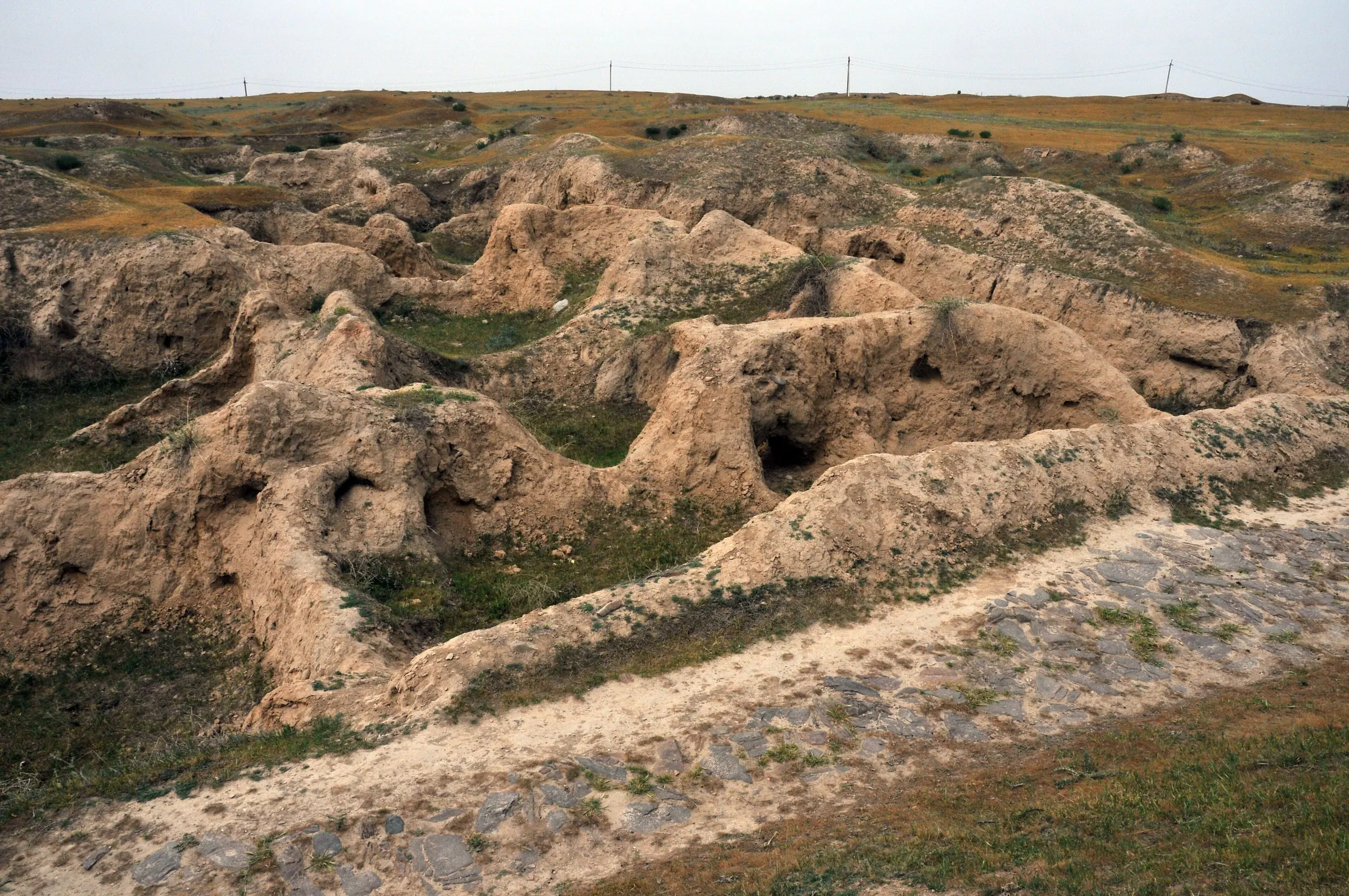
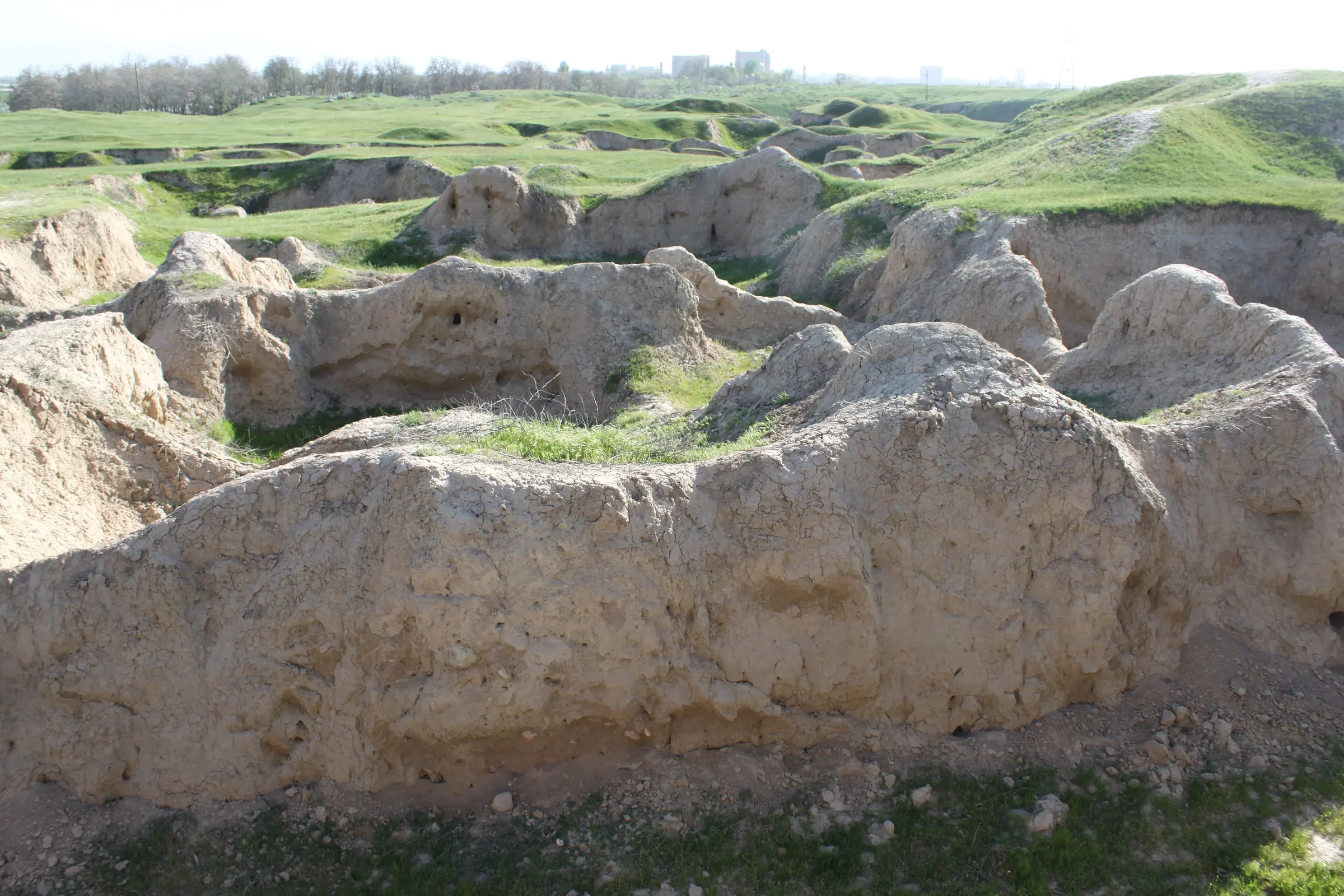
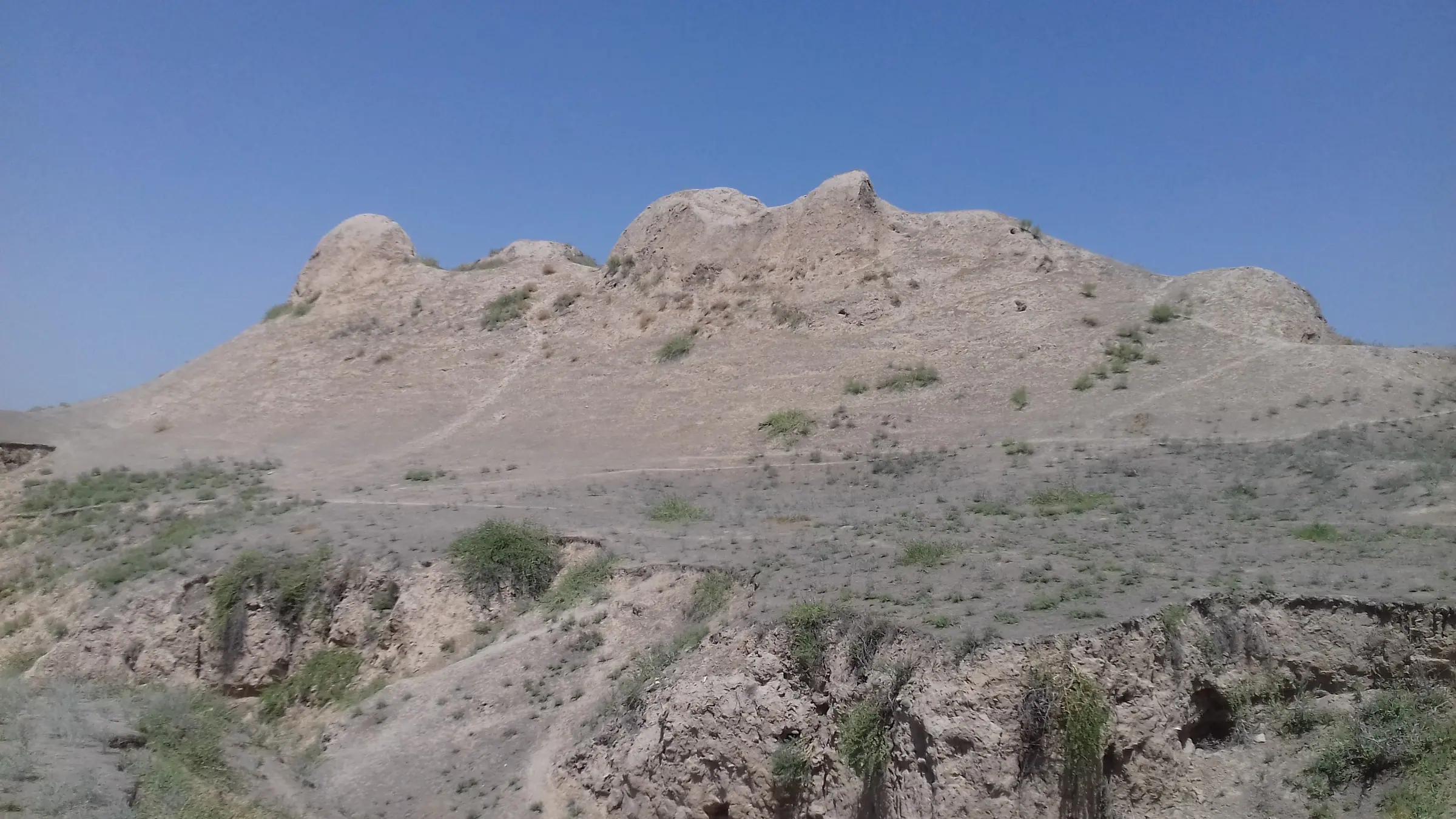
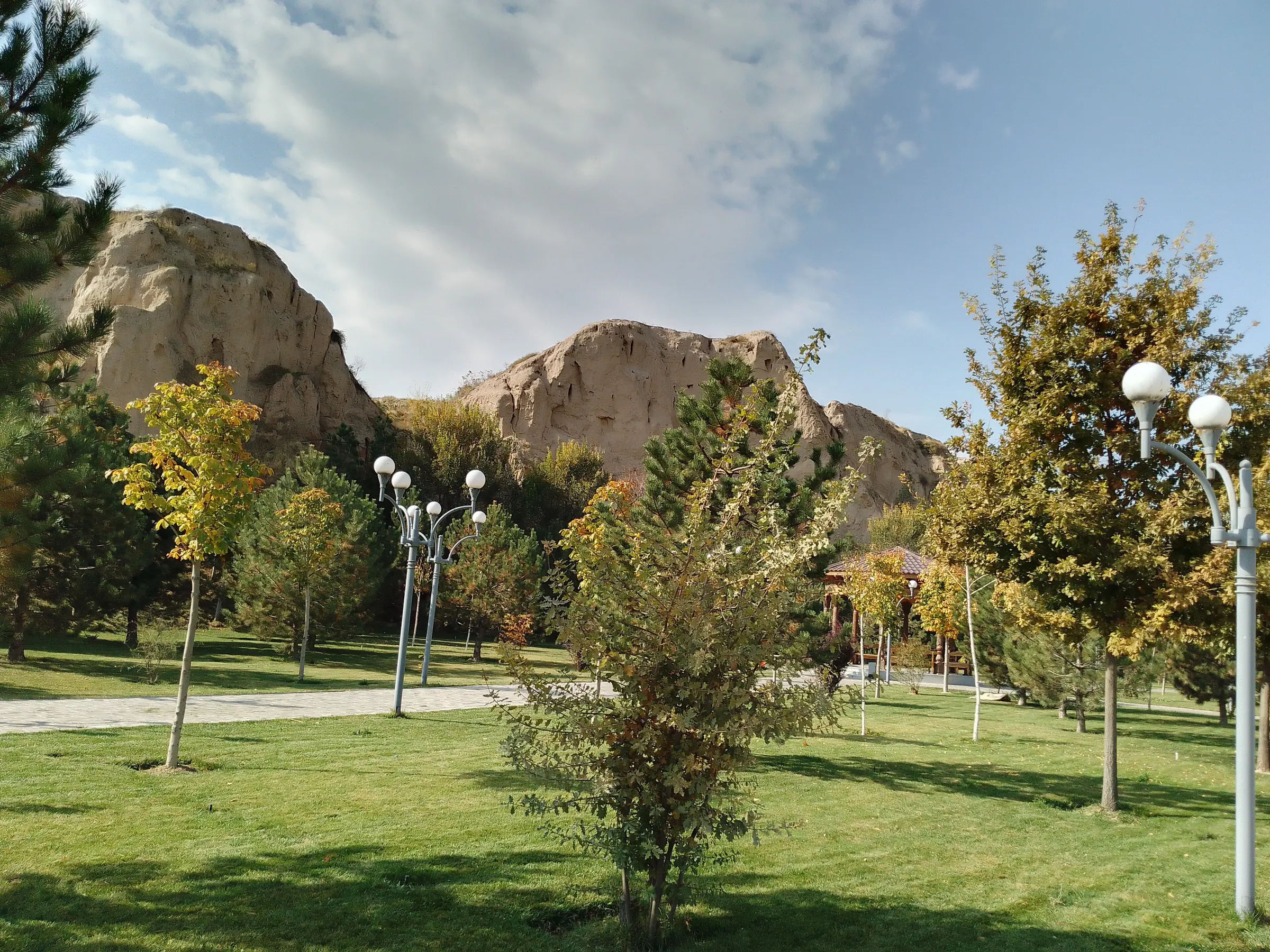
The buff-grey loess hills stretching north of Siyob Bazaar and the Bibi-Khanym Mosque are Afrasiyab – the ruins of Samarkand as it stood before the Mongols came. Covering some 219 hectares, the city sat on a natural plateau protected by the Siyob stream to the north and deep ravines on the other sides. Its archaeological layers are 8–12 metres thick: dig through one century and you find another beneath.
By the middle of the first millennium BC the city had become a centre of Sogdian culture. Samarkand's official age of 2,750 years, celebrated in 2007, rests on the excavations here. In 2025 members of the Uzbek–French expedition, re-examining finds from Koktepa and Afrasiyab, suggested that urban life may go back some 3,000 years – a conclusion still being debated. The name Afrasiyab itself only appears in written sources from the 17th century, borrowed from the legendary king of Turan in the Persian epic Shahnameh; before that the ruins were simply called Qal'a-i Kuhna, the 'Old Fortress'.

From Marakanda to the Samanid capital
In 329 BC the city the Greeks called Marakanda fell to Alexander the Great. In the early Middle Ages Samarkand was the capital of a Sogdian principality ruled by kings with the title ikhshid, and one of the richest trading cities on the Silk Road. In 712 it was taken by an Arab army under Qutayba ibn Muslim.
Under the Samanids in the 9th and 10th centuries a palace rose in the western part of Afrasiyab, and the city gained piped water, bathhouses and caravanserais. In the 11th and 12th centuries the rulers of the Western Karakhanid Khanate kept their residence here. After Genghis Khan's armies sacked Samarkand in 1220, life on Afrasiyab faded away: the city moved to the plain to the south, where Timur would later build his capital.
The Ambassadors' Painting
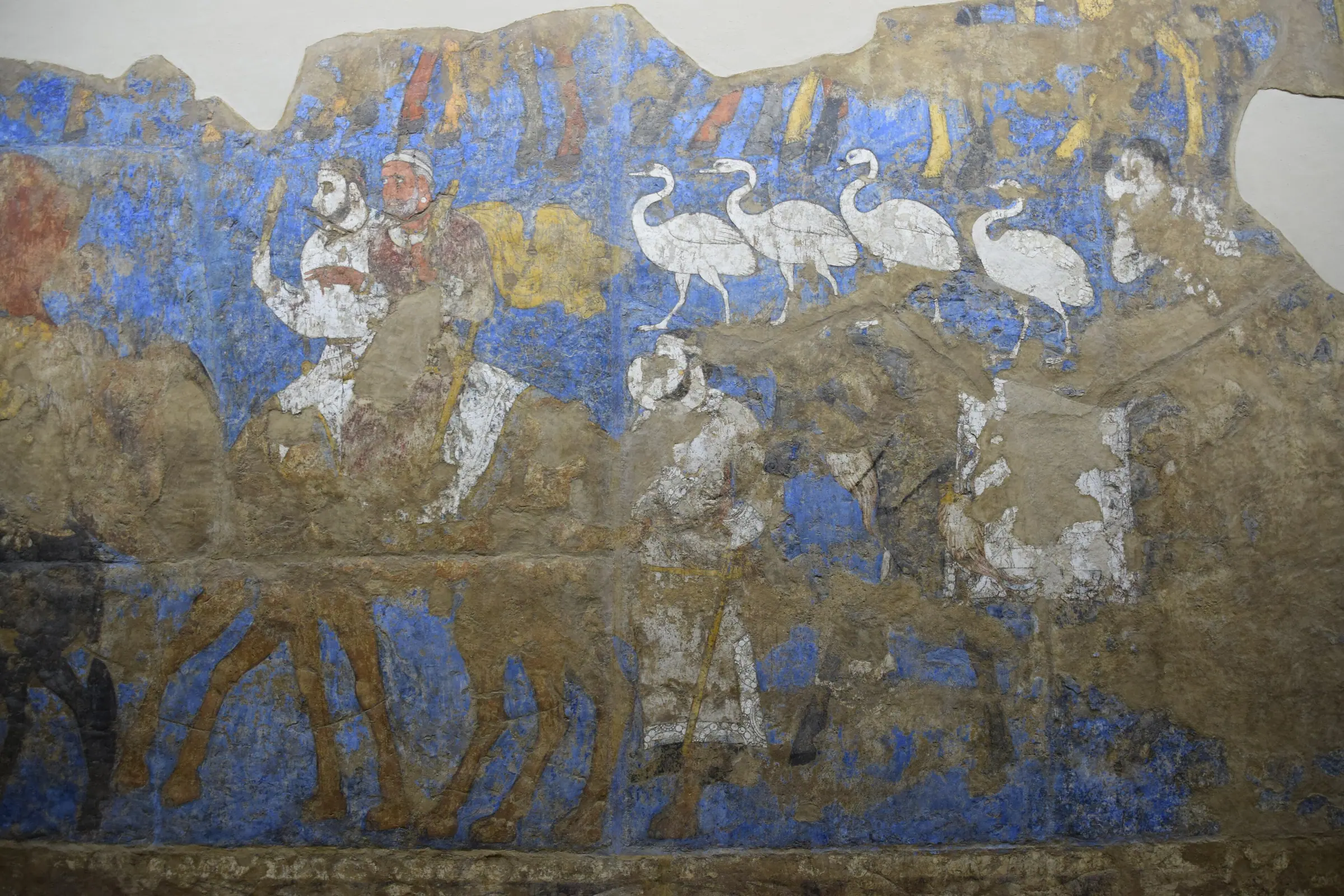
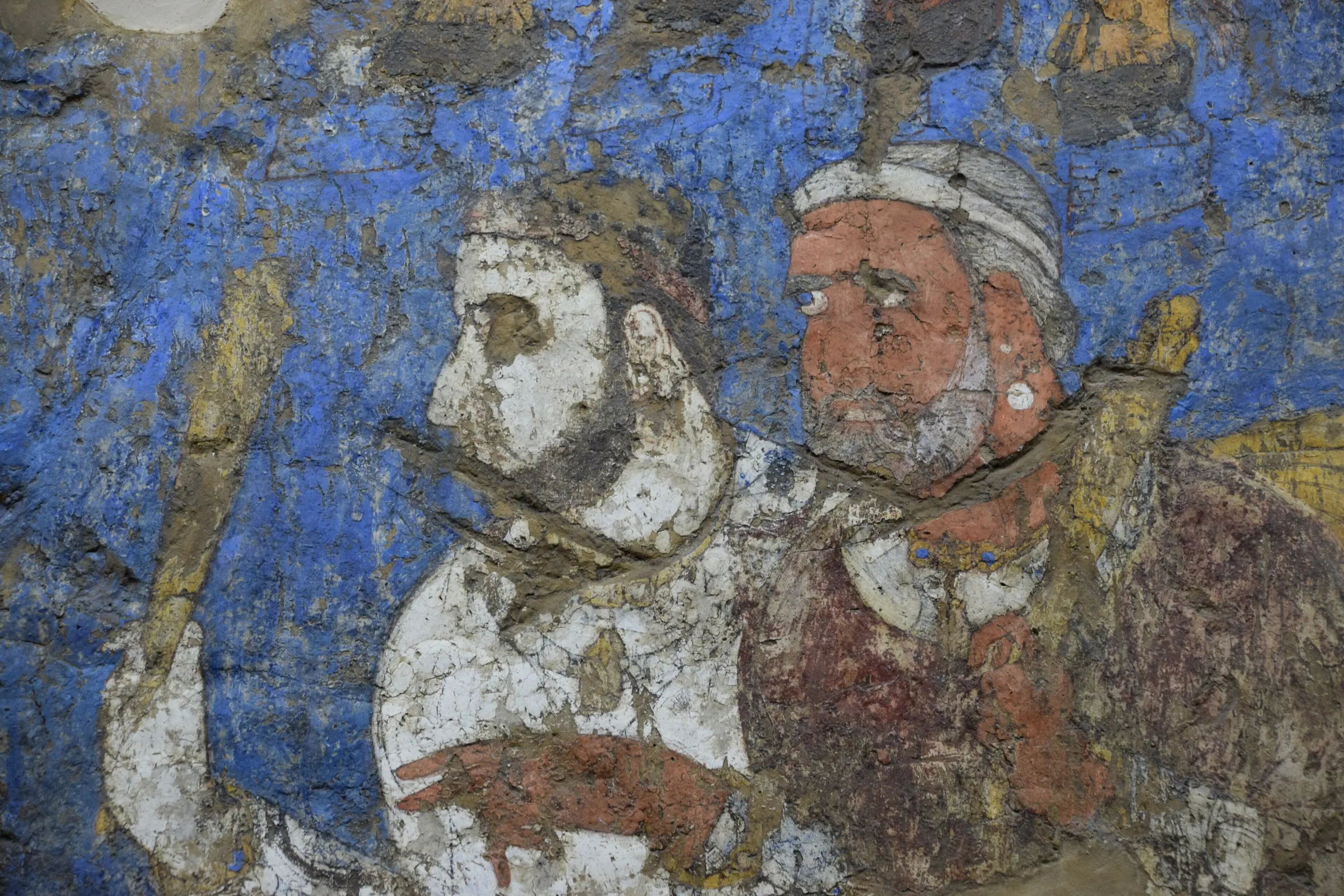
Afrasiyab's most famous find came to light by accident in 1965, when a road was being cut across the mound. Murals on the four walls of a reception hall in a wealthy residence date from the mid-7th century, the reign of the Samarkand king Varkhuman. The west wall shows envoys from many lands escorted by Turkic guards; the south wall a ceremonial procession; the north wall a Chinese empress in a boat and an emperor on the hunt. A Sogdian inscription names Varkhuman himself. Sadly, bulldozers all but destroyed the upper register of the murals during the roadworks; what survives is displayed in the Afrasiyab Museum beside the site.

Digging up the past
Excavations began in the 1870s–1880s, and scholars such as Nikolai Veselovsky, Vasily Vyatkin and Mikhail Masson all worked here. In 1966 the government declared Afrasiyab an archaeological reserve. Finds include Sasanian, Samanid and Karakhanid coins, 9th–10th-century bathhouses, houses panelled in carved ganch and murals from a Karakhanid palace. Work continues: in March 2025 archaeologists studied defensive walls from the 7th–4th centuries BC.
Afrasiyab today
Today Afrasiyab is open, grassy upland criss-crossed by footpaths, where it takes only a little imagination to trace the outline of the ancient city. On its southern edge stand the Hazrat Khizr Mosque and Shah-i-Zinda; on its north-eastern edge, the tomb of Khoja Doniyor. The 10th-century geographer al-Istakhri wrote that one of the city gates, the Kesh Gate, was made of iron – it is thought to have stood where the Hazrat Khizr Mosque is today. In 2001 Afrasiyab became part of Samarkand – Crossroads of Cultures on the UNESCO World Heritage List.

Good to know
- Start at the Afrasiyab Museum: once you have seen the murals and finds, the mounds begin to make sense.
- There is almost no shade on the hills – in summer go early or late, bring a hat and water, and wear sturdy closed shoes.
- Keep away from the edges of excavation trenches and don't climb on ruined walls: mud-brick is fragile and easily damaged.
- Make it a 90-minute to two-hour walk, taking in the tomb of Khoja Doniyor to the north-east and the Hazrat Khizr Mosque to the south.
Gallery
Afrasiyab
Nearby
Nearby


Stay & eat
Stay & eat nearby
Hotels nearby
See allSiab Hotel
Hotel · ★★★★ · 1.0 km
Khan Hotel
Hotel · 1.1 km
Kohinur Plaza
Hotel · ★★★★★ · 1.1 km
Azaliya Hostel
Hostel · 1.3 km
Restaurants & cafés nearby
See allOtash Osh
Plov centre · 1.1 km
Samarqand Osh Markazi No. 1
Plov centre · 1.2 km
Art Cafe
Café · 1.4 km
Zargaron
Restaurant · 1.4 km


