
Ulugh Beg Madrasa
The astronomer-king's university
This site is in test mode — some information may contain errors.
Report
The greatest astronomical instrument of the Middle Ages
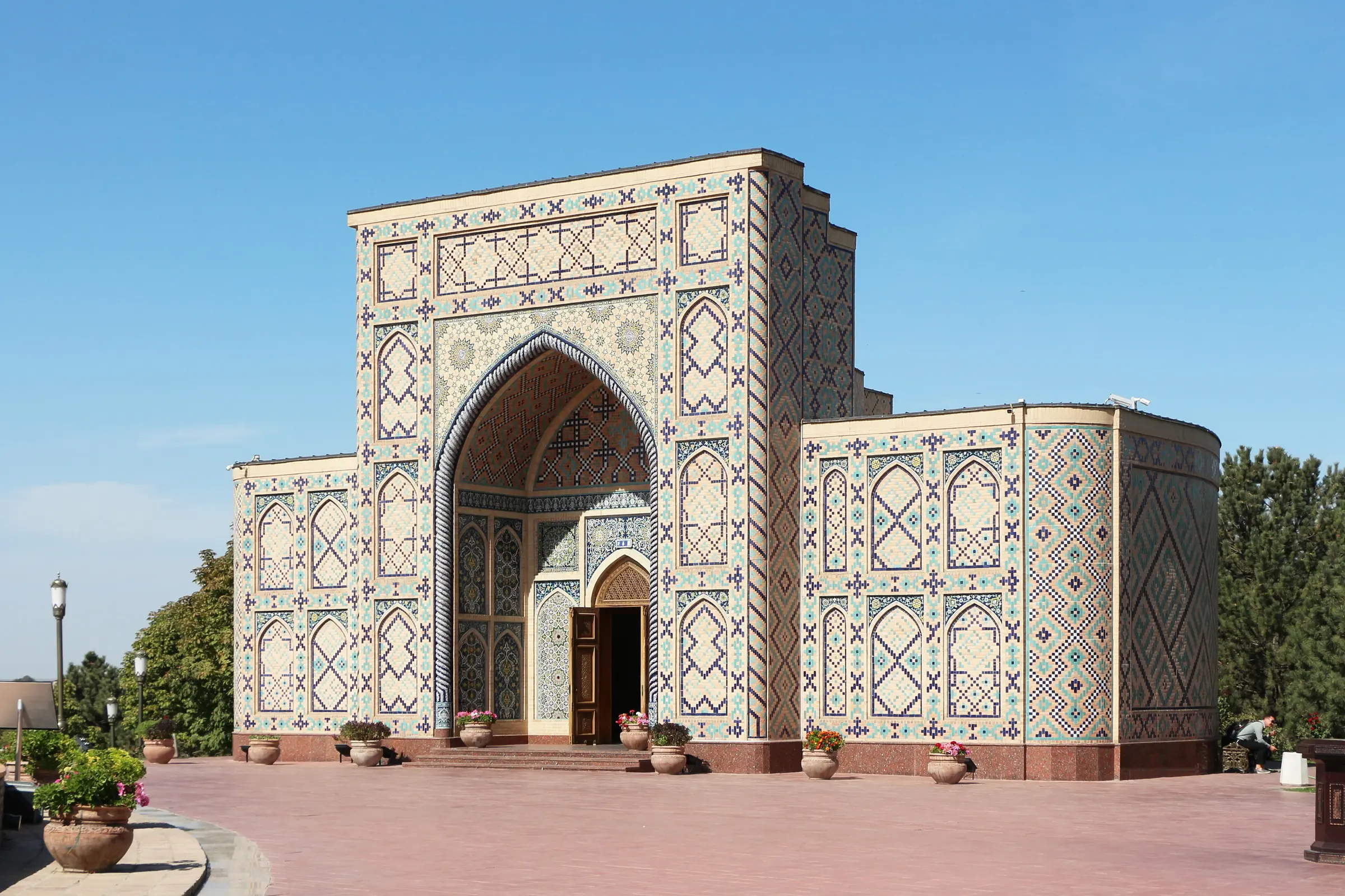
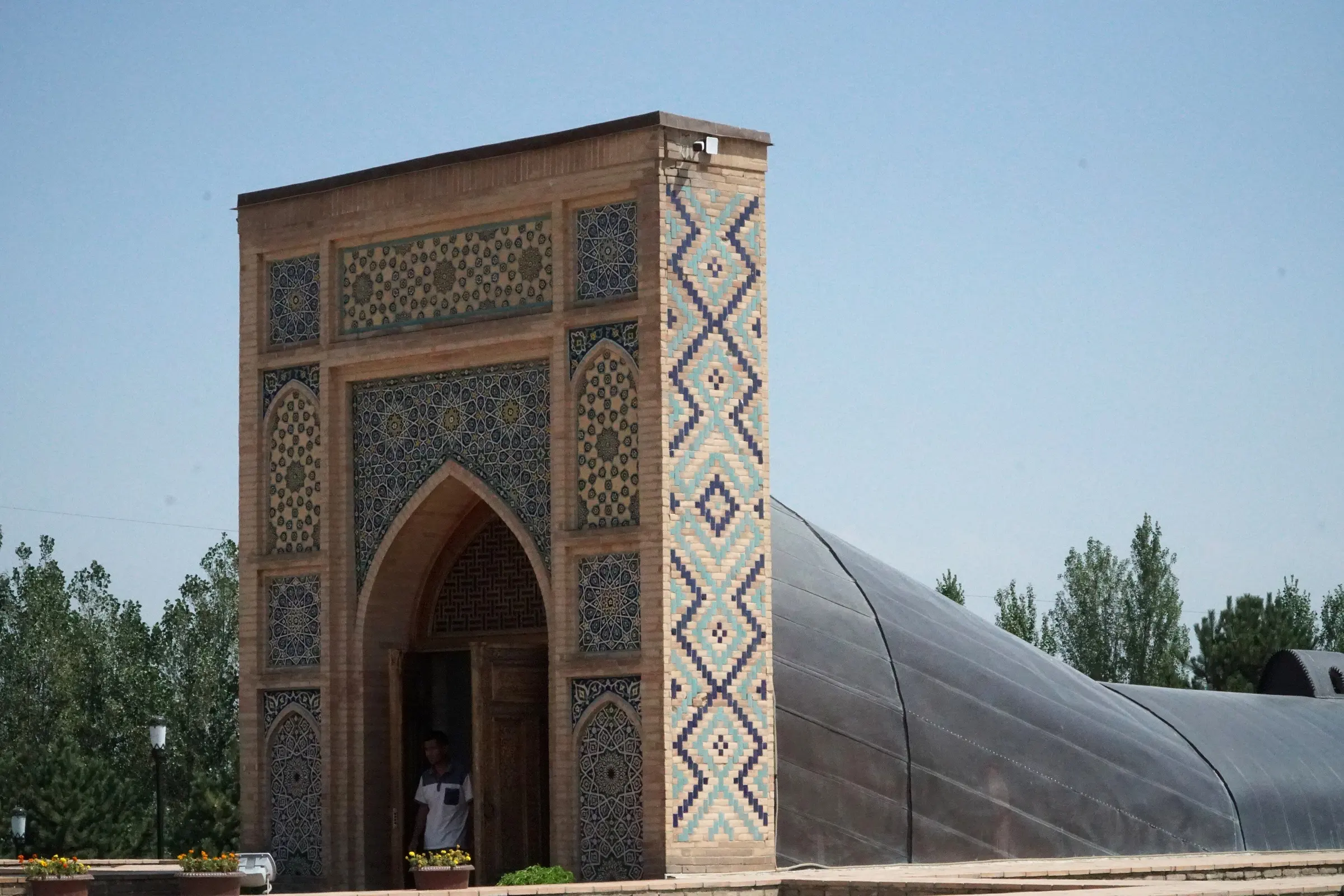
The remains of the observatory Mirzo Ulugh Beg built on Kuhak hill in the 1420s: a giant meridian arc cut into the rock, beside a museum devoted to the scholar-king and his star tables.
Timur's grandson Mirzo Ulugh Beg was fascinated by mathematics and astronomy from his youth. Ruler of Samarkand from 1409, he set about realising a long-held ambition about a decade later, building an observatory on Kuhak hill outside the city. Work began in the mid-1420s and was finished by 1428–1429. Ulugh Beg named his teacher Qazi-zade Rumi as his chief adviser. The brilliant mathematician Jamshid al-Kashi, from Kashan, oversaw the installation and calibration of the instruments and became the observatory's first director; after his death Qazi-zade Rumi and then Ali Qushji took charge.
The observatory drew on the experience of Maragha, where Nasir al-Din Tusi had worked, but outdid it in scale. Its research programme was planned to run for at least thirty years — the time Saturn takes to circle the Sun.

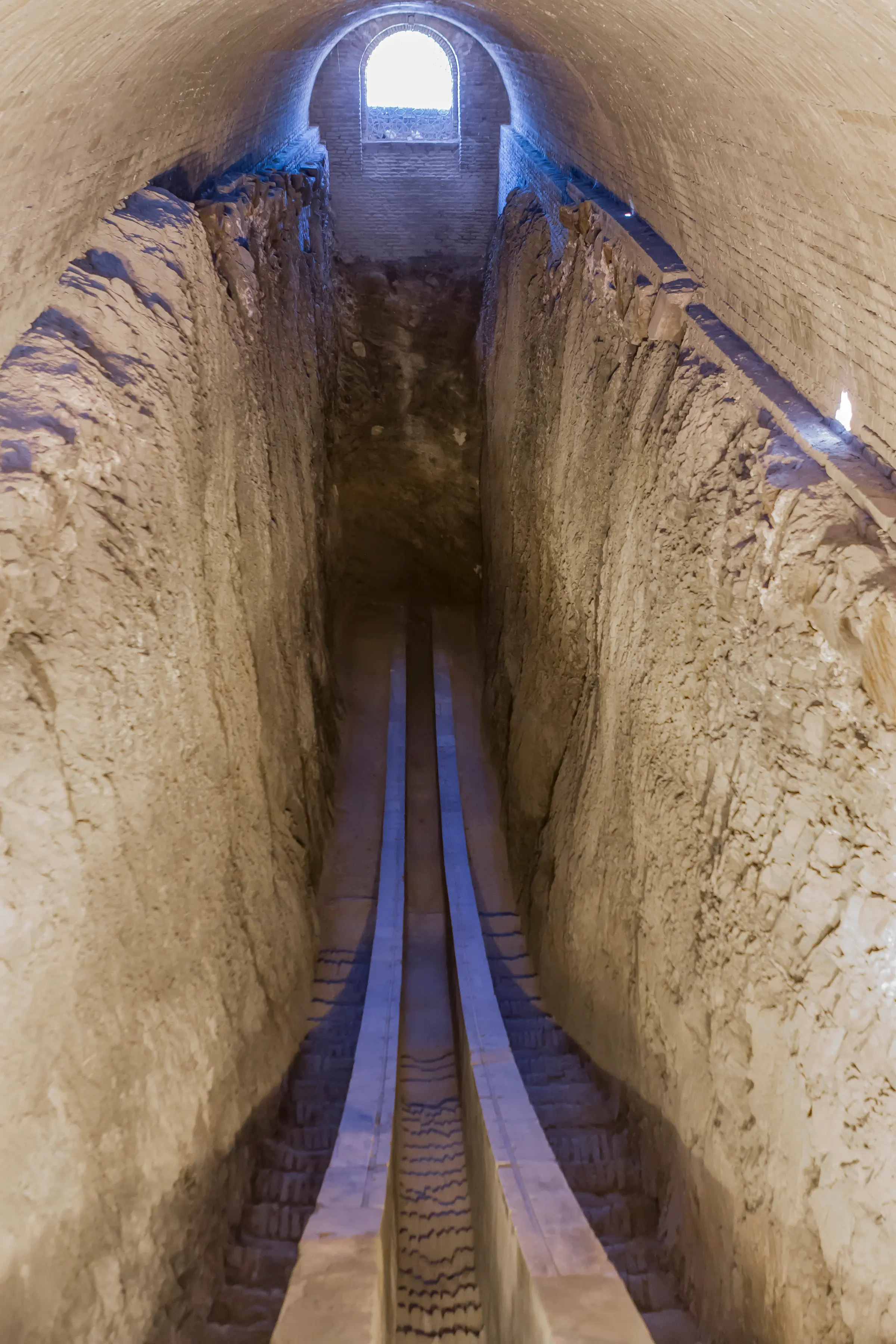
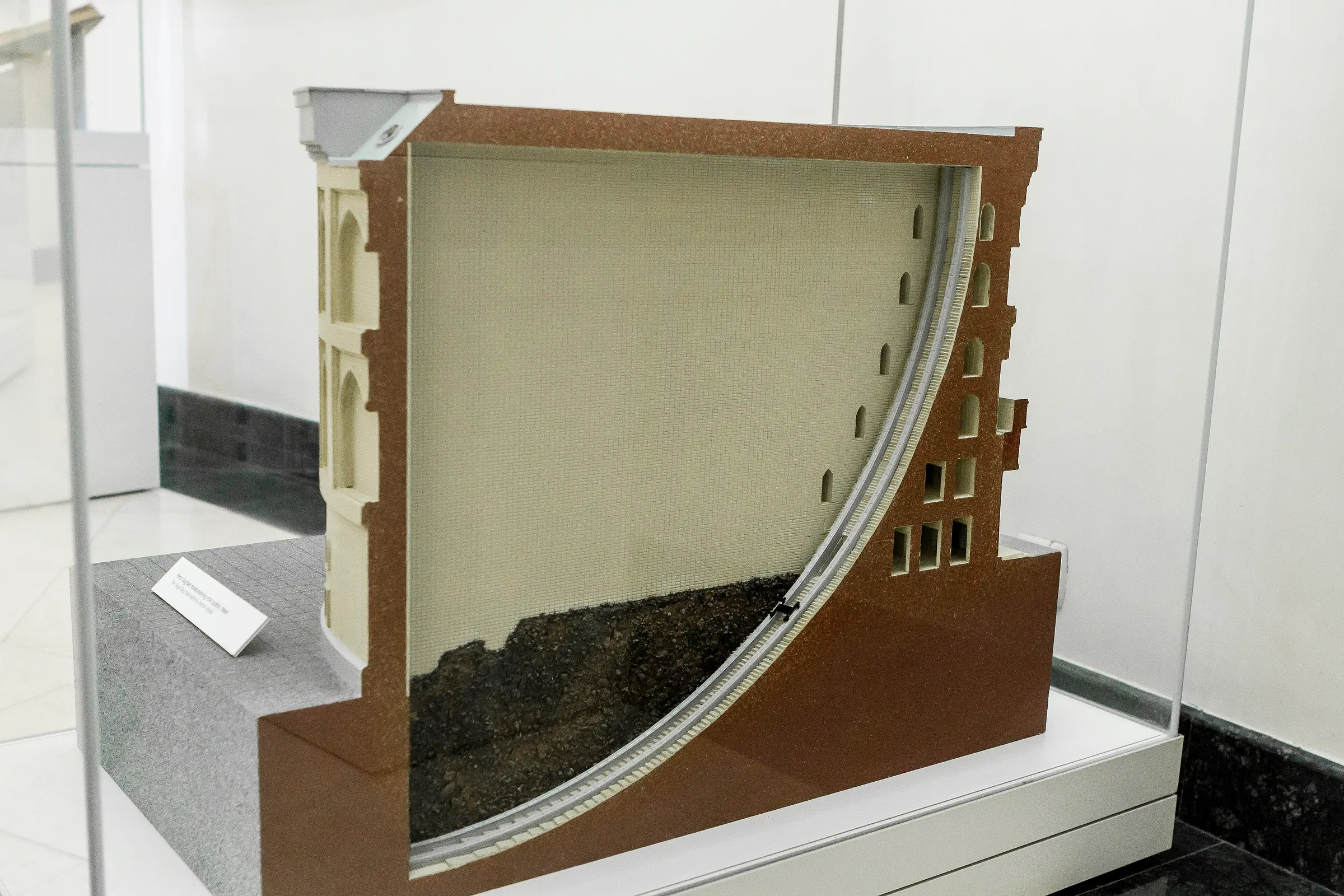
According to reconstructions, the observatory was a three-storey cylindrical building about 46 metres across and around 30 metres high; Babur, in his memoirs, describes it as three storeys tall and faced with tiles. Through its centre, aligned exactly north–south along the meridian, ran an enormous instrument: an arc with a radius of about 40 metres — sources give figures from 40.04 to 40.21 metres. It was used to measure the altitude of the Sun, Moon and planets as they crossed the meridian.
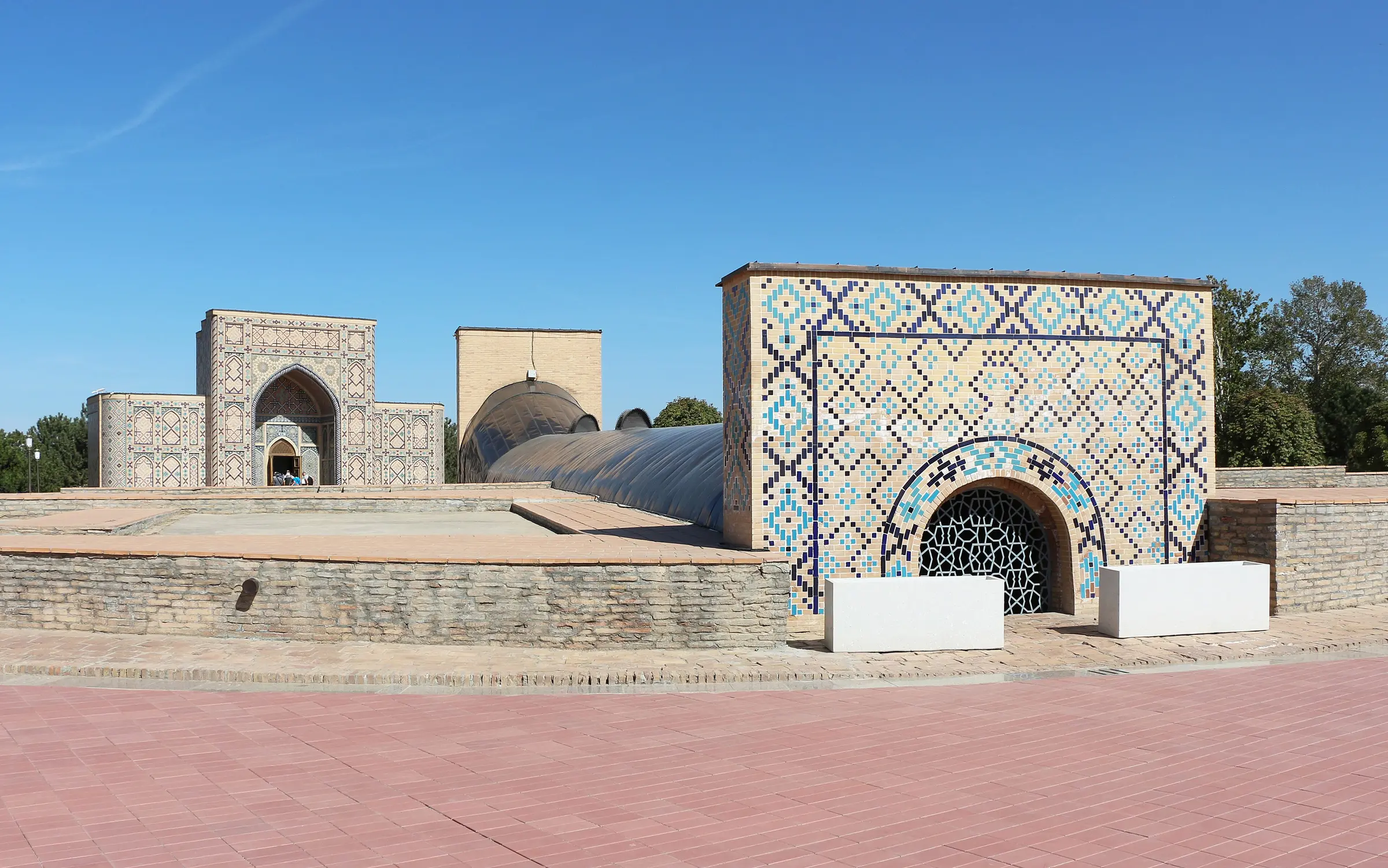
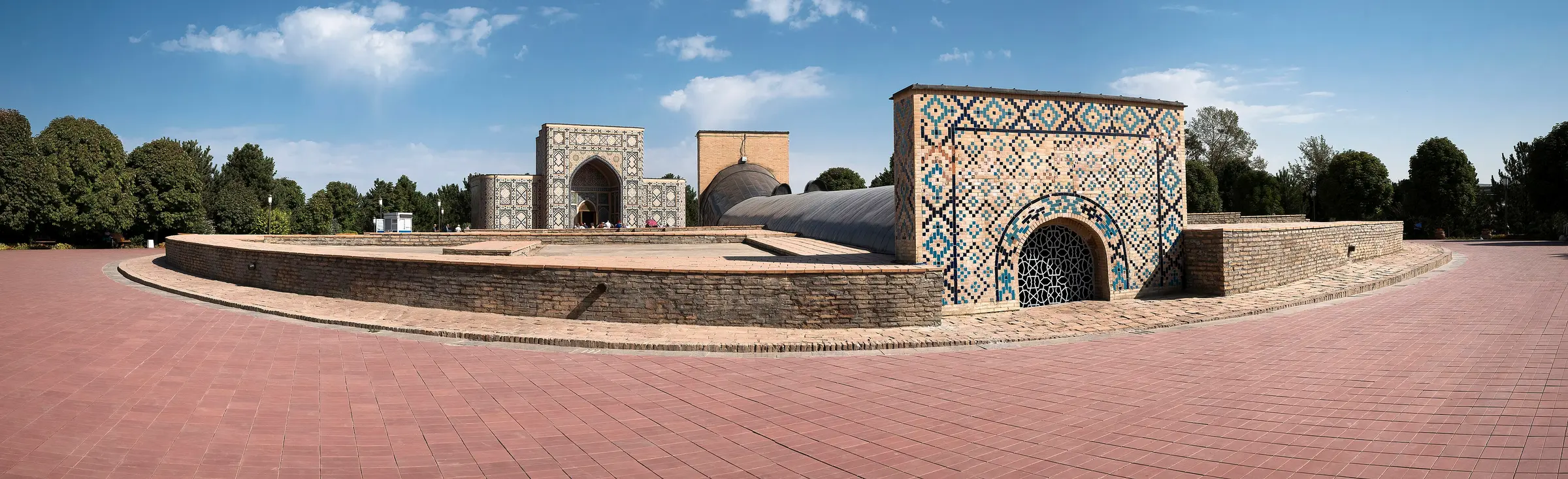
The lower part of the instrument sat in a trench cut into the bedrock, which is why it survives. The arc is formed by two parallel, marble-faced parapets, with roughly 70 centimetres to each degree — enough to engrave very fine divisions. Brick stairs ran down beside the parapets. Other instruments, including one for measuring azimuth, stood on the roof, but none survive.
The fruit of these observations was the Zij-i Jadid-i Gurgani, or Zij-i Sultani, completed in 1437: a theoretical introduction, astronomical tables and a catalogue of 1,018 stars, regarded as the first major star catalogue based on fresh observations since Ptolemy. Ulugh Beg and his colleagues measured the length of the year to within less than a minute and put the tilt of the Earth's axis at 23°30′17″. The Zij was used across the East for centuries, and in the 17th century it was translated into Latin and published in Oxford.

After Ulugh Beg was murdered in 1449 the observatory declined. Historians disagree on exactly when it ceased to function; its scholars left Samarkand, and Ali Qushji eventually settled in Istanbul. The empty building stood for a long time, but was later quarried for bricks by the townspeople, and even its location was forgotten.
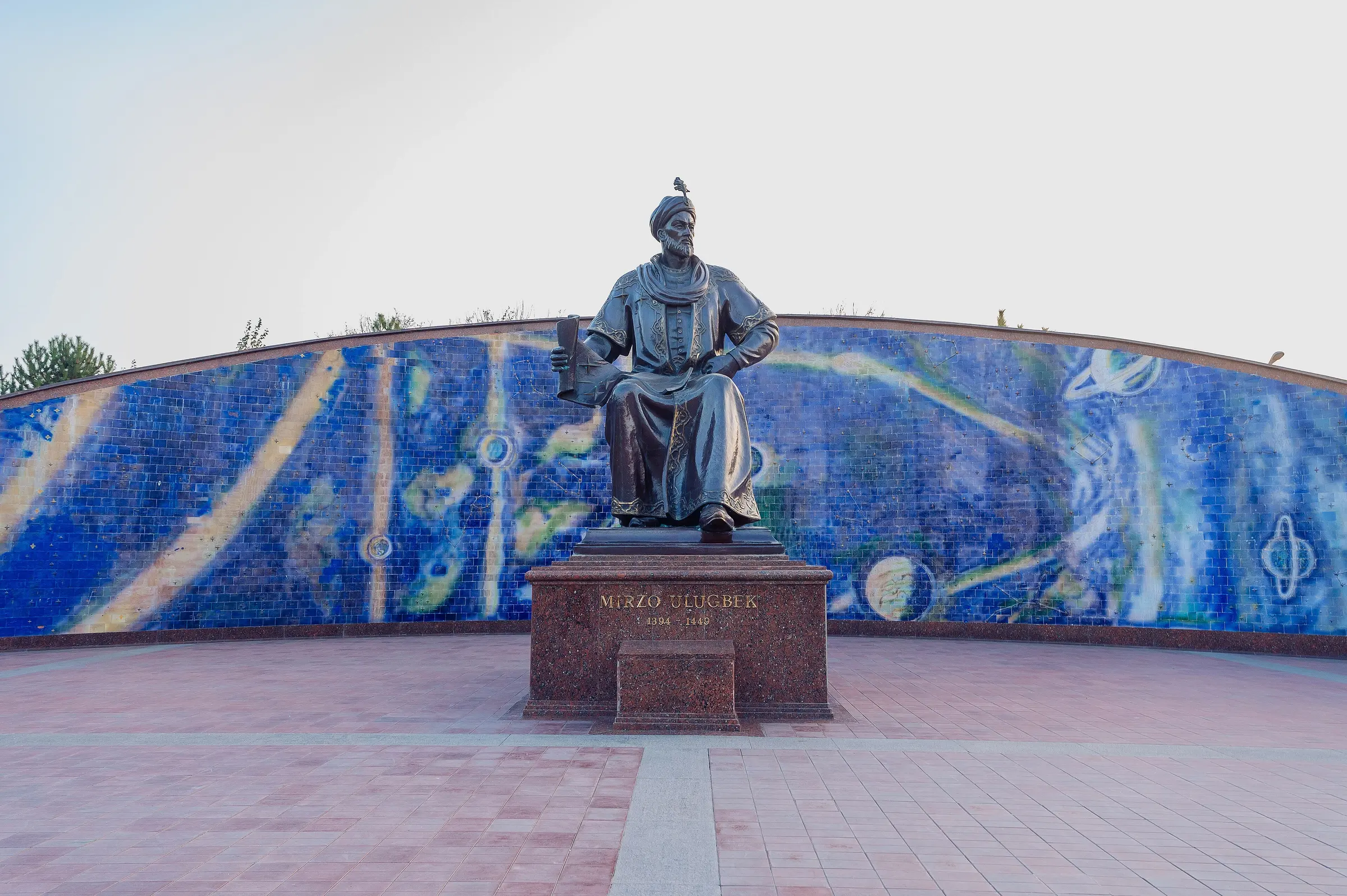
In 1908 the archaeologist V. L. Vyatkin, guided by a 17th-century endowment document, found the remains and cleared the rock-cut arc. Vyatkin died in 1932, and in 1934 his grave was moved here, beside the observatory he had discovered. An expedition led by V. A. Shishkin completed the excavation in 1948, exposing the foundations. Today the arc sits under a protective vault, next to a circular museum and a statue of Ulugh Beg; the museum displays copies of manuscripts and editions of the Zij, astronomical instruments and a model of the observatory.
The observatory was so thoroughly forgotten that 19th-century travellers looked for it in the madrasas of the Registan: the Hungarian orientalist Ármin Vámbéry, who reached Samarkand disguised as a dervish in 1863, believed it had stood inside the Ulugh Beg Madrasa. Today a crater on the Moon bears Ulugh Beg's name.

Details may change — please check before you visit.
Gallery
Related places
The astronomer-king's university

Tomb of Timur and his dynasty
Nearby


The fig-garden quarter — Uzbekistan's first tourism mahalla
1.3 km


For example: Registan, Ulugh Beg, plov, Urgut