
Bibi-Khanym Mosque
Timur's colossal Friday mosque
This site is in test mode — some information may contain errors.
Report
The gilded mosque-madrasa
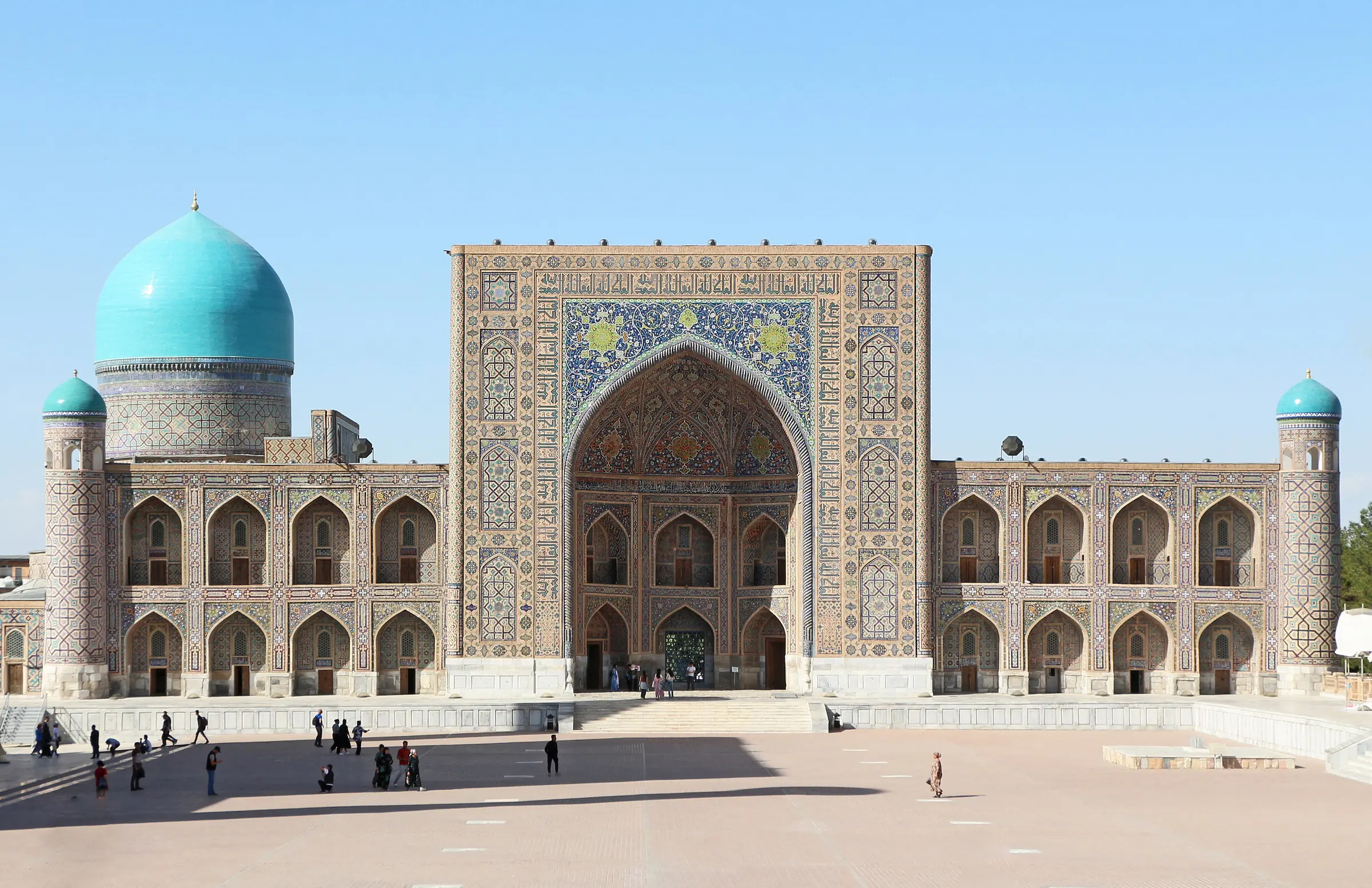
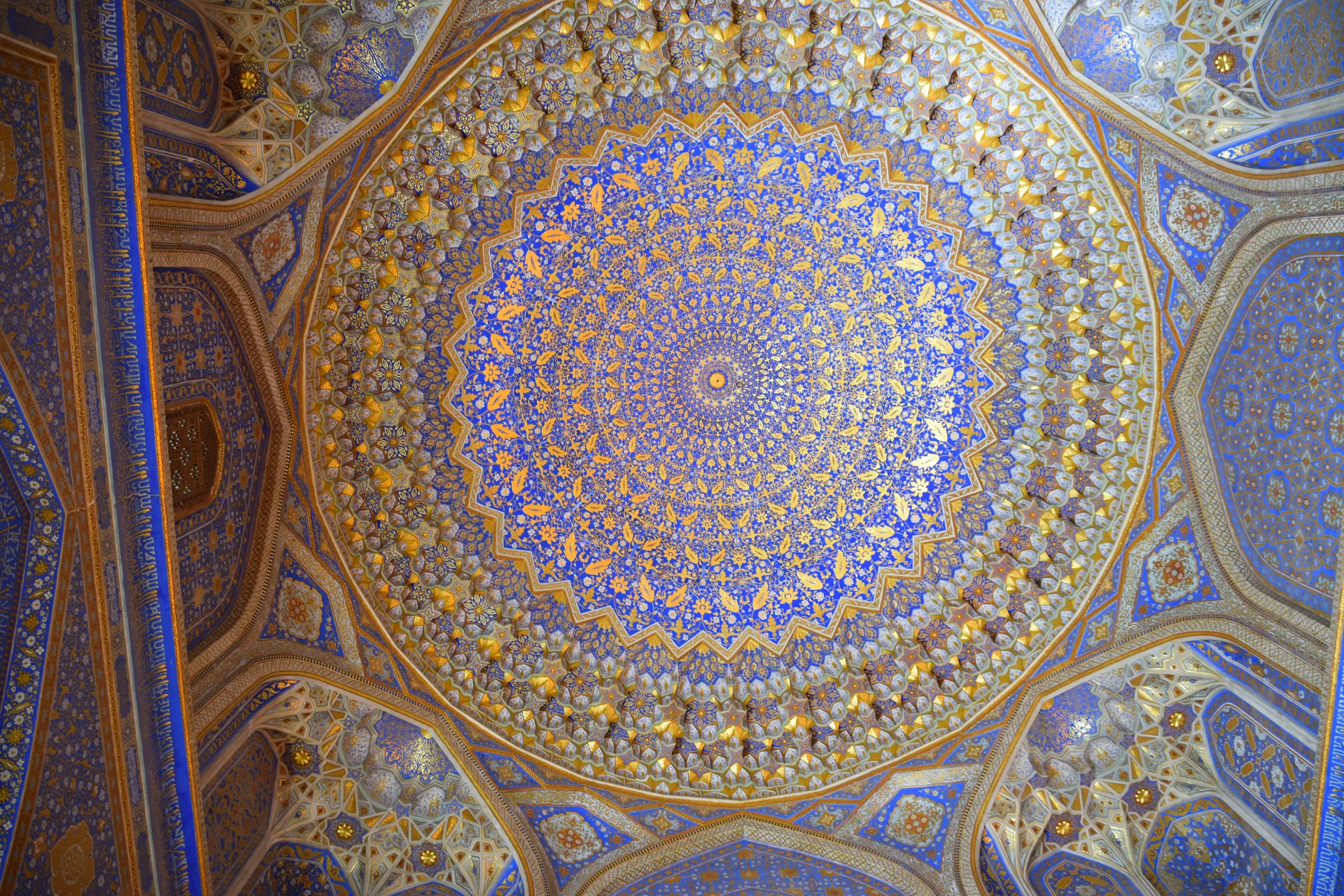
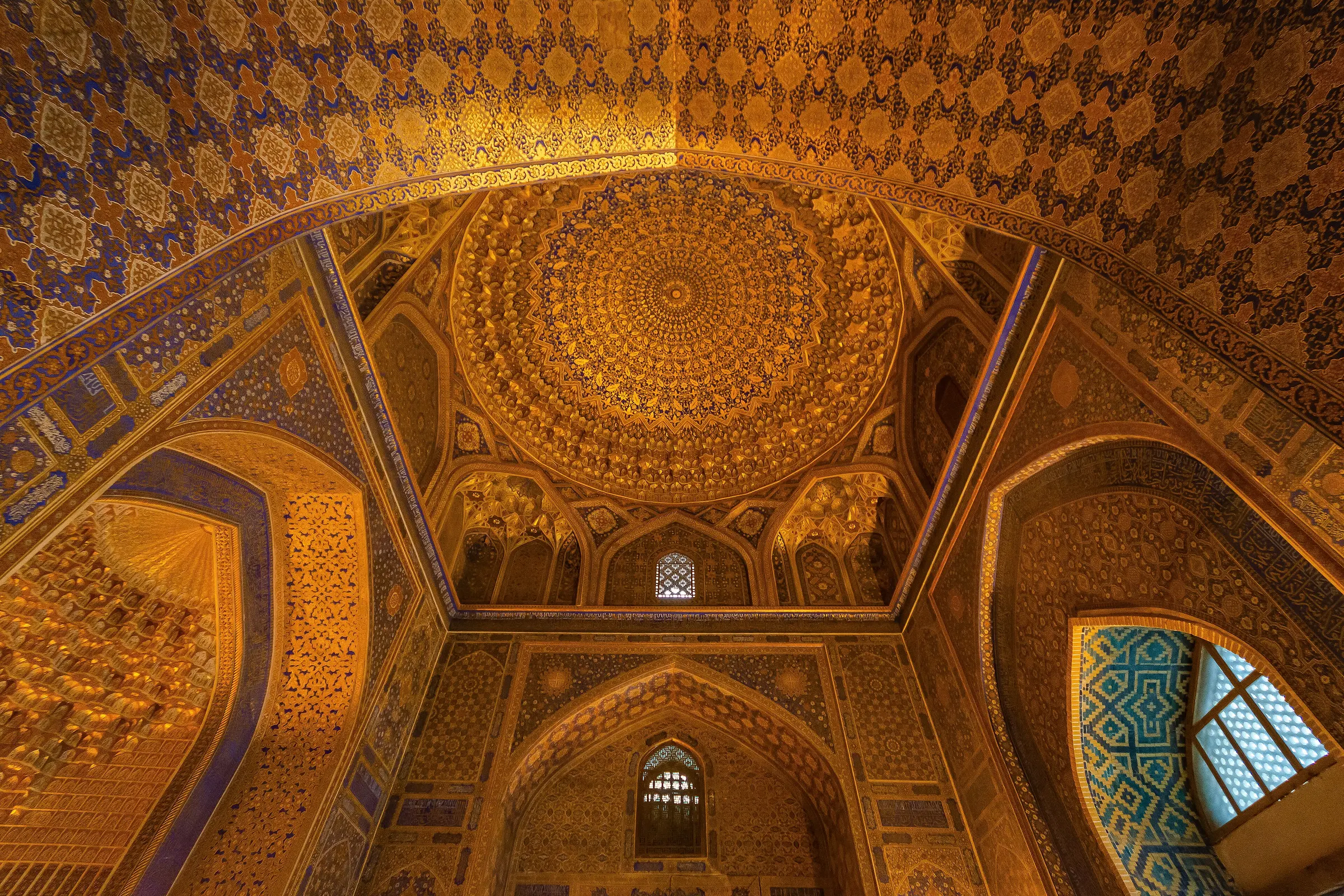
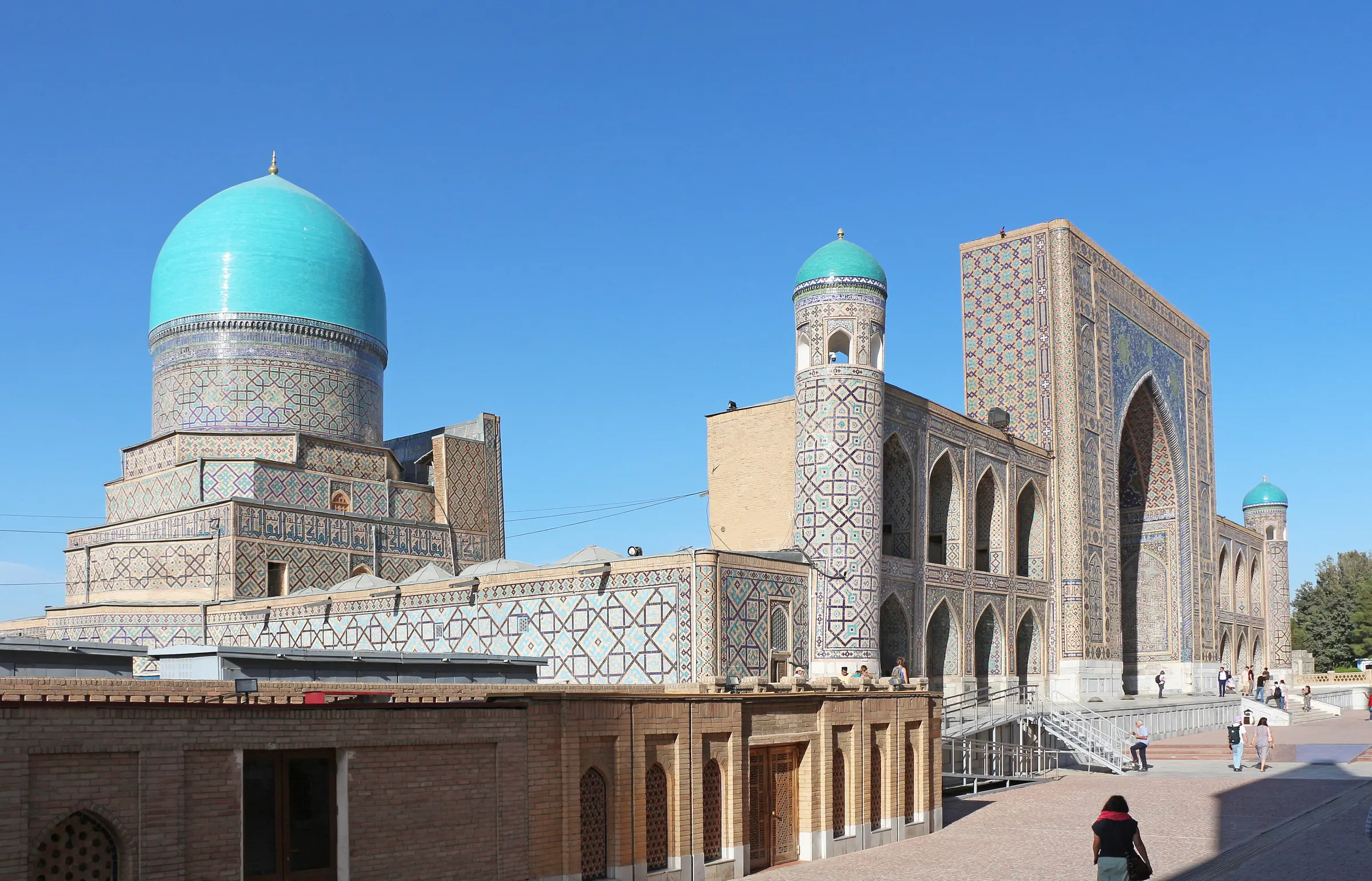
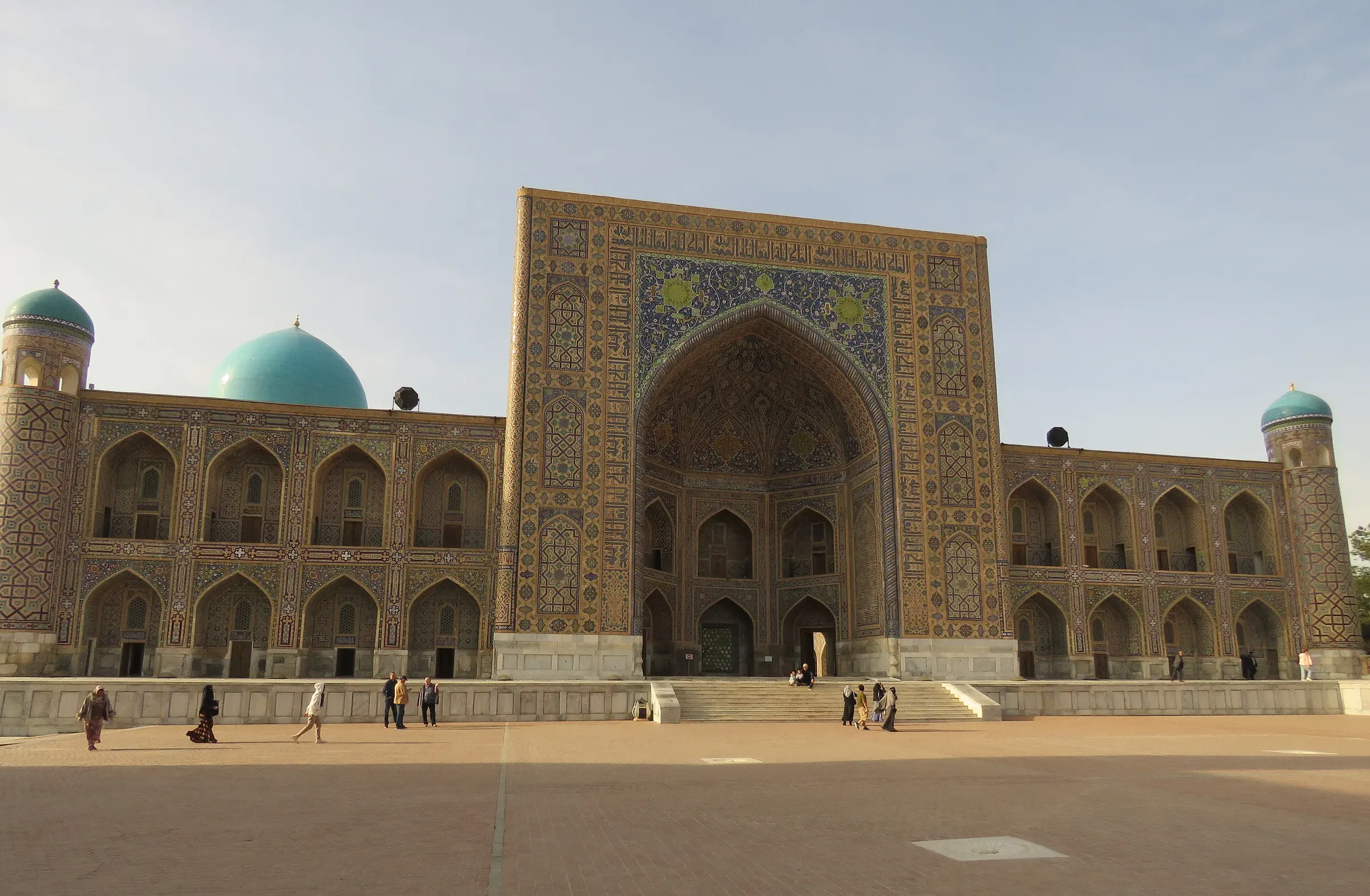
The madrasa that closes the north side of the Registan and once served as Samarkand's Friday mosque (1646–1660), its prayer hall ablaze with gilded kundal decoration.
With the Sher-Dor complete, Yalangtush Bahadur began building on the north side of the square in 1646. The new madrasa rose on the site of the dilapidated 15th-century Mirzoi caravanserai, partly reusing its foundations and walls. By then Samarkand's great congregational mosques — Bibi-Khanym and the mosque of Alika Kukeltash — lay in ruins, so the decision was made to combine a theological college and the city's Friday mosque in a single building.
Building and decoration took fourteen years and were finished in 1660, after Yalangtush's death. That may explain why some details look hurried and why the mosque's outer dome was never built. With Tilya-Kori in place, the Registan was complete: three madrasas now enclosed the square on three sides.

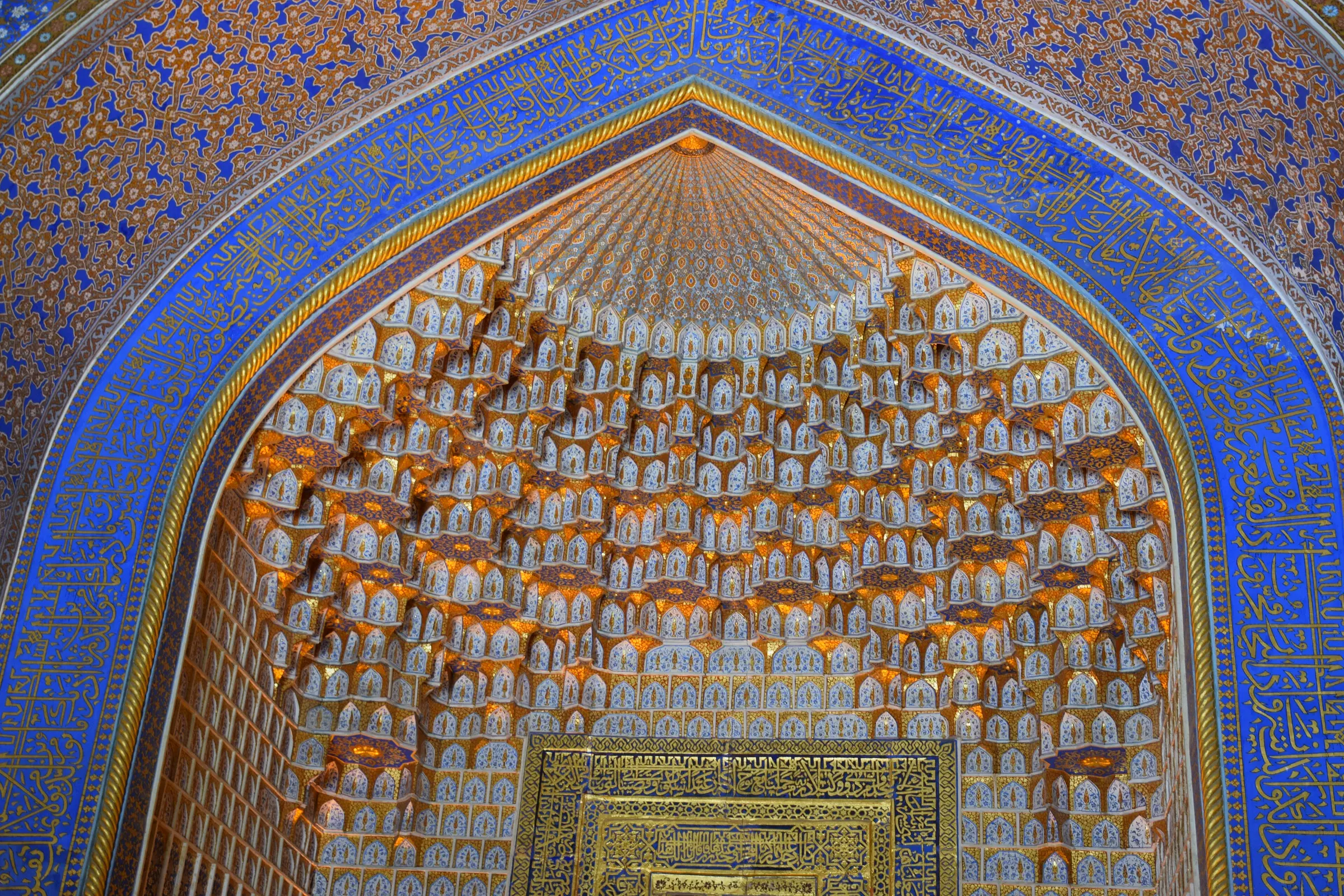
Tilya-Kori means "worked with gold". The name comes from the mosque in the west wing, whose walls, vaults and dome are covered in kundal decoration: a relief pattern is first modelled in gypsum or a special paste, then painted and overlaid with gold leaf, so that the surface shimmers like brocade. Locals like to say that enough gold went into the mosque to pay for another whole building. Amid the gilding stand a marble mihrab and an eleven-step marble minbar. The mihrab niche is filled with gilded muqarnas and framed by Quranic inscriptions in relief, the lower walls are clad in tiles, and the wooden doors are richly carved with ornament and calligraphy.
The building is almost square, more than 70 metres a side. Its architect, evidently trained in the Bukhara school, did not copy the proportions of its neighbours. Instead he stretched the wings of the main facade to enclose the square, so that Tilya-Kori, though the centrepiece of the composition, never competes with the other two madrasas and serves as their backdrop.
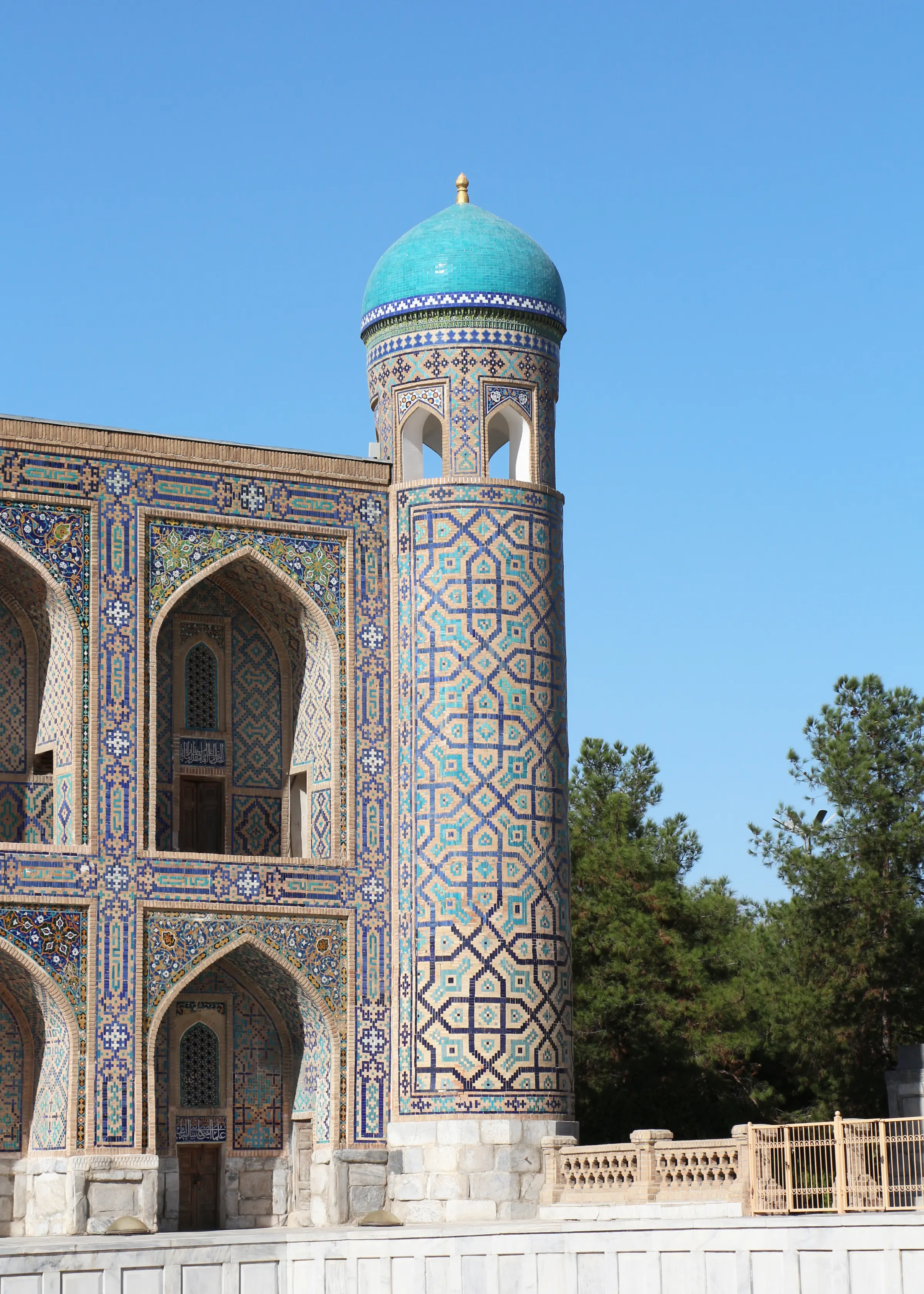
The facade consists of a central portal and two-storey wings lined with arched student cells overlooking the square, with slender guldasta turrets at the corners. A spacious four-iwan courtyard is surrounded by cells — two storeys along the front, one storey elsewhere. On the west side of the courtyard stands the domed mosque: a cross-shaped central hall flanked by open, pillared galleries.

The earthquake of 1817–1818 brought down the upper part of the main portal and its tympanum; Emir Haydar had it rebuilt, but without tiles. During repairs in 1885 the gilding was painted over, and by the early 1900s most of the tile cladding had gone. Restoration began in the 1920s, and from 1930 a restoration workshop based here studied the original tile colours. The courtyard facades and the drum of the mosque dome were restored in 1950–1958; in the early 1970s the main portal was redecorated and a turquoise outer dome was raised over the mosque for the first time. Restoration of the gilded interior was completed in 1979.
The building served as the city's Friday mosque until the 1920s and is now a museum hosting exhibitions.
Tilya-Kori's familiar turquoise dome is a 20th-century addition: the 17th-century builders only managed the inner dome. That is why old photographs show the madrasa without it. Tilya-Kori is also home to the Registan Ensemble Directorate, so the life of the whole square is run from this building.

Details may change — please check before you visit.
Gallery
Related places
Timur's colossal Friday mosque
Nearby


The pedestrian street from the Registan to Bibi-Khanym
249 mStay & eat
Hotel · 100 m
Hotel · 100 m
Hotel · 250 m
Hotel · 300 m
Restaurant · 100 m
Café · 200 m
Teahouse · 250 m
Café · 300 m


For example: Registan, Ulugh Beg, plov, Urgut