
Registan
The great square of three madrasas
This site is in test mode — some information may contain errors.
Report
Tomb of Timur and his dynasty
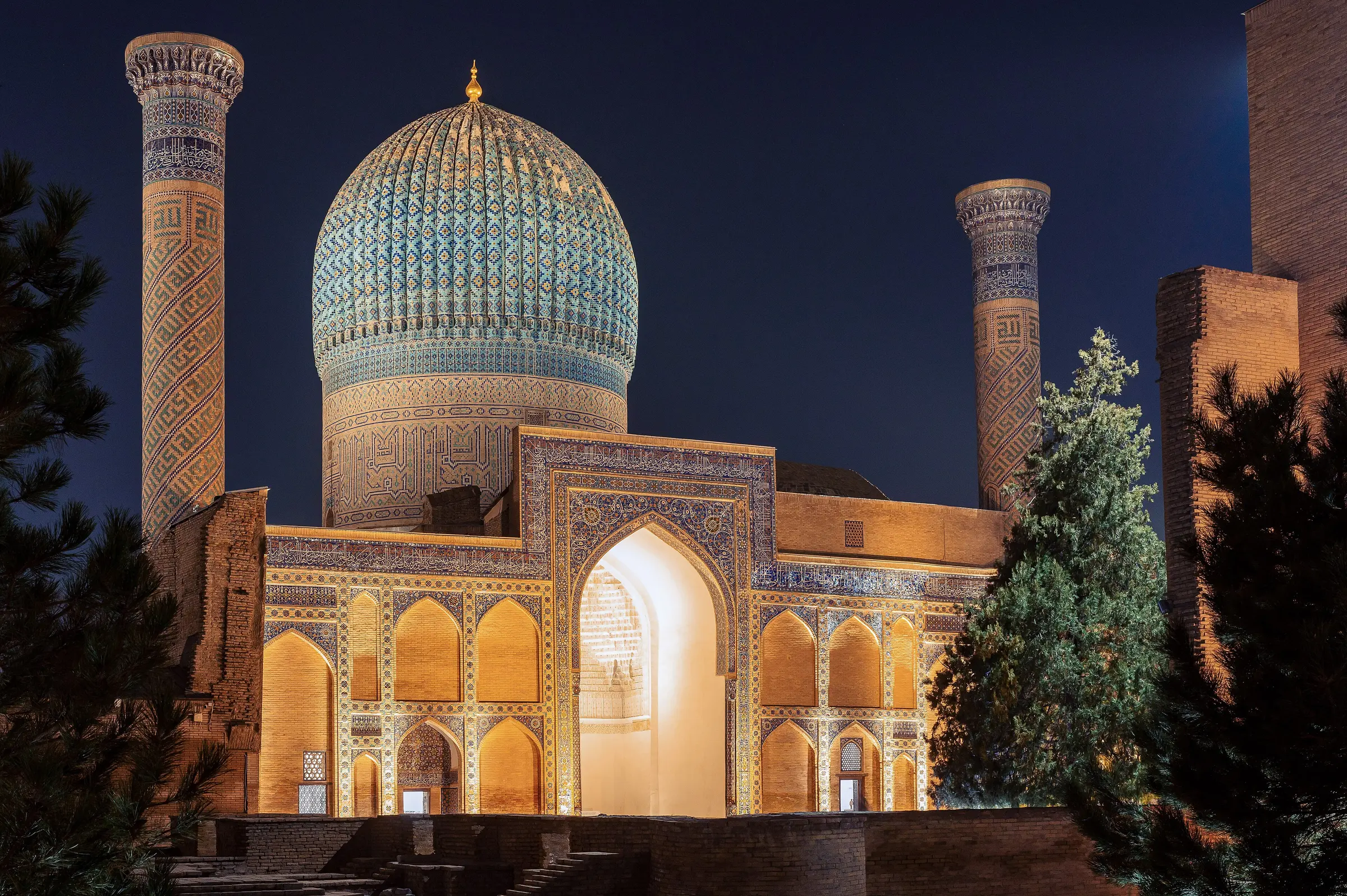
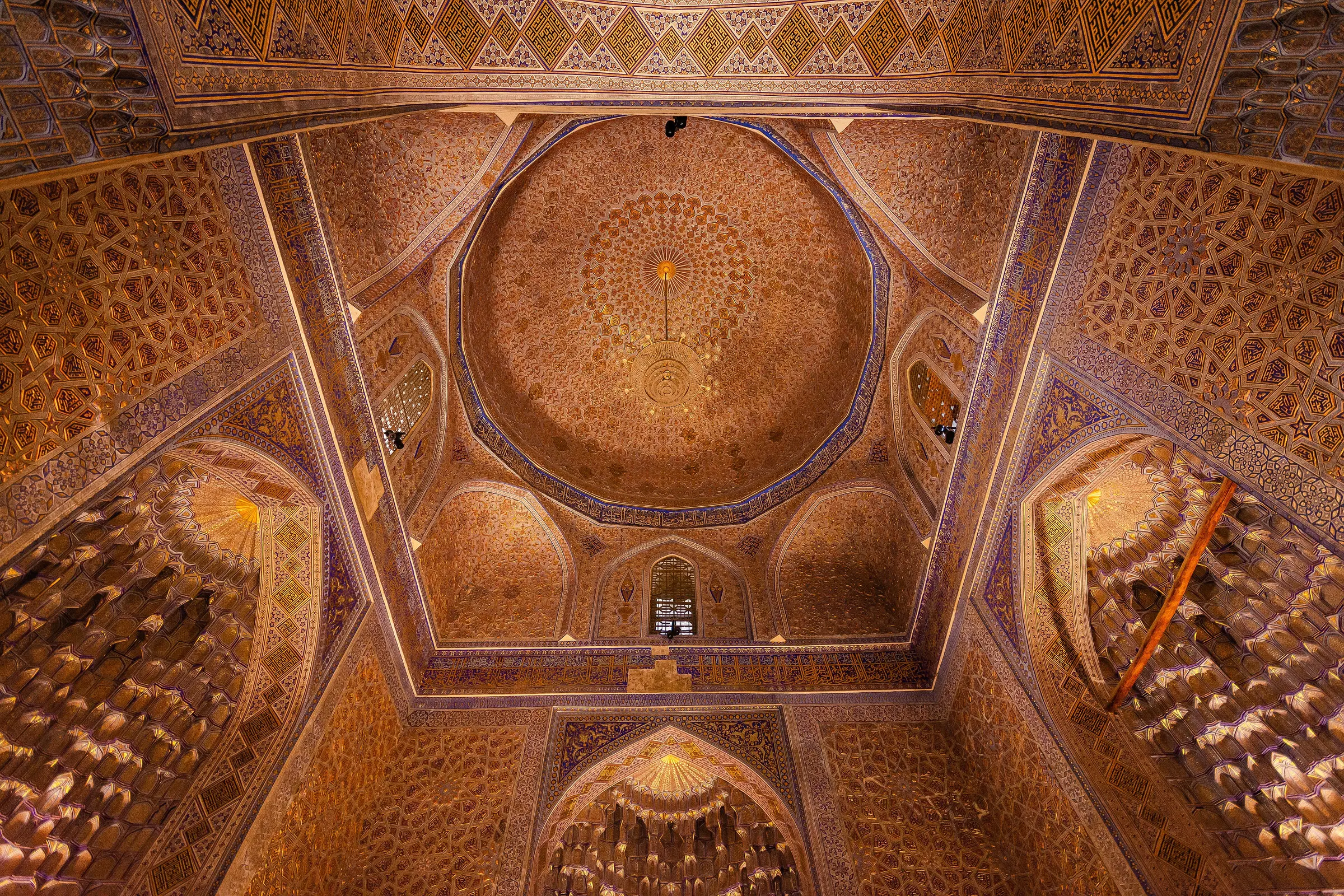
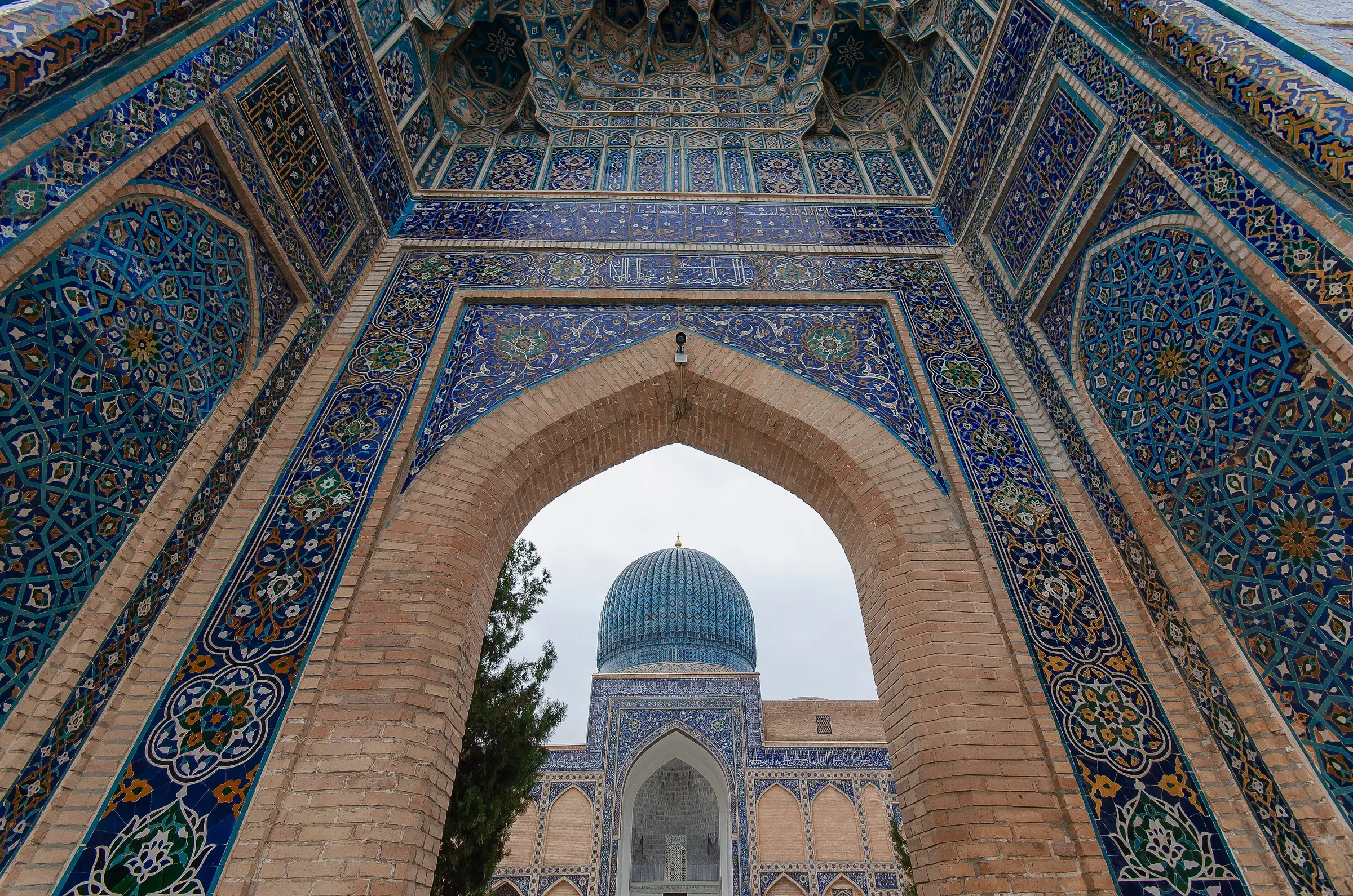
The mausoleum of Timur, his sons and grandsons, among them Ulugh Beg (1403–1404): a ribbed turquoise dome and a gilded interior make it a high point of Timurid architecture.
Gur-e-Amir is Persian for "tomb of the emir". In the late 14th century Timur's favourite grandson and heir, Muhammad Sultan, built a madrasa and a khanaqah on this spot. When he died suddenly in 1403 on the way back from campaigning in Anatolia, a grief-stricken Timur ordered a mausoleum raised in the complex's courtyard. The Castilian envoy Ruy González de Clavijo, in Samarkand in the autumn of 1404, left a brief description of it.
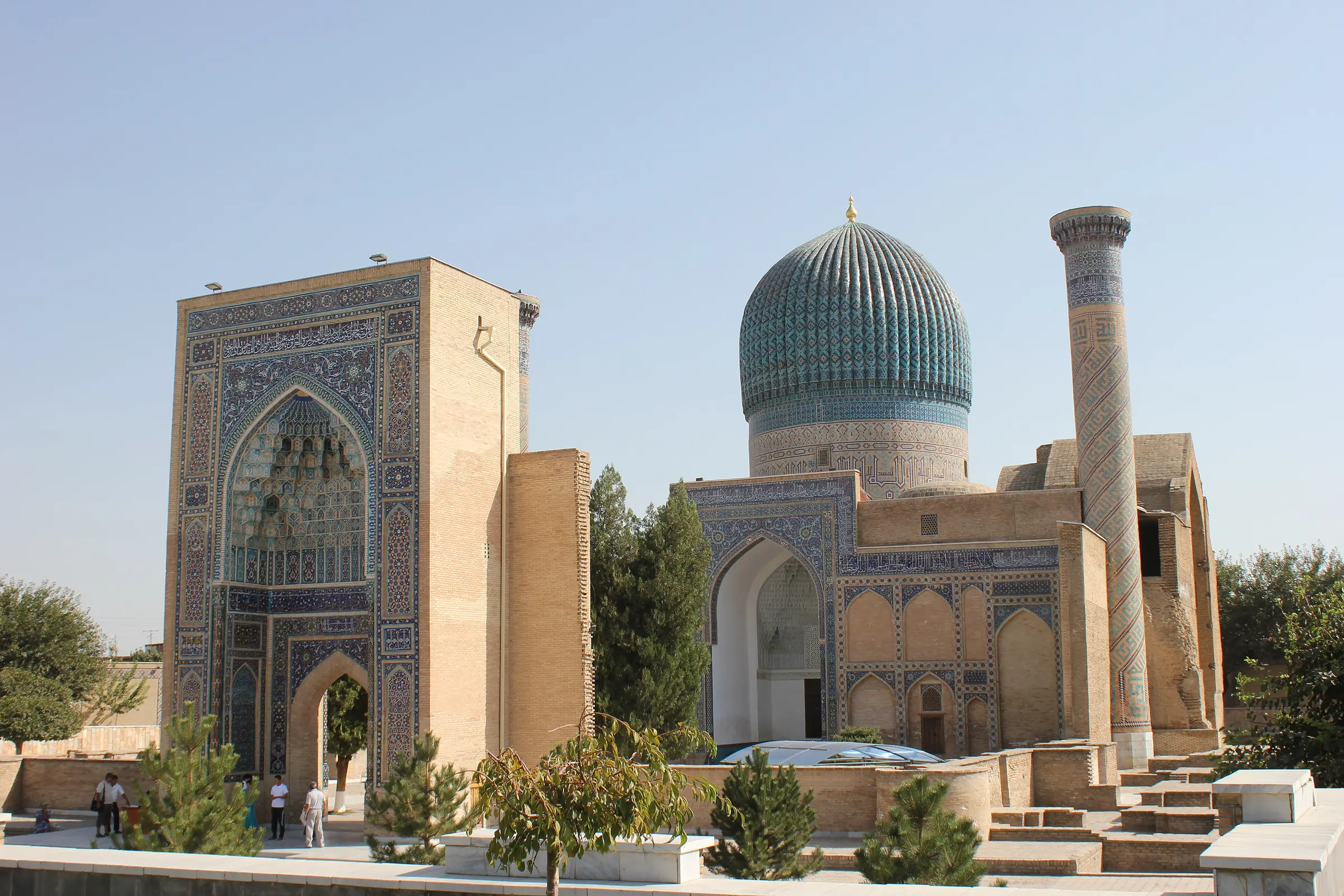
Timur himself intended to be buried in his home town of Shahrisabz, where he had prepared a crypt. But when he died at Otrar in February 1405, his body was brought to Samarkand and laid in the still unfinished mausoleum — snow-blocked mountain passes are the reason usually given. Under Ulugh Beg the building became the Timurid family vault, gaining an entrance gallery and a remodelled courtyard; the original gateway of Muhammad Sultan's complex still stands.

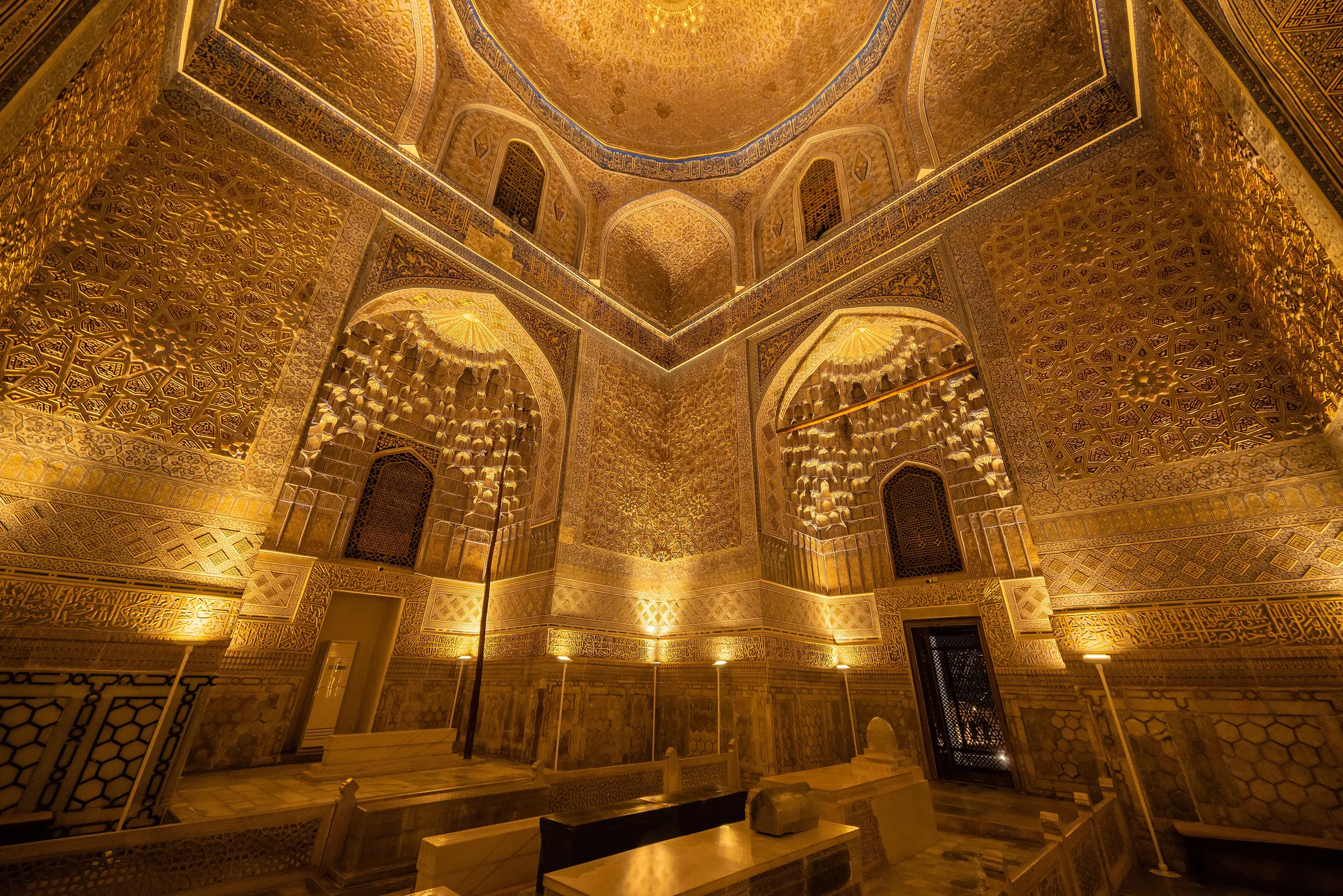
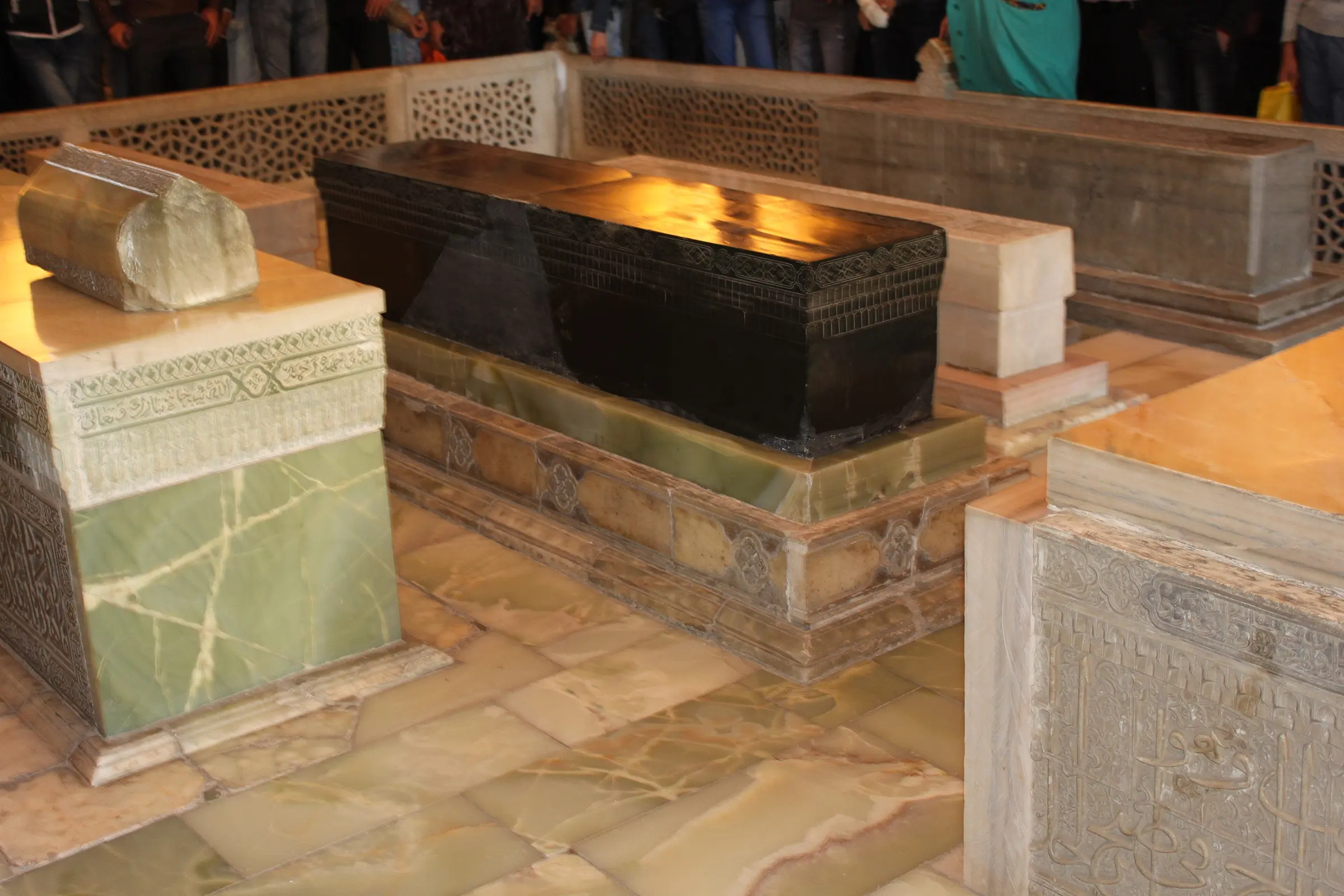
The mausoleum holds Timur, his sons Shah Rukh and Miran Shah, his grandsons Muhammad Sultan and Ulugh Beg, and Timur's spiritual guide Mir Sayyid Baraka; tradition says Timur asked to be buried at his teacher's feet. The carved tombstones in the upper hall are cenotaphs only: the real graves lie in a plain brick crypt directly below, in the same arrangement.
The dark-green, almost black slab of nephrite jade at the centre marks Timur's grave. According to the sources, Ulugh Beg brought the jade back from his 1425 campaign into Moghulistan. Its inscription sets out Timur's genealogy, tracing his line to ancestors shared with Genghis Khan. Legend has it that in 1740 the Persian ruler Nader Shah carried the stone off, that it cracked in two on the way, and that the shah, fearing ill fortune, sent it back — the crack is still visible.
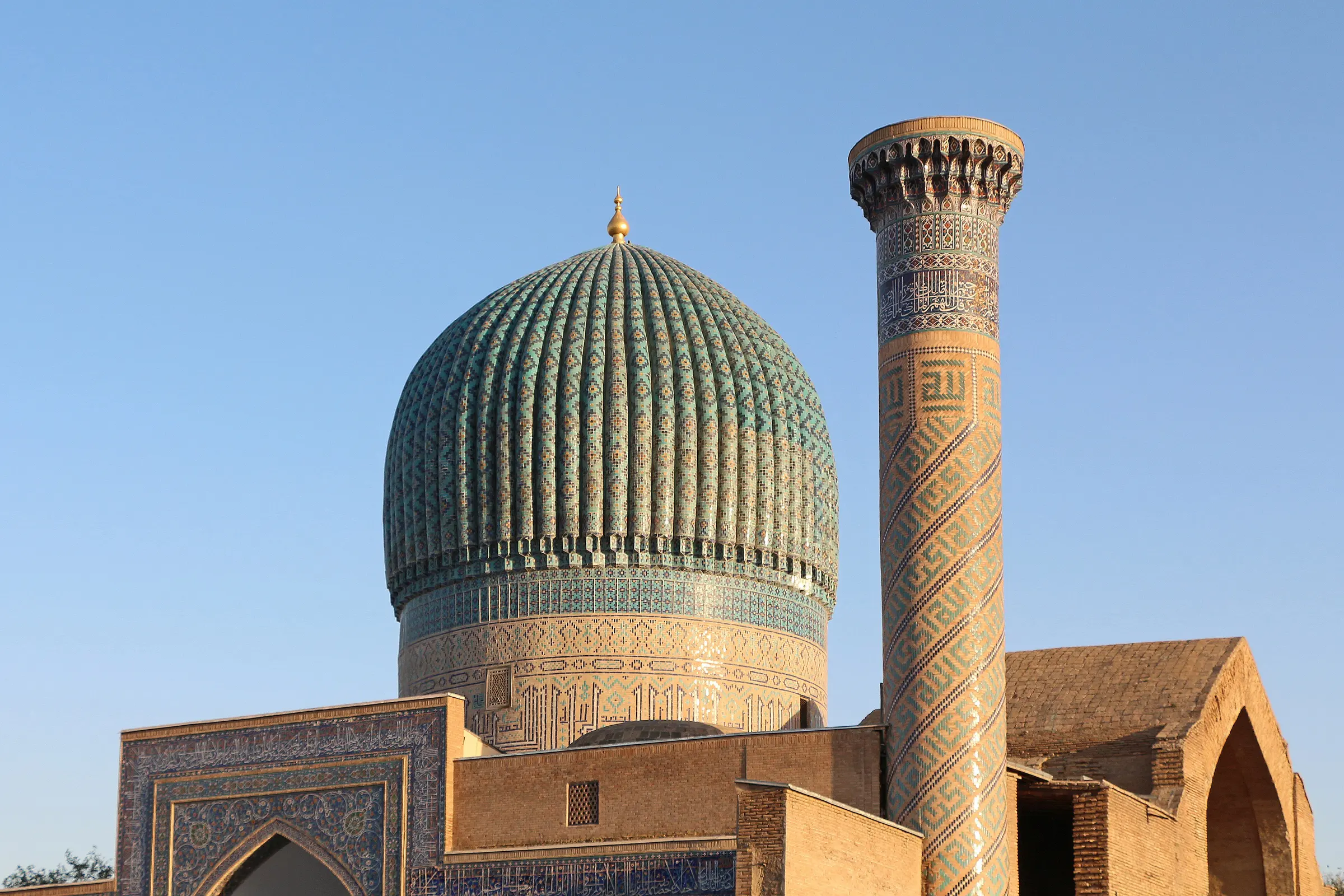
From outside the mausoleum is an octagon topped by an inscribed cylindrical drum and a ribbed, melon-shaped dome. The dome is 15 metres across and 12.5 metres high, with 64 ribs; the building rises to about 34 metres overall. Huge Kufic letters around the drum repeat the phrase "Eternity belongs to God". Inside is a second, lower dome — a double shell that let the builders give the exterior its soaring silhouette while keeping the hall itself in proportion.
The lower walls are clad in onyx and marble; above, blue paint and gold cover the surfaces, and gilded reliefs on the dome and arches evoke a starry sky. The mosaic of the entrance portal carries the name of its architect, Muhammad ibn Mahmud of Isfahan. Gur-e-Amir later served as a model for the Mughal tombs of Timur's descendants in India — Humayun's Tomb in Delhi and the Taj Mahal in Agra.

In June 1941 a Soviet commission opened the Timurid graves. The anthropologist Mikhail Gerasimov reconstructed Timur's face from his skull and confirmed that he stood about 172 cm tall and walked with a limp; Ulugh Beg was found to have been beheaded. Because the tomb was opened on the eve of the German invasion of 22 June, a legend of "Tamerlane's curse" took hold — researchers trace it to Malik Kayumov, a cameraman on the expedition. The remains were reburied with Islamic rites in December 1942.
Restoration began with the dome and portal in the 1950s, and the interior was restored in the 1970s. In 1996, for the 660th anniversary of Timur's birth, two minarets were rebuilt from old drawings and photographs. Of Muhammad Sultan's madrasa and khanaqah, only the foundations remain.
A tiled inscription over the side door once read "This is the tomb of the sultan of the world, Emir Timur Gurgan". Stolen in 1905 and sold in Constantinople, the original was recovered through Russian diplomats and is now in the Hermitage in St Petersburg; a copy hangs above the door.

Details may change — please check before you visit.
Gallery
Related places
The great square of three madrasas

The astronomer-king's university

The avenue of mausoleums
Nearby


Stay & eat
Guesthouse · 50 m
Guesthouse · 100 m
Guesthouse · 100 m
Hotel · 150 m
Plov centre · 150 m
Restaurant · 350 m
Restaurant · 550 m
Restaurant · 650 m


For example: Registan, Ulugh Beg, plov, Urgut