
Chorsu
From trading dome to art gallery
This site is in test mode — some information may contain errors.
Report
Samarkand's biggest and oldest market
A seven-hectare bazaar beside the Bibi-Khanym Mosque, piled with Samarkand bread, dried fruit, spices and sweets — the place to see the city's everyday life up close.
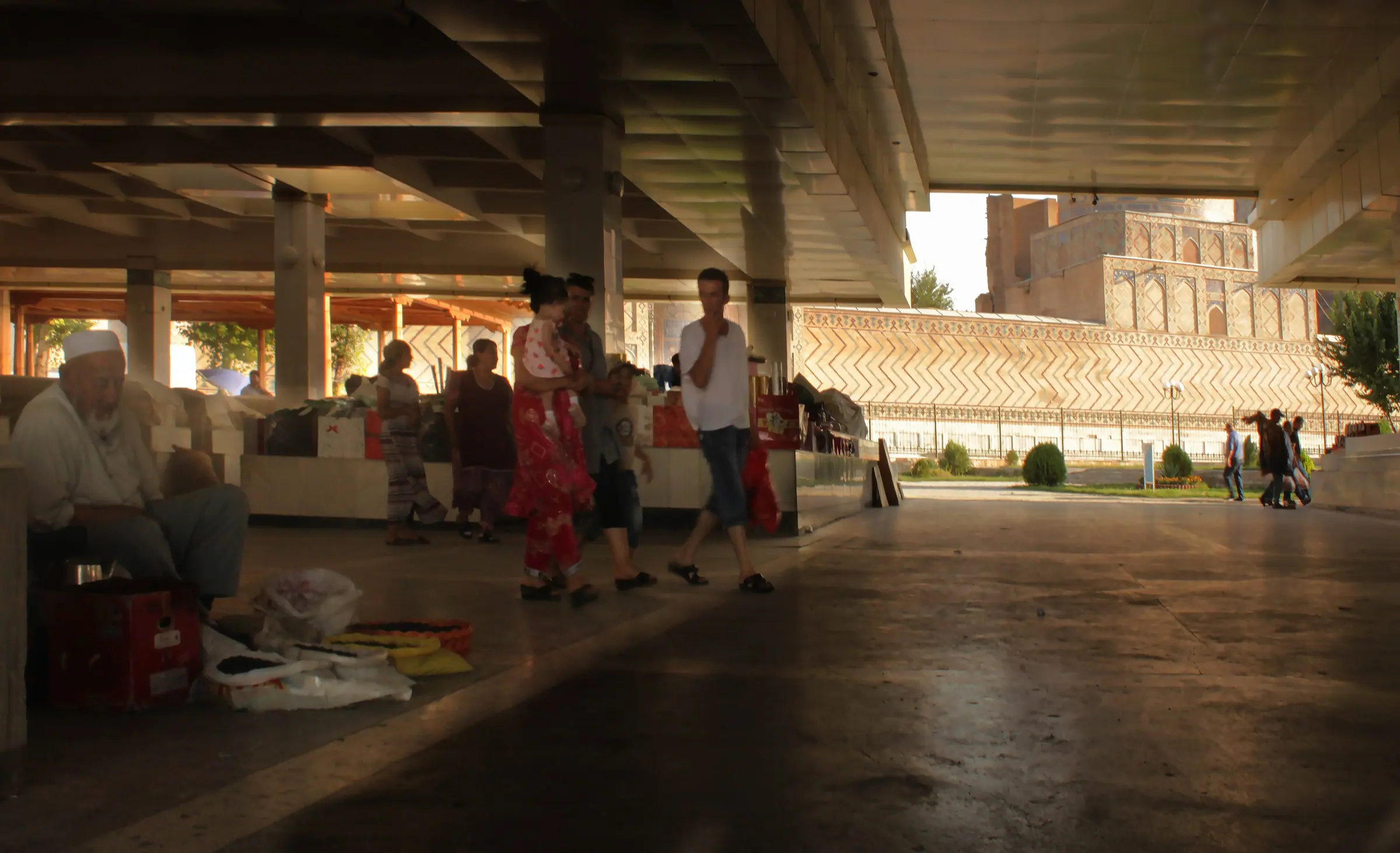
Siyob Bazaar (often spelled Siab) is the largest and oldest market in Samarkand and one of the great traditional bazaars of Uzbekistan and Central Asia. It sits in the heart of the old city, where Islam Karimov Street meets Shah-i-Zinda Street, right up against the Bibi-Khanym Mosque. The Registan lies about a kilometre to the south, the Shah-i-Zinda necropolis some 500 metres to the east, and the ancient site of Afrasiyab two kilometres to the north.
The bazaar takes its name from the historic district of Siyob and the stream of the same name that runs nearby; in Persian and Tajik the word means "black water". Nobody knows exactly when trading began here — sources simply describe a market centuries old. In the Russian imperial era, the street leading past it was even called Siab Street. The covered halls and the grand gateway you see today, however, are modern structures.

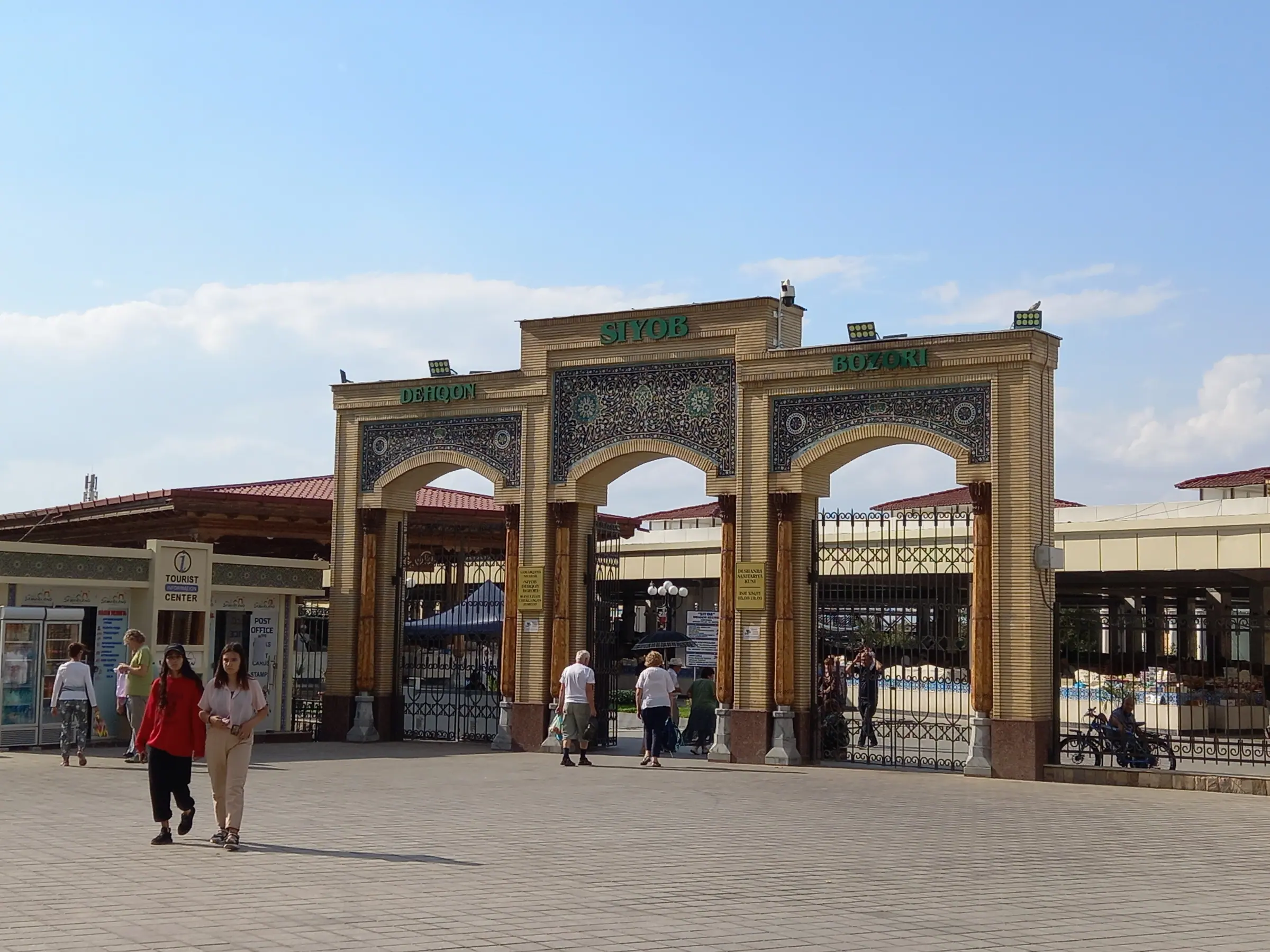
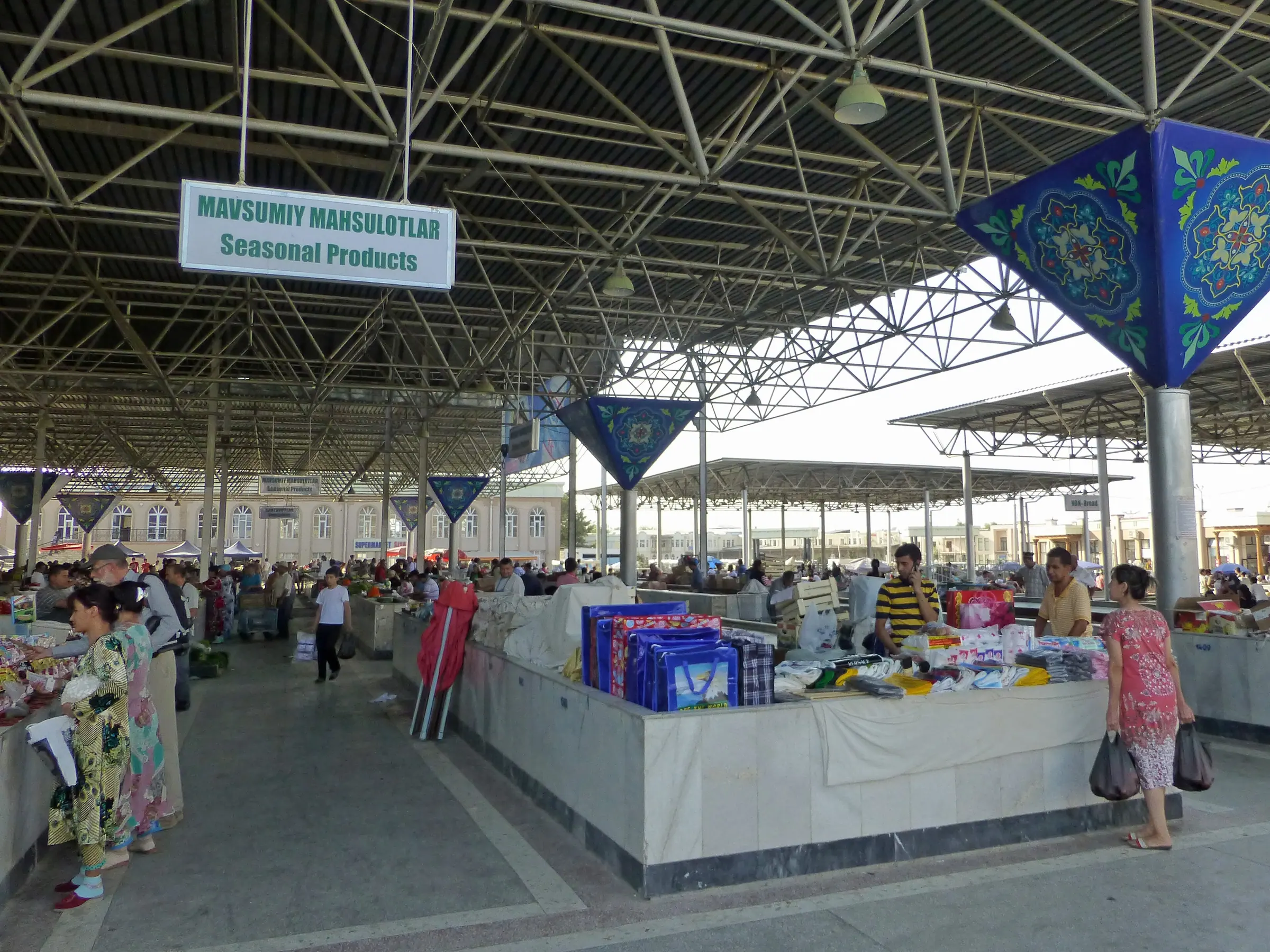
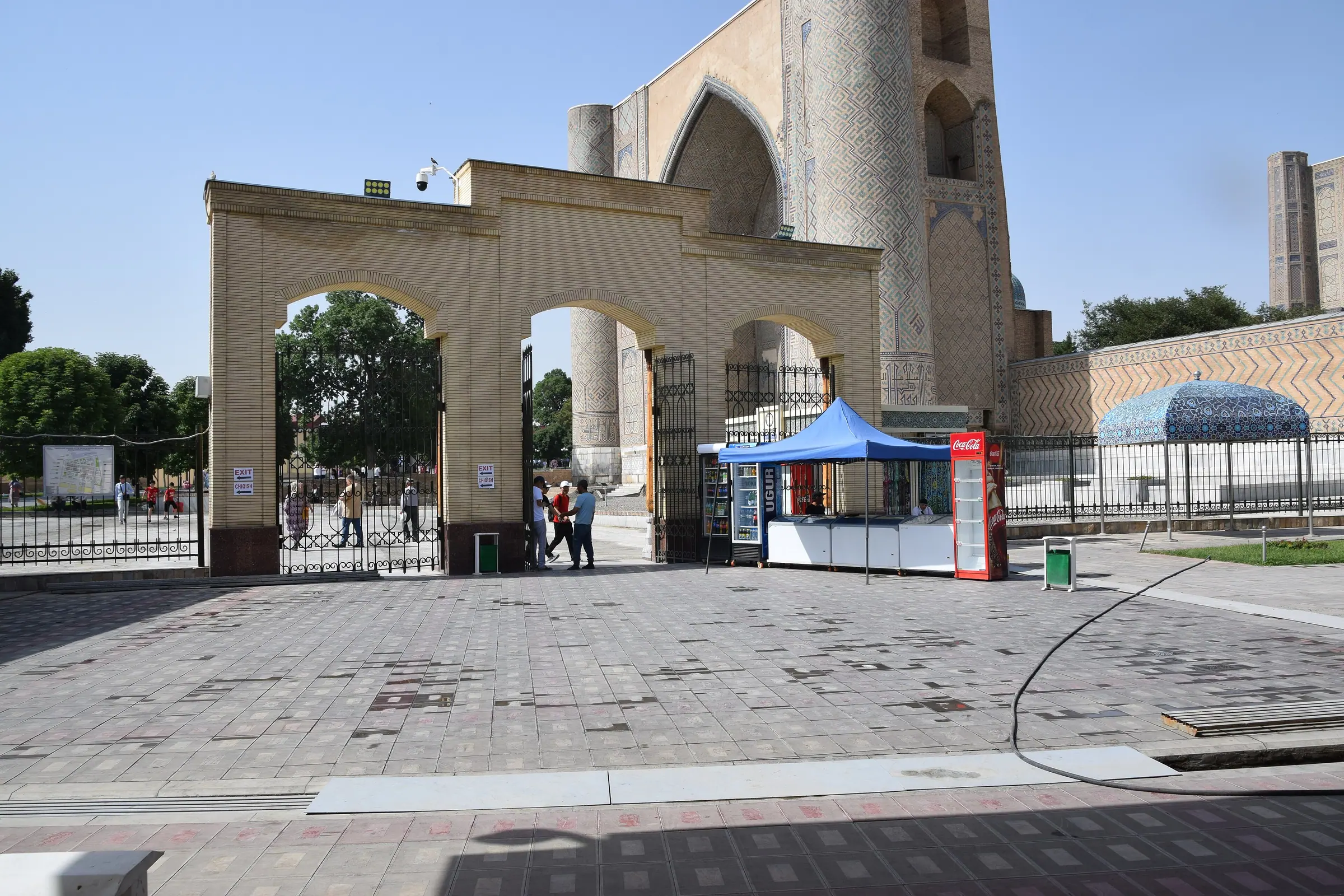
The market covers more than seven hectares. You enter through a triple arch faced with blue majolica tiles. Inside are seven large covered halls lined with counters, plus several more pavilions of small shops. Each trade has its own zone: a meat hall, dairy, fruit and vegetables, dried fruit and nuts, spices, a separate hall for bread and sweets, and rows of fabric and household goods. Local craftsmen also sell carved woodwork and metal ware made on site.
Within the grounds stand the five-storey Shodiyona shopping centre and the two-storey Siab supermarket, and canteens serve shashlik, plov and lagman. In 2017 a plan to replace the bazaar with a three-storey hypermarket alarmed residents, who feared losing their historic market. As of 2025, Siyob still operates as a traditional bazaar and remains woven into the city's daily routine.
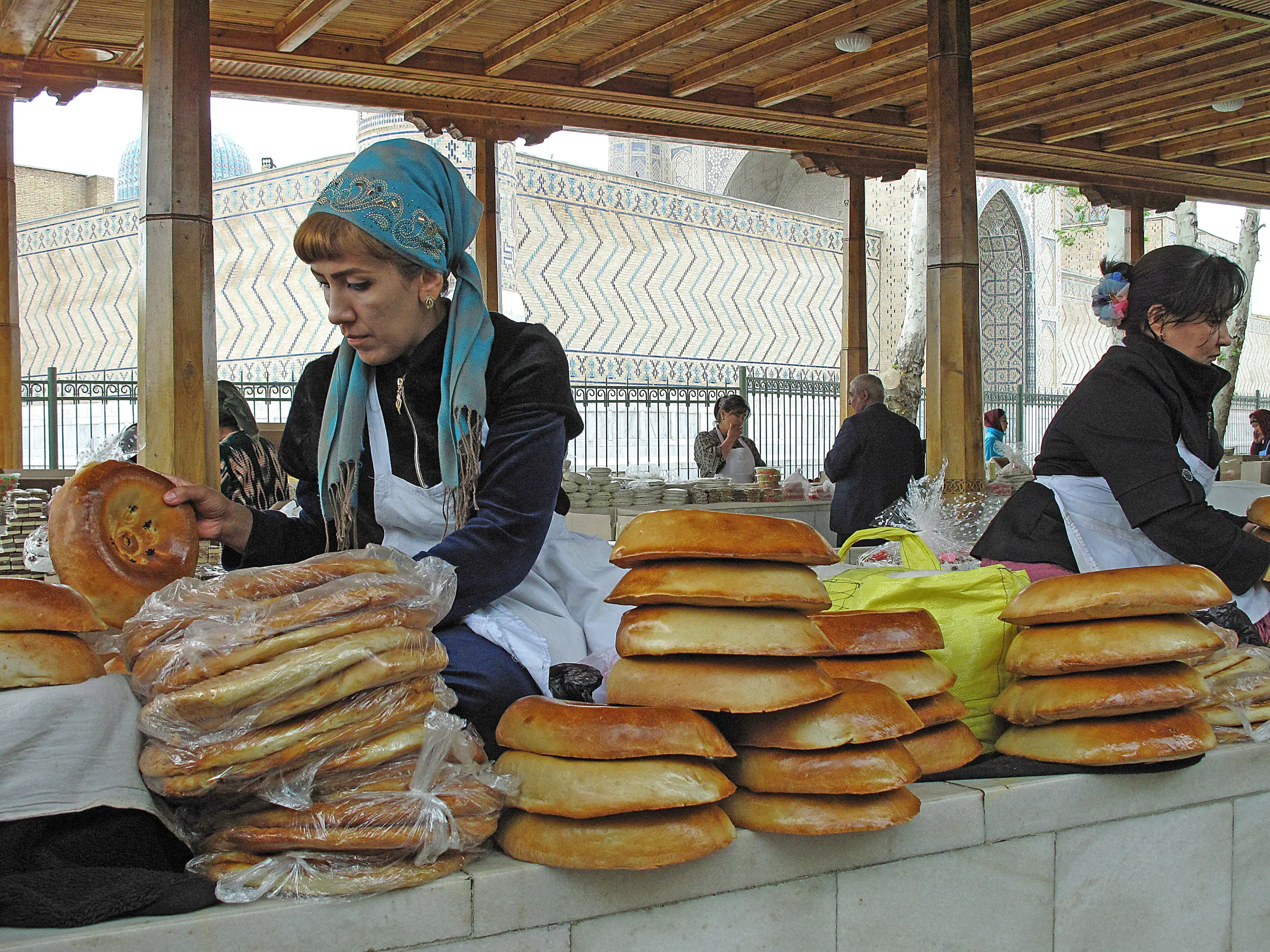
Many people come to Siyob first and foremost for bread. The bread hall offers more than seventeen kinds of tandoor-baked flatbread, the most famous being the dense, heavy, stamped Samarkand non. It is something of a civic emblem, and locals routinely carry it to friends and family in other cities as a gift.
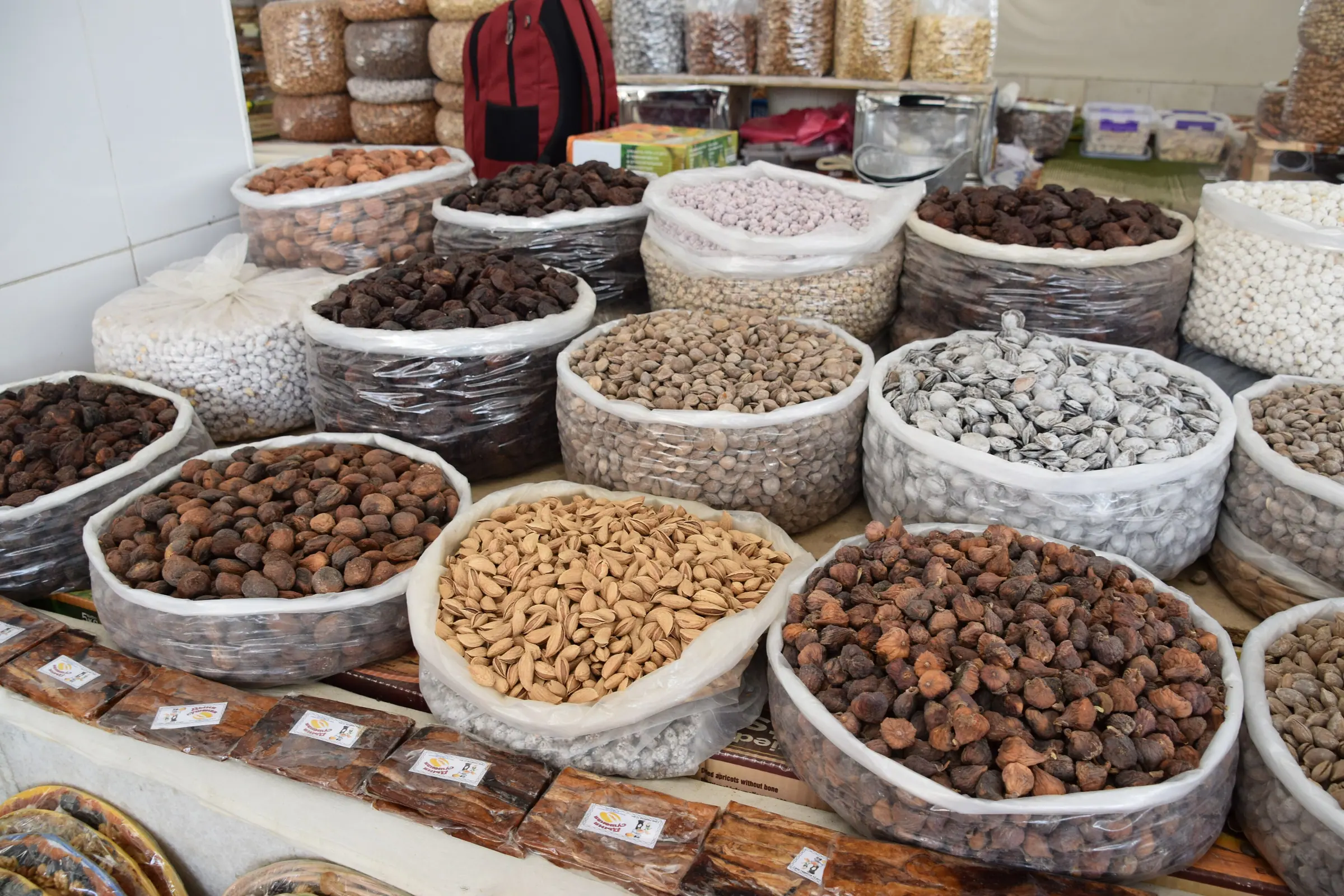
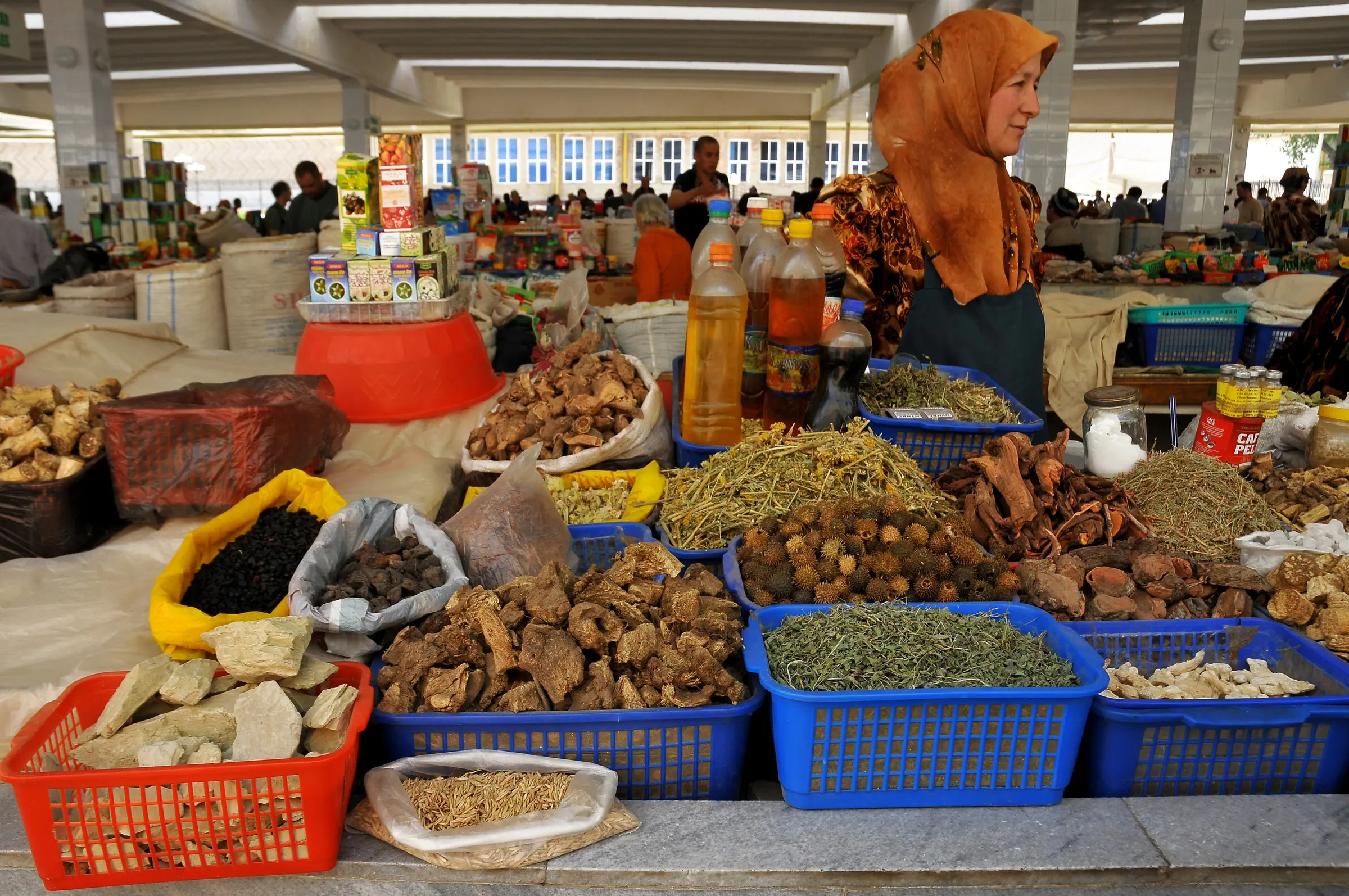
The dried-fruit rows are heaped with raisins, apricots, figs, almonds, pistachios and walnuts; spice sellers offer cumin, red pepper and saffron; confectioners stack halva and navat, the local crystallised sugar. Vendors will happily let you taste before you buy, and haggling is part of the social ritual. In late summer and autumn the stalls of melons, grapes and pomegranates are at their most spectacular.

Siyob wakes at dawn, as farmers and wholesalers unload their produce and bakers carry in baskets of hot bread. Early in the day the shoppers are mostly locals — families stocking up and cooks buying for cafés and restaurants. Tourists arrive towards midday, and in the summer heat the market noticeably slows down.
The dairy rows sell qatiq yoghurt, suzma and dried qurt balls; the herb stalls have basil, dill and thyme; the meat hall deals in lamb and beef. For visitors there are souvenirs, traditional clothes, skullcaps and fabrics, and household odds and ends. Prices are generally negotiable, so it pays to wander a few rows and compare.
Legend has it that an emir of Bukhara, determined to have Samarkand bread at his own court, carried off a Samarkand baker together with his tandoor, his flour and even his water. The bread still came out differently. The baker's explanation: "We could not bring the air of Samarkand."
From the bazaar it is an easy walk onward: south to the Bibi-Khanym Mosque and Mausoleum and the pedestrian stretch of Islam Karimov Street, or north-east to the Hazrat Khizr Mosque and Shah-i-Zinda.

Details may change — please check before you visit.
Gallery
Related places
From trading dome to art gallery
Nearby


The pedestrian street from the Registan to Bibi-Khanym
714 m
Stay & eat

Hotel · 300 m
Hotel · 400 m
Hostel · 400 m
Hotel · 550 m
Café · 300 m

Restaurant · 350 m
Teahouse · 350 m
Restaurant · 400 m


For example: Registan, Ulugh Beg, plov, Urgut