
State Museum of the History of Culture of Uzbekistan
From the Neolithic to the present
This site is in test mode — some information may contain errors.
Report
Home of the Hall of Ambassadors
A museum beside the ruins of ancient Samarkand, home to the celebrated 7th-century Hall of Ambassadors murals and more than 20,000 objects spanning two millennia of city life.
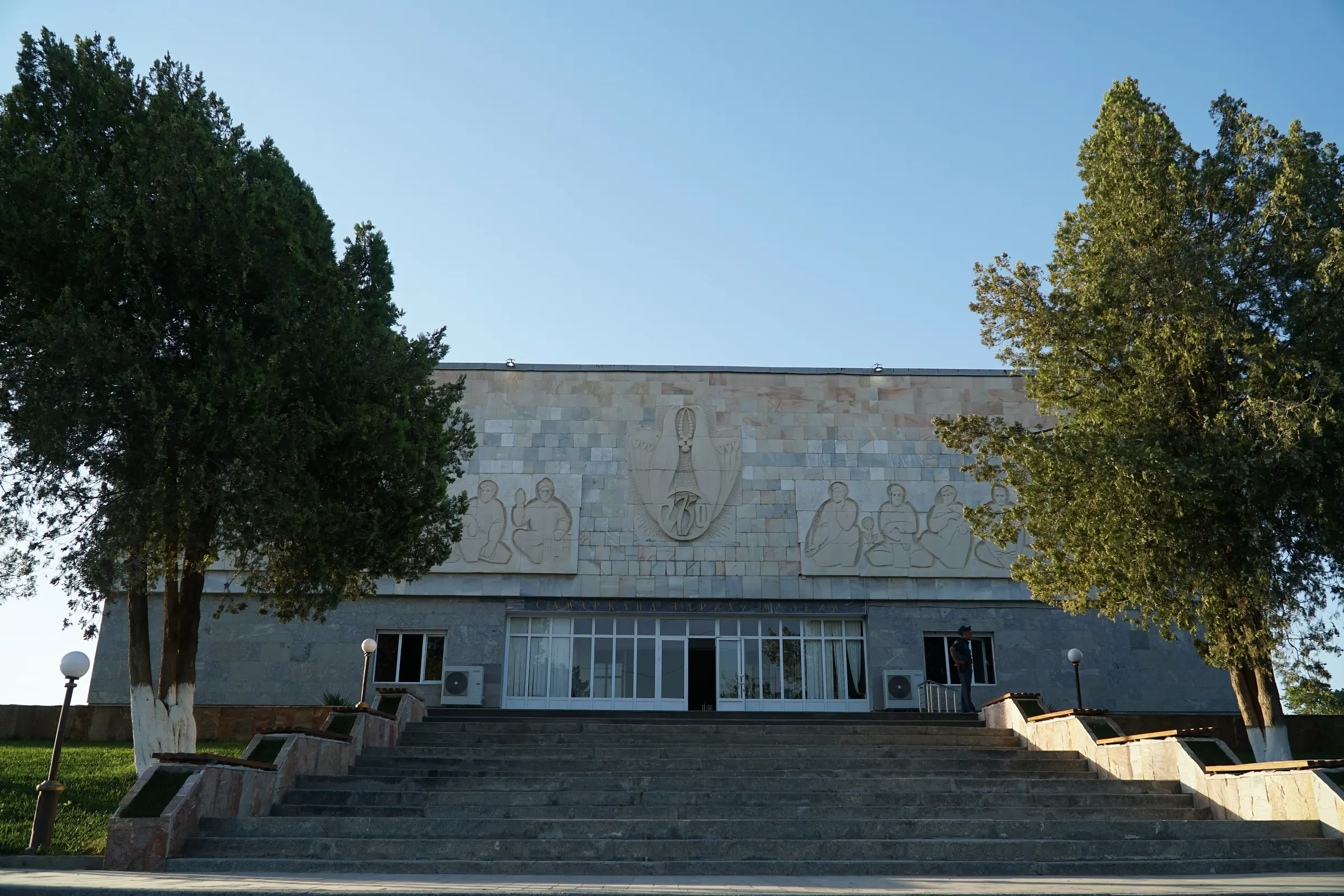
The Afrasiyab Museum stands at the foot of the great mound where Samarkand lived from the 8th–7th centuries BC until the Mongols sacked it in 1220. It opened in 1970, the year the city celebrated its 2,500th anniversary, in a building designed by the Armenian architect Bagdasar Arzumanyan, and today belongs to the Samarkand State Museum-Reserve.
More than 20,000 objects trace the city's story from Sogdian times to the Karakhanids: pottery, coins, weapons, terracotta figurines, ossuaries, glazed ceramics and glass. A refreshed display reopened in March 2024 with 3D reconstructions, dioramas and interactive panels, plus a small cinema that rebuilds ancient Samarkand in three dimensions.
The galleries are arranged by period across five halls. Under the renovation plan, the ground floor covers the early city and Sogdian culture, while the upper floor follows the Islamic centuries up to the Mongol conquest, so it pays to walk through in order: early finds first, then the Hall of Ambassadors, and medieval glazed ceramics last.

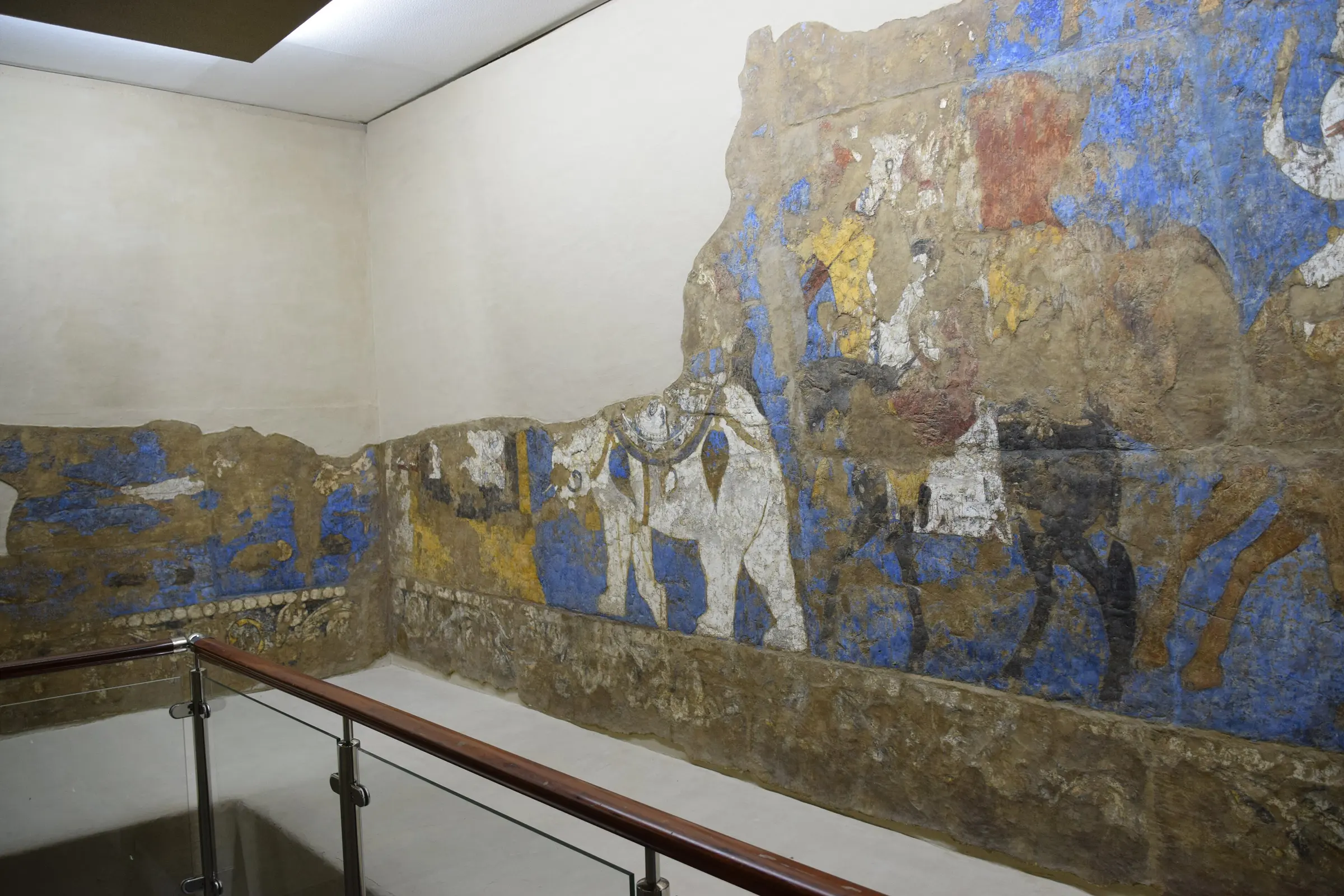
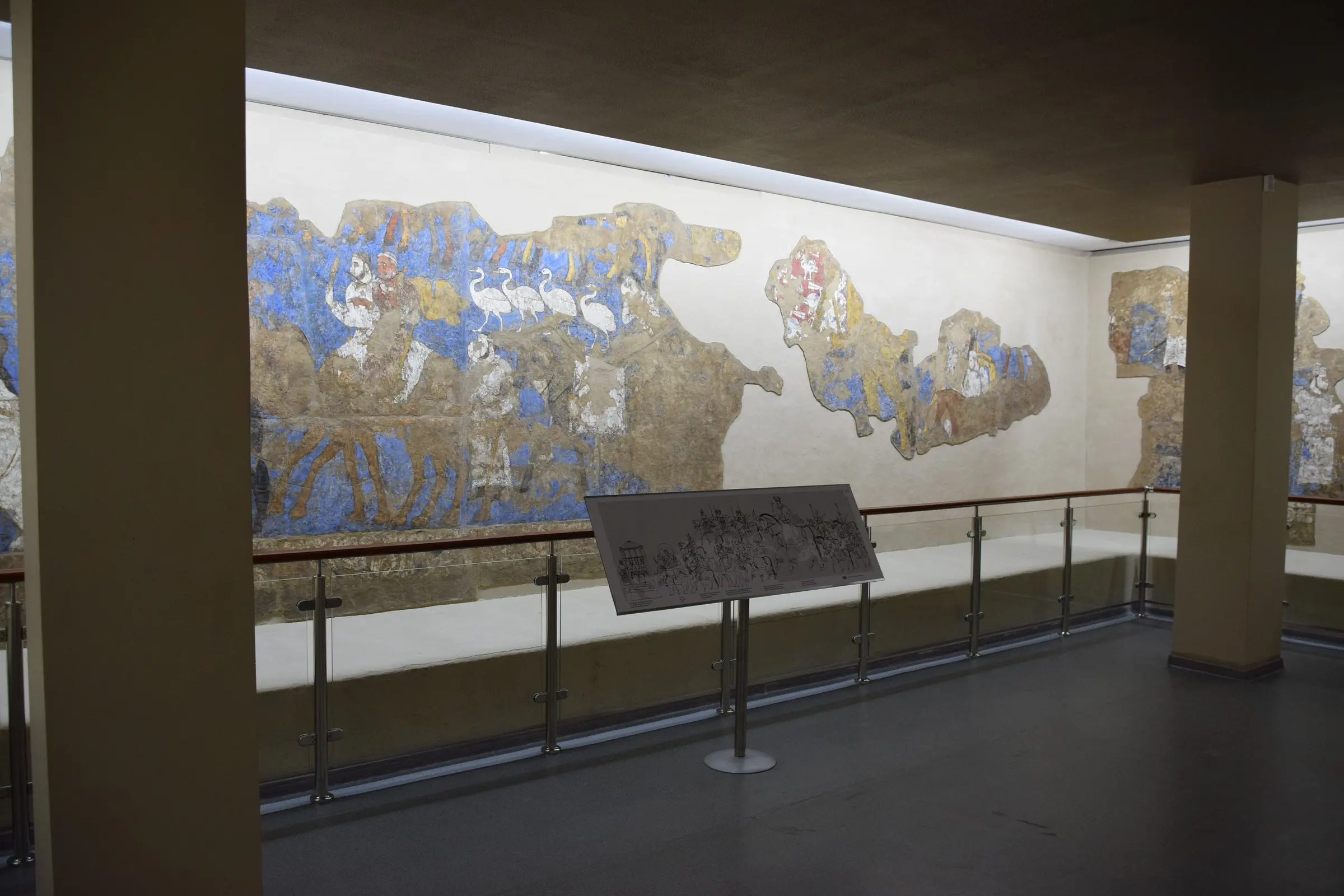
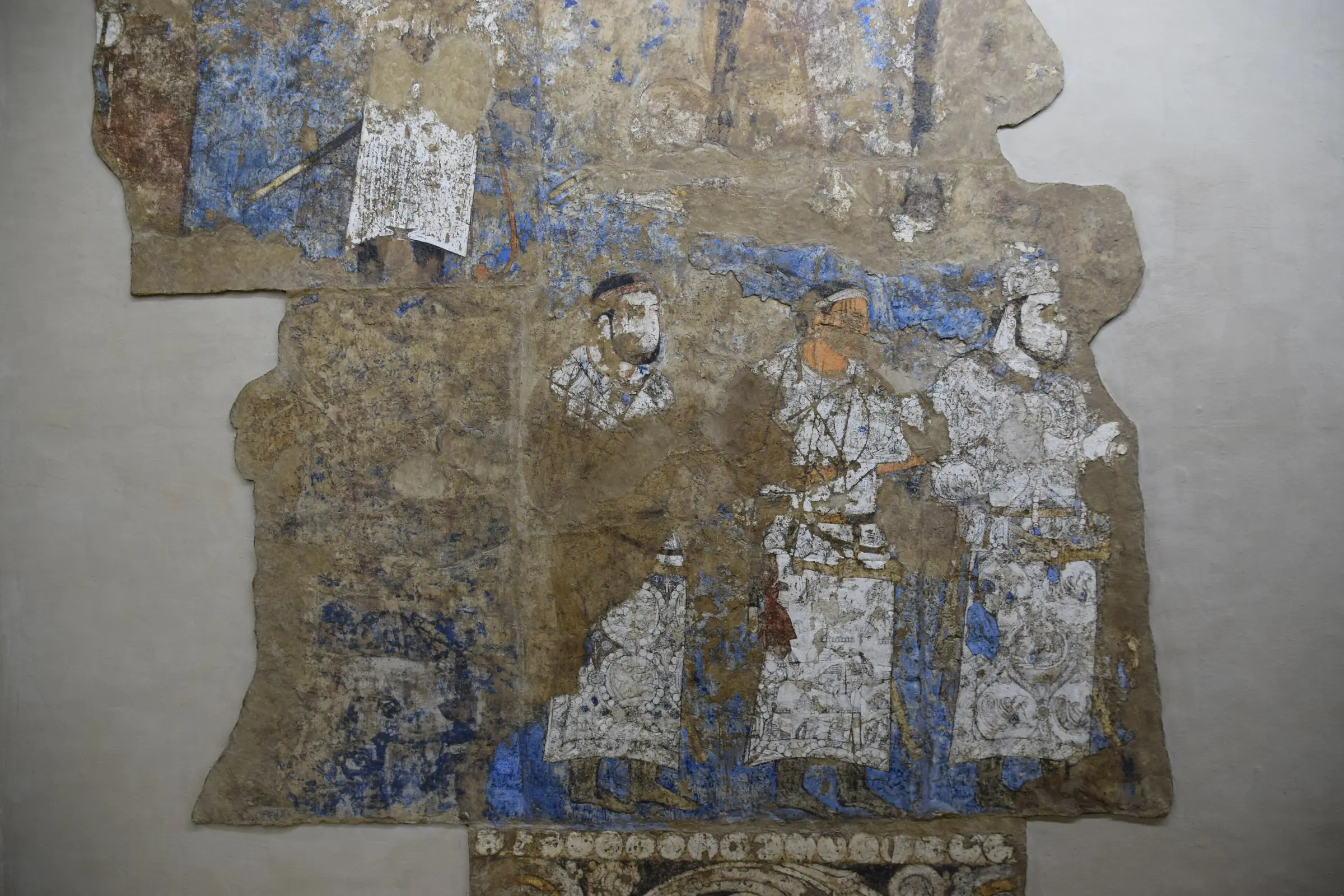
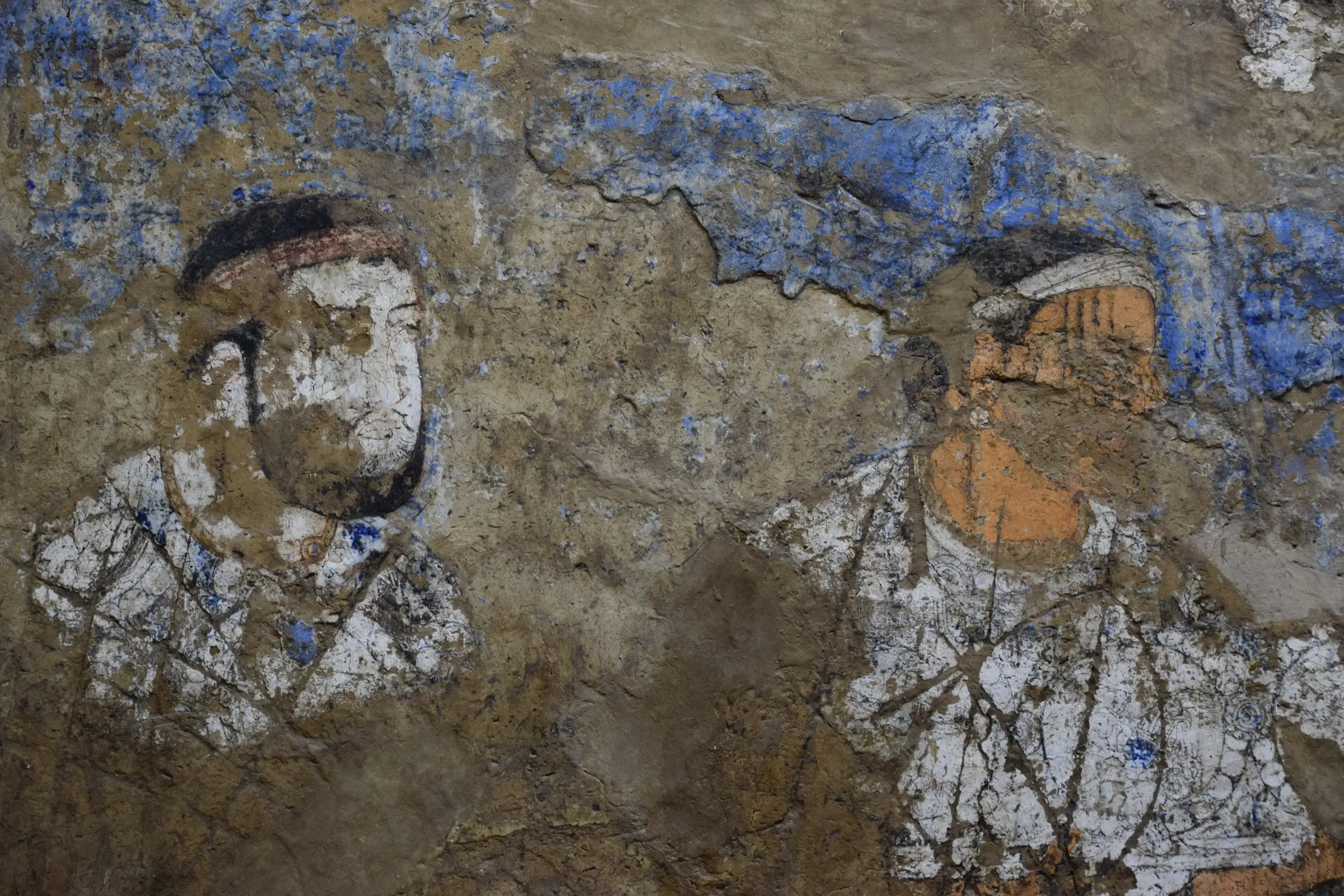
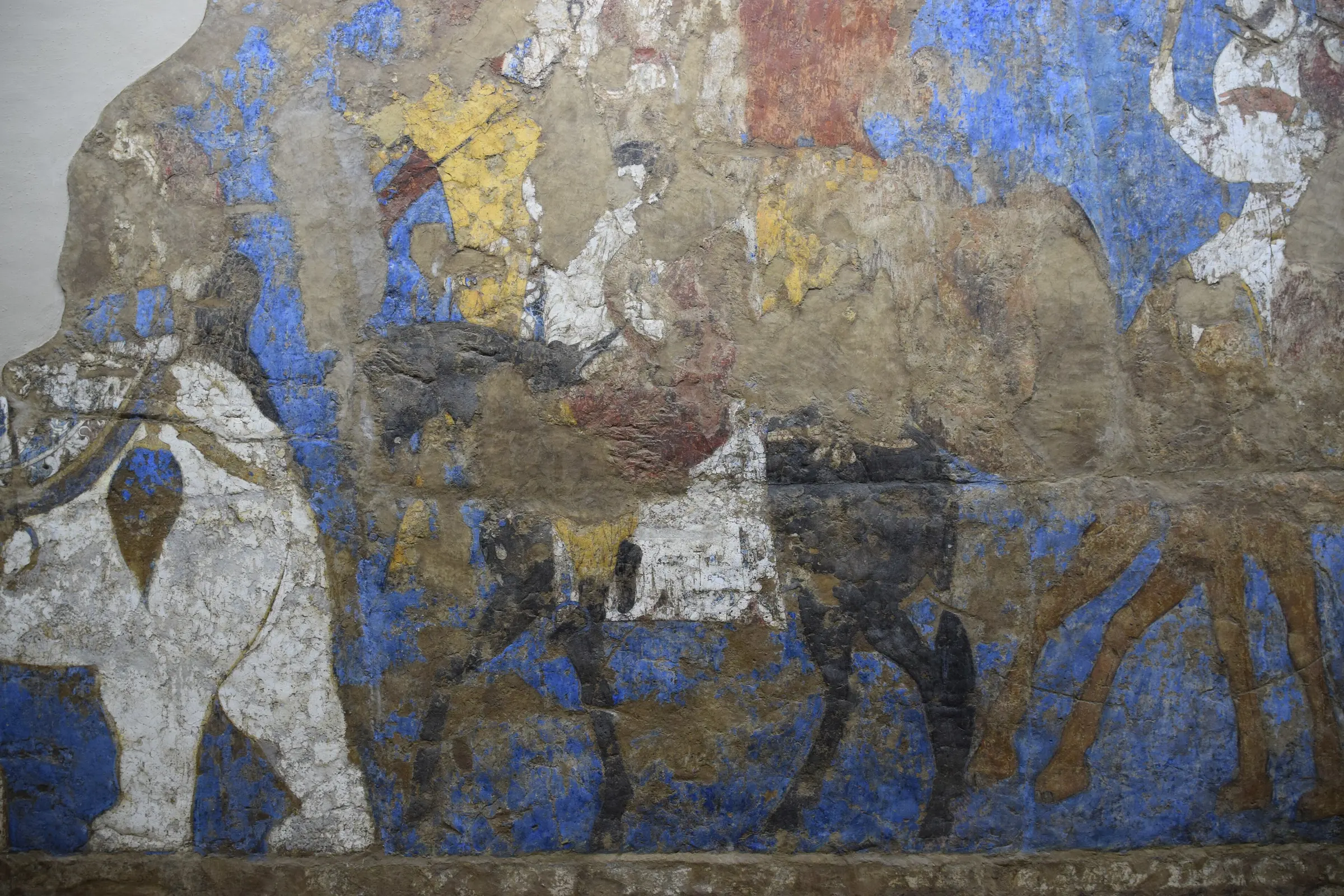
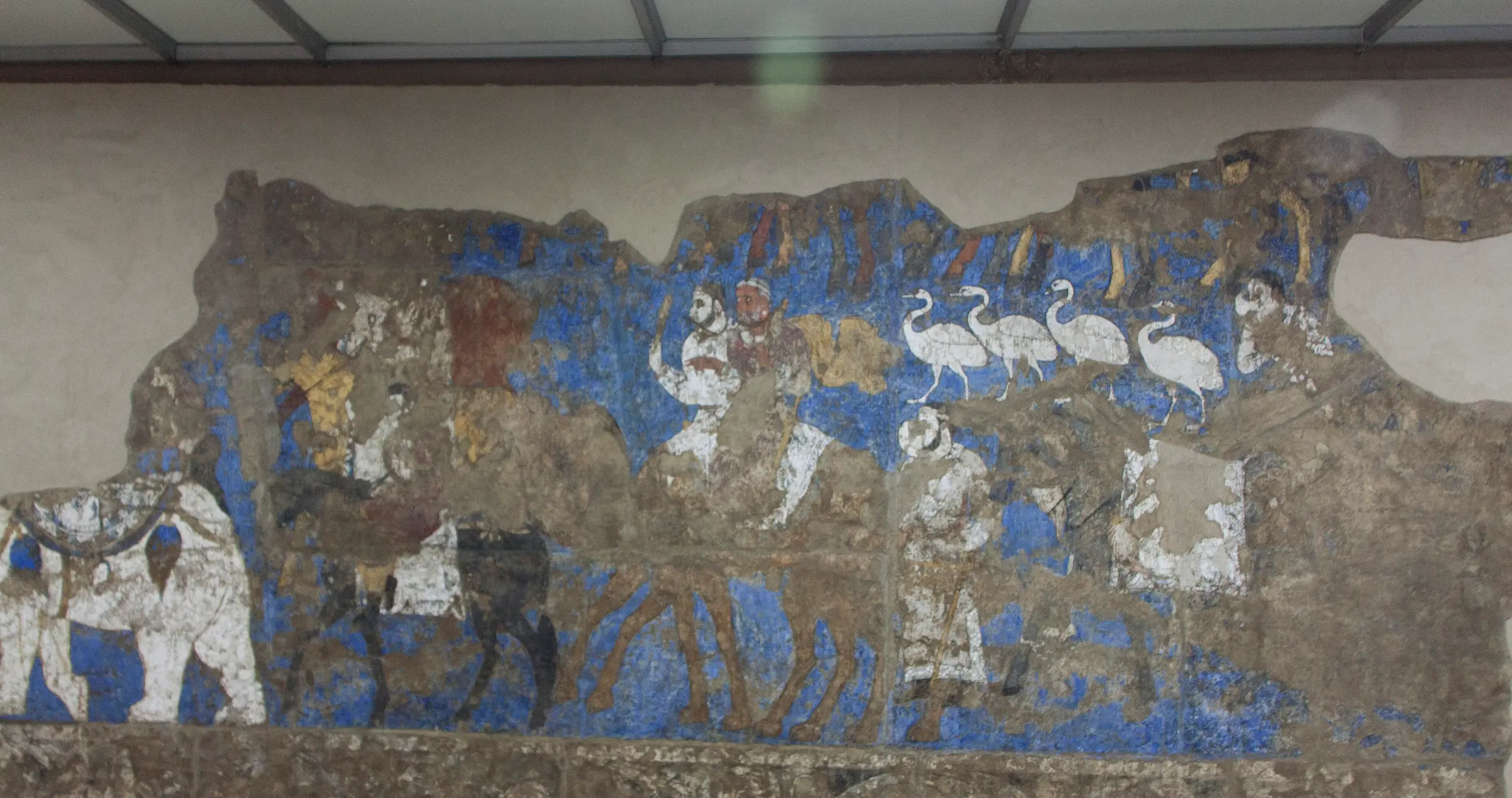
The real reason to come is a cycle of mid-7th-century wall paintings found by accident in 1965, when a road was being cut across Afrasiyab. Bulldozers destroyed the upper register, but on all four walls of a square hall measuring 11 by 11 metres the scenes survived to a height of 2.5–2.7 metres. The archaeologists V. Shishkin and L. Albaum called the room the “Hall of Ambassadors”, and the name stuck. The paintings were lifted from the walls and installed in the museum.
On the west wall, embassies bearing gifts converge on the ruler of Samarkand: Chinese envoys carry rolls of silk, Iranians bring necklaces, and two figures with feathers in their caps are generally identified as Koreans, all escorted by Turkic guards. A Sogdian inscription names King Varkhuman and records the words of an envoy from Chaganiyan presenting himself at the Samarkand court. Chinese annals say that between 650 and 655 the Tang emperor Gaozong recognised Varkhuman as ruler of Sogdiana, which is how the paintings are dated.
The south wall shows a festive Nowruz procession honouring the ancestors, with geese, a riderless horse and attendants wearing the padām, the mouth veil of Zoroastrian priests. The north wall is unmistakably Chinese: a hunting scene and a boat carrying court ladies and musicians. The east wall is the most damaged, and some scholars read its fragments as scenes from India.
Few places bring the Silk Road to life so vividly. The hall is among the finest surviving examples of pre-Islamic Sogdian painting, and its costumes, weapons, hairstyles and gifts are a primary source on 7th-century Central Asian diplomacy, linking Samarkand with China, Iran, the Turkic Khaganate and even the Korean peninsula. Conservation is ongoing: France pledged funding for restoration in 2014, and murals from the Karakhanid palace are due to go on show upstairs once restored.
Afrasiyab is also famous for its 9th–10th-century glazed pottery: bowls inscribed with proverbs in elegant Kufic script on a white slip now sit in major museums around the world, a reminder that Samarkand was a great centre of craft as well as trade.

Since September 2026, under the city's night-tourism programme, the museum stays open until 11 pm — a chance to see the Hall of Ambassadors in the evening, without the daytime tour groups.
Details may change — please check before you visit.
Gallery
Related places
From the Neolithic to the present
Nearby


Stay & eat
Hotel · 1.0 km
Hostel · 1.2 km
Hostel · 1.5 km
Hotel · ★★★★★ · 1.5 km
Plov centre · 1.1 km
Café · 1.5 km
Plov centre · 1.5 km
Restaurant · 1.6 km


For example: Registan, Ulugh Beg, plov, Urgut