
Gur-e-Amir
Tomb of Timur and his dynasty
This site is in test mode — some information may contain errors.
Report
The great square of three madrasas
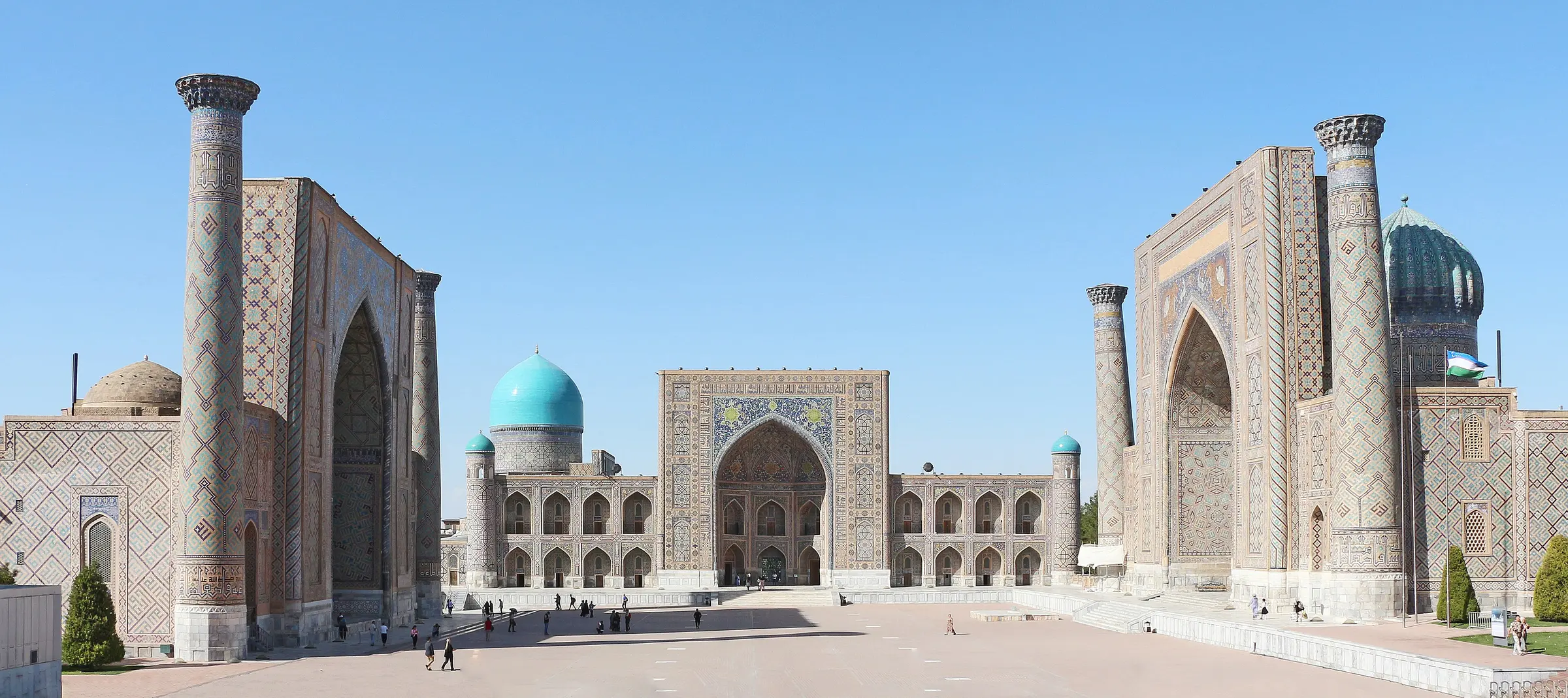
The heart of Samarkand: a square framed by the Ulugh Beg, Sher-Dor and Tilya-Kori madrasas of the 15th–17th centuries — Central Asia's most celebrated ensemble and a landmark of Islamic town planning.
Registan means "sandy place" in Persian, the name Central Asian cities gave to their main squares. Under Timur, Samarkand's Registan was a marketplace ringed by shops, caravanserais and domed trading arcades, the largest of them the hat-sellers' tim, Telpak-furushon. Heralds read out the ruler's decrees here, and the square filled up for festivals and public celebrations.
Today's ensemble took shape in two great waves. Between 1417 and 1420 Mirzo Ulugh Beg built his madrasa on the west side; a khanaqah followed opposite in 1424, a caravanserai to the north and a Friday mosque to the south. Two centuries later these buildings were crumbling, and Samarkand's governor Yalangtush Bahadur replaced the khanaqah with the Sher-Dor Madrasa (1619–1636) and the caravanserai with the Tilya-Kori Madrasa (1646–1660). The result was the arrangement of three madrasas facing one another that the whole world now knows.

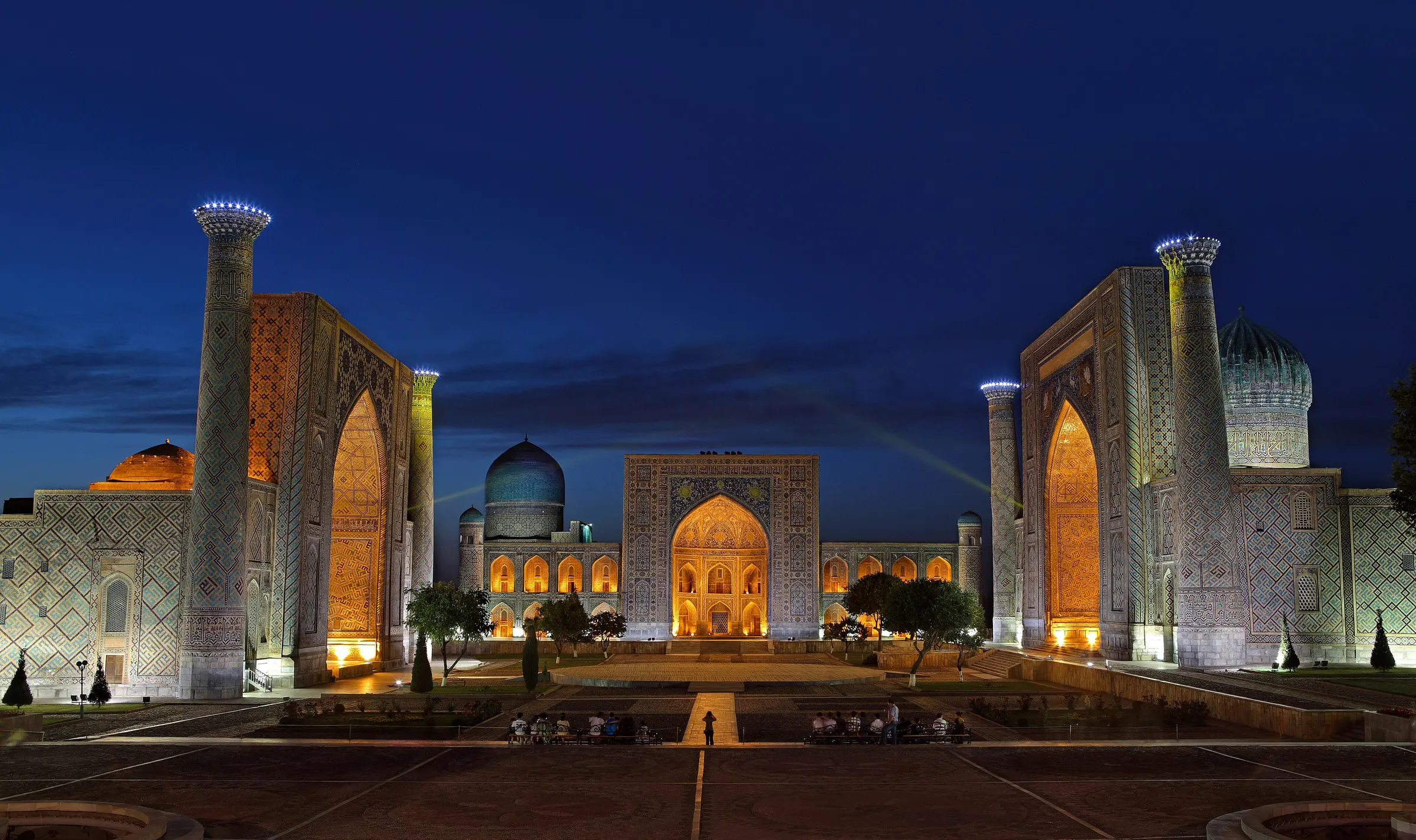
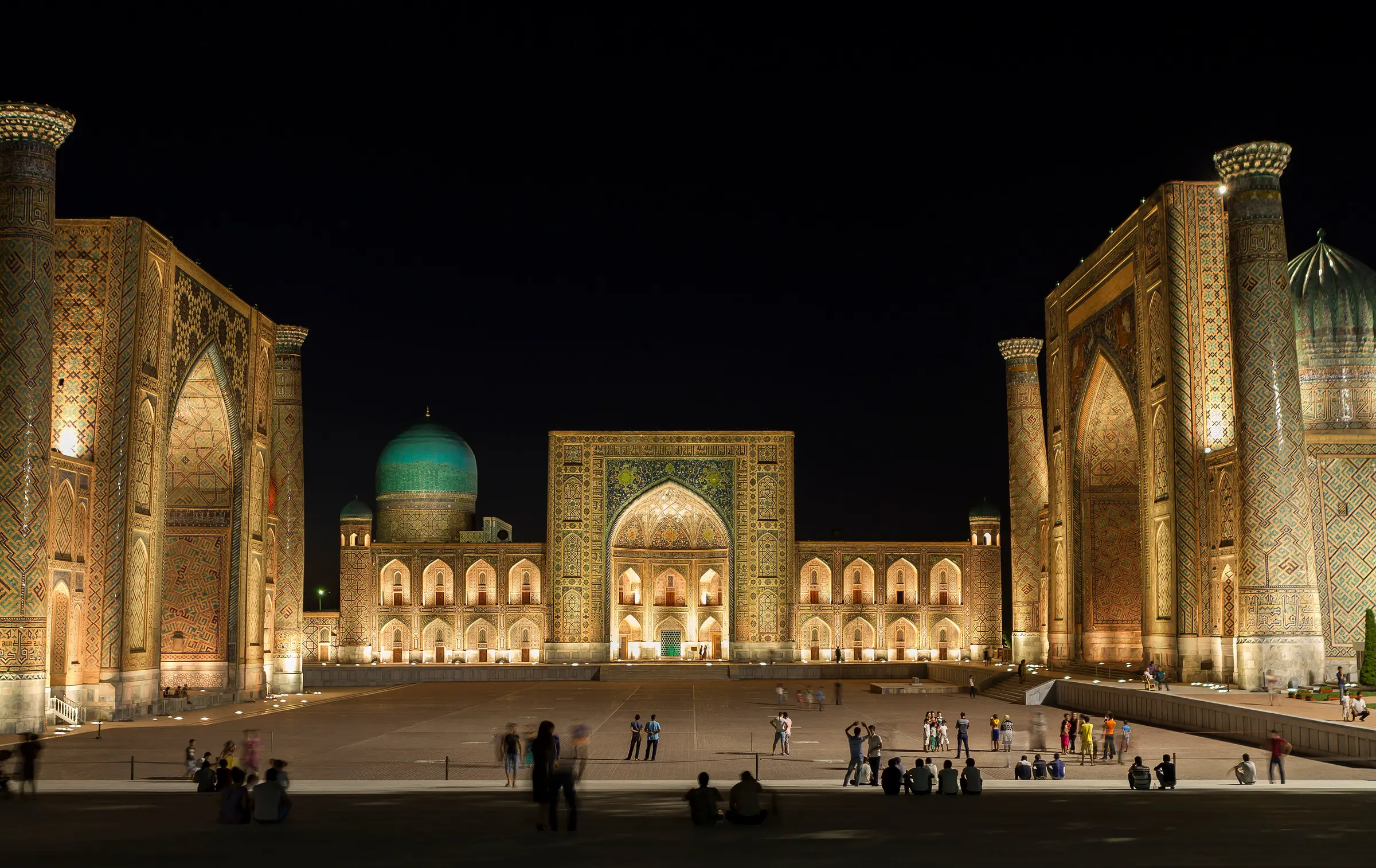
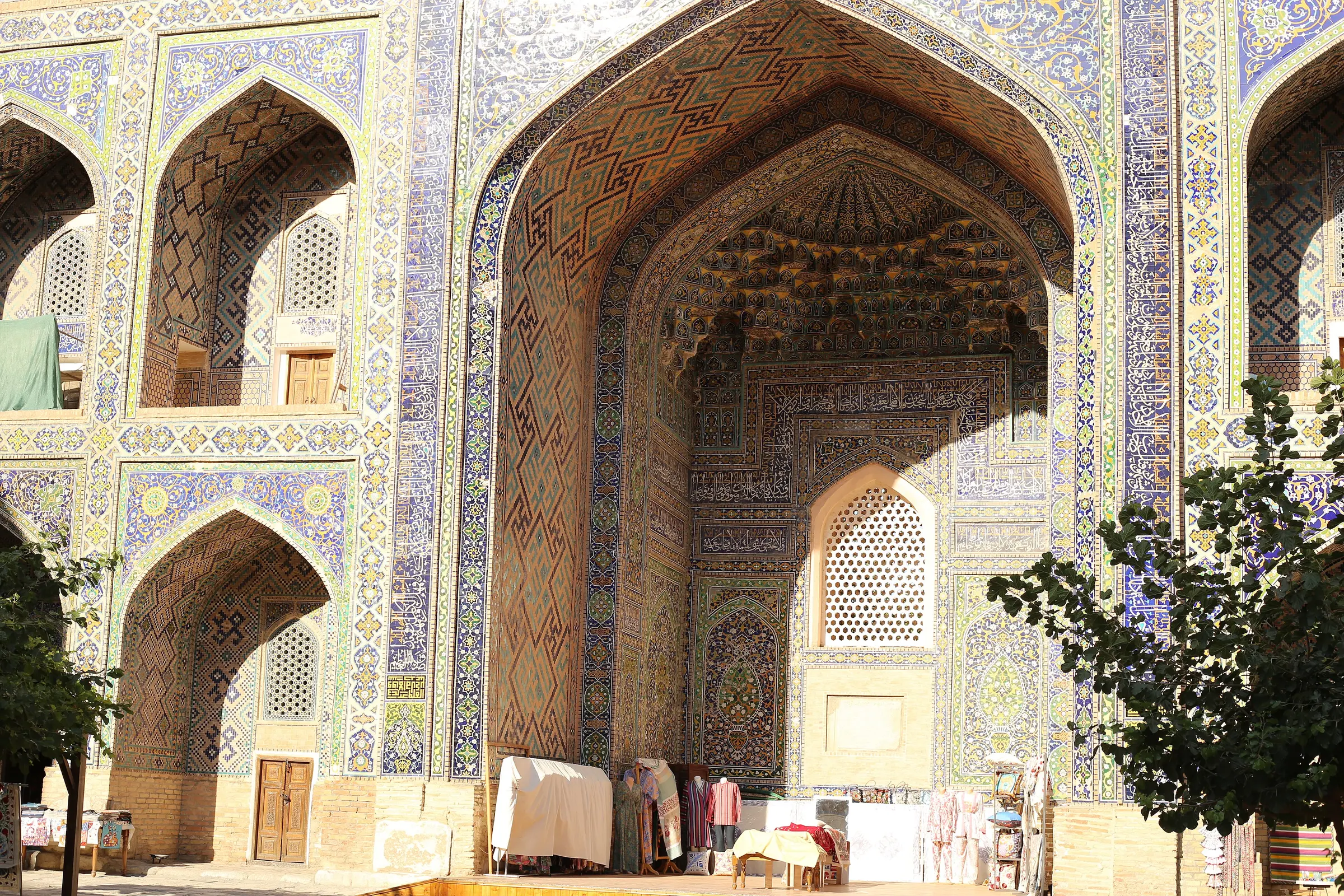
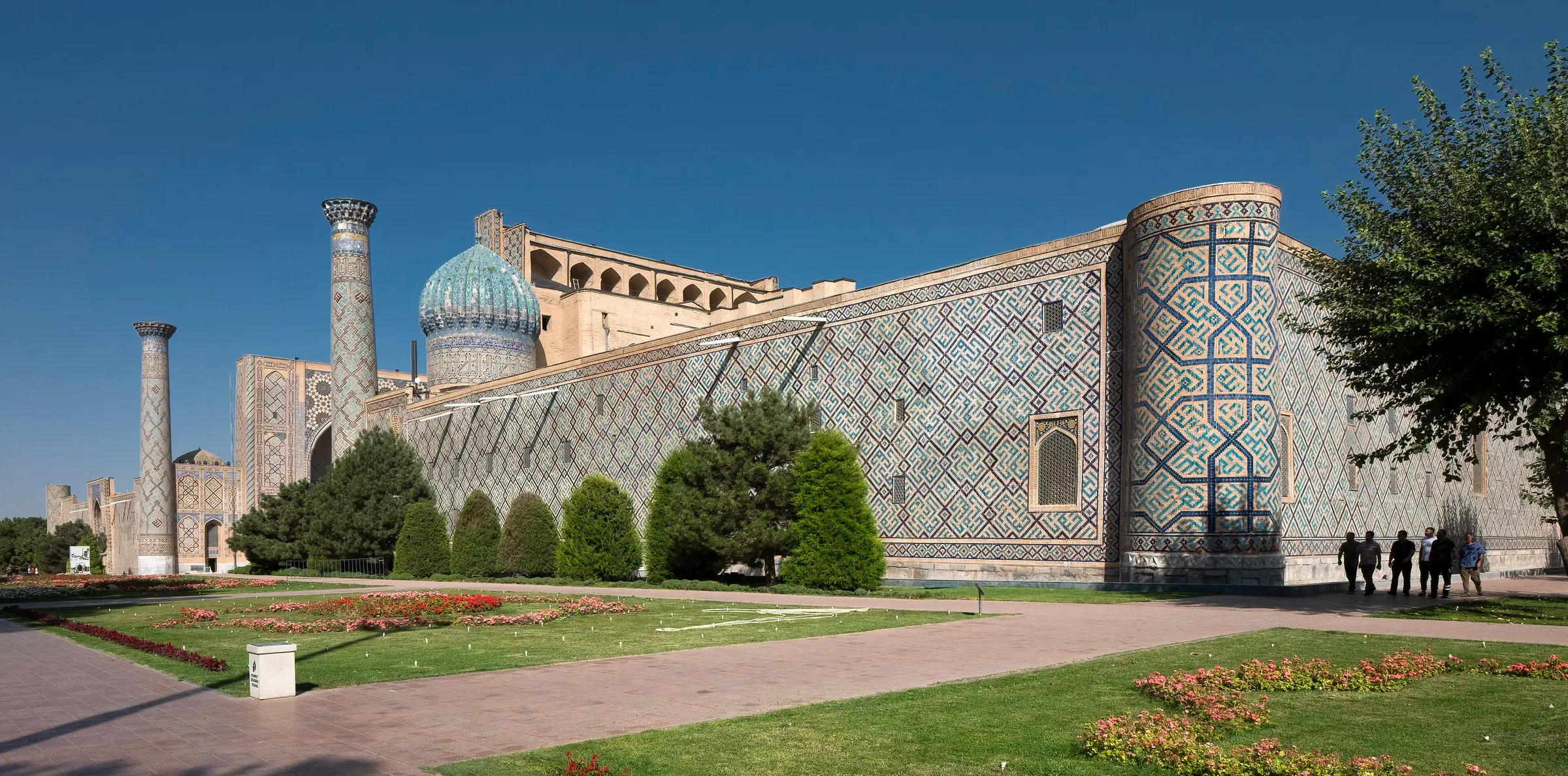
Registan's power lies in its balance. The Ulugh Beg and Sher-Dor madrasas face each other across the square like mirror images — a paired layout Central Asian builders called qosh. Tilya-Kori, on the north side, ties them together, closing the square on three sides and turning it into a vast stage open to the south. The three portals, soaring minarets, ribbed turquoise domes and tilework were created over two and a half centuries, yet read as a single composition.
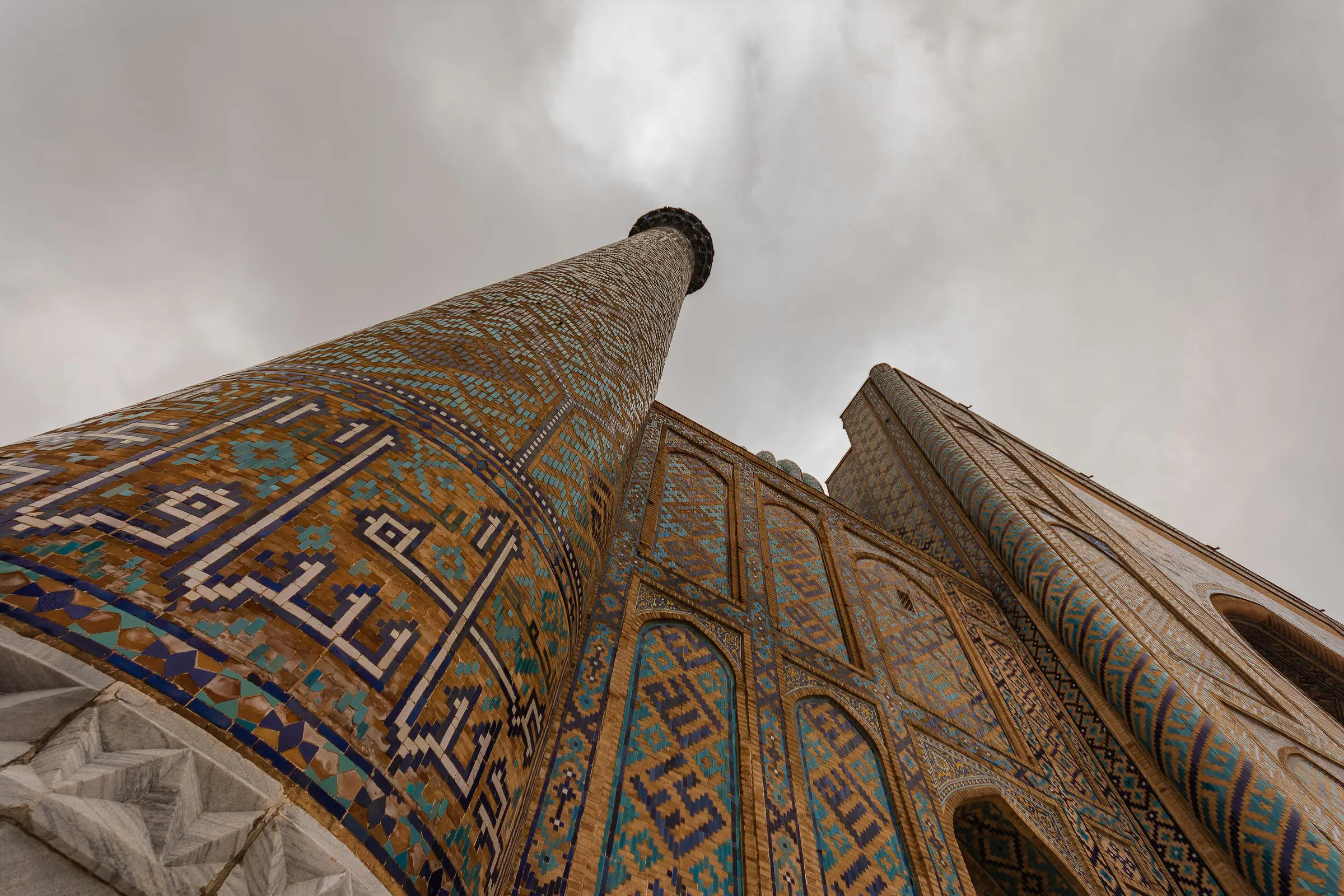
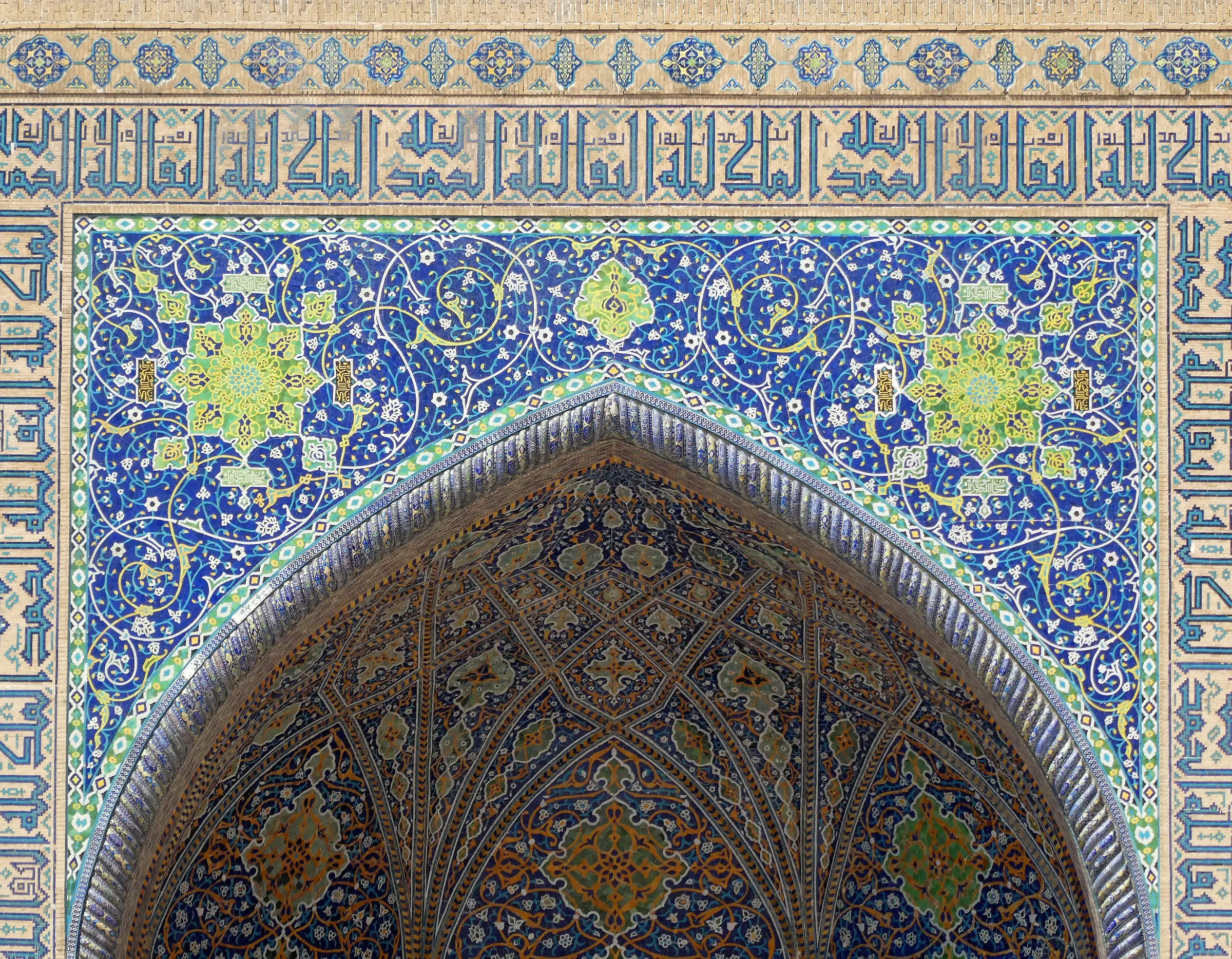
Look closely and the centuries show. The 15th-century Ulugh Beg Madrasa is all rigorous geometry, star-shaped girih patterns and angular Kufic script. The 17th-century buildings bring in flowing floral motifs and gilding, and on the Sher-Dor portal even living creatures appear — the famous tiger-lions carrying a radiant sun on their backs.
Once the capital moved to Bukhara, Samarkand slipped into decline and the madrasas were neglected. Nineteenth-century earthquakes, notably those of 1817–1818 and 1897, badly damaged the portals and minarets; photographs from the early 1900s show leaning towers and bare, tile-stripped walls. Restoration began in the 1920s and continued for most of the century. In 1932 a scheme by V. G. Shukhov and M. F. Mauer straightened the tilting north-east minaret of the Ulugh Beg Madrasa, an engineering feat that drew attention far beyond the Soviet Union. In the 1950s and 1960s the ground around the Ulugh Beg Madrasa was lowered by almost two metres to restore the building's original proportions.
Much of what you see today is the product of that work, and UNESCO's assessment of Samarkand notes that some inappropriate restoration has affected the authenticity of its monuments. Even so, Registan remains the crown jewel of "Samarkand – Crossroads of Cultures", inscribed on the World Heritage List in 2001.

The square is still the city's main stage. Since 1997 it has hosted the biennial Sharq Taronalari international music festival, and world-famous performers give concerts against the illuminated facades. Every evening the portals are lit up and a music show starts at 21:00. Craftsmen sell their work from the former student cells, and Tilya-Kori houses an exhibition. Behind the ensemble stands the 18th-century Chorsu trading dome, and next to Tilya-Kori lie tombstones of the Shaybanid dynasty.
Archaeologist V. L. Vyatkin, who discovered Ulugh Beg's observatory, was buried on Registan Square in 1932; in 1934 his grave was moved to the observatory he had uncovered. And in 1989 the Soviet Union struck a commemorative 5-rouble coin bearing the image of the Registan.

Details may change — please check before you visit.
Gallery
Related places
Tomb of Timur and his dynasty
Nearby


The pedestrian street from the Registan to Bibi-Khanym
288 m


For example: Registan, Ulugh Beg, plov, Urgut