
Gur-e-Amir
Tomb of Timur and his dynasty
This site is in test mode — some information may contain errors.
Report
Tomb of Timur's senior wife
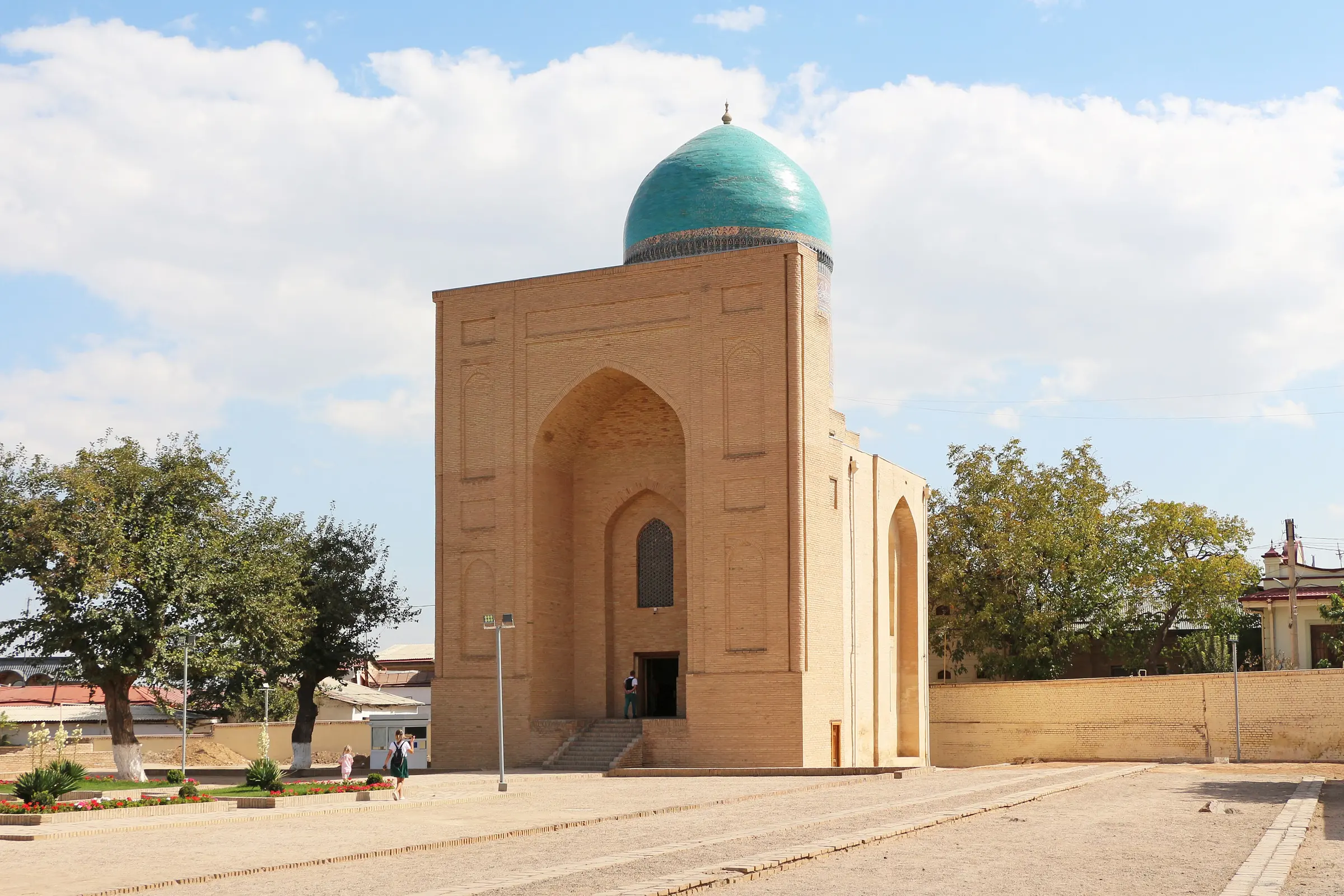
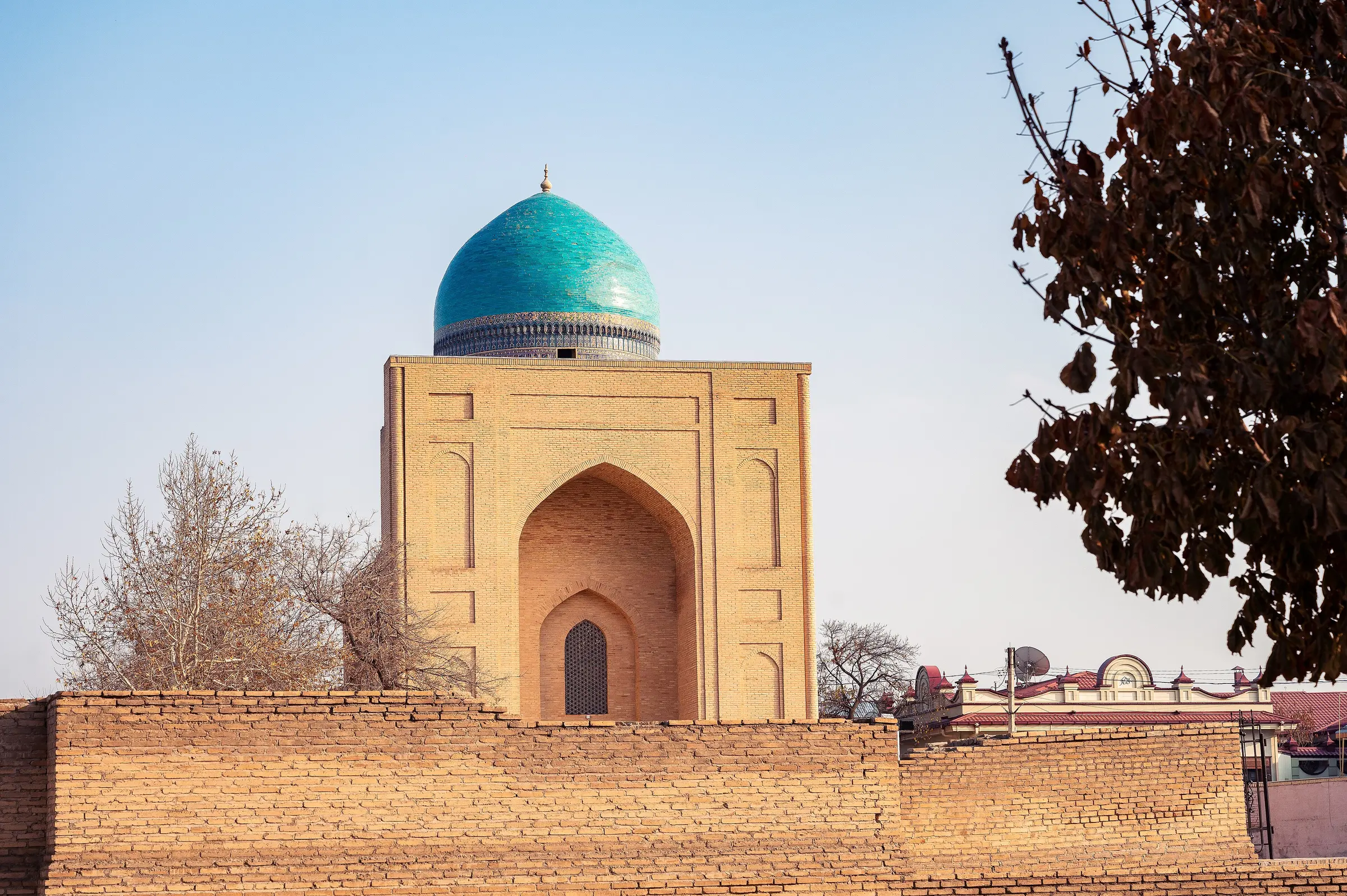
An octagonal mausoleum facing the Bibi-Khanym Mosque (c. 1400): the only surviving part of Saray Mulk Khanum's madrasa, with a crypt where the queen and her kin were laid to rest.
Timur's senior wife Saray Mulk Khanum, popularly Bibi-Khanym, was the daughter of the Chagatai ruler Qazan Khan; through her, Timur could style himself gurgan, "royal son-in-law". In the late 14th century she built her own madrasa facing the site of the great mosque. The historian Ghiyas al-Din Ali notes that Timur stayed at the madrasa in May 1399, so it must have preceded the mosque, and contemporaries marvelled at its splendour.
Tradition says its portal ended up taller than the mosque's, to Timur's fury; the chronicler Fasih Khavafi writes that the architects were punished. The madrasa was later demolished, leaving only this octagonal domed mausoleum. According to the Spanish envoy Clavijo, the queen's mother was buried here first, and Saray Mulk Khanum herself later.

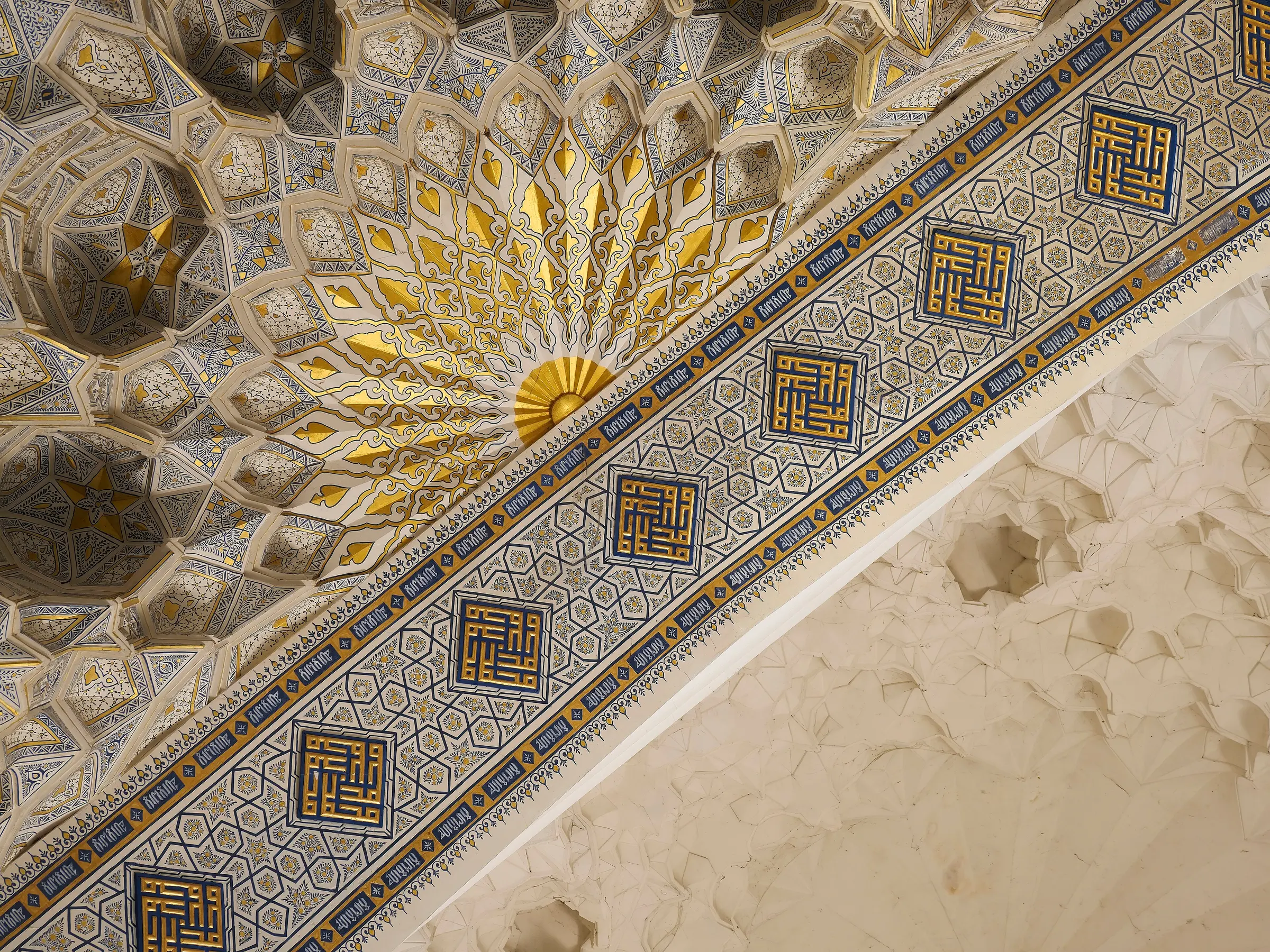
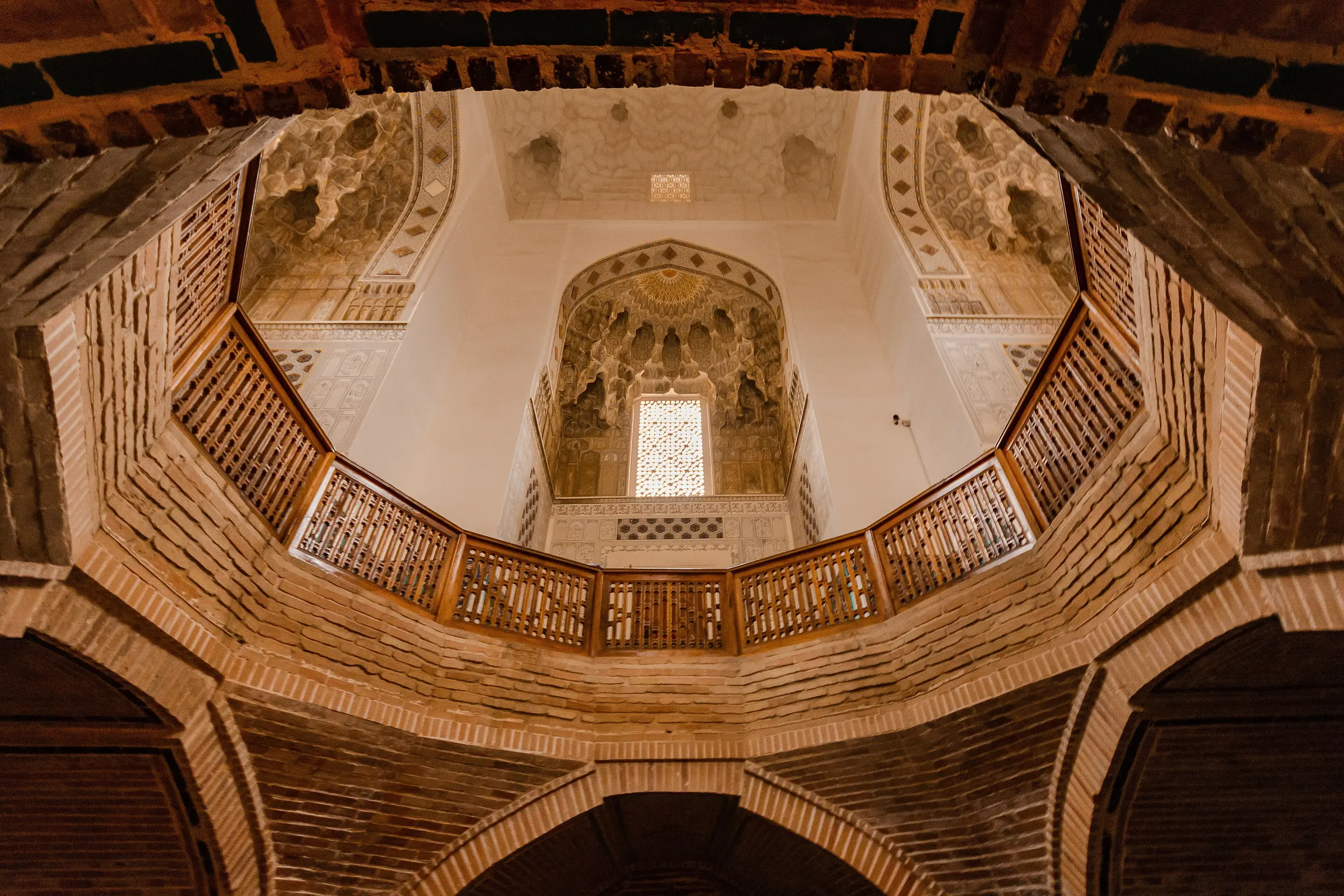
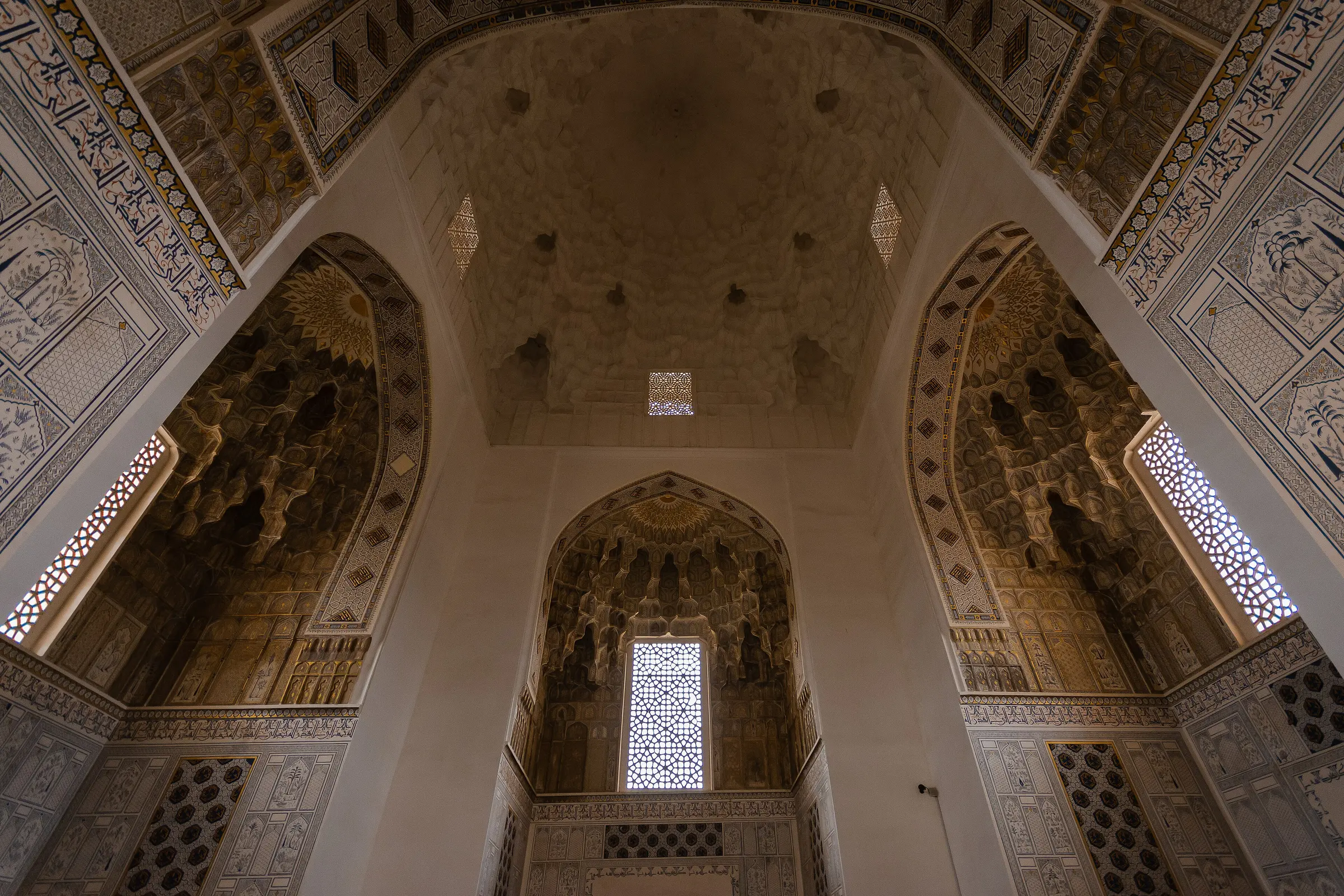
The mausoleum is an octagon that once stood at a corner of the madrasa, crowned by a dome on a tall drum, with remnants of tiled and painted decoration inside. The small crypt beneath is lined with large grey stone slabs. The madrasa itself, the sources say, stood out for its unusual octagonal minarets and a smooth rather than ribbed main dome above a muqarnas cornice.
When the crypt vault caved in during the earthquake of 1875, stone sarcophagi were found below. Grave robbers broke into the queen's coffin in 1927, and on 21 June 1941 it was opened again for study, revealing well-preserved remains, fragments of clothing and signs of embalming. The remains went to Tashkent, returned to a Samarkand museum in 1947, and were laid back in the sarcophagus on 10 June 1950.
The building's identity is not entirely settled: the National Encyclopaedia of Uzbekistan suggests it may in fact be the khanaqah of another of Timur's wives, Tuman Aqa. The mausoleum was rebuilt after independence, and UNESCO lists "the Bibi-Khanum Mosque and Mausoleum" among Samarkand's major monuments.

Gallery
Related places
Tomb of Timur and his dynasty
Nearby


The pedestrian street from the Registan to Bibi-Khanym
551 mStay & eat

Hotel · 200 m
Hotel · 250 m
Hostel · 300 m
Hostel · 300 m
Café · 150 m

Restaurant · 200 m
Teahouse · 200 m
Plov centre · 300 m


For example: Registan, Ulugh Beg, plov, Urgut