
Afrasiyab
The ruins of pre-Mongol Samarkand
This site is in test mode — some information may contain errors.
Report
A hilltop mosque at the old gate of Afrasiyab
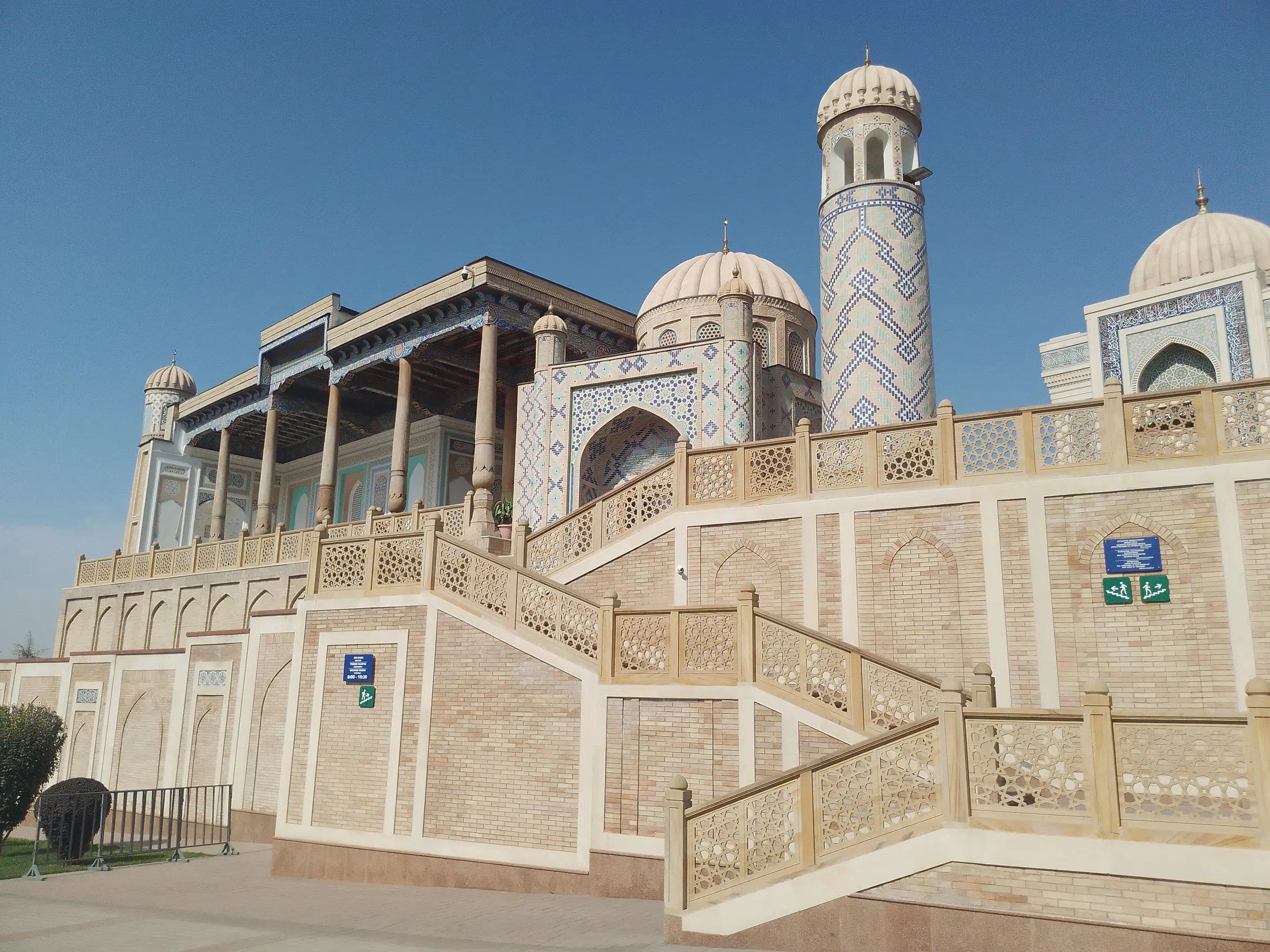
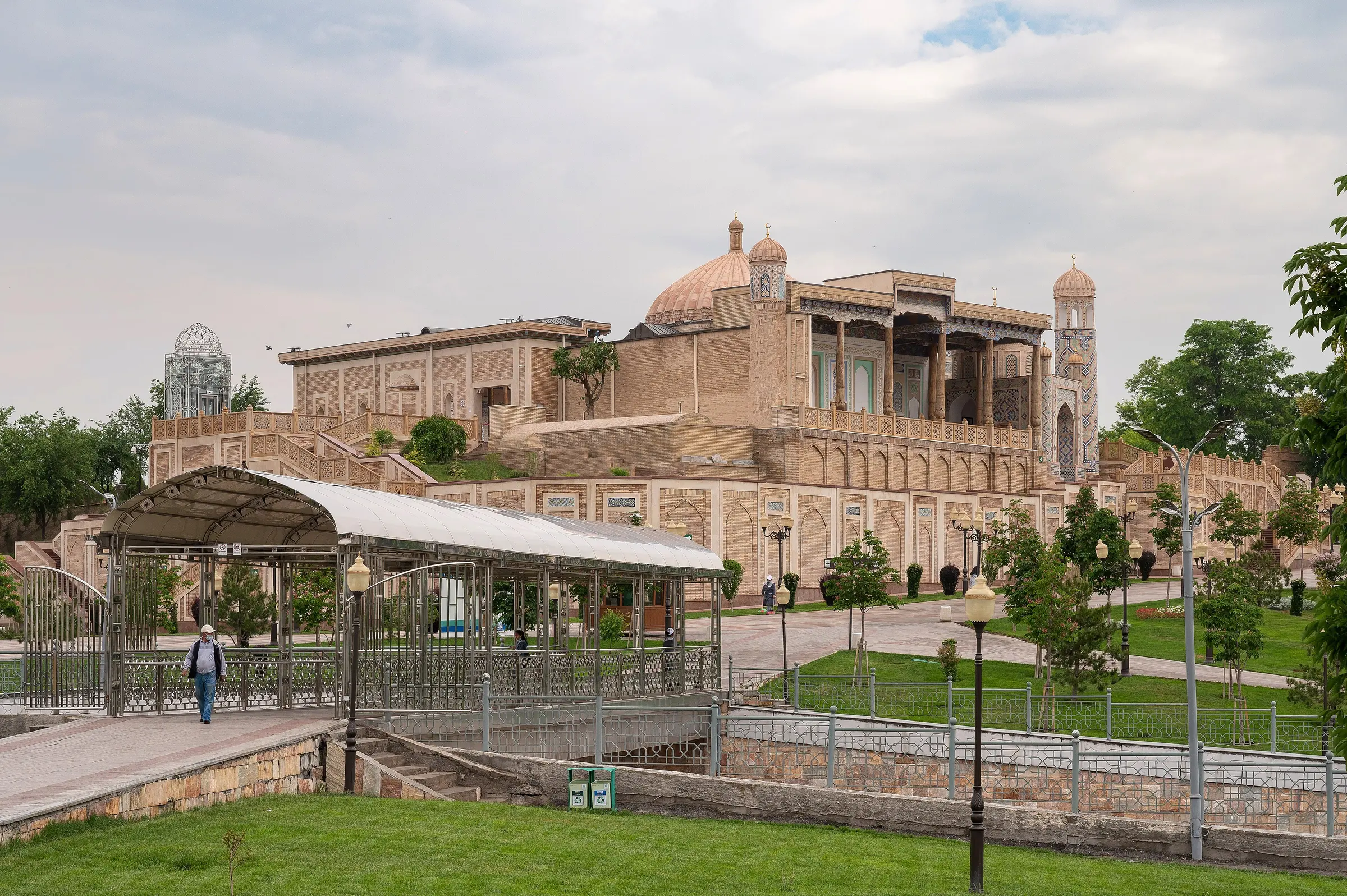
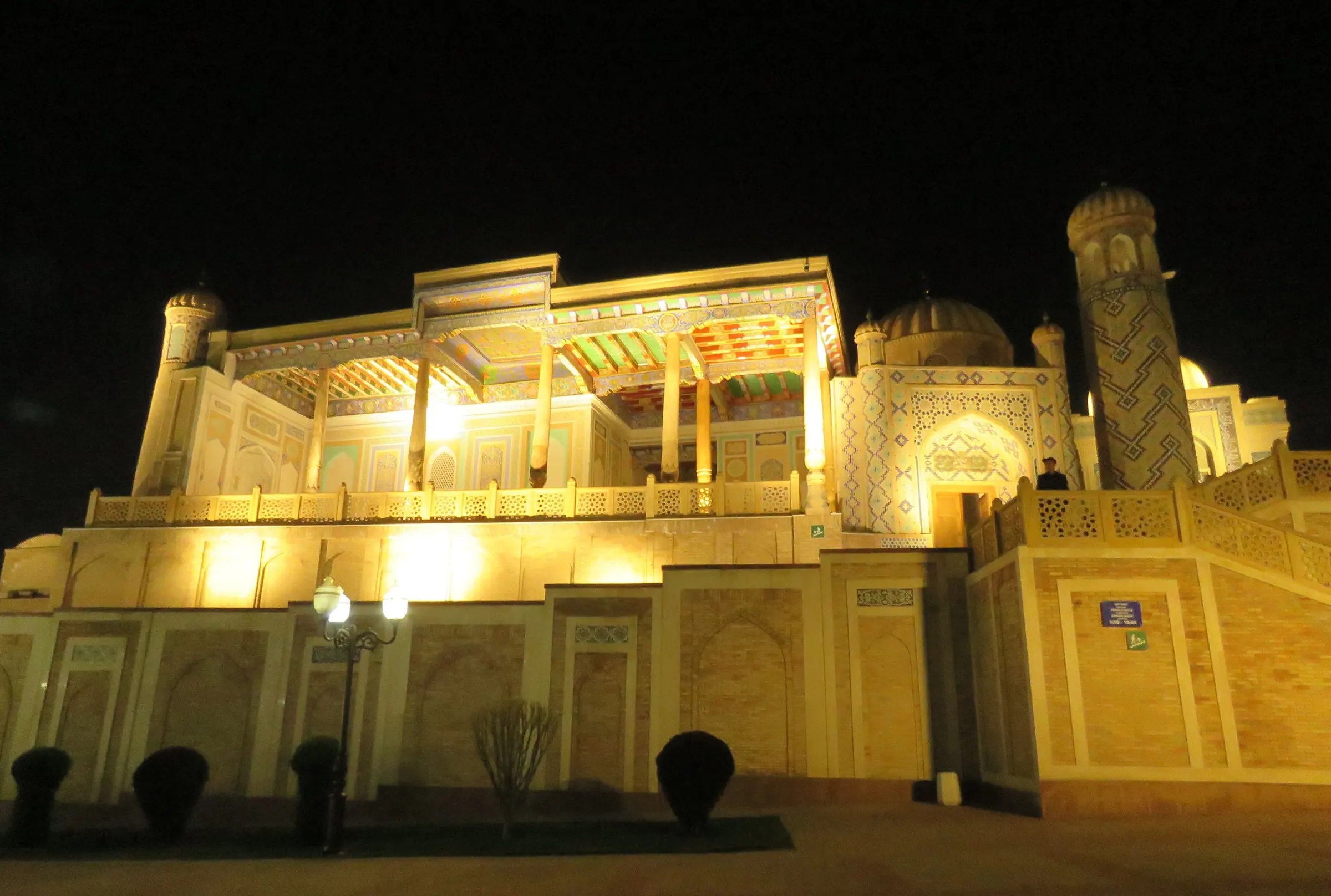
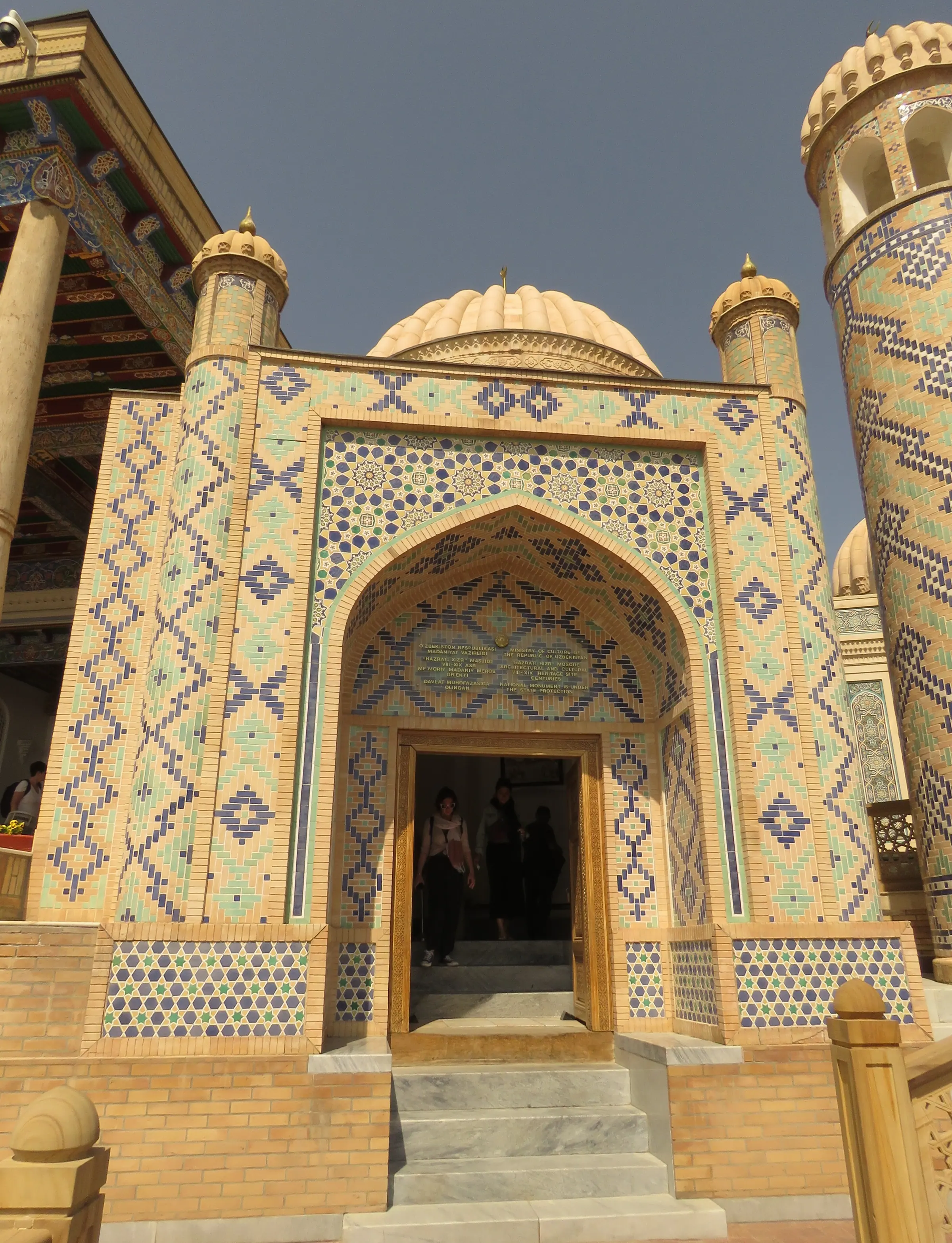
A mid-19th-century mosque on a hill facing Shah-i-Zinda, with a carved wooden veranda, a ribbed dome and sweeping views of the old city. Uzbekistan's first president, Islam Karimov, is buried in its grounds.
The mosque crowns the southern tip of Afrasiyab, close to where one of the gates of the ancient city once stood. Legend has it that in 712, as Qutayba ibn Muslim's army besieged Samarkand, the Arabs dammed the Juy-i Arziz canal to flood the citadel – until a huge white bird swooped from the sky and broke the dam. To mark the miracle, Qutayba's companion Muhammad ibn Wasi is said to have built a mosque on the site of a temple revered by the Sogdians. That first building vanished in the Mongol sack of 1220.
Today's mosque rose on the old foundations in the mid-19th century – in 1855 according to the inscription on its mihrab (some sources give 1854). It was redecorated in 1884; in 1899 the veranda was rebuilt and a gatehouse added. In 1919 the Samarkand master Abduqodir Boqiyev completed the ensemble with the entrance portal and the eastern minaret, capping the gatehouse with a ribbed dome. The mosque was restored in the 1990s.

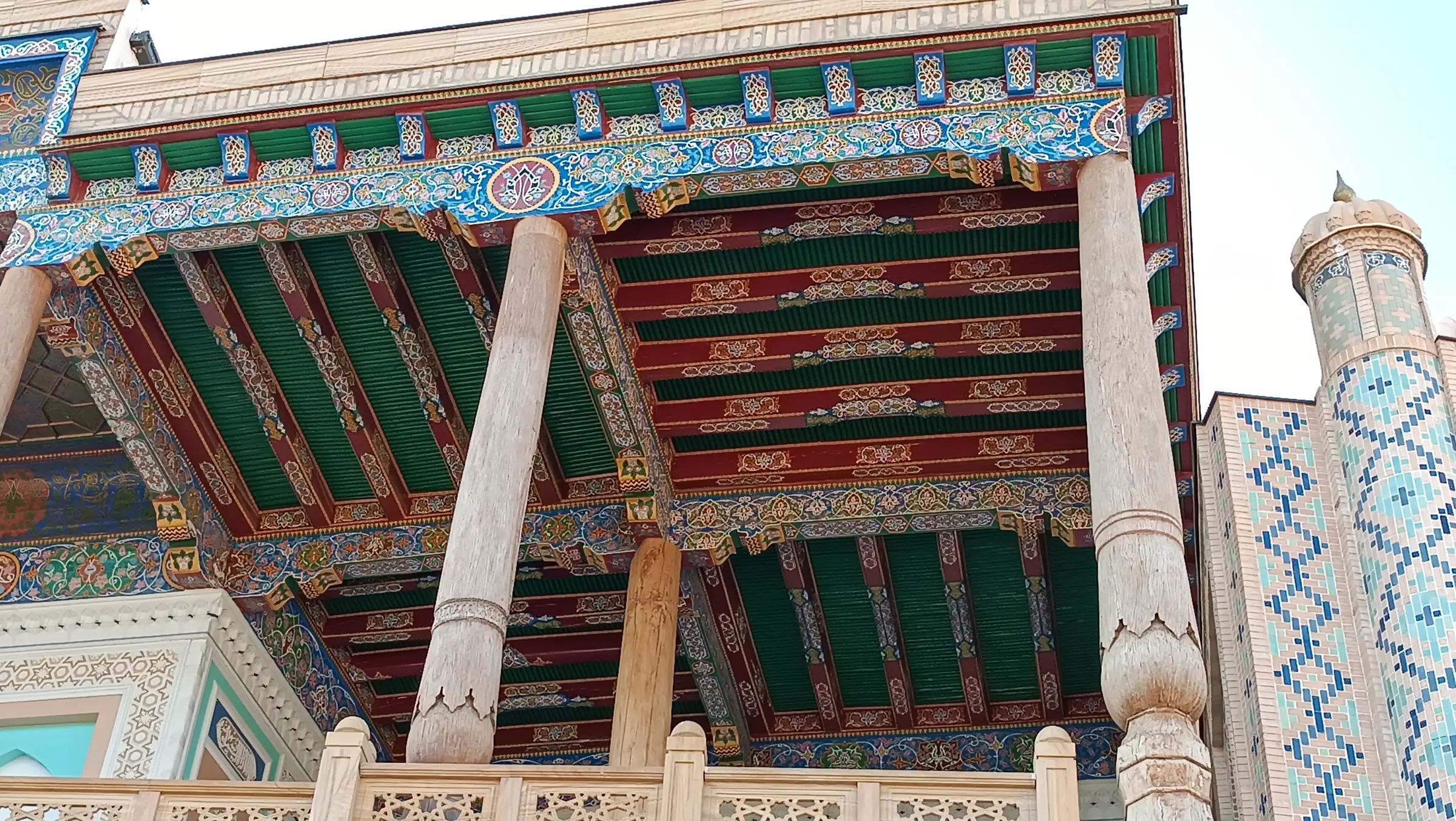
Hazrat Khizr is a fine example of Samarkand's vernacular architecture. The rectangular building (about 30 by 16 metres) is deliberately asymmetrical: a domed winter prayer hall, a columned summer aivan, a portal framed by slim corner turrets and a graceful free-standing minaret. Note the painted veranda ceiling, the carved and tinted ganch (plaster) panels, the muqarnas cornice and the 19th-century carved door.
In Islamic tradition Khizr is a mysterious righteous figure who found the water of life – a guardian of travellers and of those who have lost their way. Folk belief holds that he appears unrecognised and blesses the kind-hearted, which is why the mosque has long drawn pilgrims as well as worshippers.

Islam Karimov (1938–2016), Uzbekistan's first president, was buried in the mosque grounds on 3 September 2016. The mausoleum over his grave opened on 30 January 2018, the 80th anniversary of his birth. The architects' main challenge was to make the new building sit comfortably beside a historic mosque within a UNESCO World Heritage site. Some 2,000 people worked on it, including decorative craftsmen from India; the single-domed mausoleum is finished in white marble, polychrome relief majolica and onyx.
Gallery
Related places
The ruins of pre-Mongol Samarkand
Nearby


The pedestrian street from the Registan to Bibi-Khanym
878 mStay & eat

Hotel · 450 m

Hotel · 450 m
Hostel · 550 m
Hotel · 550 m
Plov centre · 300 m
Restaurant · 350 m
Café · 450 m

Restaurant · 500 m


For example: Registan, Ulugh Beg, plov, Urgut