
Registan
The great square of three madrasas
This site is in test mode — some information may contain errors.
Report
The "abode of the spirit", a saint Timur revered
The mausoleum Timur raised over the grave of Sheikh Burhan al-Din Sagharji (1370s–1380s): no portal, little ornament, yet one of Samarkand's oldest and most intriguing shrines.
The mausoleum stands over the grave of Sheikh Burhan al-Din Sagharji, from the village of Saghraj near Samarkand. The Moroccan traveller Ibn Battuta met him in India in the 1340s and described him as the leading Muslim of China, where he enjoyed great influence at the Yuan court. After his death his son Abu Said, honouring his wishes, brought the body home to Samarkand. Tradition says the sheikh's wife, a "Chinese princess", lies here too.
Timur revered the saint and built a mausoleum over his grave, around 1380 according to most sources, in the 1370s according to others. He is said to have always dismounted and walked when passing by. Later he linked Rukhabad by a dedicated street to the madrasa and khanaqah of his grandson Muhammad Sultan — the site of today's Gur-e-Amir.

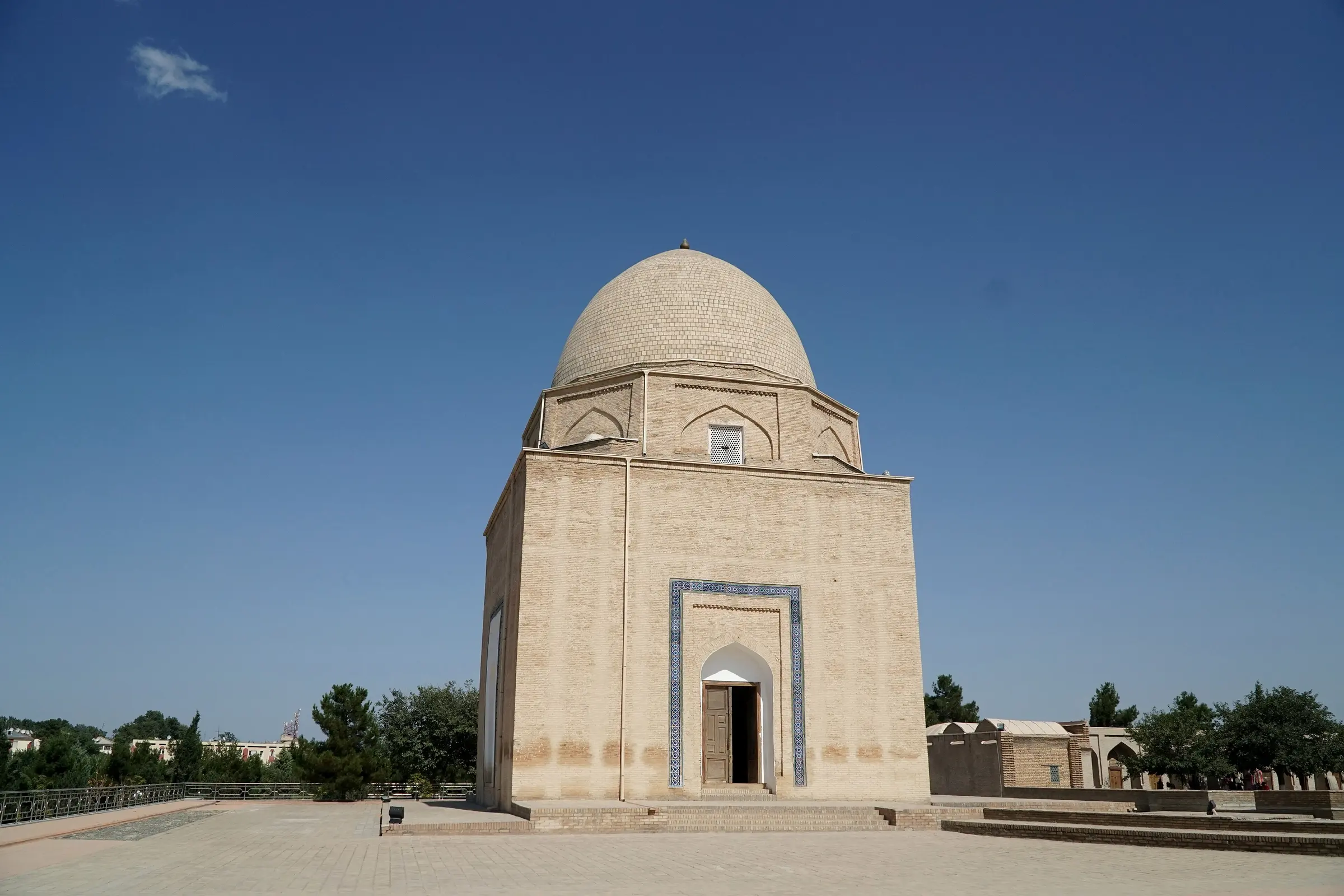
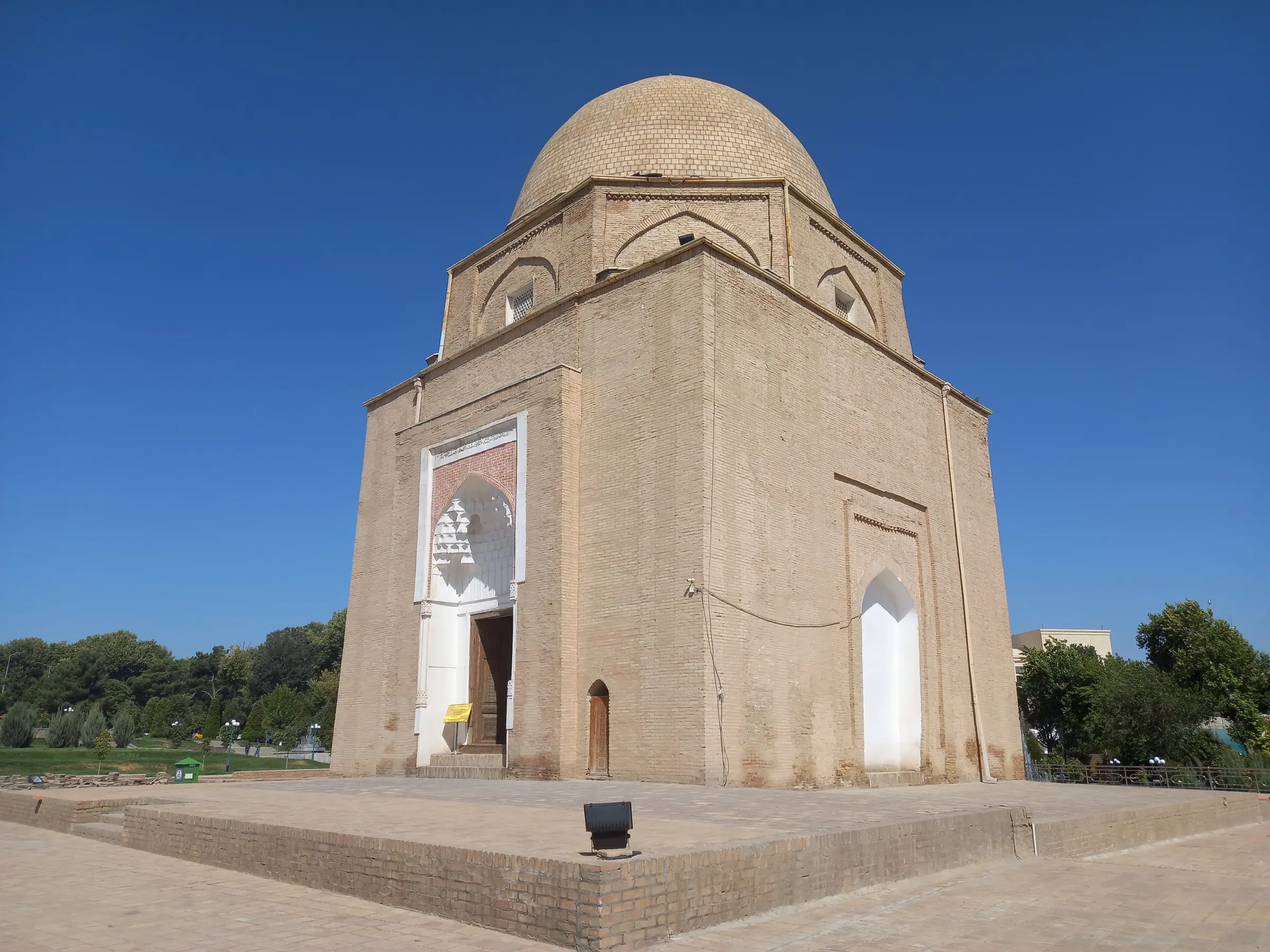
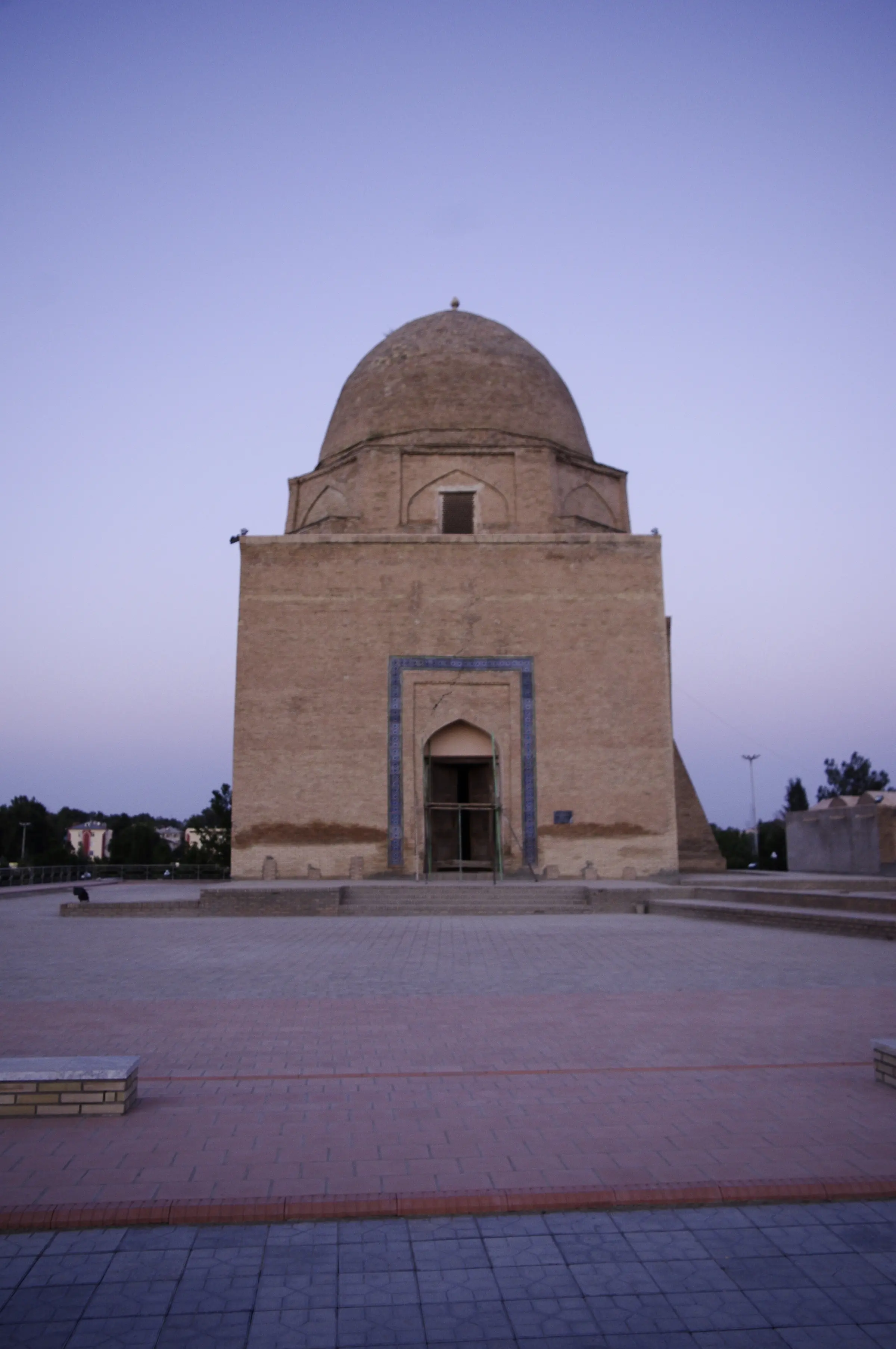
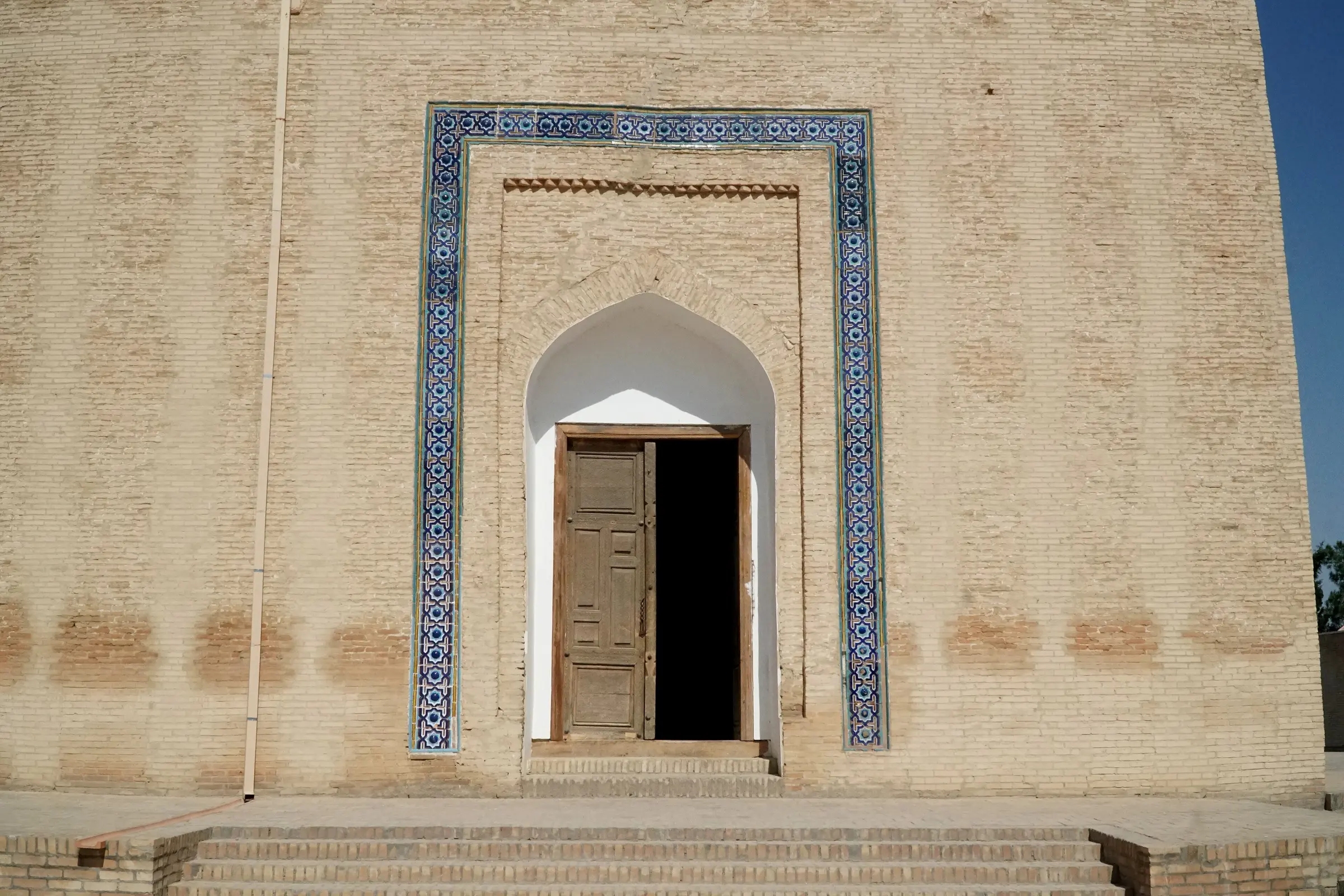
Rukhabad is unusual for its time: it lacks the grand portal typical of Timurid buildings, so all its facades are of equal weight. A cubic base carries an octagonal transition zone pierced by windows and a spheroconical dome, and three doorways open to the north, west and south. The decoration is austere — bare fired brick outside, with glazed carved terracotta only around the arches, and inside a ceramic dado below whitewashed walls.
Rukhabad means "abode of the spirit". Legend has it that the sheikh owned a copper box holding seven hairs from the Prophet's beard, which was sealed into the dome during construction. Look closely at the carved entrance door, installed in the 19th century in the name of the Emir of Bukhara, and you can spot fish among the ornament.
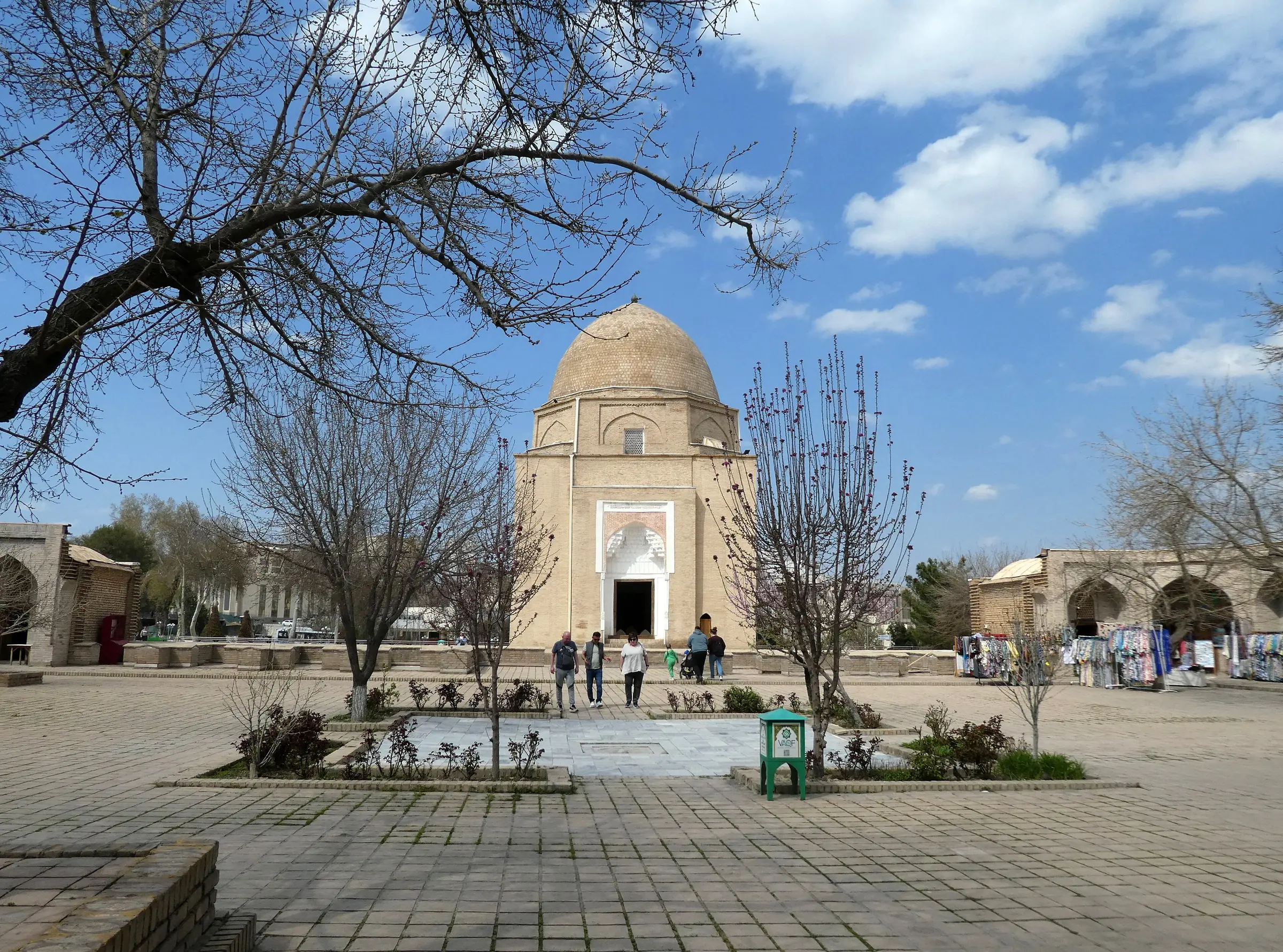
In the 19th century a madrasa, a neighbourhood mosque and a minaret were built alongside; the madrasa's gateway and a few cells survive and now house craft workshops. Neglected in Soviet times, the complex was landscaped in 1996 for Timur's 660th anniversary and became a busy pilgrimage site again. UNESCO singles out "the ensembles of Gur-Emir and Rukhabad" among the key elements of Samarkand's heritage.

Gallery
Stay & eat
Hotel · 200 m
Guesthouse · 200 m
Hotel · 200 m
Guesthouse · 250 m
Plov centre · 100 m
Restaurant · 300 m
Restaurant · 400 m
Fast food · 450 m


For example: Registan, Ulugh Beg, plov, Urgut


