
Ishratkhana Mausoleum
The roofless tomb of Timurid princesses
This site is in test mode — some information may contain errors.
Report
Plain outside, golden within
A tomb of the late Timurids just behind the Gur-e-Amir (1460s–1470s): bare brick outside, rare gilded kundal painting inside.
Ak-Saray, "the White Palace", stands a few dozen metres south-east of the Gur-e-Amir in a quiet lane. No written record says exactly when or for whom it was built. The Soviet orientalist Mikhail Masson suggested it was made for Abd al-Latif, implicated in the murder of his father Ulugh Beg, who as a parricide could not be laid in the Gur-e-Amir. Other scholars point to its close resemblance to the Ishratkhana and date it to the 1460s–1470s, the reign of Sultan Abu Said, seeing it as a burial vault for the men of his family. The Registan Ensemble Directorate likewise describes it as a men's tomb of the last Timurids built in 1460–1470. Don't confuse it with Timur's famous Ak-Saray palace in Shahrisabz: same name, entirely different monument.

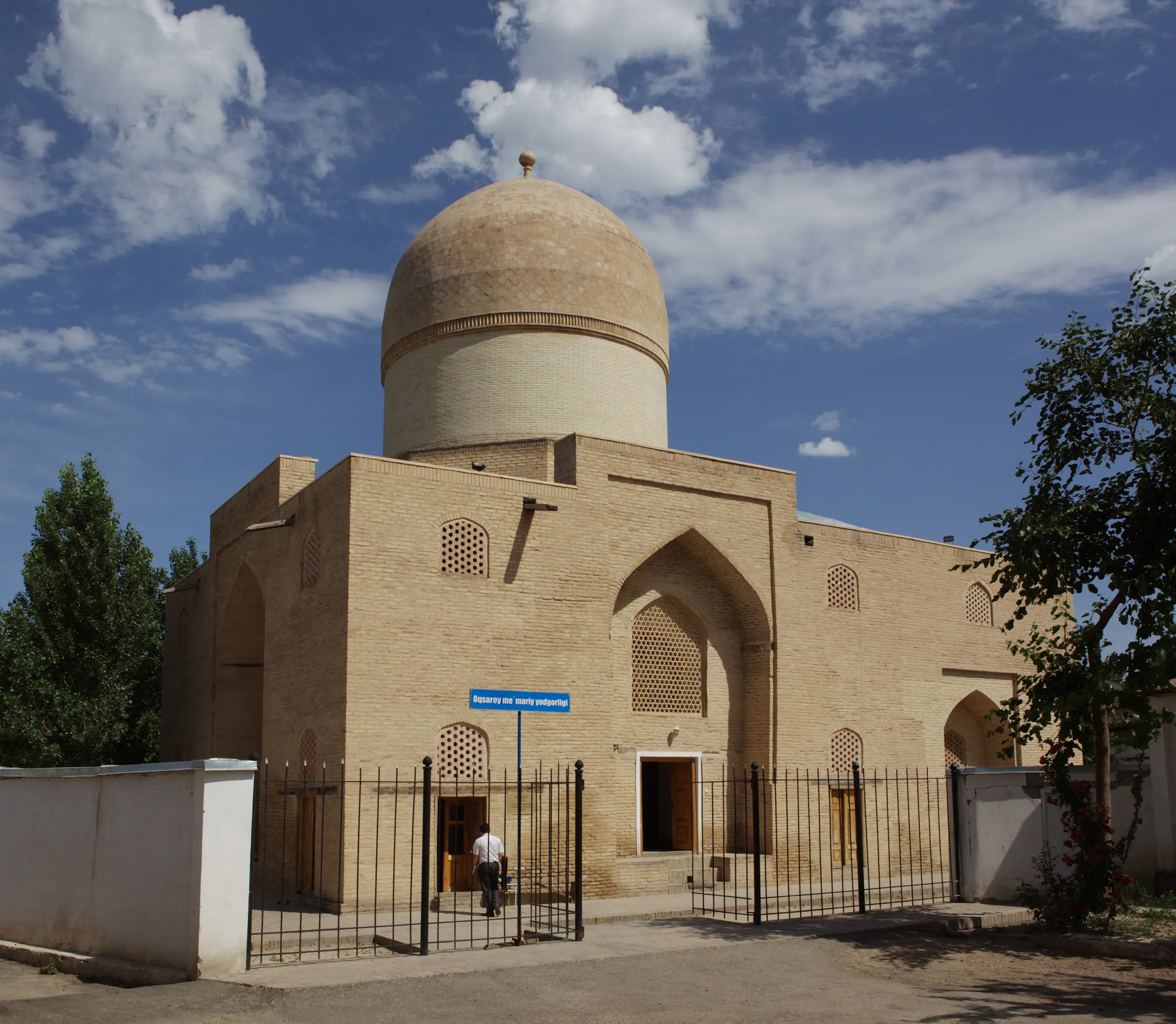
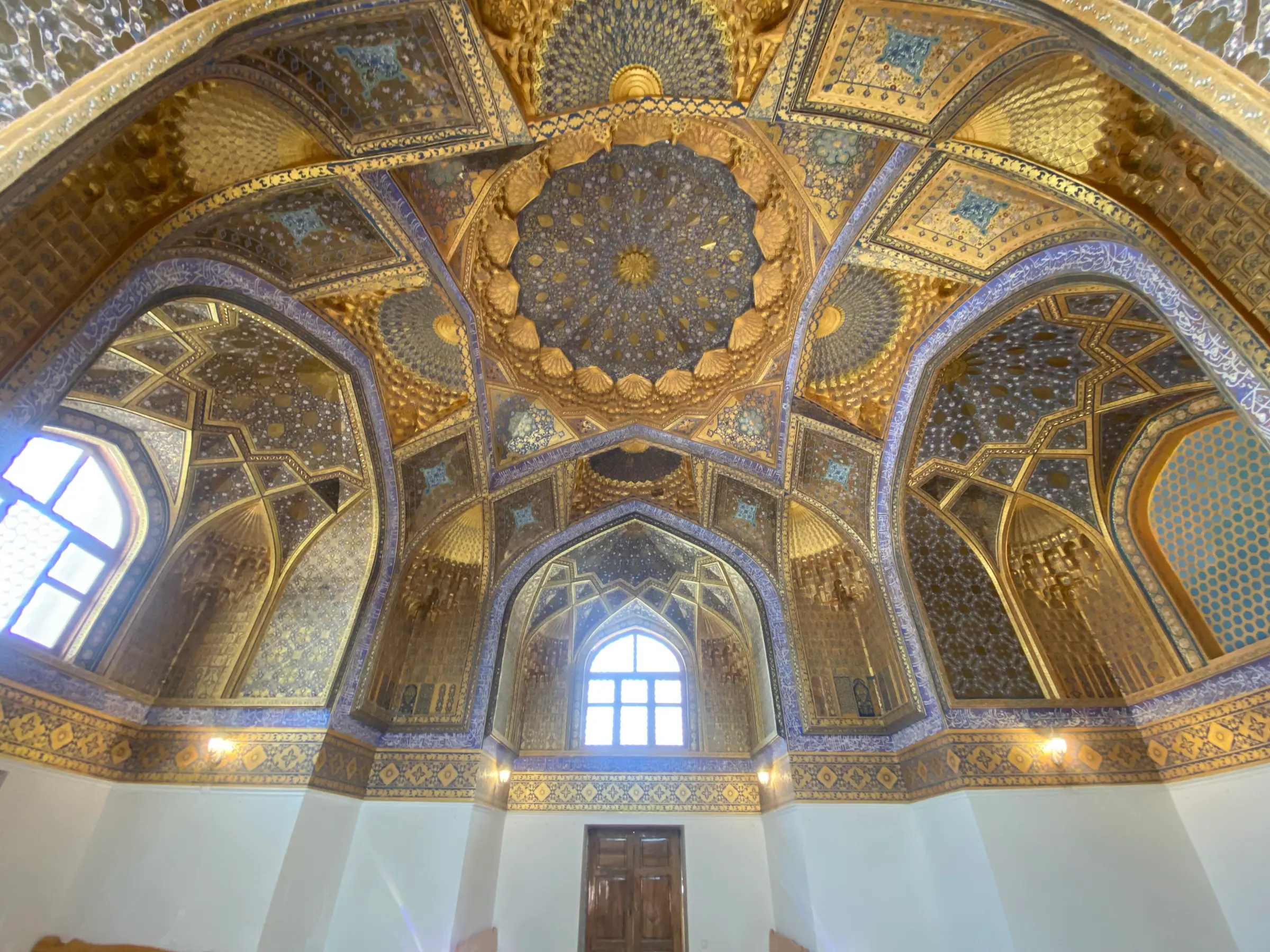
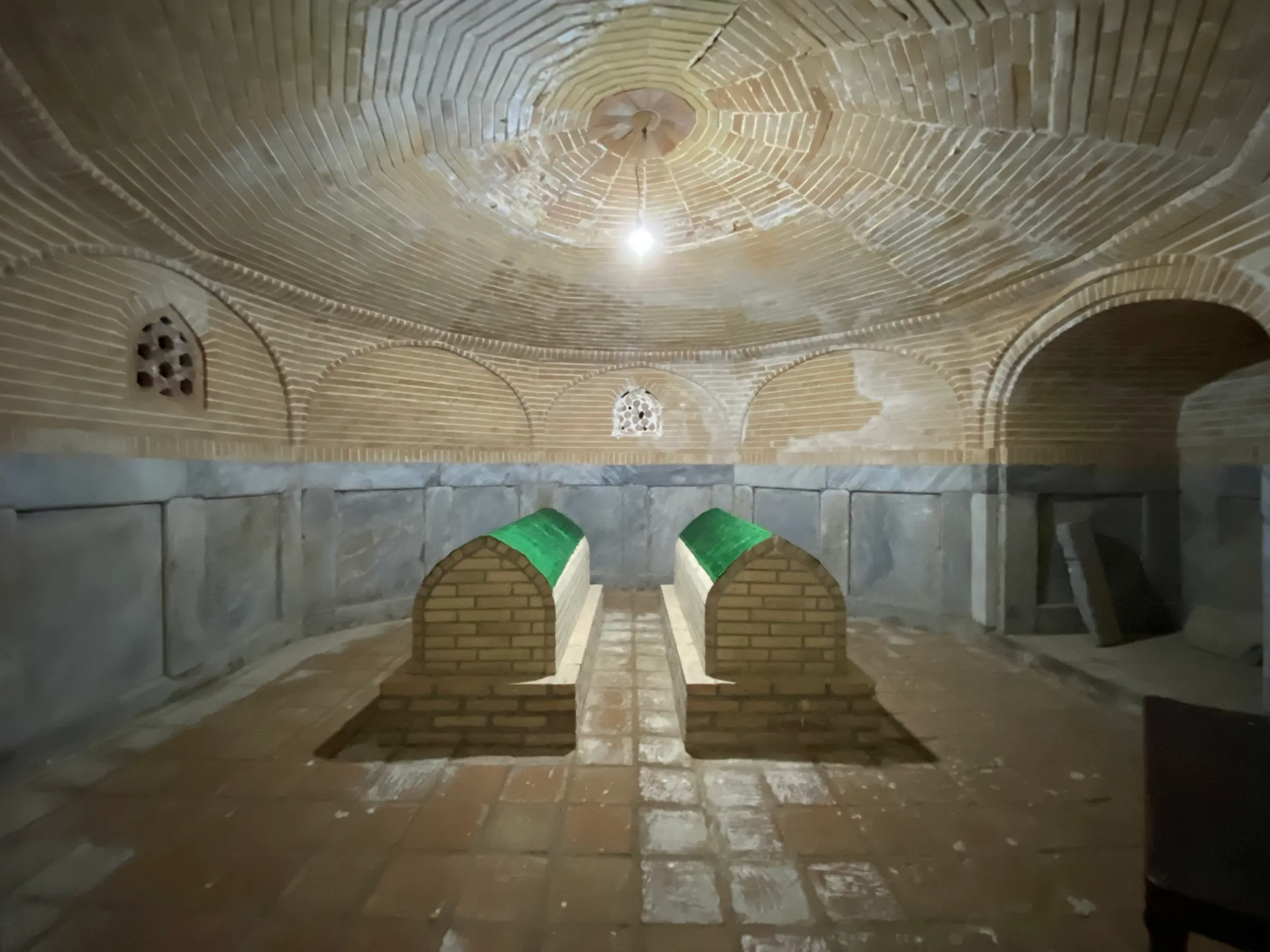
The building is a rectangle under a single dome: a cross-shaped central hall with three rooms on the entrance side. The dome rests on a tall cylindrical drum, carried on intersecting arches and shield-shaped pendentives. A narrow stepped passage leads down to an octagonal, marble-lined crypt holding unidentified burials.
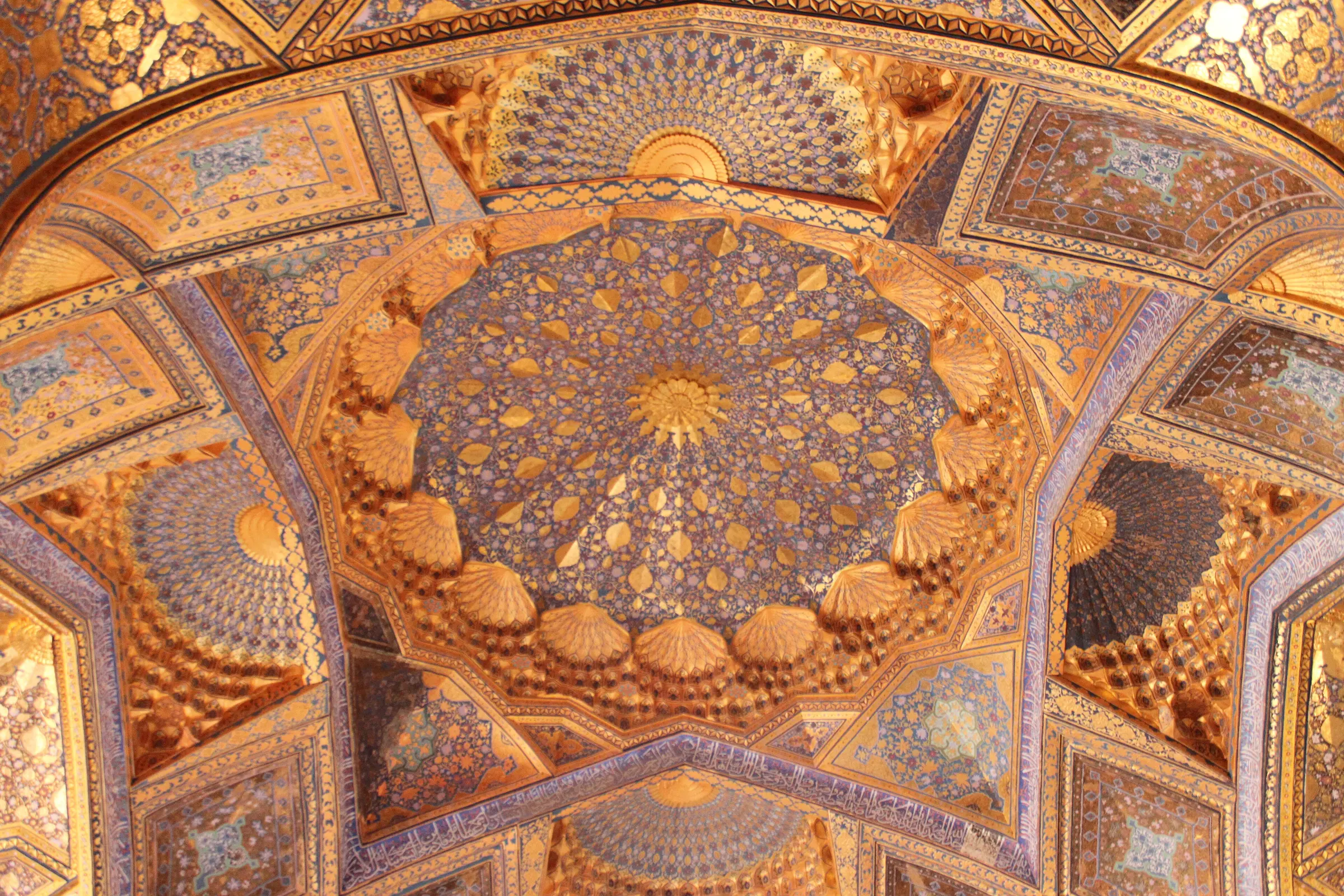
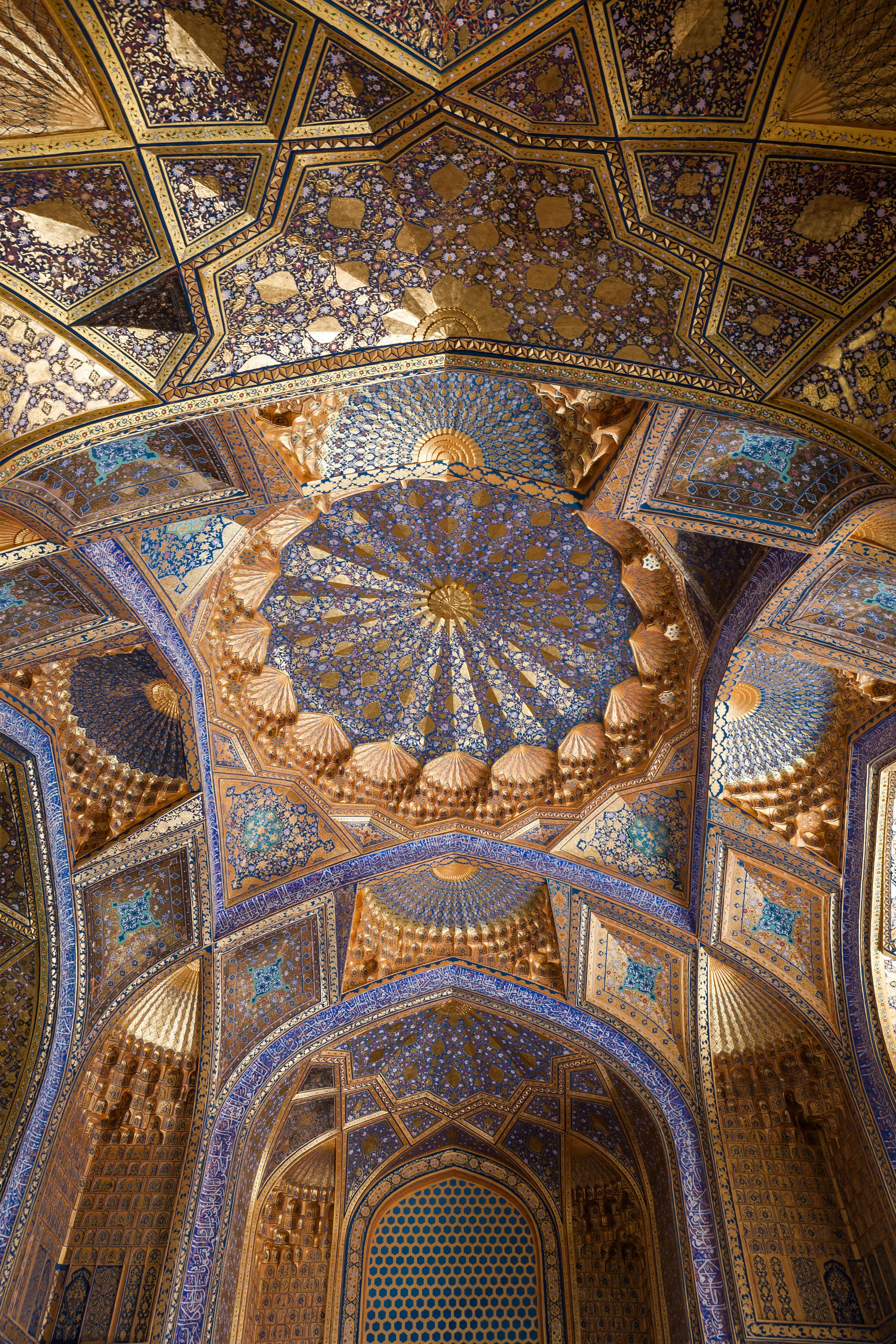
Ak-Saray's treasure is its interior. A dado of fine cut-tile mosaic runs around the base of the walls, while walls, pendentives and dome are covered in kundal painting with lavish gilding; one source counts sixty-seven different, never-repeated flower motifs in the pattern of a single arch. Outside, the building is almost bare, and its outer dome and drum appear never to have been completed — which makes stepping inside all the more startling.
Photographs in the Turkestan Album of 1871–1872 already show Ak-Saray badly damaged. Conservation work in 1924–1925 saved it from collapse, but it remained a half-ruin until the early 21st century. In 2007 it was restored with private funding and opened to visitors.

Details may change — please check before you visit.
Gallery
Stay & eat
Guesthouse · 50 m
Hotel · 100 m
Guesthouse · 100 m
Guesthouse · 200 m
Plov centre · 250 m
Fast food · 350 m
Restaurant · 400 m
Fast food · 500 m


For example: Registan, Ulugh Beg, plov, Urgut


