
Samarkand Regional Puppet Theatre
A children's stage in the 1895 Assembly House
This site is in test mode — some information may contain errors.
Report
A stage that began with “The Patricide”
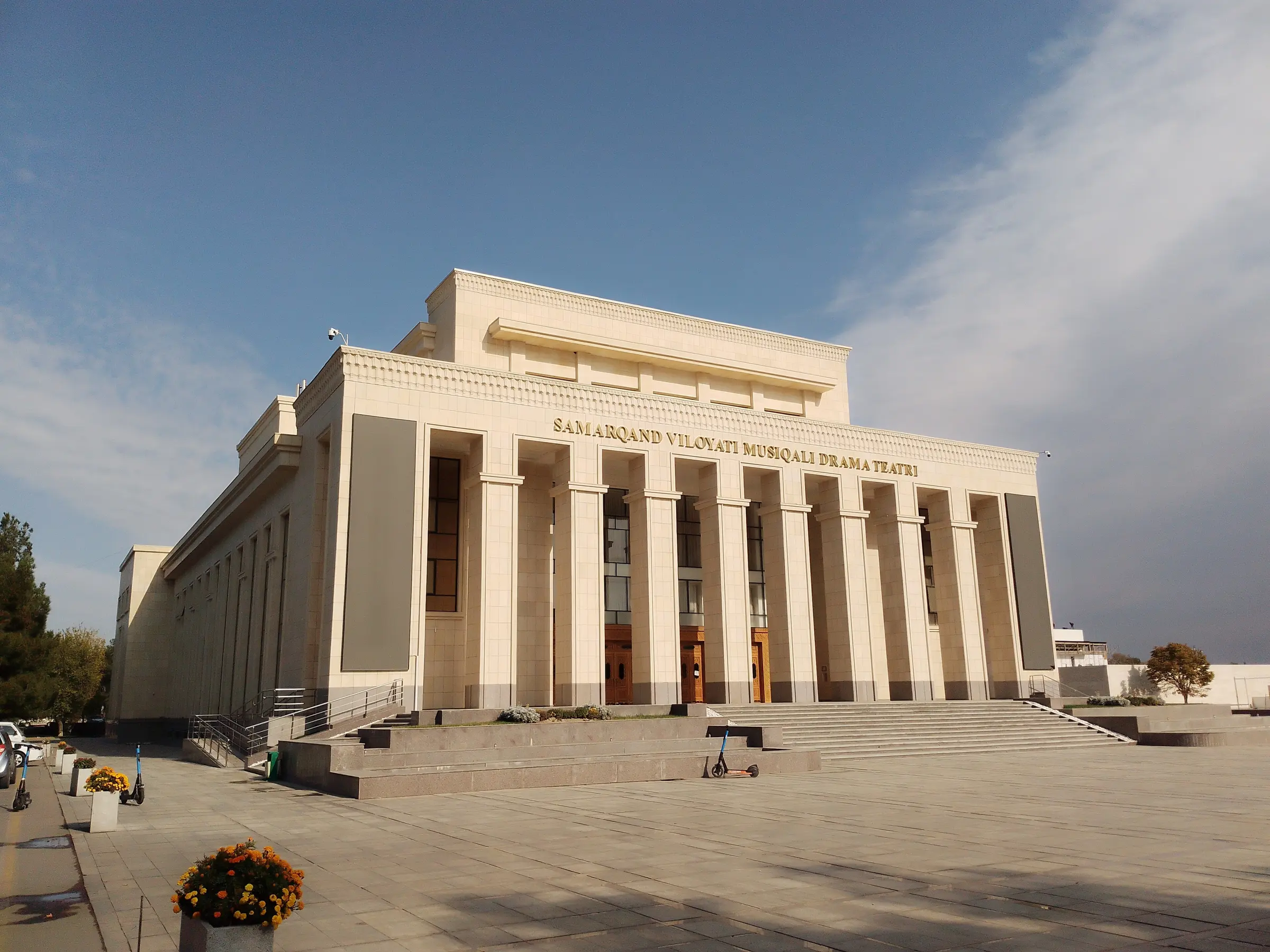
Samarkand's largest theatre, tracing its story to a 1914 staging of “Padarkush”, with a 940-seat hall in its 1964 building and drama, orchestra, choir and ballet companies.
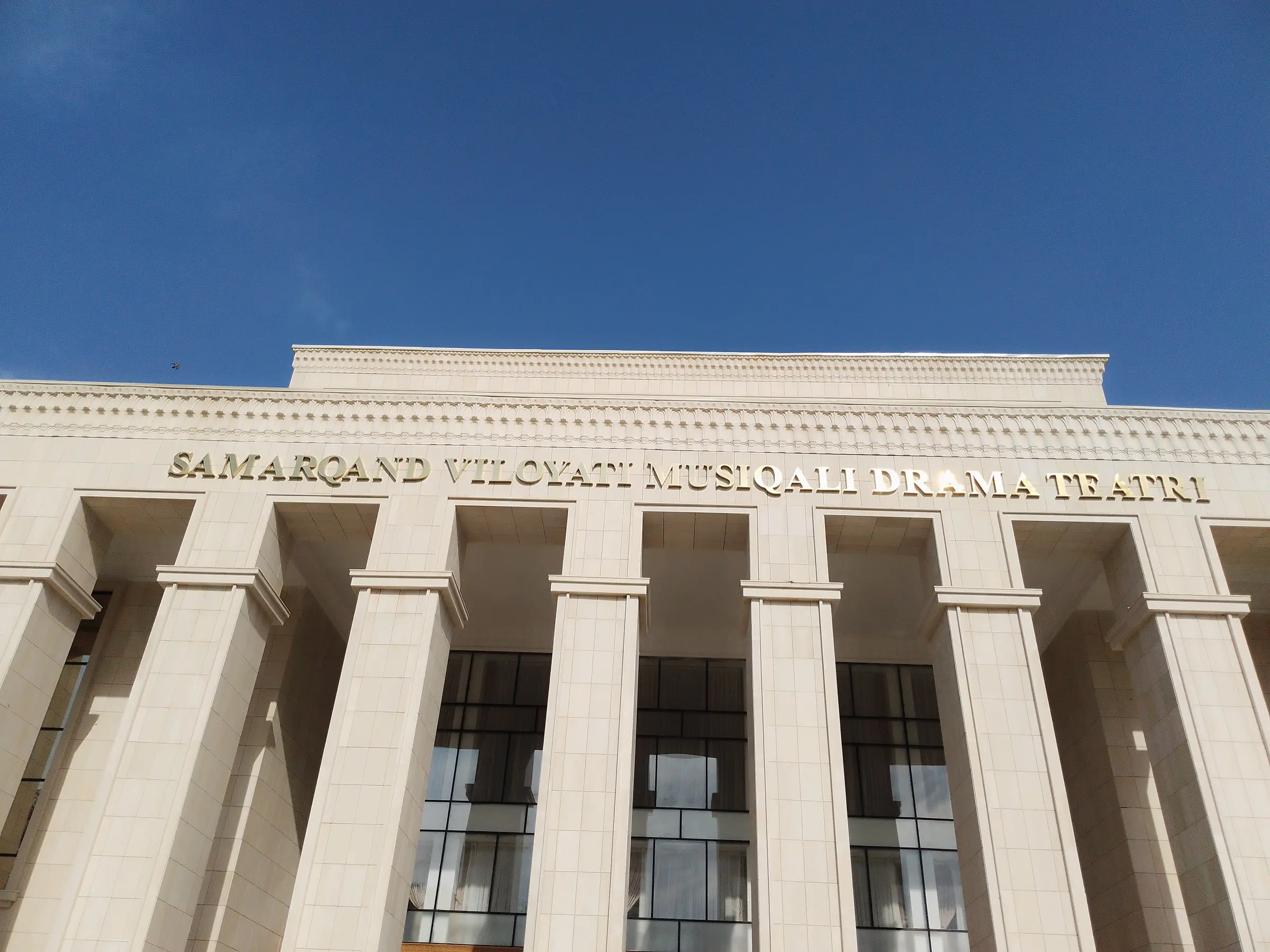
The Samarkand Regional Musical Drama Theatre named after Hamid Olimjon dates its history to 15 January 1914, when amateurs performed Mahmudkhoja Behbudiy's “Padarkush” (“The Patricide”), the first Uzbek play, in the hall of Samarkand's Qiroatxonai Islomiya library. In 1930, after the republic's capital moved to Tashkent, a regional Uzbek musical drama theatre was formed in Samarkand from amateur troupes. In 1938 Bobo Khojaev of the Hamza Theatre became artistic director, and after a tour to Tashkent in 1939 the company's actors received the title of Honoured Artist for the first time. From 1940 it performed with a full orchestra.

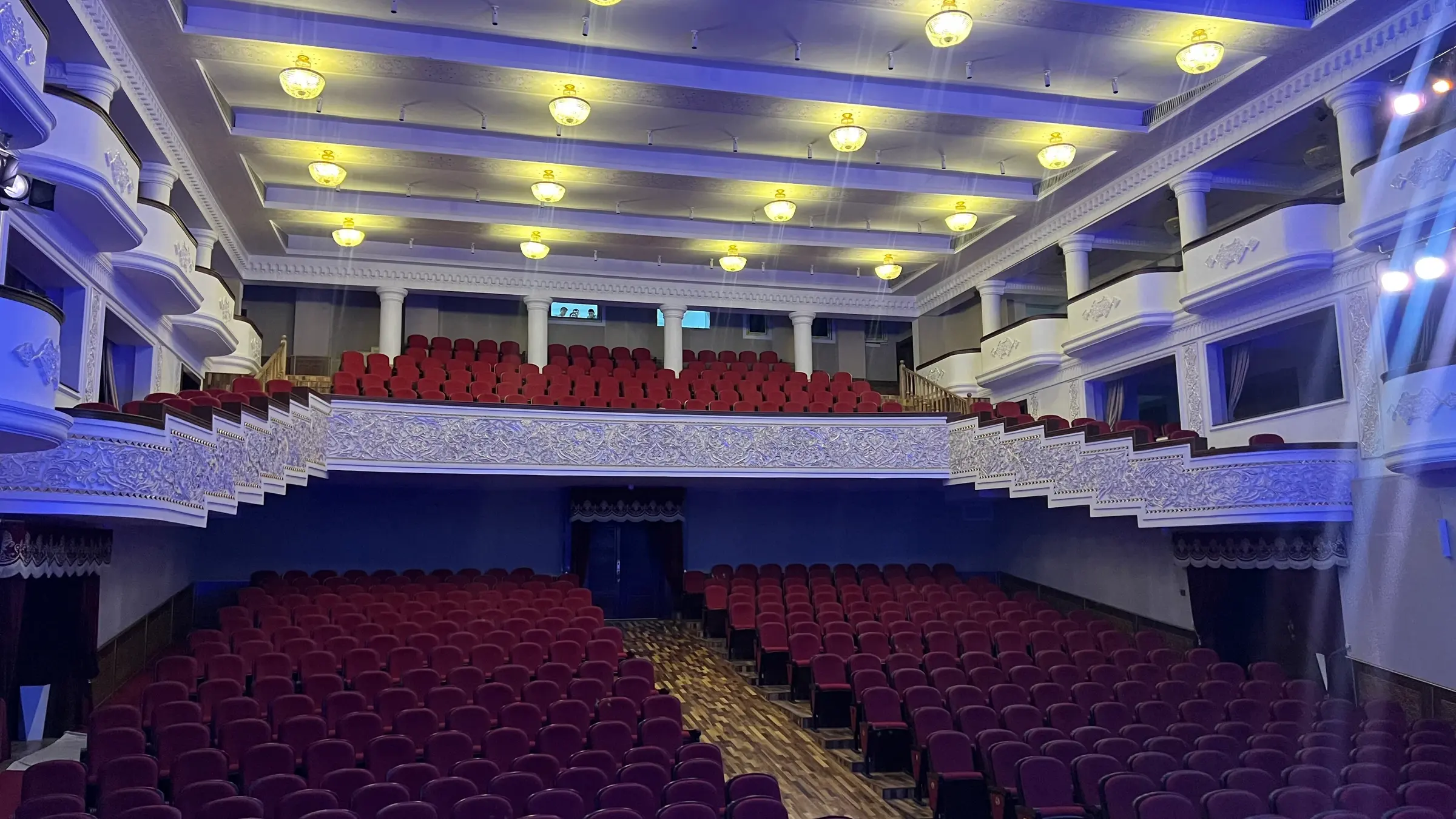
The present building on Theatre Square was completed in 1964 and has a two-tier main hall seating 940. In 1991 the company merged with the Samarkand Opera and Ballet Theatre, so alongside the drama troupe there is now an orchestra, a choir and a ballet. The repertoire runs from musical dramas such as “Alpomish”, “Farhod and Shirin” and “Nodirabegim” to the ballets “Samarkand Legend” and “Silk Road” and musical fairy tales for children. Named after the poet Hamid Olimjon (1909–1944), it is also one of the city's main venues for touring concerts.
Gallery
Related places
A children's stage in the 1895 Assembly House

The shady avenue between the old city and Russian Samarkand
Nearby


Stay & eat
Hotel · 200 m
Hotel · 350 m
Hotel · 350 m
Hostel · 350 m
Plov centre · 350 m
Restaurant · 400 m
Restaurant · 400 m

Café · 450 m


For example: Registan, Ulugh Beg, plov, Urgut