
Registan
The great square of three madrasas
This site is in test mode — some information may contain errors.
Report
The conqueror enthroned
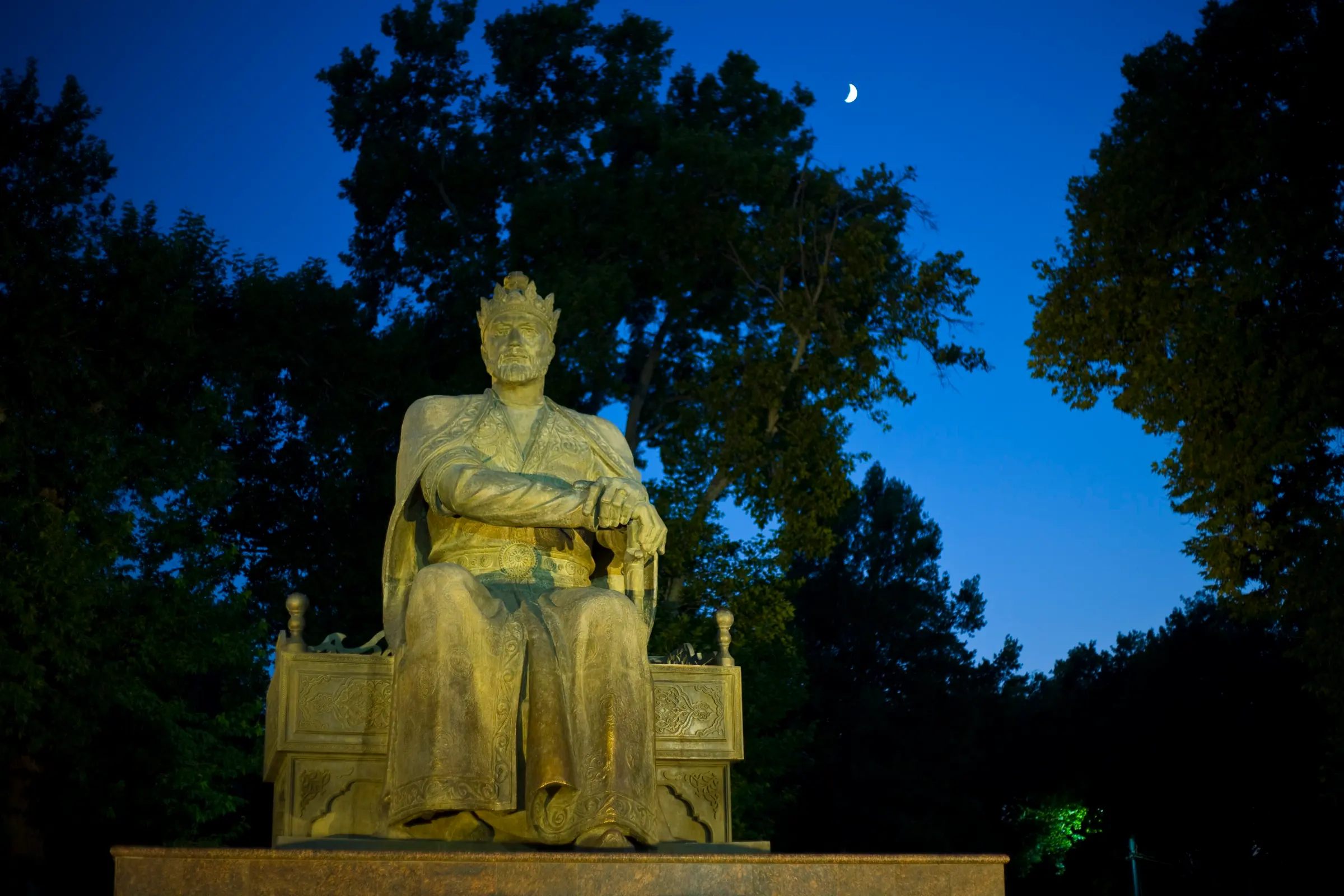
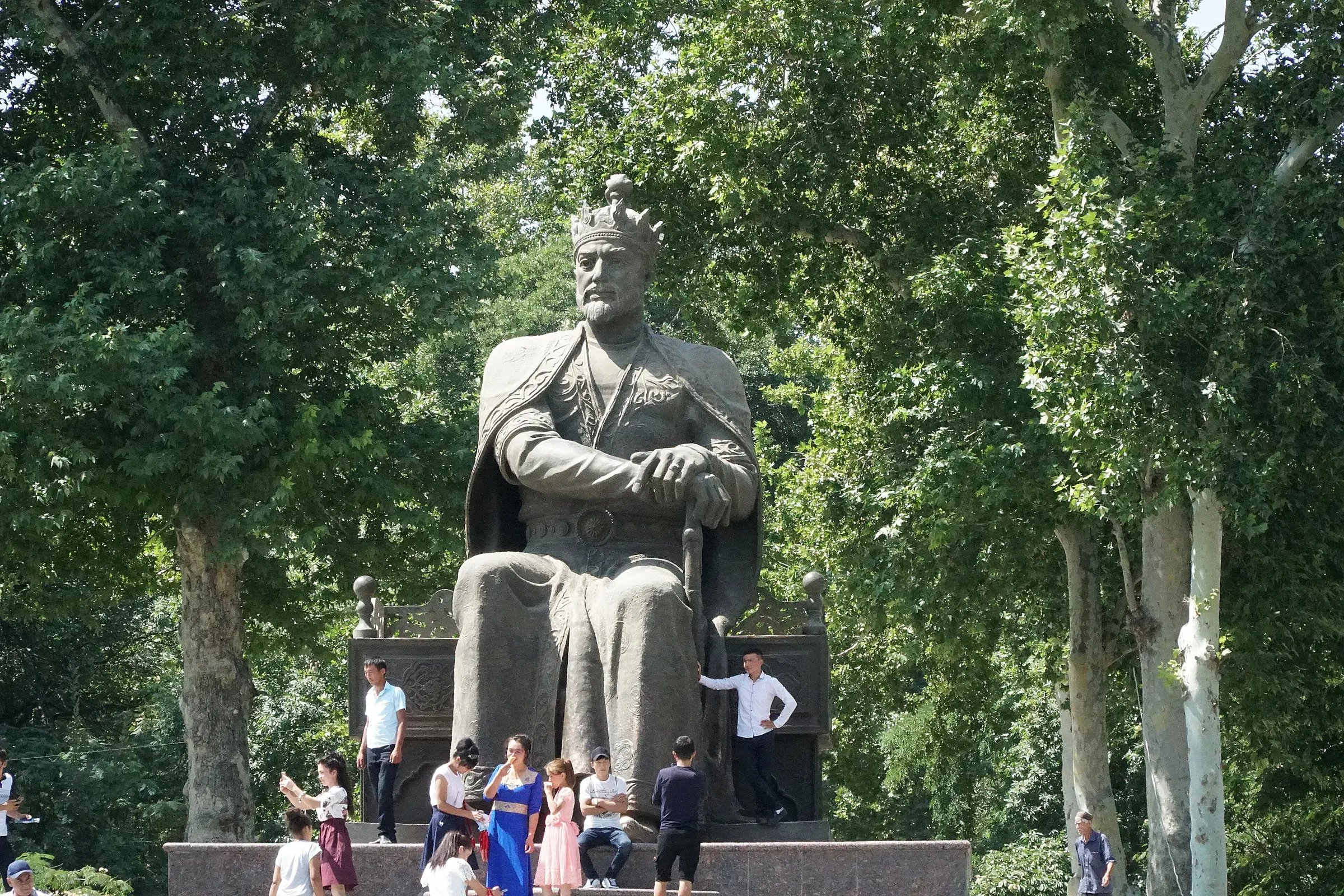
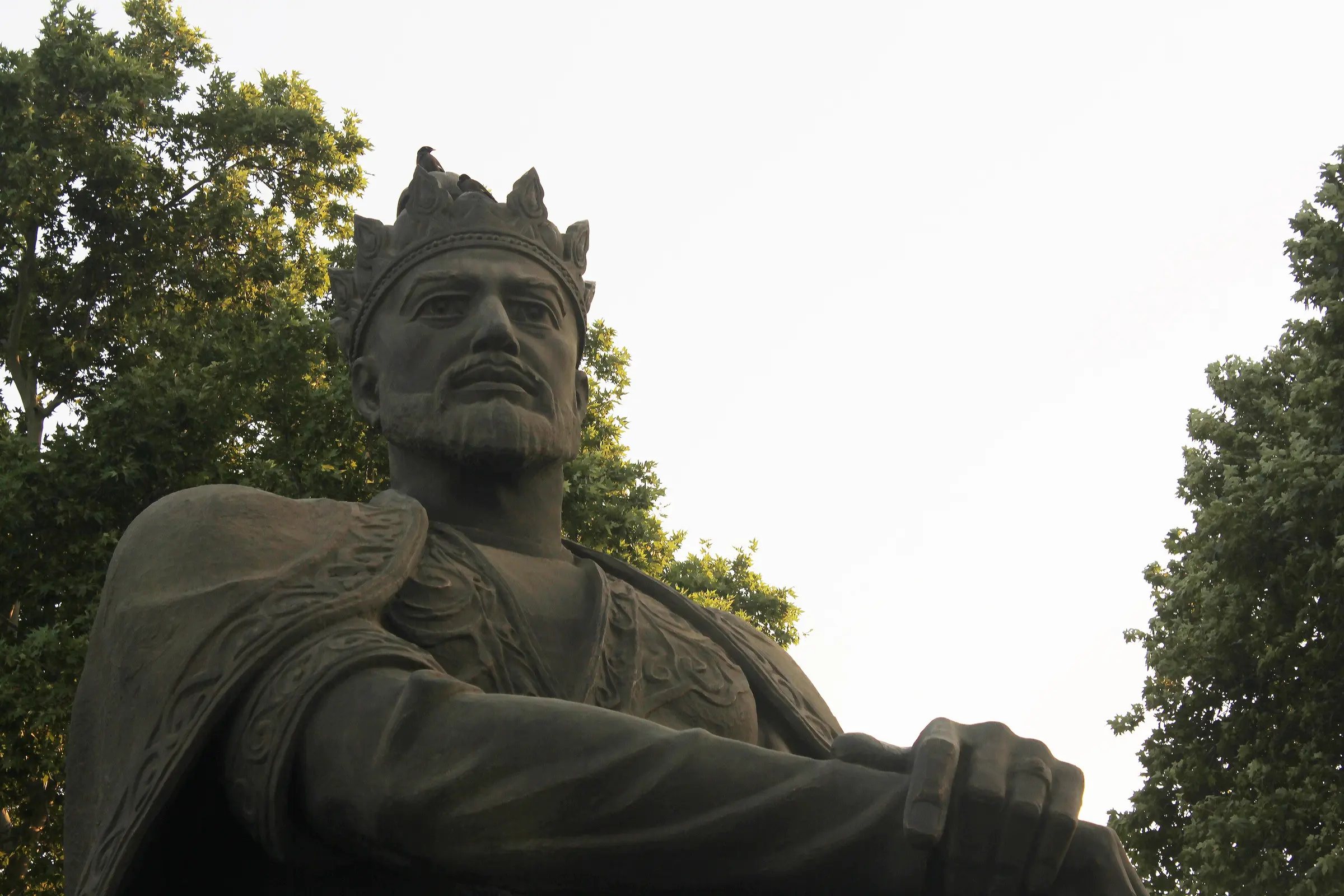
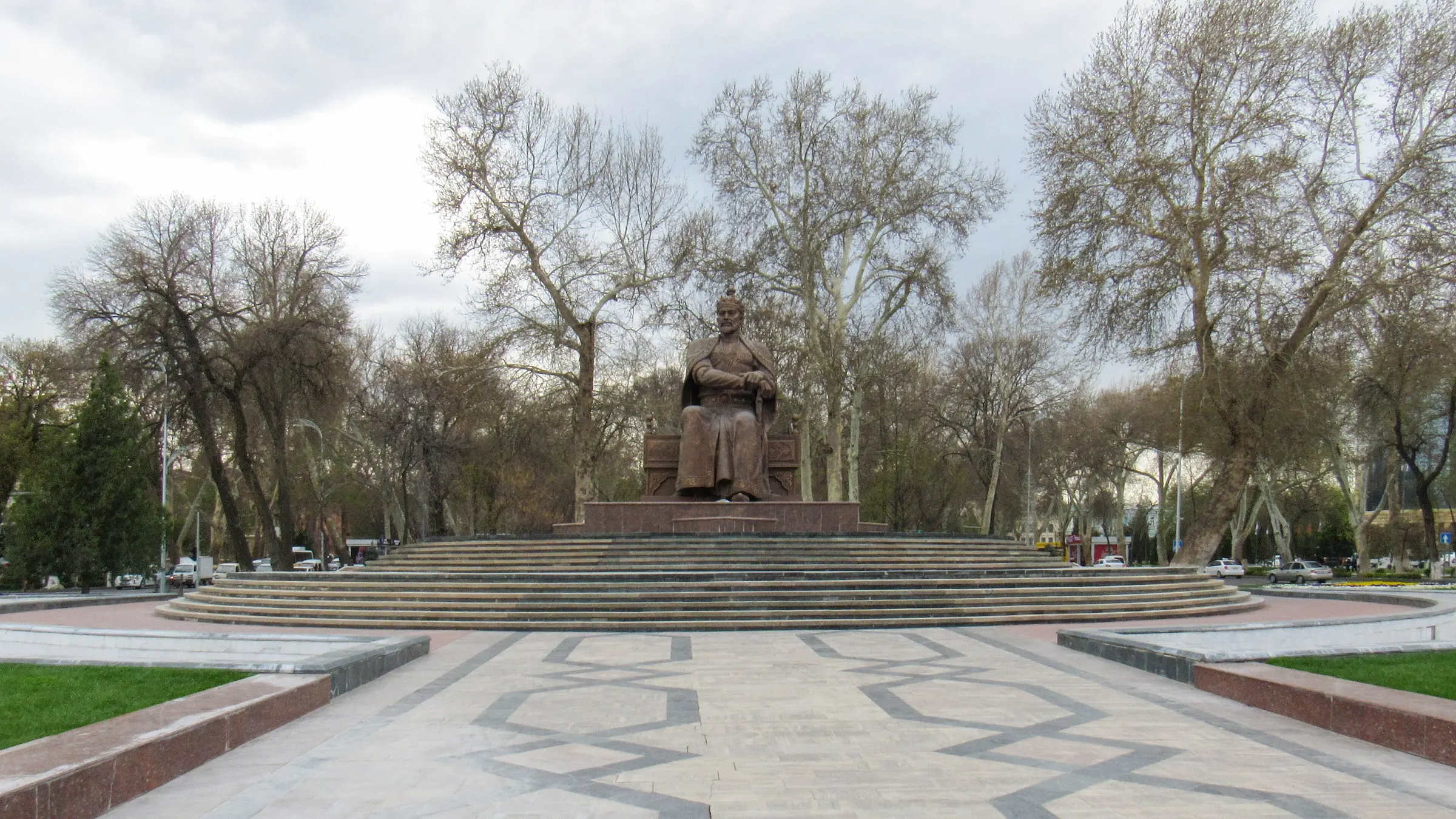
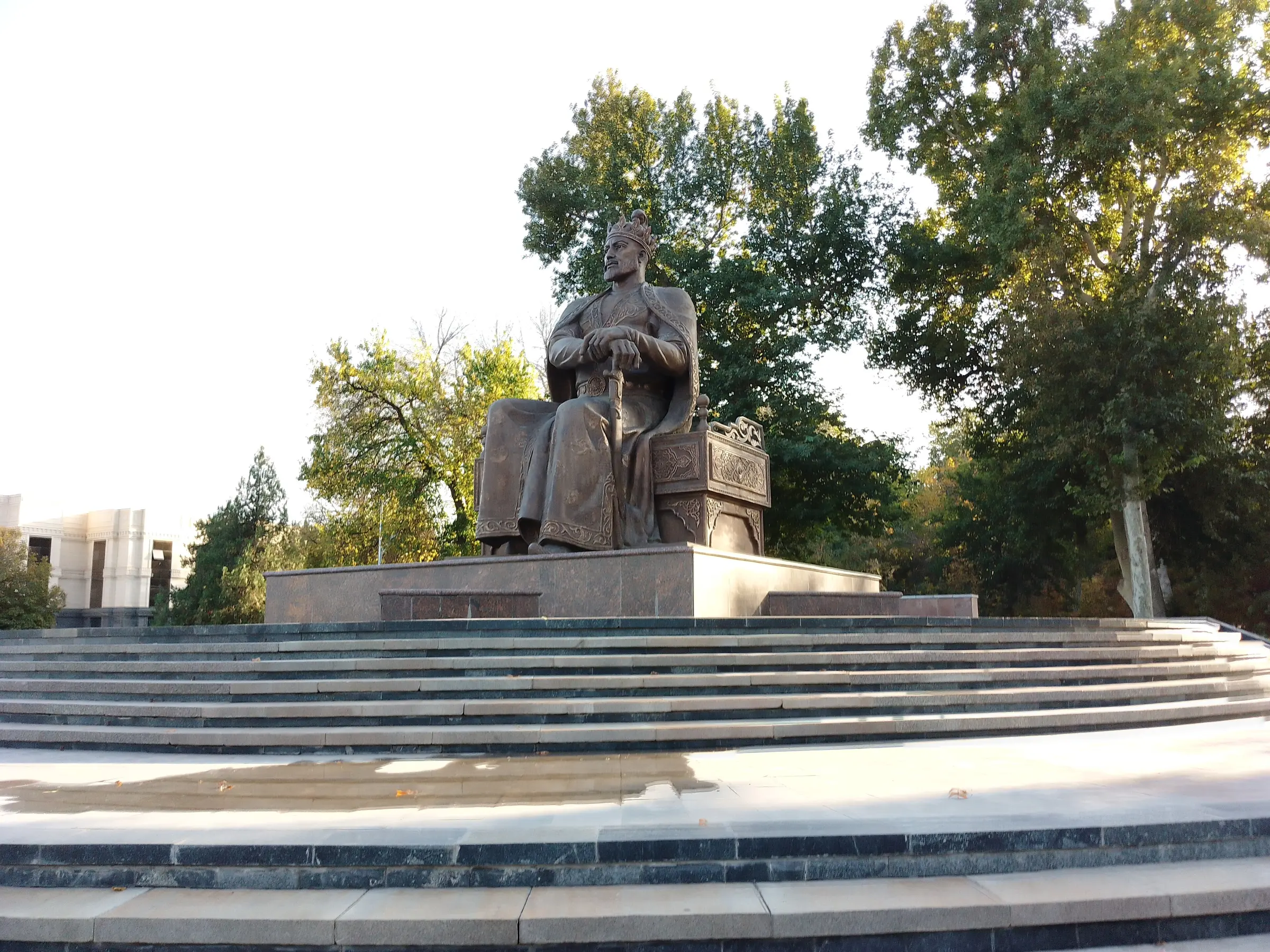
A bronze statue near Gur-e-Amir, unveiled in 1996 for Amir Temur's 660th birth anniversary, showing the ruler seated on a throne with both hands resting on his sword. Sculptor: Ilhom Jabborov.
Amir Temur (1336–1405), known in the West as Tamerlane, made Samarkand the capital of his empire in 1370 and filled it with monumental buildings. Uzbekistan declared 1996, the 660th anniversary of his birth, the Year of Amir Temur. On 18 October statues of the conqueror were unveiled in Samarkand and Shahrisabz, and both cities received the Order of Amir Temur. Ever since, 18 October has been celebrated as Samarkand City Day.

The bronze figure is by the sculptor Ilhom Jabborov, a member of Uzbekistan's Academy of Arts, with the architect F. Ashrafiy. Jabborov also made the equestrian Temur in Tashkent and the statue in Shahrisabz, but the Samarkand version strikes a different note: Temur sits calmly on a throne, both hands resting on the hilt of his sword. It is the image of a statesman who built his capital rather than of a warrior. The monument is listed as a registered cultural heritage site.
The statue stands where University Boulevard meets Registan and Bostonsaroy streets. Gur-e-Amir, where Temur and his descendants are buried, is about 400 metres away, and the Registan is a 15-minute walk. That makes it a natural starting point for exploring the historic centre, with the shady boulevard of the late-19th-century “European” town on one side and the Timurid monuments on the other.

The setting is symbolic. University Boulevard became the dividing line between the old oriental city and the new Russian town in the late 19th century, and it begins where Amir Temur's citadel once stood. Laid out in the early 1880s and first named after General Alexander Abramov, the boulevard runs for nearly a kilometre with three bands of trees and two carriageways — so Temur now sits at the point where his fortress meets modern Samarkand.
Details may change — please check before you visit.
Gallery
Stay & eat
Hotel · 200 m
Hotel · ★★★★★ · 200 m
Hotel · 250 m
Hotel · 250 m
Restaurant · 150 m
Fast food · 250 m
Plov centre · 300 m
Café · 350 m


For example: Registan, Ulugh Beg, plov, Urgut


