
Afrasiyab
The ruins of pre-Mongol Samarkand
This site is in test mode — some information may contain errors.
Report
The burnt castle of Sogdian kings
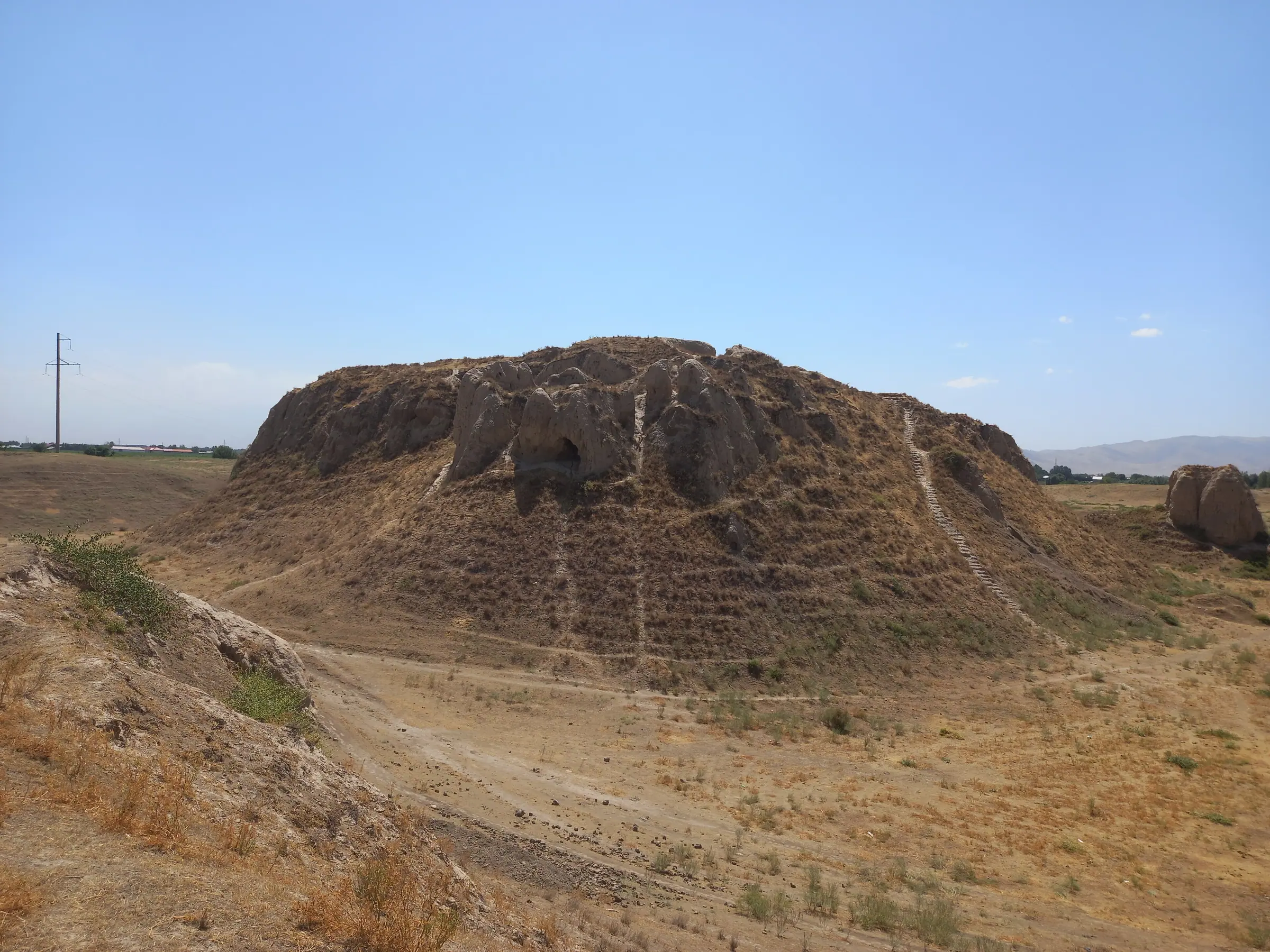
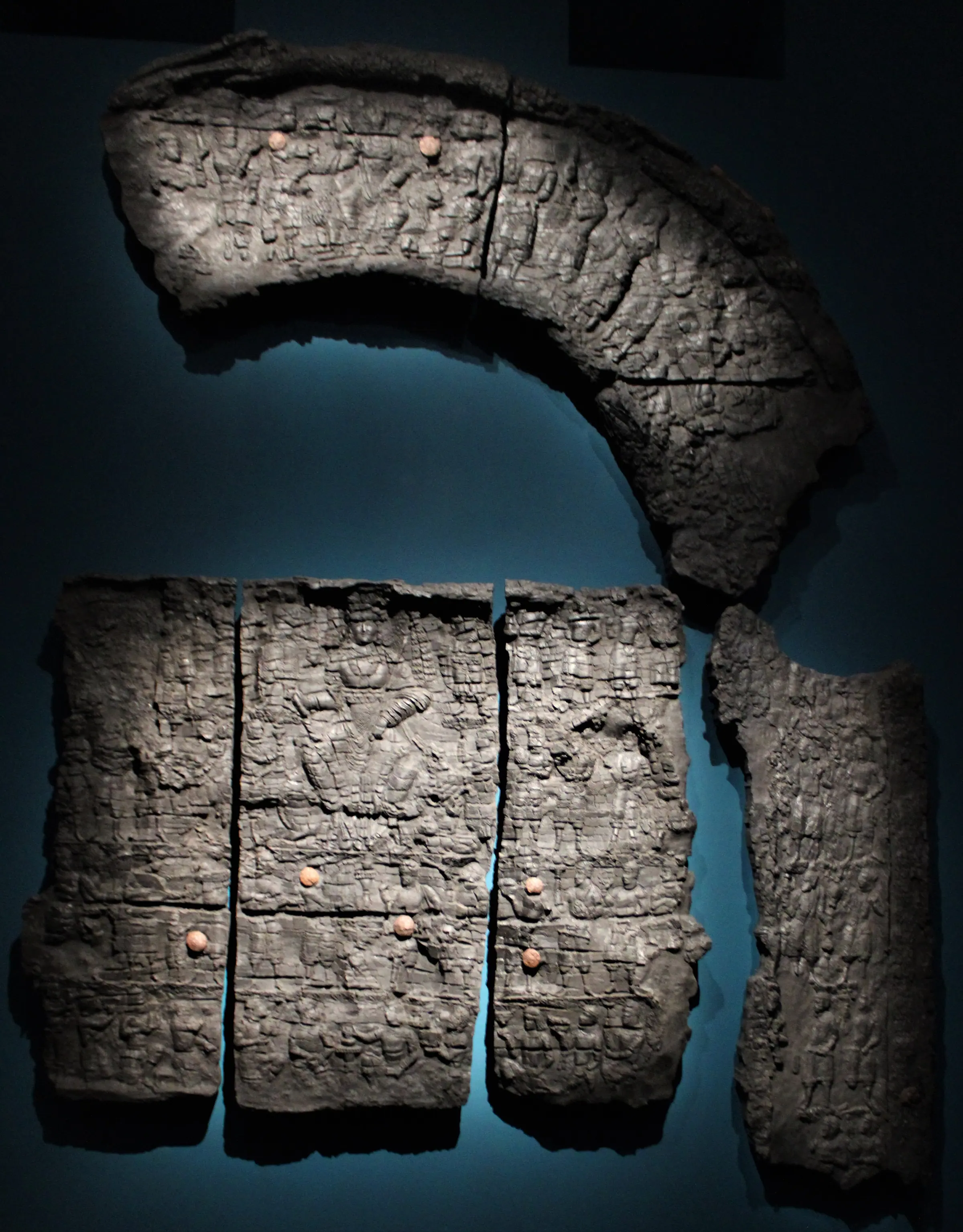
Ruins of a Sogdian fortress outside Samarkand, where a fire layer of the early 8th century yielded hundreds of clay sealings and a unique charred wooden door carved with the goddess Nana.
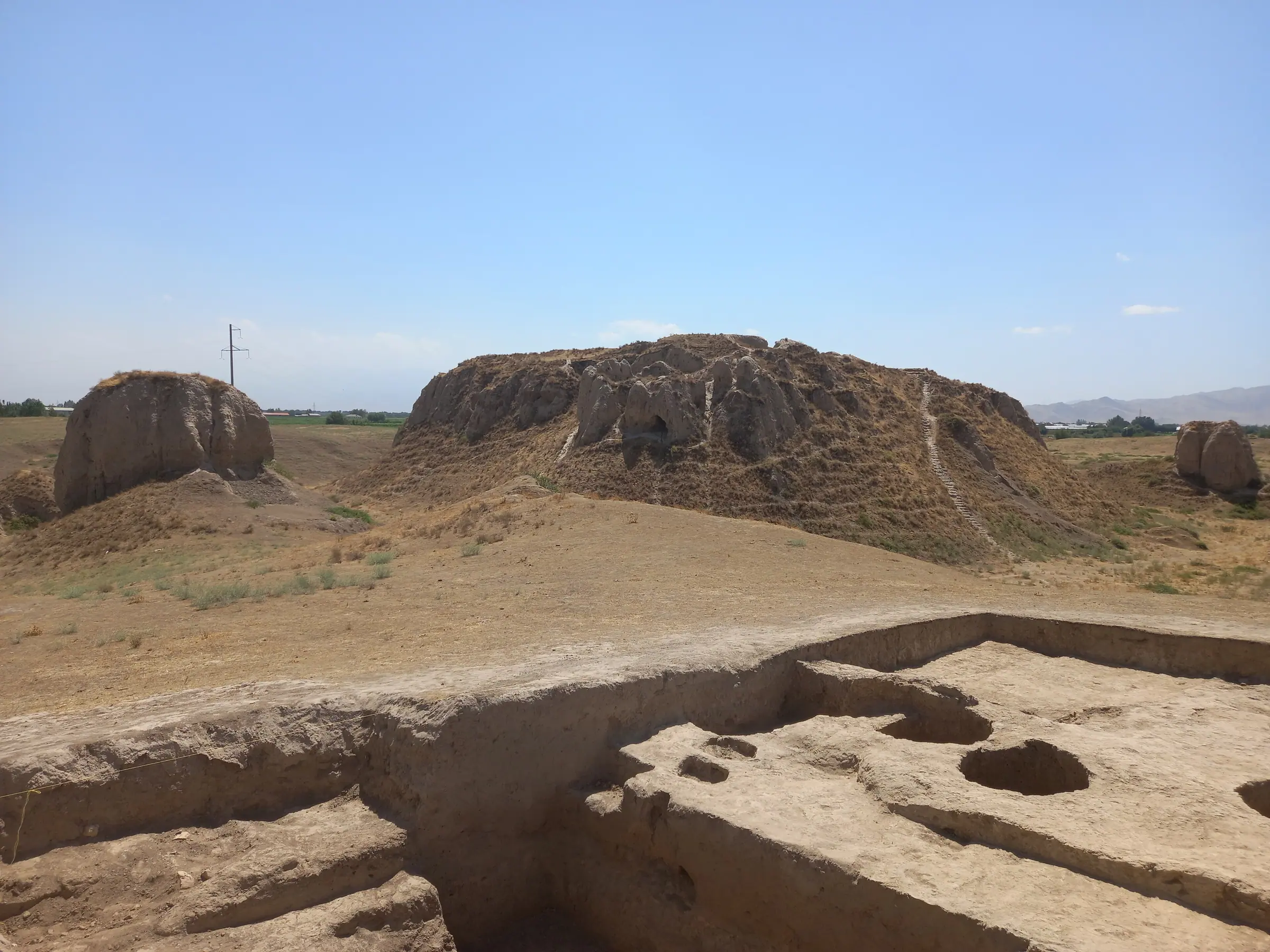
Kafir-Kala ('fortress of the infidels') is a ruined Sogdian stronghold beside the Dargom canal, about 12 km south-east of central Samarkand, guarding the southern edge of the oasis. At its centre is a mud-brick citadel 75 metres square at the base and some 20 metres high, still ringed by a visible moat, with an inner town and suburb outside. The citadel was first occupied in the 4th–5th centuries and is thought to have been a country residence of Samarkand's rulers, the ikhshids. Early in the 8th century – probably during the Arab conquest – it was destroyed by a great fire.

An Italian–Uzbek expedition worked here in 2001–2008, and a Japanese–Uzbek team has excavated since 2013. The fire layer produced some 700 clay sealings, the largest such hoard from a single site in Central Asia. In 2017 the throne room revealed the charred remains of a 6th-century carved wooden door showing the goddess Nana enthroned on lions, surrounded by worshippers. Because the fire turned the wood to charcoal rather than ash, the carving survived. Restored by a Louvre specialist, the door has since been shown at the Louvre in Paris and the British Museum in London.
Gallery
Related places
The ruins of pre-Mongol Samarkand

Home of the Hall of Ambassadors
Nearby


Stay & eat
Hostel · 6.1 km
Hostel · 8.5 km
Guesthouse · 8.8 km
Hostel · 9.1 km
Restaurant · 4.8 km
Restaurant · 7.1 km
Restaurant · 8.2 km
Restaurant · 8.2 km


For example: Registan, Ulugh Beg, plov, Urgut