

Chor-Chinor Garden
A shrine in the shade of ancient plane trees
© Екатерина Борисова, CC BY-SA 4.0
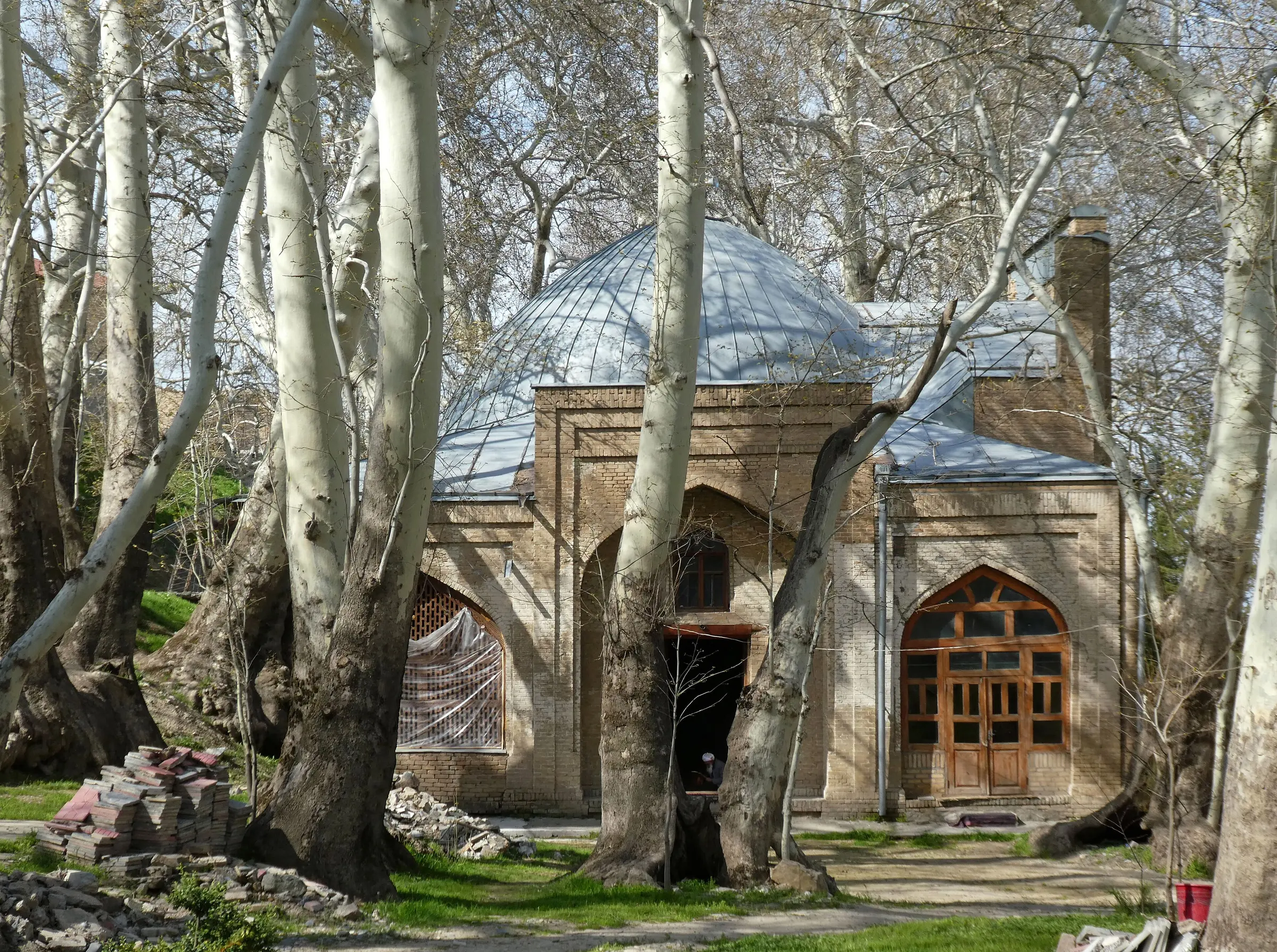
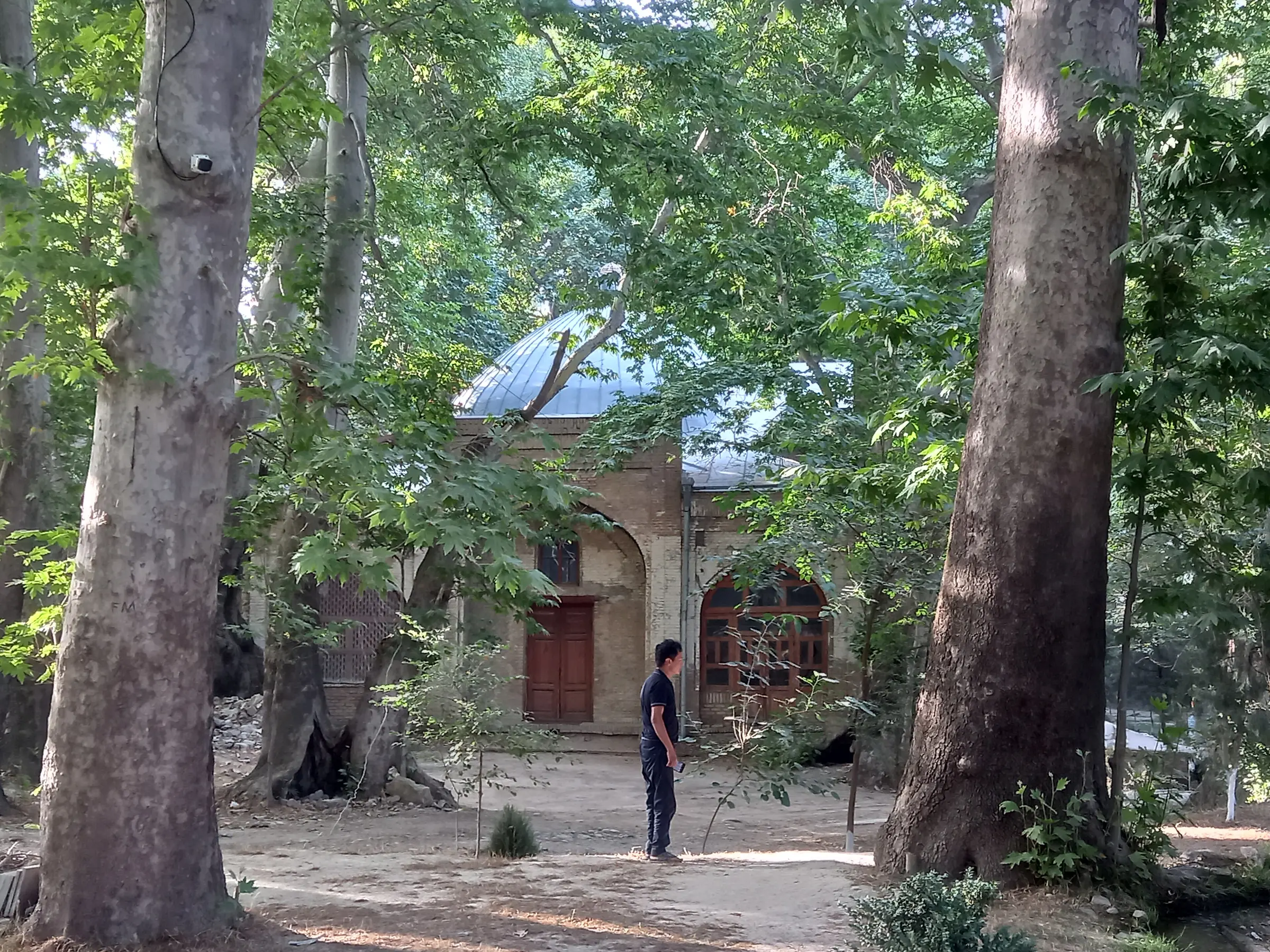
An ancient grove of plane trees at the foot of the mountains in Urgut: giant trunks beside a spring, a tree with a room inside it and a 1914 mosque-madrasa. Tradition says the oldest trees are over a thousand years old.
The legend of four trees
Chor chinor is Persian for “four plane trees”. Legend has it that Khoja Abu Talib, an Arab commander who took Urgut, had four plane trees planted by a spring and, on his death in 866–867, was buried beside them — hence the local name “Khoja Chorchinor”. Today dozens of colossal trees line the central avenue that climbs uphill from the gate.
Local tradition holds that the oldest trees have passed their thousandth year. Their age has never been scientifically measured, but their size is astonishing: the stoutest trunk is said to be around 16 metres in girth.

A room inside a tree
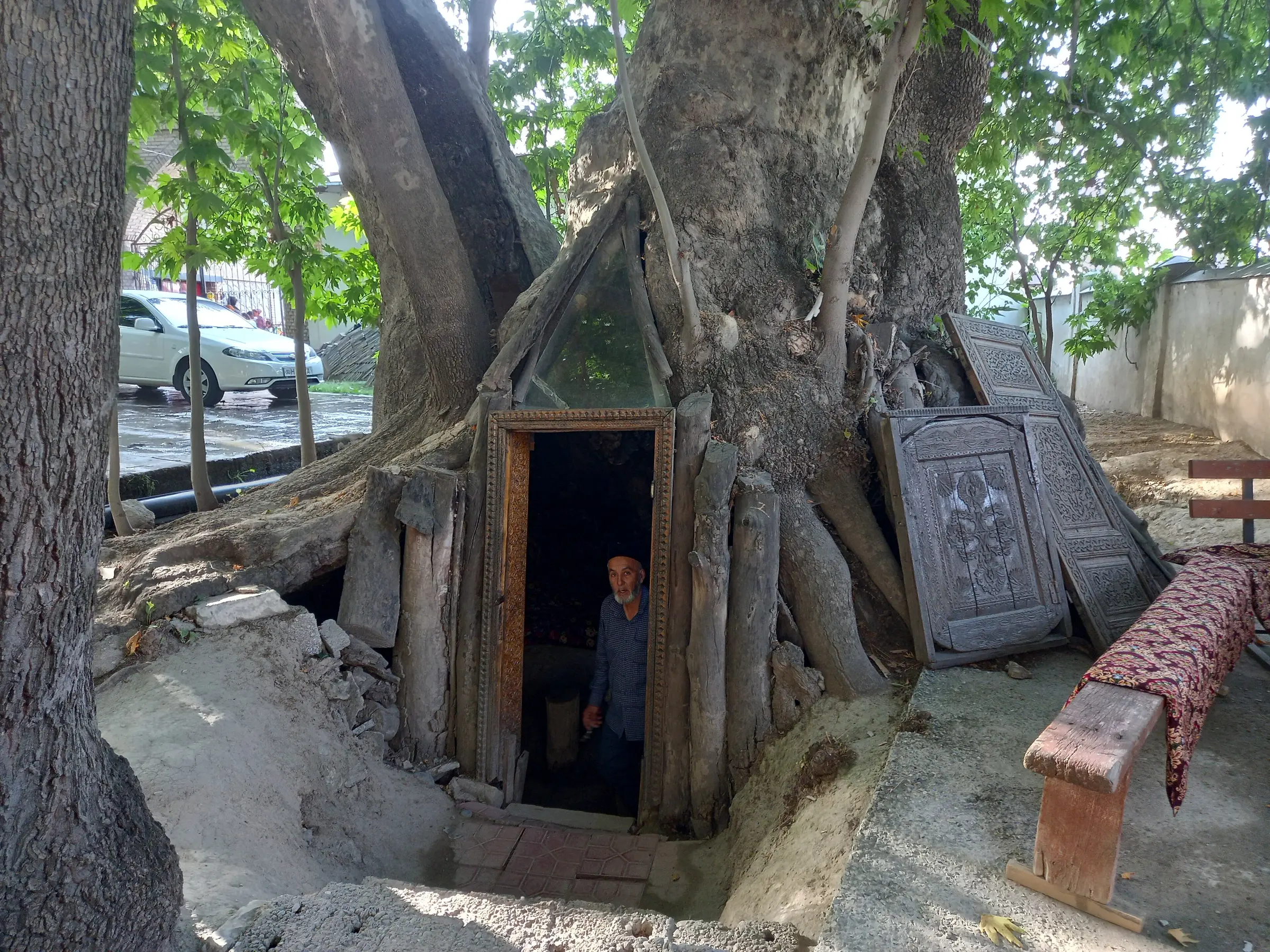
One plane tree in the left-hand row hides a hollow big enough for about ten people, entered through a carved wooden door, its walls partly lined with brick. It is said to have served as a retreat cell for prayer; in the early Soviet years meetings were held here, and later it became a school classroom.
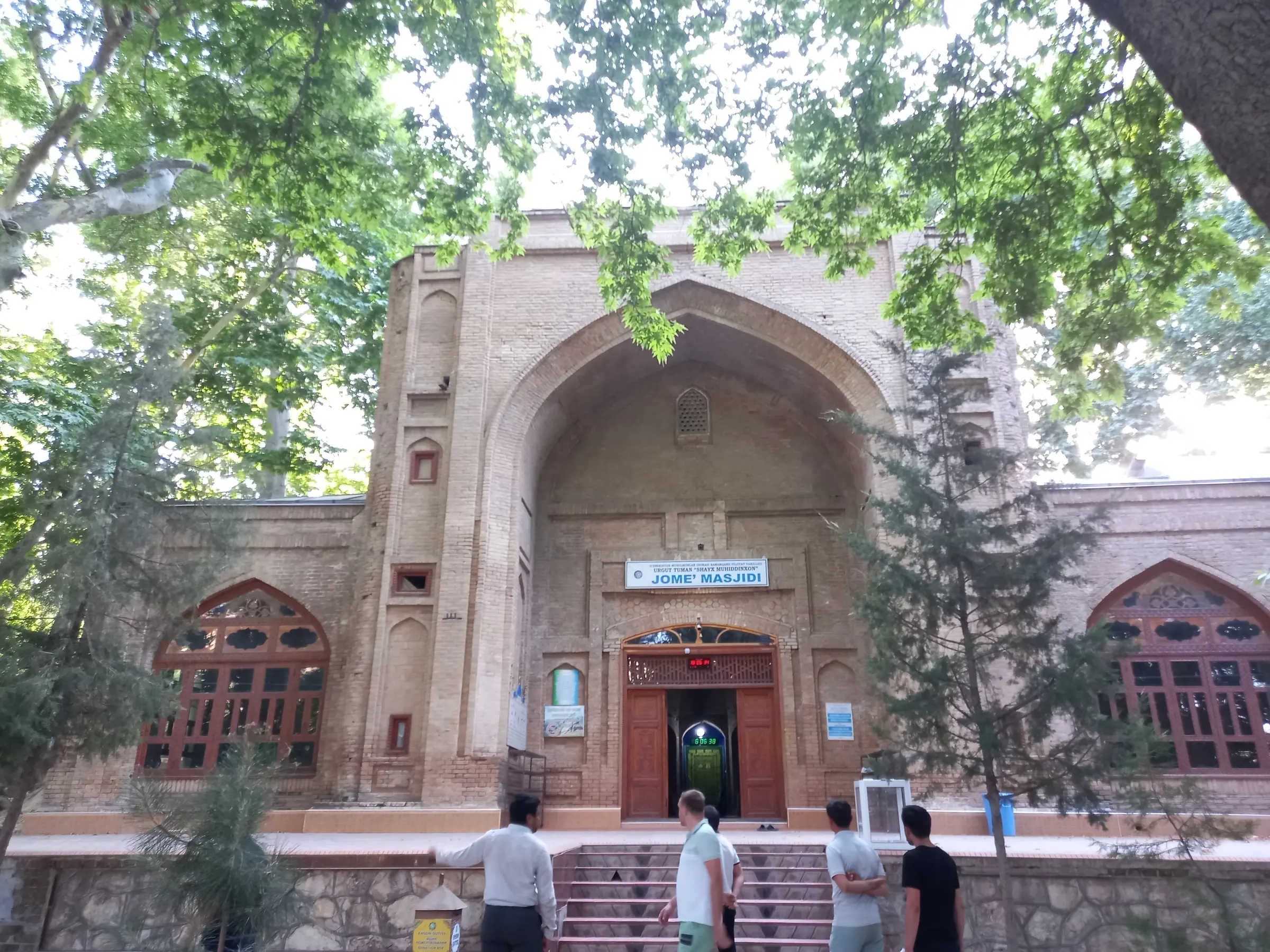
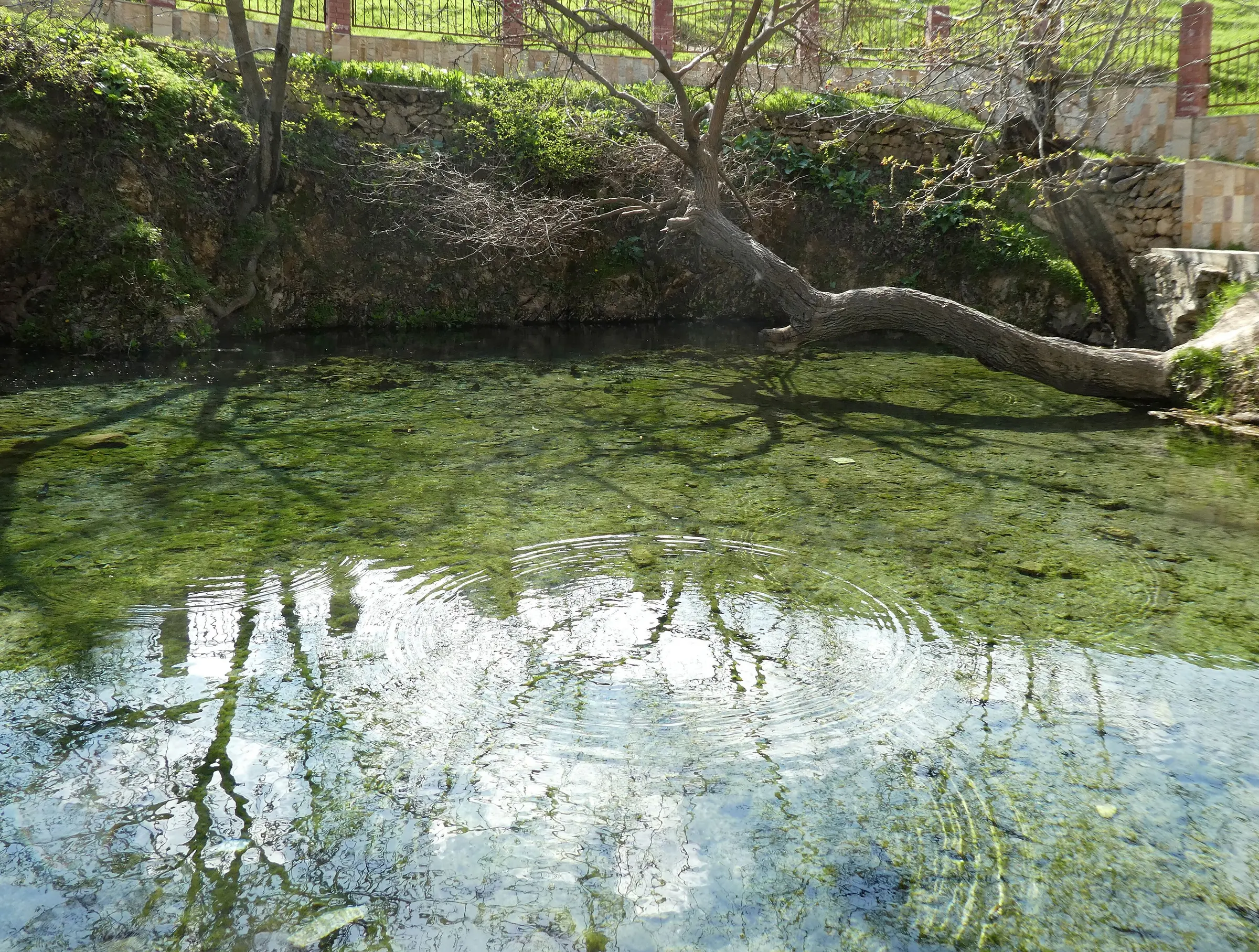
The mosque in the grove was built in 1914 by the master craftsman Abdukadyr for Sheikh Muhiddinkhan and doubled as a madrasa until 1927. In the courtyard lies the ishan Valikhan Ismailkhoja-ogly (1842–1915), who taught at the Mir-i Arab madrasa in Bukhara; his grandson Kutbiddinkhan became a noted orientalist. A spring wells up on the south side to fill a small pool, and the old cemetery nearby holds the graves of Urgut's beks.
Getting there
Urgut lies 35–40 km southeast of Samarkand: shared taxis and minibuses leave from Samarkand's Kaftarkhona station and take about an hour. Chor-Chinor is roughly 3 km south of the town centre, at the foot of the hills. The same neighbourhood, about 7 km from the district centre, also holds Yakhdon Cave, which the government added in 2026 to its list of caves with potential for speleotourism.

Good to know
- Even in the summer heat the canopy keeps the grove cool — a perfect spot for a midday break.
- This is also a shrine: dress modestly and keep your voice down near the mosque and graves.
- At weekends, pair the visit with the Urgut bazaar, about 3 km away.
- The best photographs come in the morning, when sunlight filters through the leaves.
Gallery
Chor-Chinor Garden
Nearby
Nearby


Stay & eat


