
Siyob Bazaar
Samarkand's biggest and oldest market
This site is in test mode — some information may contain errors.
Report
A craft-filled weekend market
The best-known weekend market around Samarkand: suzani and carpets, jewellery, ceramics, copperware, leather boots and antiques, all crammed into one bustling bazaar.
Urgut has always lived by trade and craft. Under the Emirate of Bukhara it was the seat of the semi-independent Urgut bekdom, ruled from the 18th century until 1868 by a local Ming dynasty, and its position on the road from Samarkand to the Shahrisabz valley kept its merchants busy. Its people are still known for their business sense, the district has carpet factories, and its craft traditions have survived for centuries.
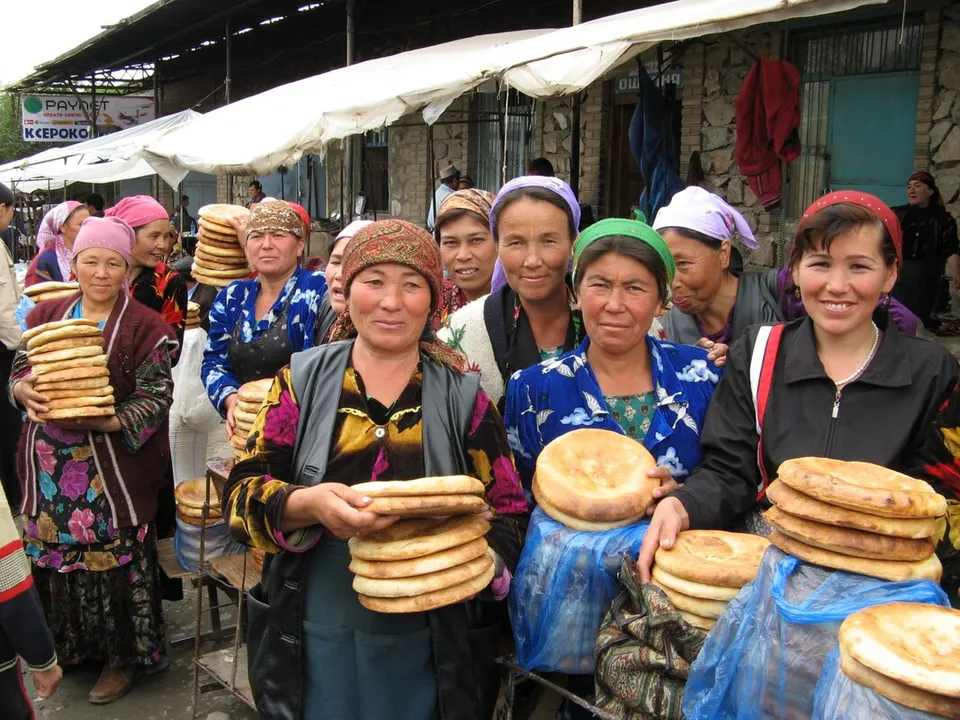
The town's market is one of the largest in the region, and its relatively low prices draw shoppers even from Samarkand. It is at its liveliest at weekends — Saturday and Sunday mornings. The town's old trading reach shows in the fact that communities in Uzbekistan, Tajikistan and Afghanistan still call themselves “Urgutlik”, people from Urgut.

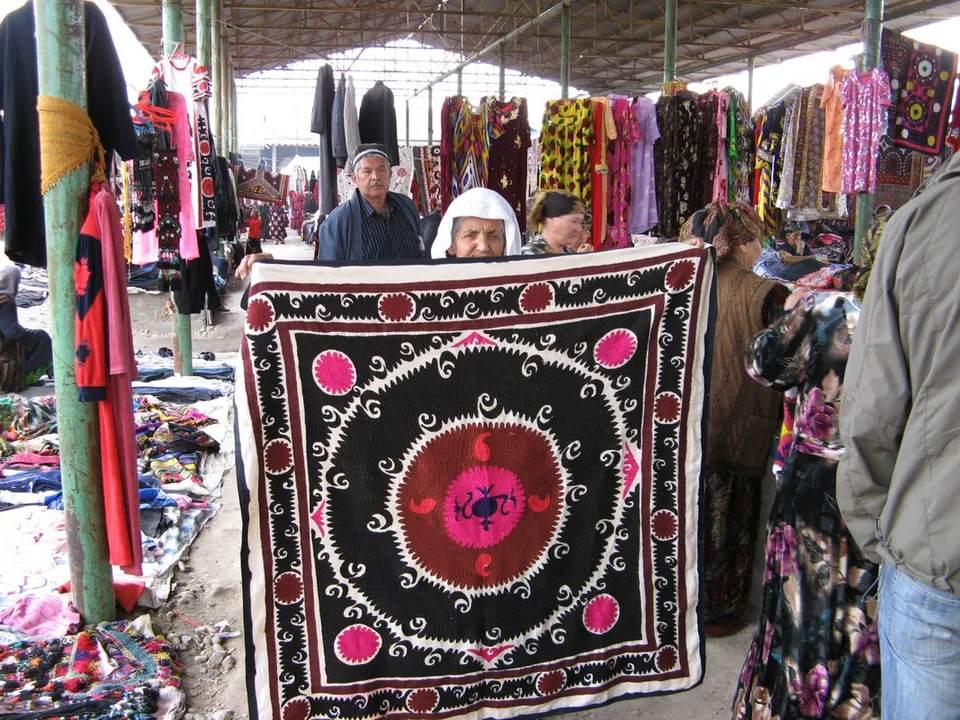
Most visitors head first for the suzani stalls, piled with hand-embroidered wall hangings. The name comes from the Persian suzan, “needle”, and a suzani was traditionally among the most treasured items in a bride's dowry. Alongside new pieces you may, with luck, find older ones from someone's grandmother's chest. There are also carpets and flat-weaves, jewellery, ceramics, copper and tinware, tea sets, traditional clothes and leather boots.
In the crafts section, blacksmiths and tinsmiths work in open stalls, which is a show in itself. The food rows offer seasonal fruit and vegetables, dried fruit and nuts.
Urgut is 35–40 km southeast of Samarkand. Shared taxis and minibuses leave from Kaftarkhona station and take about an hour. The famous Chor-Chinor garden lies just 3 km south of the bazaar, so both fit easily into one day.
Gallery
Stay & eat


For example: Registan, Ulugh Beg, plov, Urgut


