
Sher-Dor Madrasa
The portal of the sun-lions
This site is in test mode — some information may contain errors.
Report
Shrine of a Naqshbandi master in Dahbed
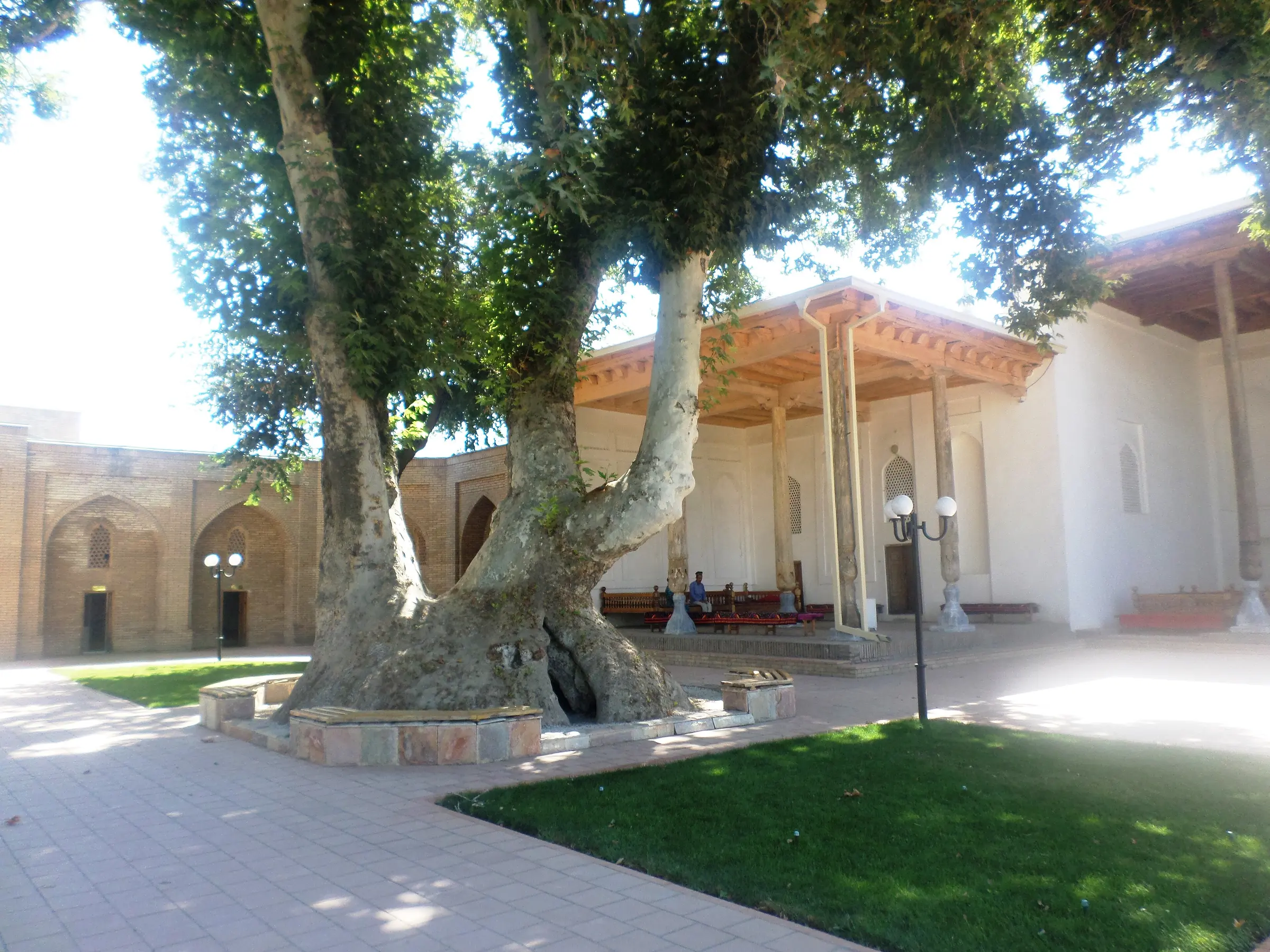
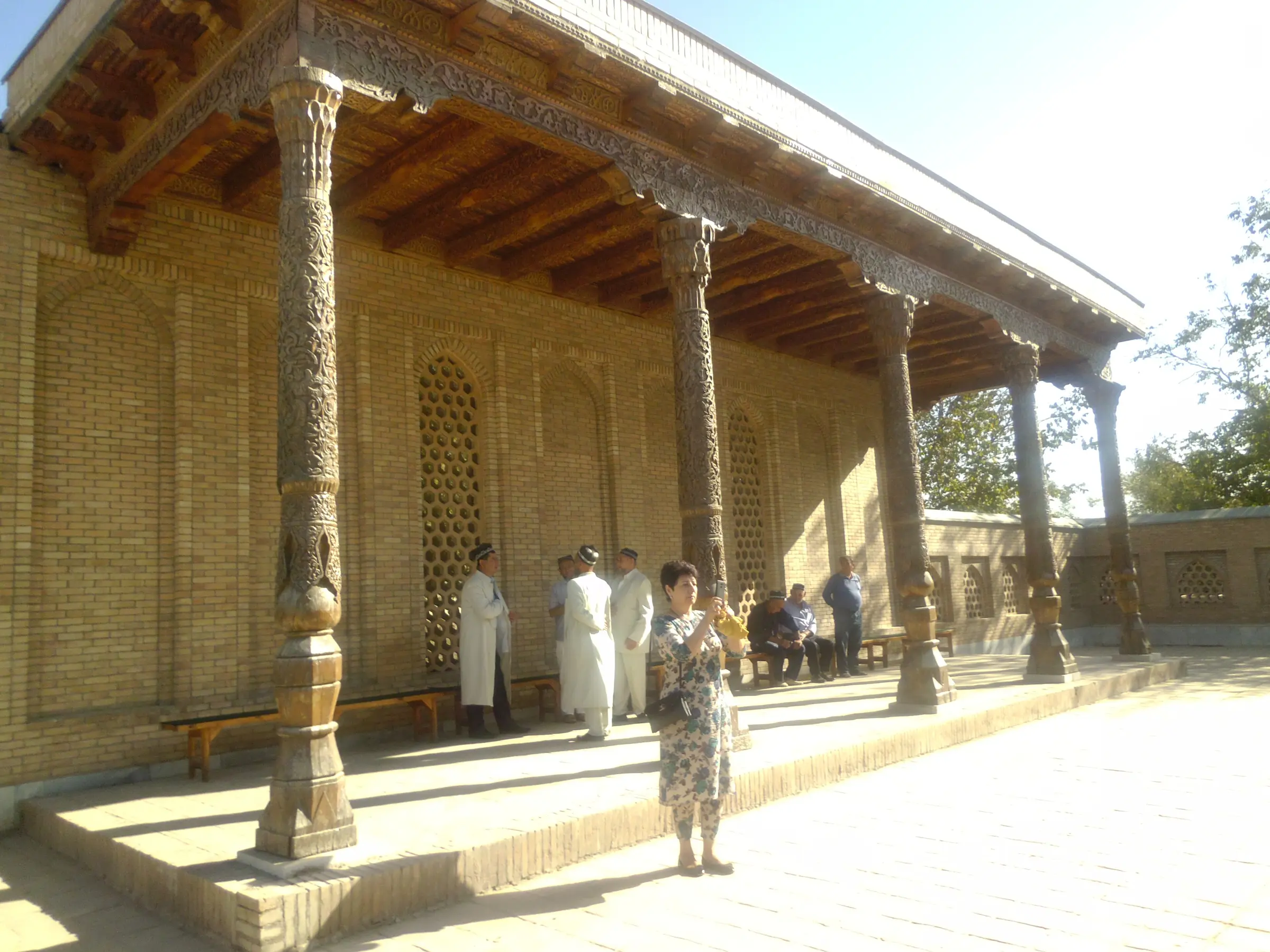
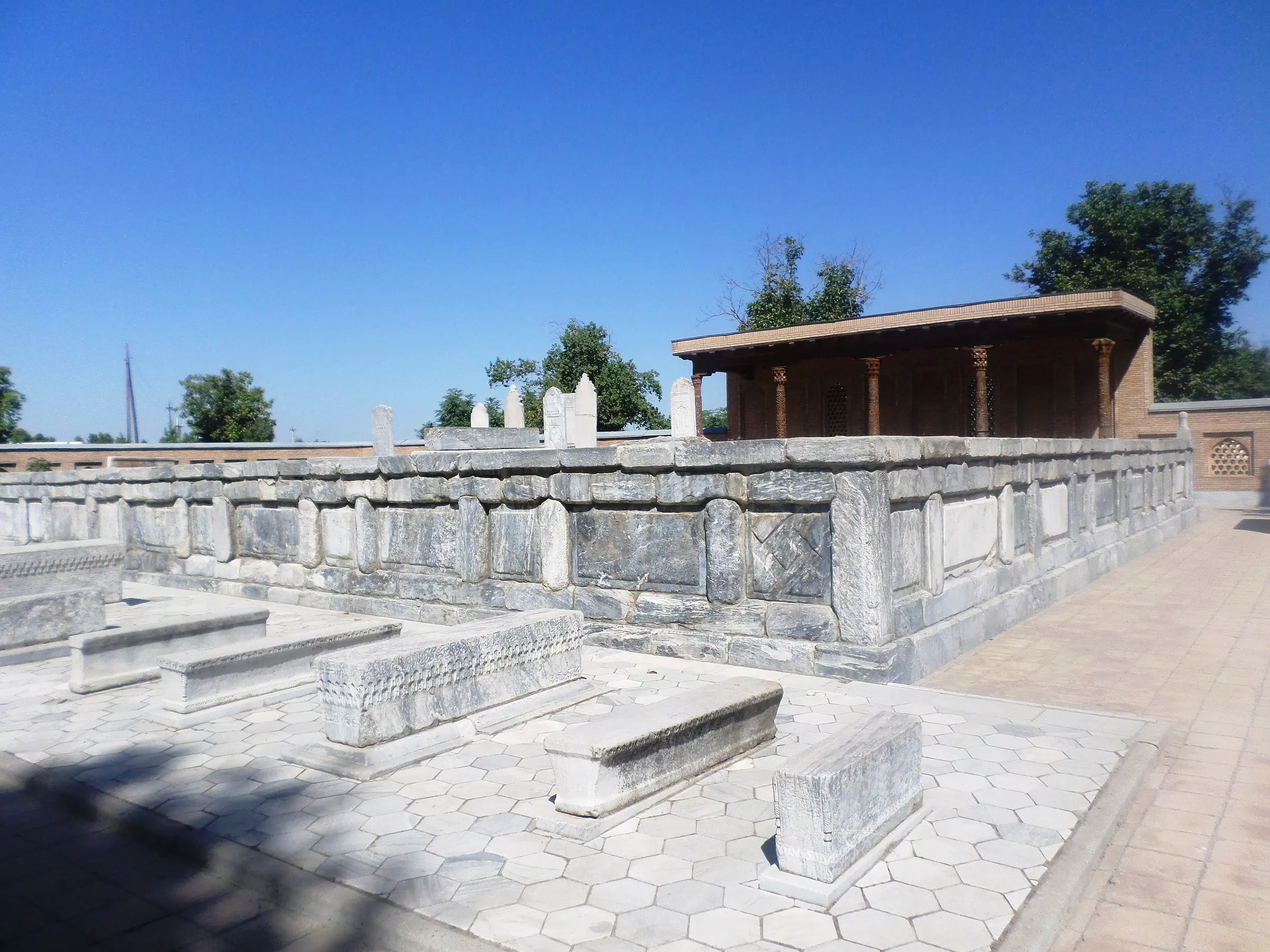
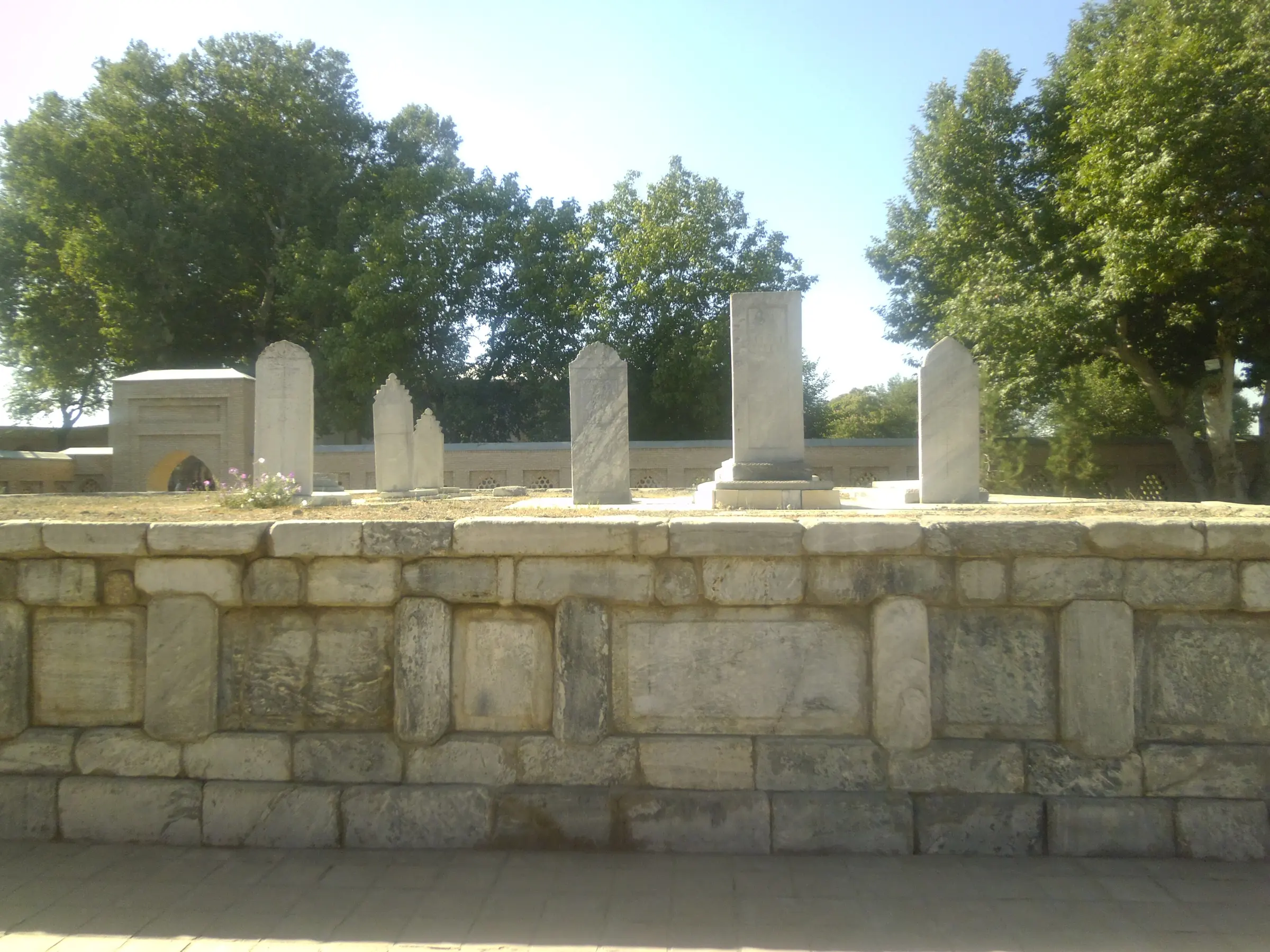
Shrine in Dahbed where the 16th-century Naqshbandi sheikh Makhdumi Azam is buried: a twelve-domed khanqah, a grey-marble burial platform and the grave of Yalangtush Bahadur, builder of the Registan.
Makhdumi Azam — born Ahmad Khwajagi Kasani (1461–1542) — came from Kasan in the Fergana Valley, studied in Tashkent and grew up among the followers of Khoja Ahrar to become one of the leading sheikhs of the Naqshbandi order. His title means “the greatest master”. At the invitation of the Shaybanid prince Janibek Sultan he moved to the Miyankal oasis near Samarkand. Legend has it that the first thing he did was plant ten willows, giving the place its name: Dahbed, Persian for “ten willows”.
He wrote some thirty treatises, most of them gathered in the collection Majmu al-Rasail, and died in Dahbed in 1542. His descendants, the Khojas, later became a powerful political force in Eastern Turkestan — the celebrated Afaq Khoja of Kashgar was one of them. Sources also name Babur, founder of the Mughal dynasty, among those who saw the sheikh as a spiritual guide; one of his treatises, the Risala-yi Baburiya, is addressed to him.

The most imposing building is the khanqah: six columns, twelve domes and a deep wooden iwan along its long side. The mosque was paid for by Yalangtush Bahadur, governor of Samarkand and the man behind the Sher-Dor and Tilya-Kori madrasas on the Registan. North of the khanqah stands the dakhma, a platform of grey “Samarkand marble” measuring 17.6 by 16.6 metres and 1.55 metres high, topped with the tombstones of the sheikh and his descendants.
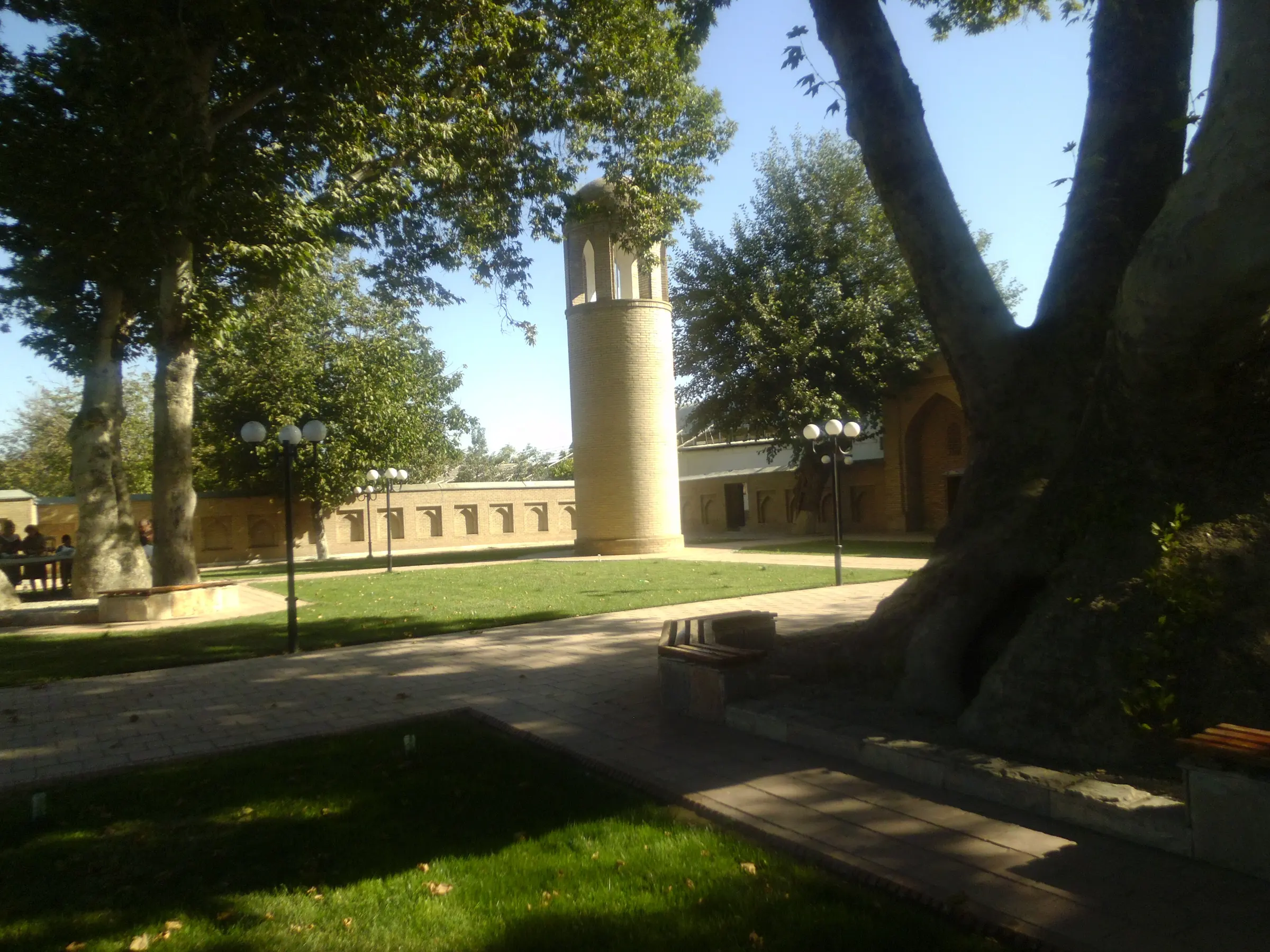
At its foot lie the gravestones of Yalangtush Bahadur himself (AH 1066, or 1655–1656) and his daughter Iklim. The brick wall around the cemetery was built by the Bukharan official Nadir Divan-Begi. A small mosque, gatehouse, retreat cell and minaret complete the site, which was restored in the 1990s for an international symposium honouring the sheikh.
In the 19th century Dahbed was known for a huge twice-weekly market said to have outstripped Samarkand's own bazaar in turnover. The complex lies about 15 km north of central Samarkand, a 20–25 minute taxi ride.

Gallery
Related places
The portal of the sun-lions

The gilded mosque-madrasa
Nearby


The fig-garden quarter — Uzbekistan's first tourism mahalla
11.1 kmStay & eat
Guesthouse · 6.4 km
Hotel · 9.1 km
Hostel · 9.4 km
Hotel · 9.6 km
Café · 9.5 km
Fast food · 9.9 km
Restaurant · 10.0 km
Plov centre · 11 km


For example: Registan, Ulugh Beg, plov, Urgut